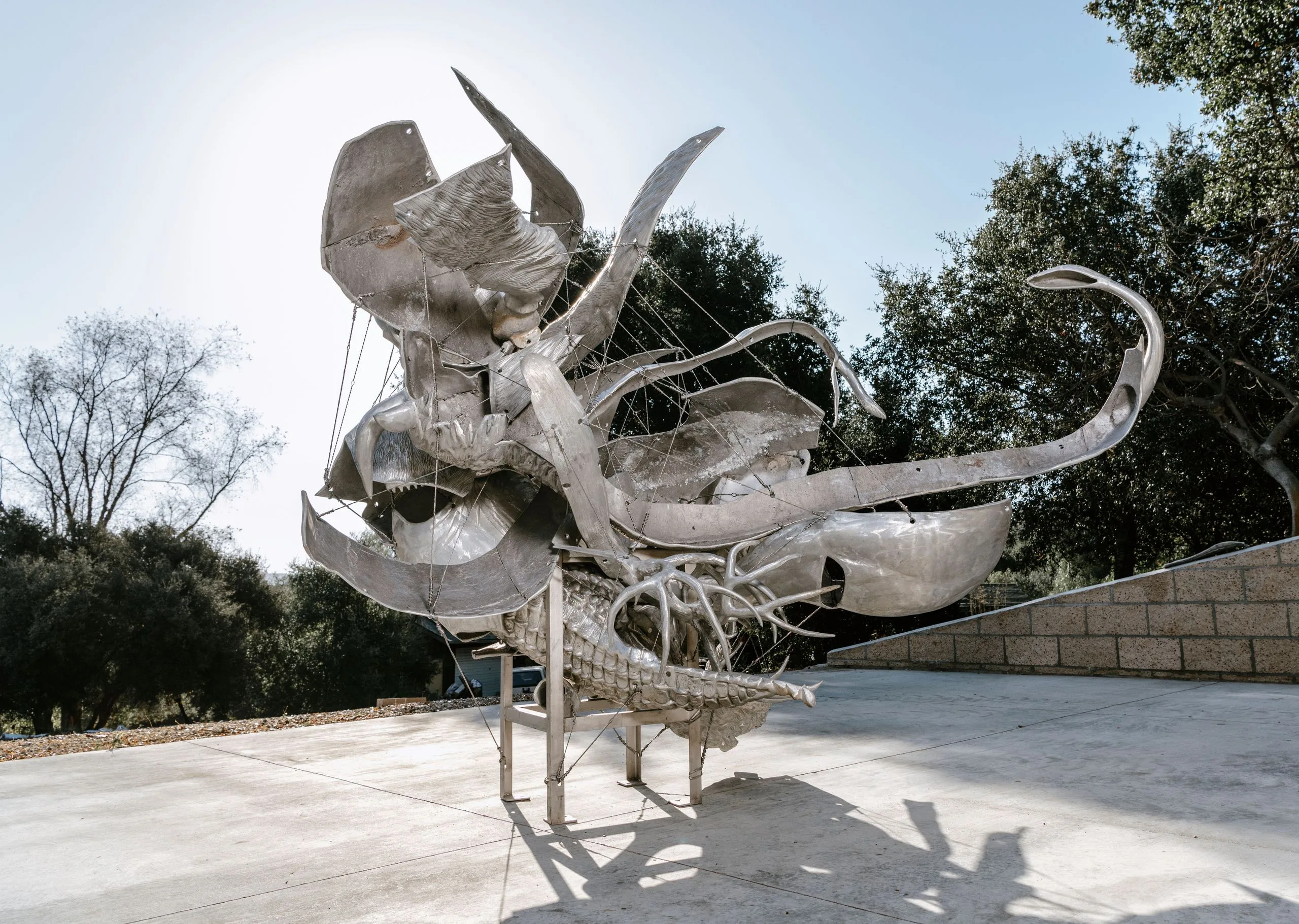
Since the late 1970s, Nancy Rubins has assembled her soaring sculptures from the detritus of commercial and industrial America: discarded televisions and water heaters, salvaged mobile homes, dismembered airplane parts, abandoned boats, and animal playground figures. Her dynamic works combine features of assemblage and monumental sculpture, and are both familiar and otherworldly.
Rubins has consistently produced work that investigates material and structure in an enduring and innovative examination of formal interrelationships. She has a long-standing interest in the evolutionary cycle of the elements she uses for her sculptures.
In 2013, Rubins began producing large-format assemblages constructed from cast-aluminum playground animals bound together with cables. The technique evolved to include the use of other metals, such as cast iron, brass, and bronze. Held together by stainless-steel wiring, these aggregations simultaneously appear to be suspended in a moment of temporary stasis and evoke the possibility of ever-changing movement.
In the Fluid Space series, to which Photon’s Mass belongs, welded metal tables serve as structural supports. Rubins has sliced, cut, and inverted the discarded playground characters, transforming these animals from kitschy, cartoonish figures into commanding formal elements. Some are recycled from previous works, following the cyclical life of metal seen in Rubins’ past use of airplanes, boats, and playground parts. The scale of this body of work is more intimate, compressed, and contained, while retaining the signature tension between expansiveness and limitation. In Photon’s Mass, Rubins weaves and transforms the elements in and around the anchoring table, while the wires connect and balance the cantilevered fragments that have been turned and twisted to reveal their seams, welds, and grind marks.