LACMA

ShopMembershipMyLACMATickets
LACMA
Los Angeles County Museum of Art
5905 Wilshire Blvd.
Los Angeles, CA 90036
info@lacma.org
(323) 857-6000
Sign up to receive emails
Subscribe
© Museum Associates 2025

Museum Hours

Monday

11 am–6 pm

Tuesday

11 am–6 pm

Wednesday

Closed

Thursday

11 am–6 pm

Friday

11 am–8 pm

Saturday

10 am–7 pm

Sunday

10 am–7 pm


  • About LACMA
  • Jobs
  • Building LACMA
  • Host An Event
  • Unframed
  • Press
  • FAQs
  • Log in to MyLACMA
  • Privacy Policy
© Museum Associates 2025
Collections

Unknown
Indra, Chief of the Gods16th century

Not on view
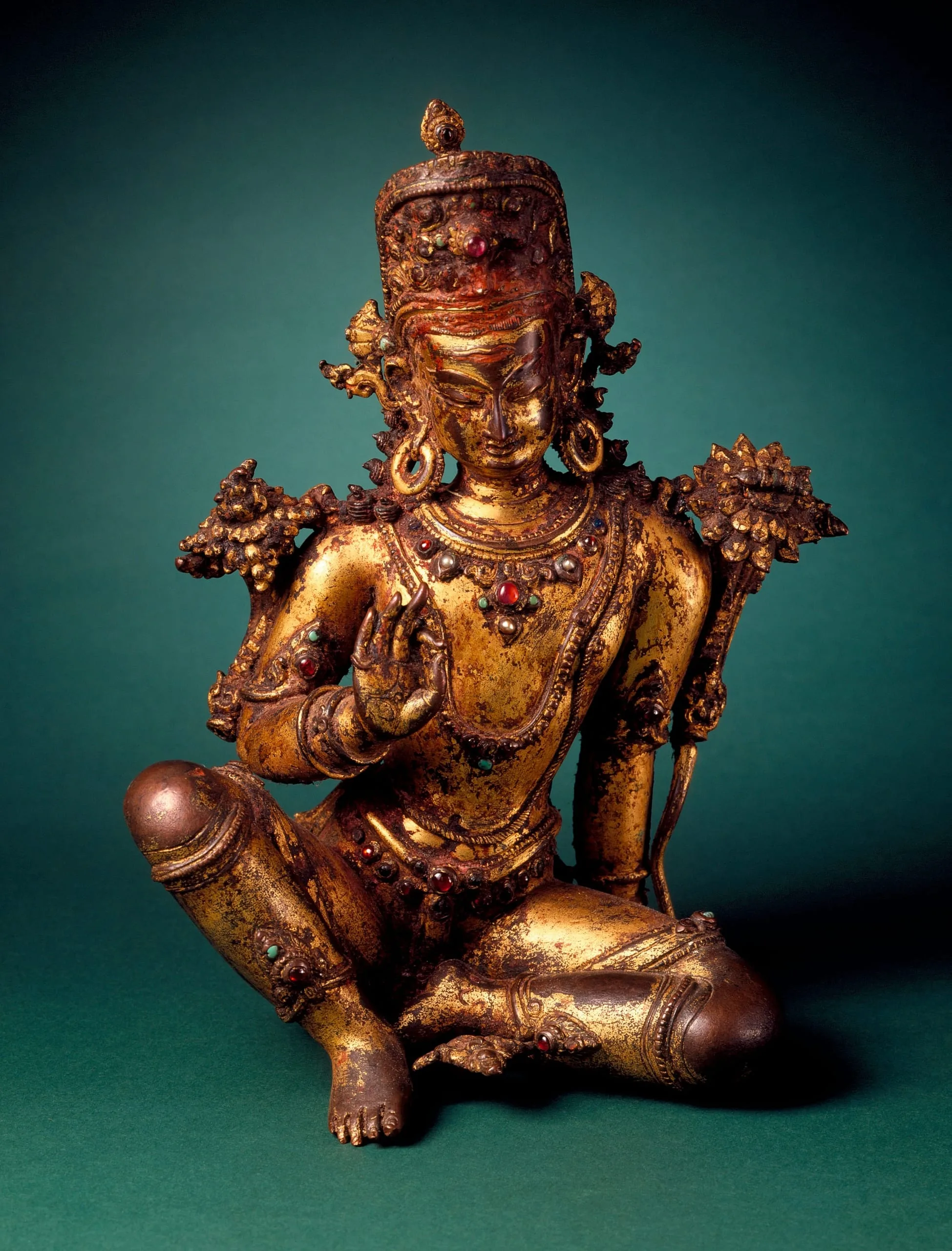
Gilt bronze sculpture of a seated deity with inlaid gemstones, elaborate beaded jewelry, and a tall cylindrical crown, warm honey-gold surface with reddish-brown patina in recessed areas
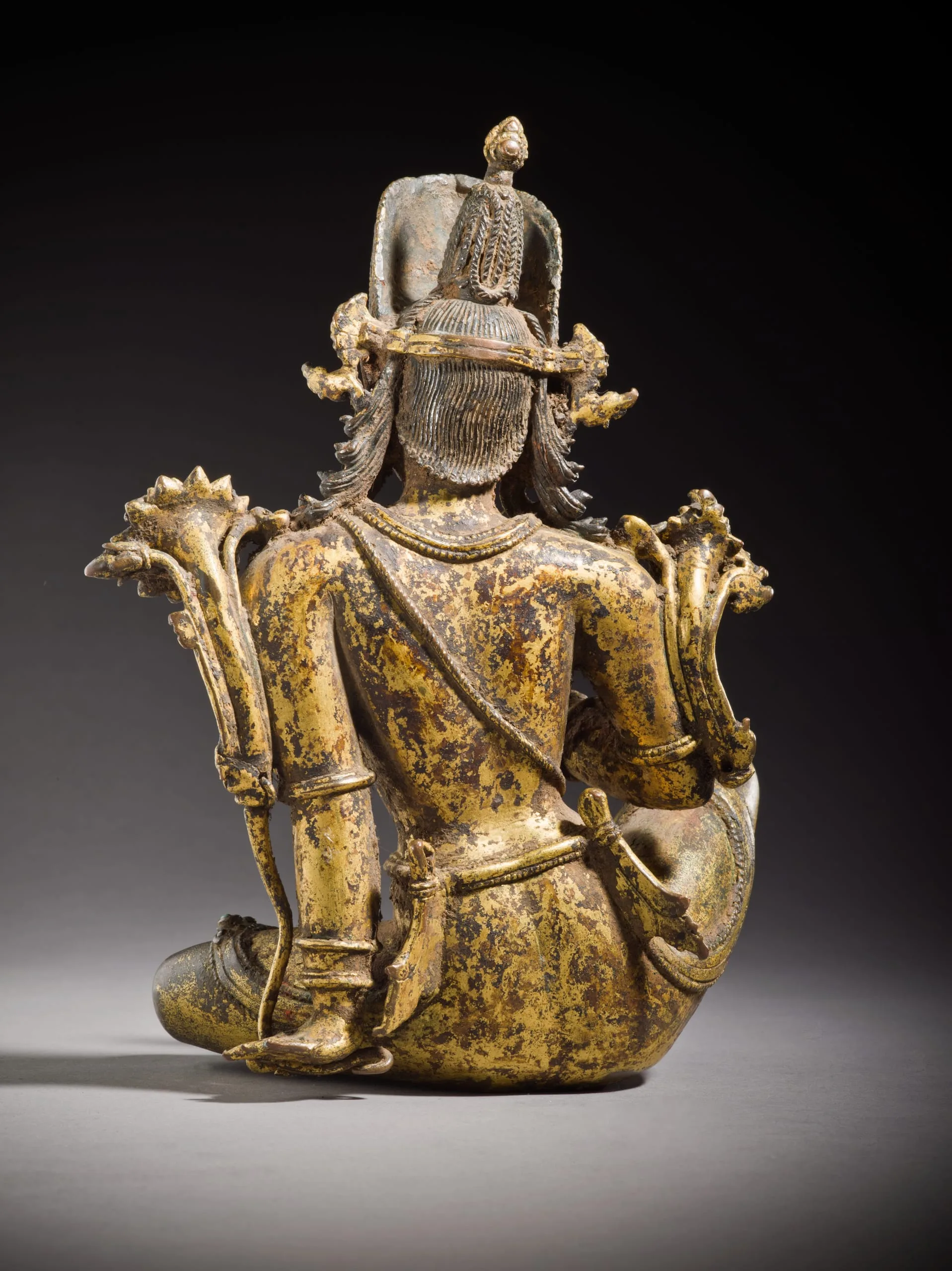
Gilt bronze sculpture of a seated deity shown from the back, wearing an elaborate crown with flame-like ornaments and long ridged hair. Holding lotus stems in both hands, adorned with beaded jewelry and a sash across the torso. Surface shows heavy wear with exposed dark metal beneath patchy gold gilding.
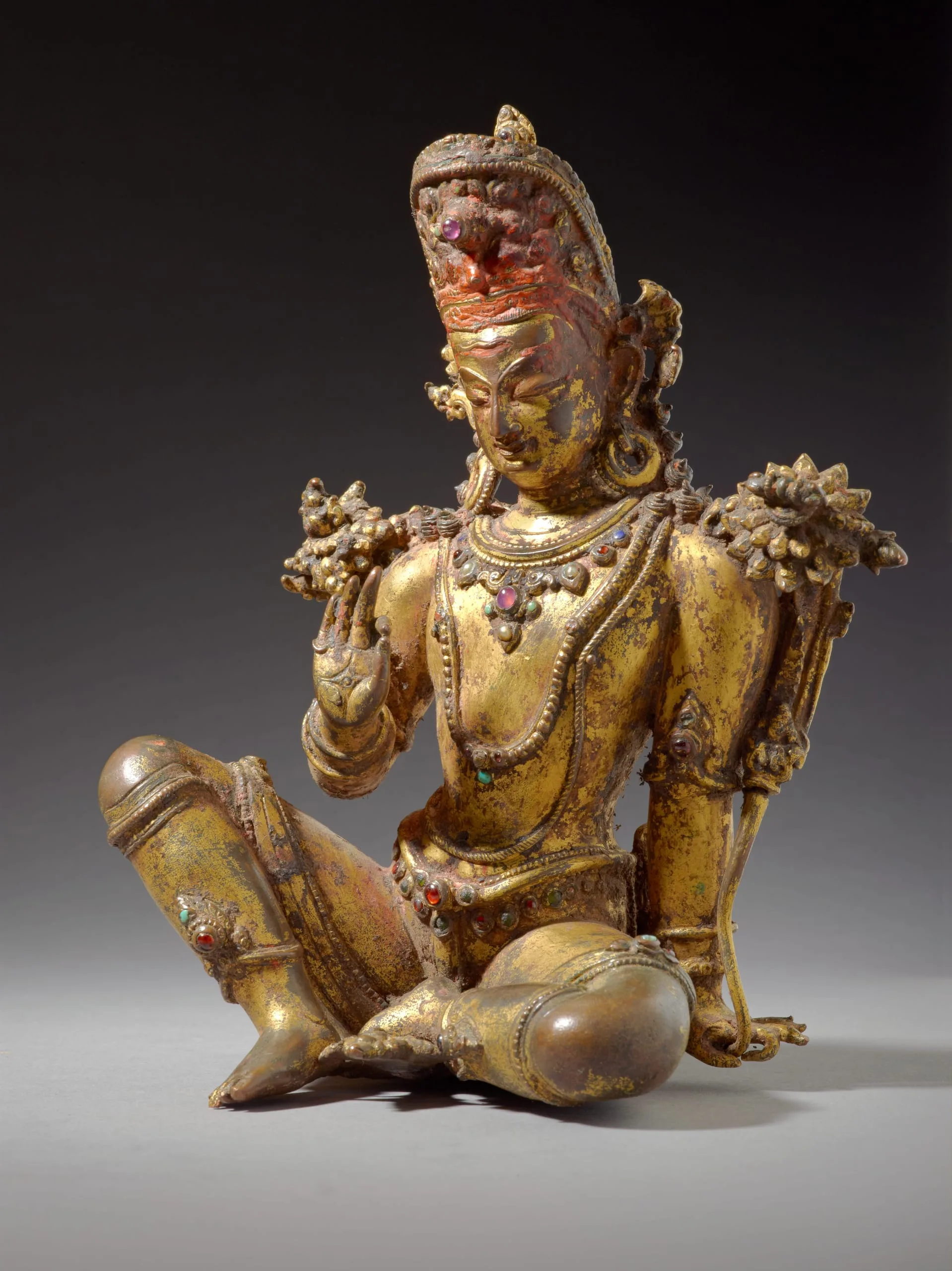
Gilt copper alloy sculpture of a seated deity in lalitasana pose, right hand raised in a gesture, adorned with an ornate crown, large earrings, necklaces, and inlaid gemstones in red, blue, and green; richly detailed with floral shoulder ornaments and a club-like object at the left side.
Artist or Maker
Unknown
Title
Indra, Chief of the Gods
Place Made
Nepal
Date Made
16th century
Medium
Gilt copper inlaid with gemstones; traces of paint
Dimensions
7 5/8 x 6 x 3 7/8 in. (19.37 x 15.24 x 9.84 cm)
Credit Line
From the Nasli and Alice Heeramaneck Collection, Museum Associates Purchase
Accession Number
M.69.13.4
Classification
Sculpture
Collecting Area
South and Southeast Asian Art
Curatorial Notes

In his seminal cosmogonic role in the creation of the universe, the Vedic (proto-Hindu) deity Indra splits open the world mountain, the axis mundi. This releases the primal elements of water and fire, which are personified respectively by the Vedic deities Varuna, the God of Waters (see M.72.4.2), and Agni, the God of Fire (see M.79.189.8). In later Hinduism, Indra was considered the god of lightning and thunder, analogous to his Norse counterpart, Thor, and was intimately associated with the life-giving monsoonal rains. Indra can be identified by his primary attribute of the thunderbolt (vajra) that rests atop the lotus by his left shoulder, and by the horizontal third eye on his forehead that refers to his one thousand eyes (sahasranayana) symbolic of his cosmic nature. He has an ascetic’s piled hair topped with a jewel (?) and wears a tall crown similar to a mitre, which is an idiosyncratic Nepalese attribute. He wears profuse jewelry, including the Brahmanical sacred thread (yajnopavita) worn over his left shoulder. He is seated in the kingly posture of royal ease (maharajalila) befitting his role as king of the gods. His right hand is held in the gesture of discourse (vitarka mudra).

Indra served an auxiliary function as a directional guardian (dikpala) in which he was the Divine Regent of the East (see M.2013.57a-b).

A comparable Nepalese image of Indra, complete with its original lotus base that has a dedicatory inscription dated 1589, is in the Museum of Fine Arts, Boston (69.947).
Selected Bibliography
  • Markel, Stephen. "Hindu Cosmology and Mythology." Orientations 55, no.6 (2024): 39-47.