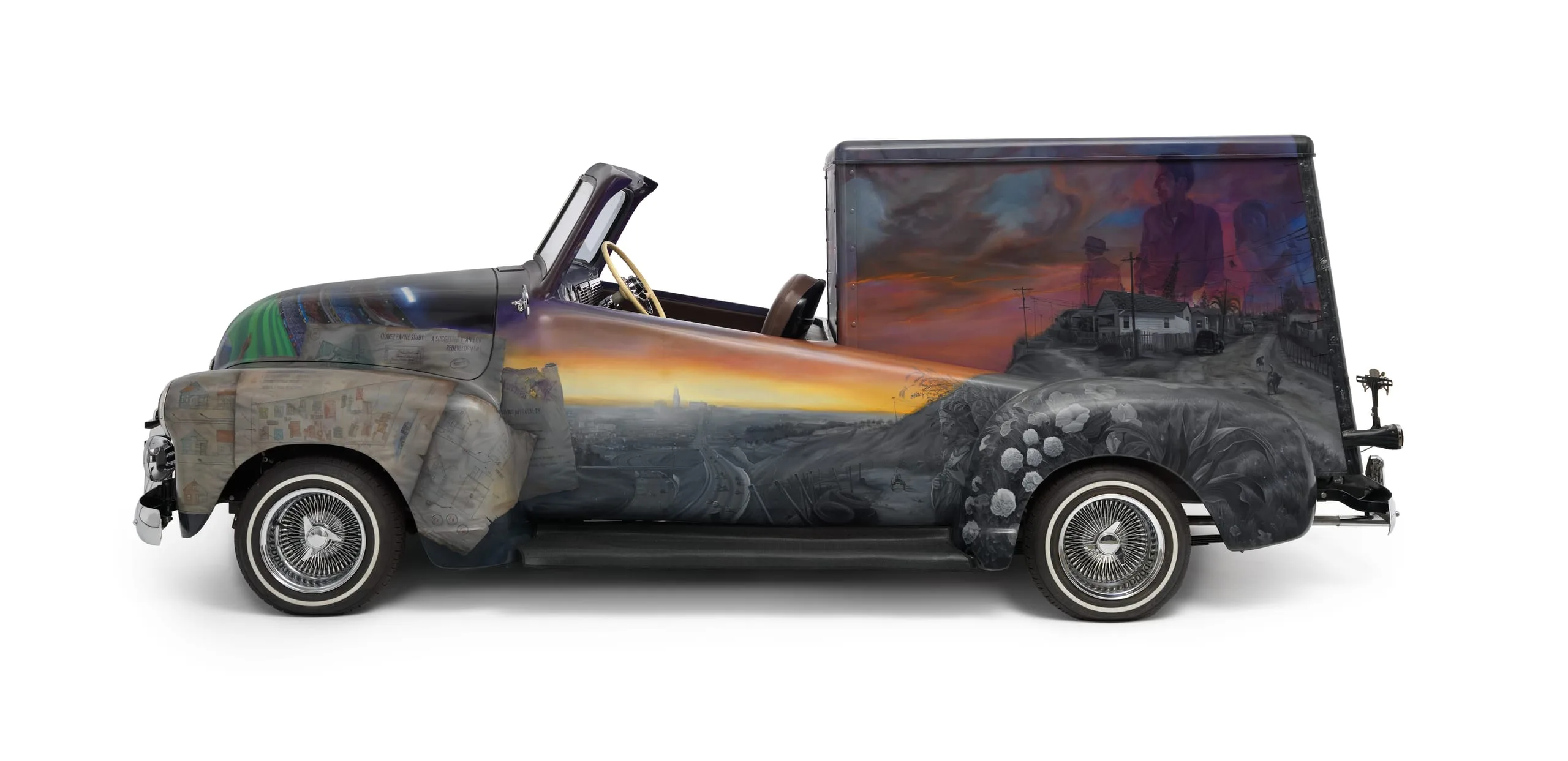
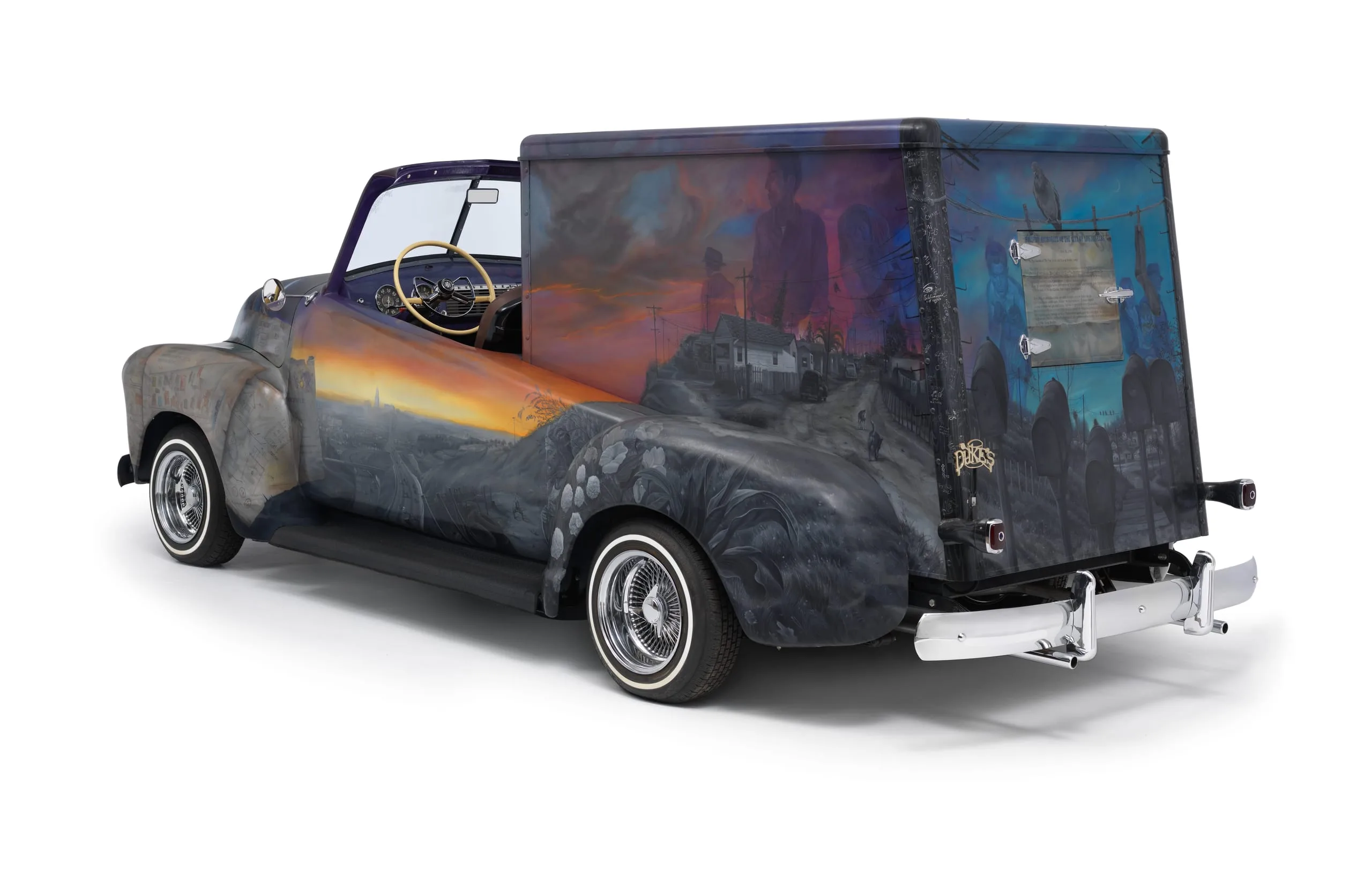
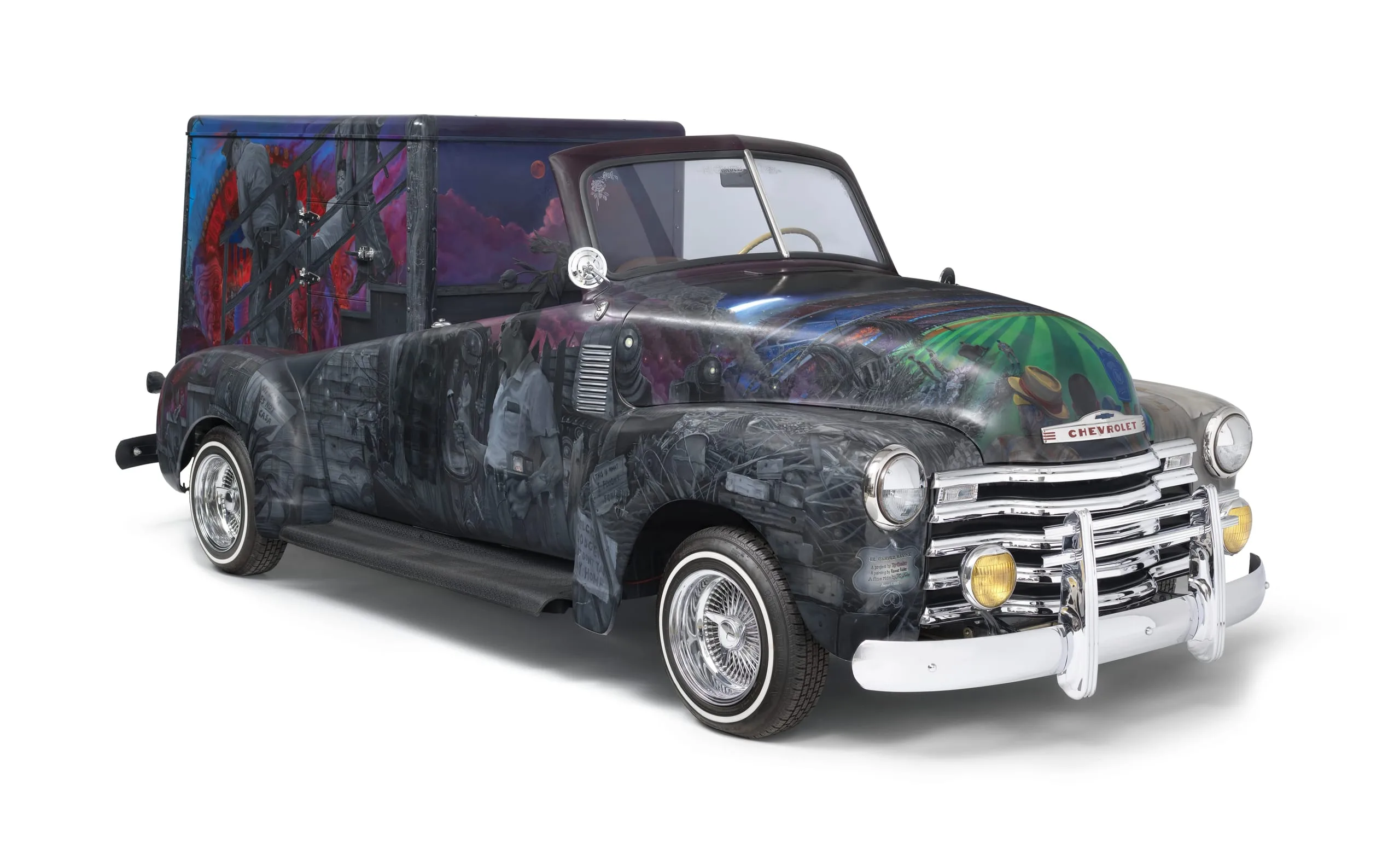
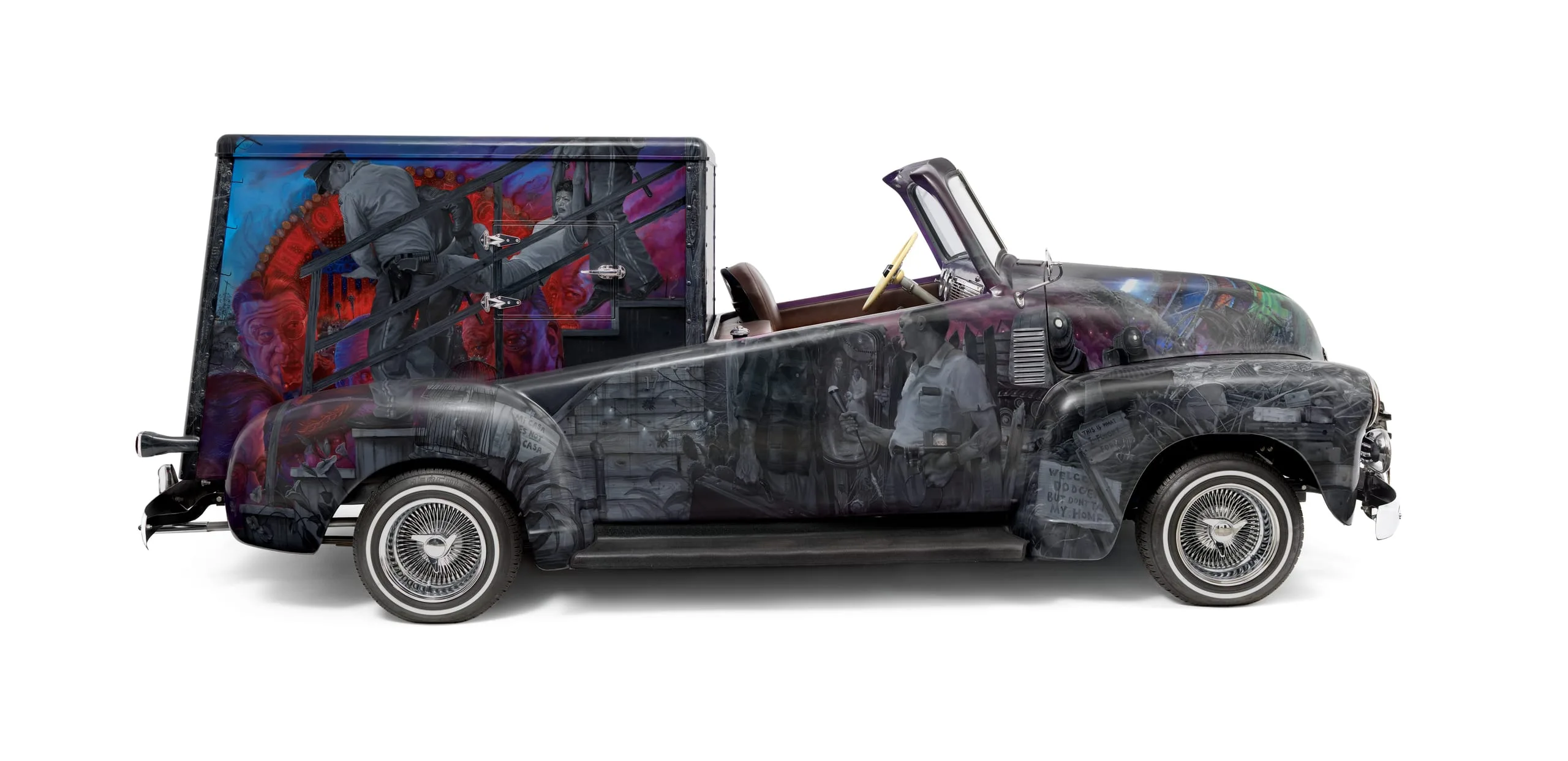
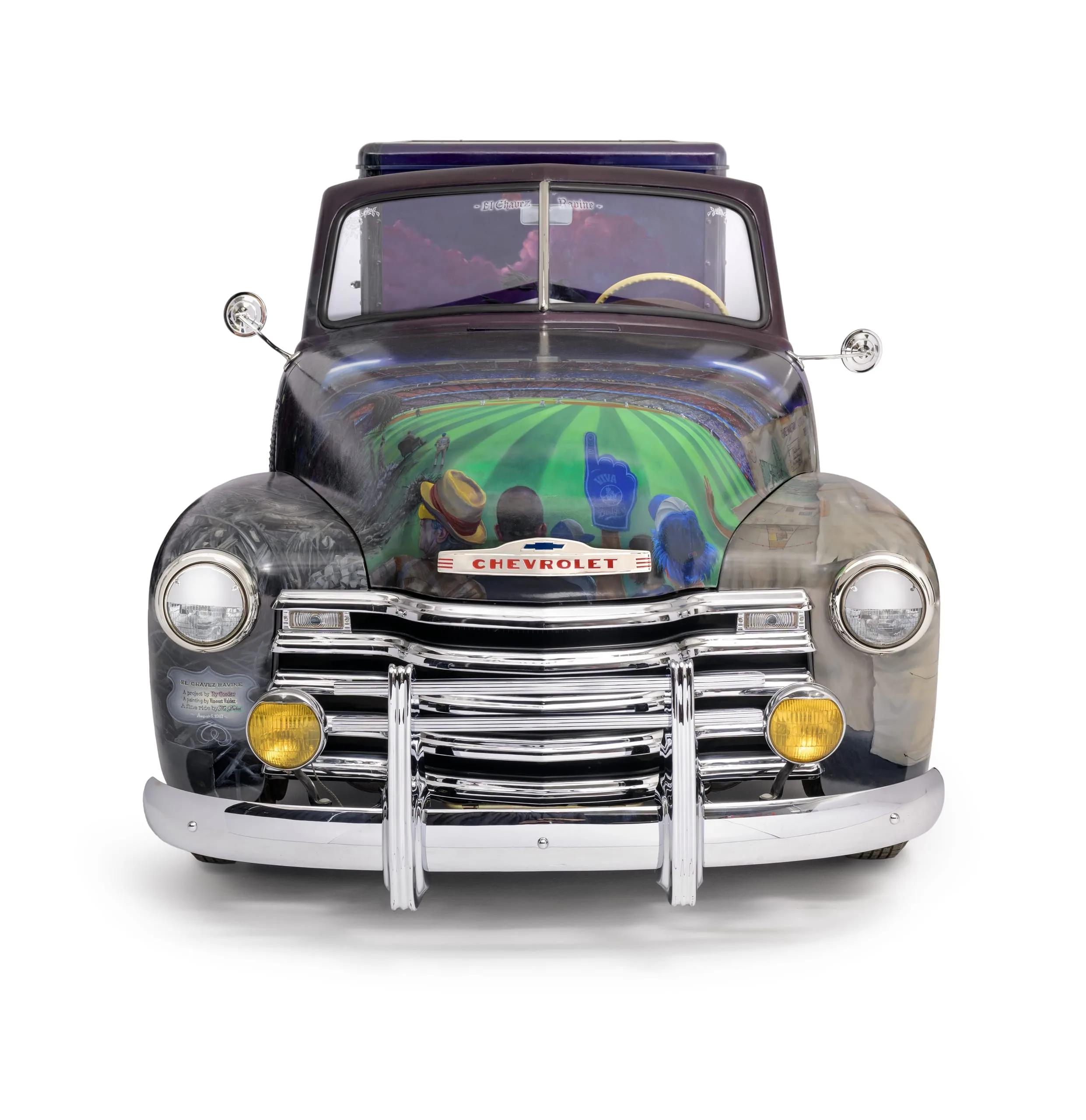
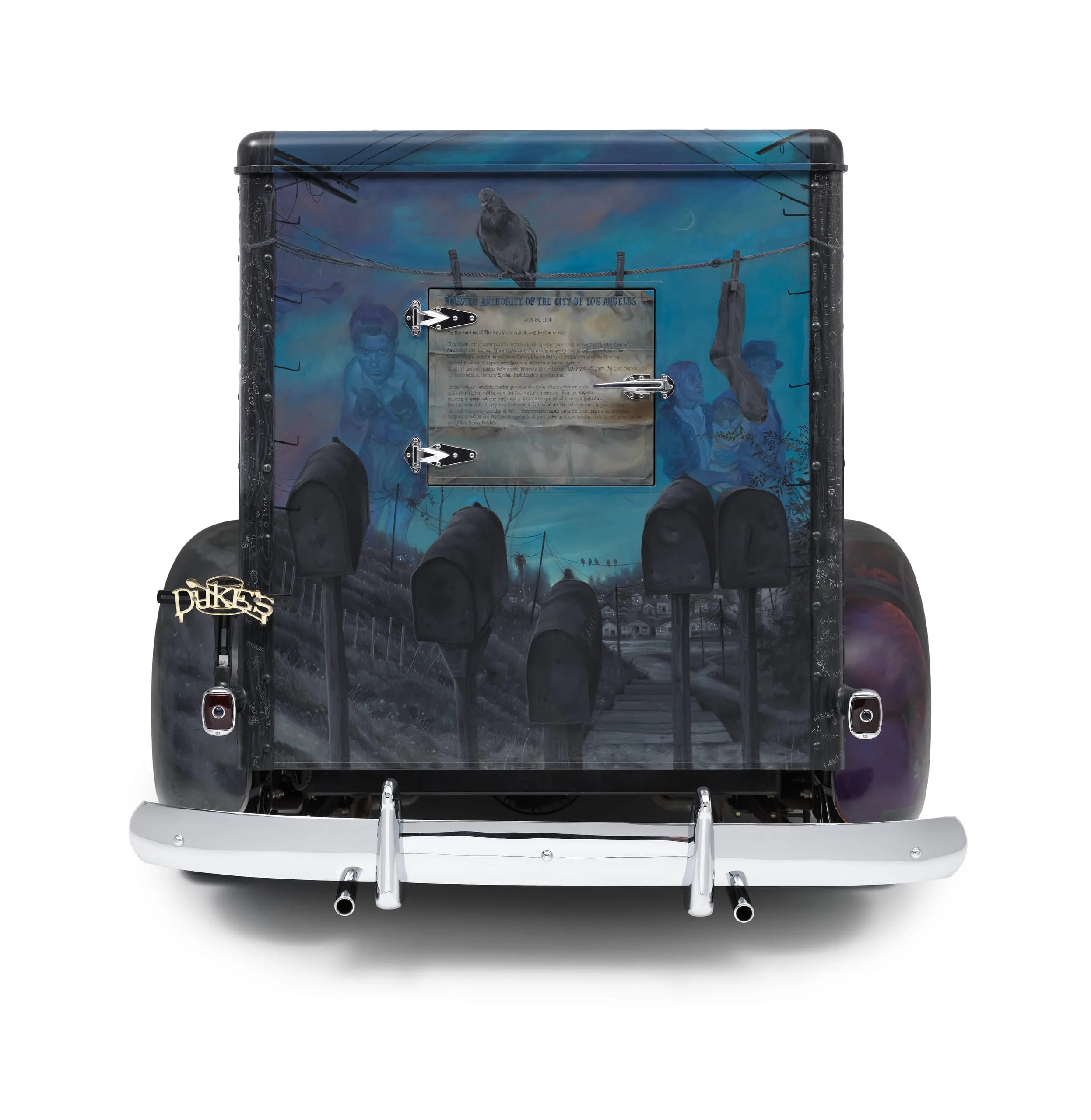
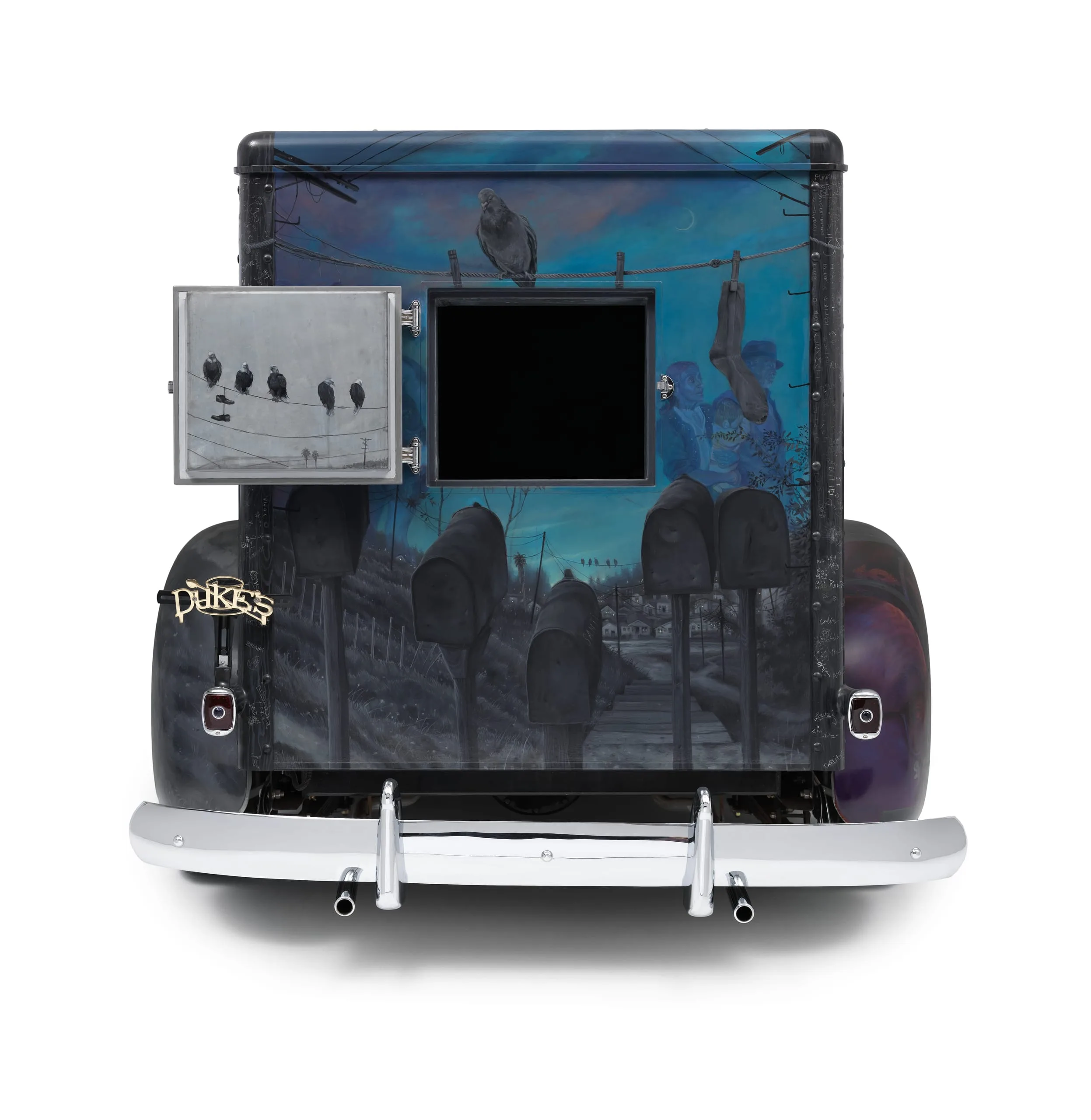
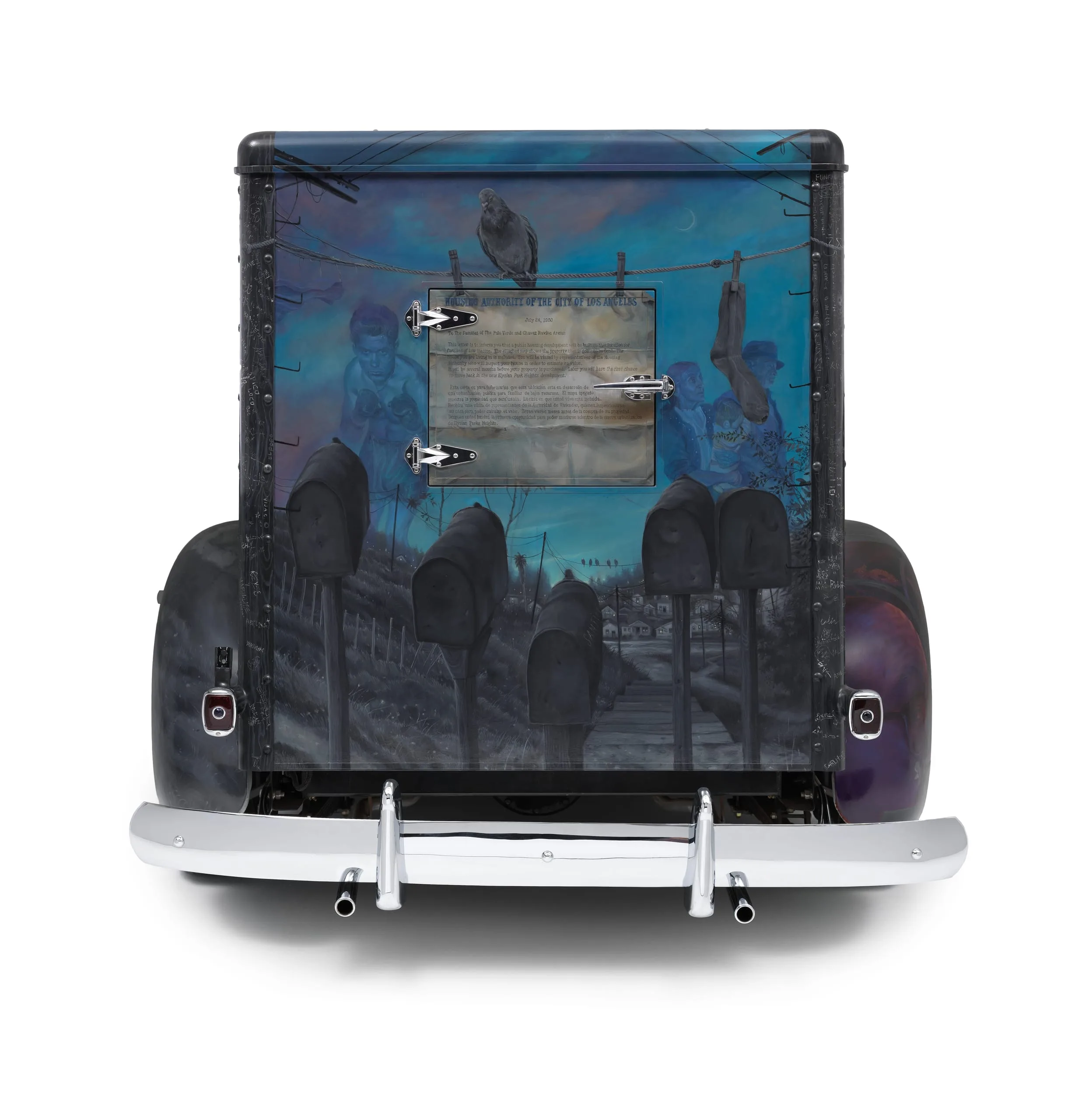
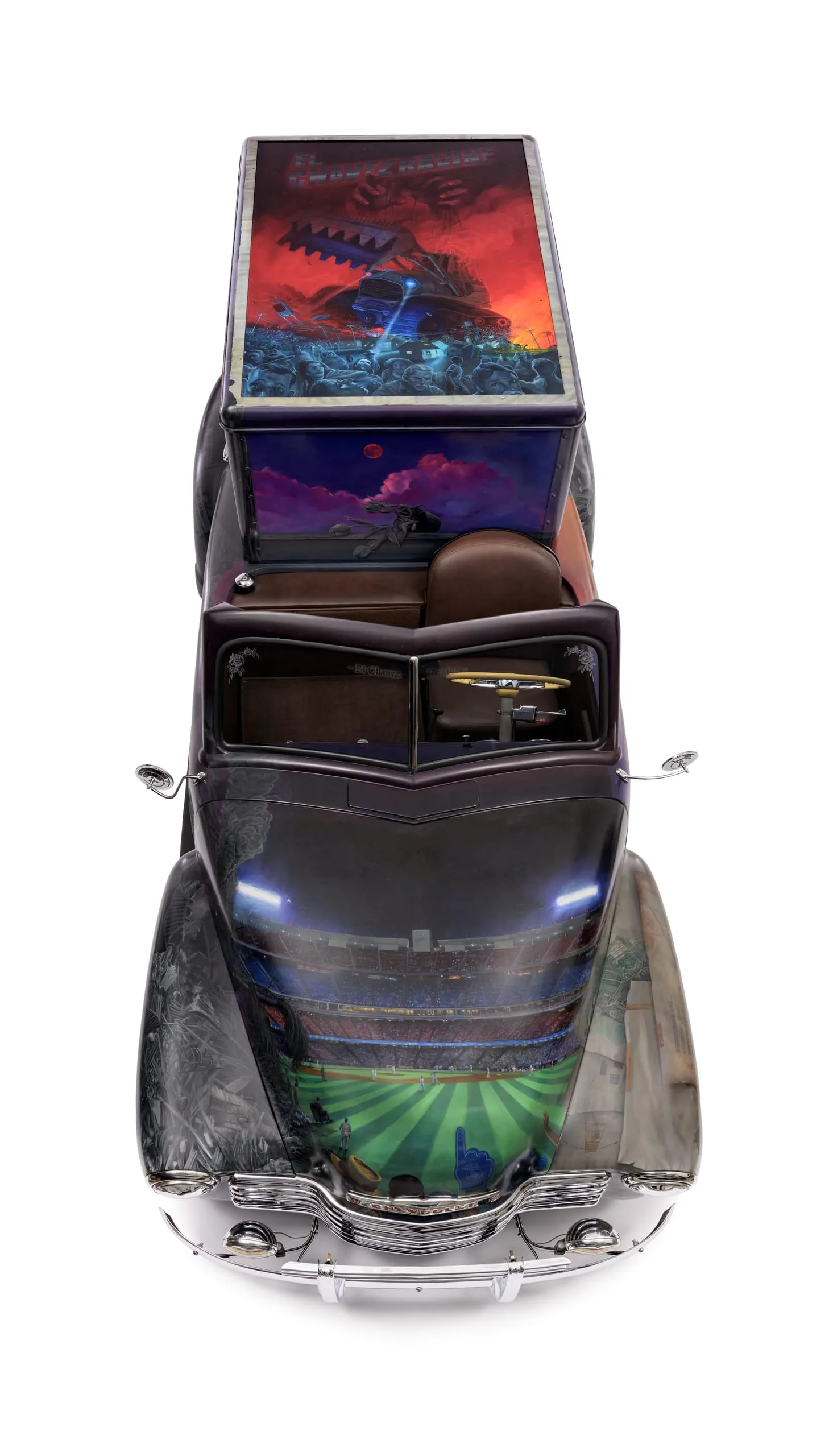
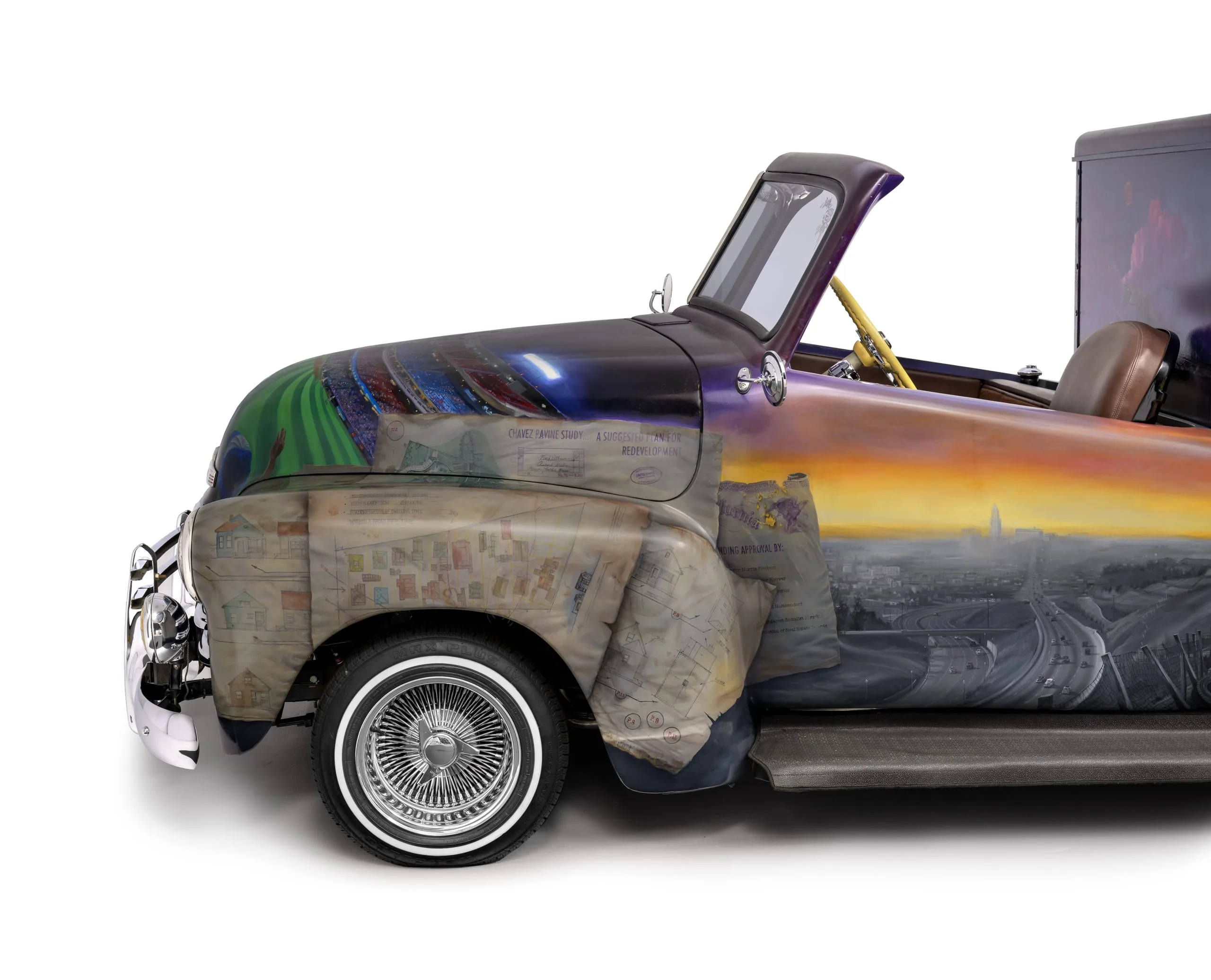
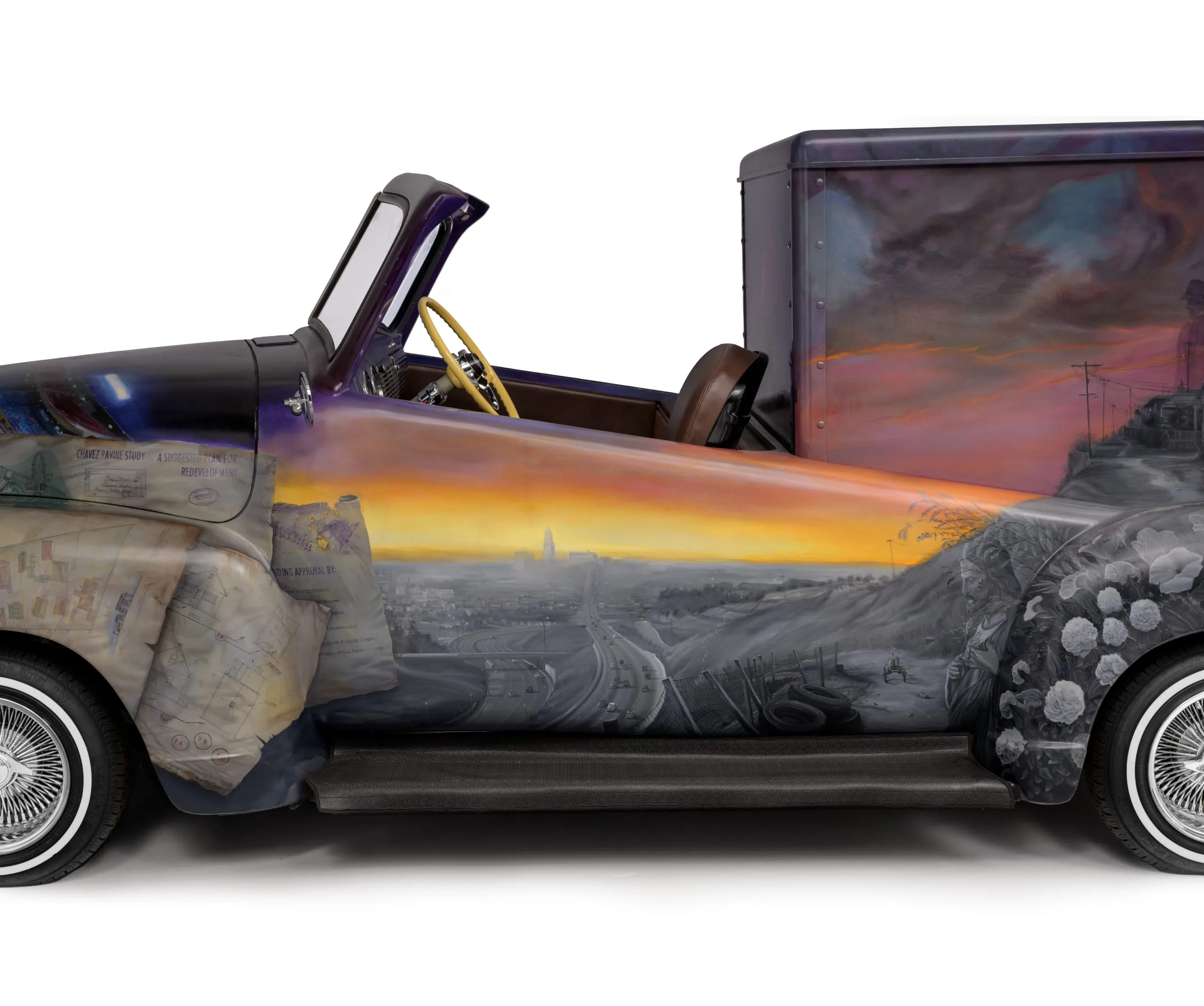
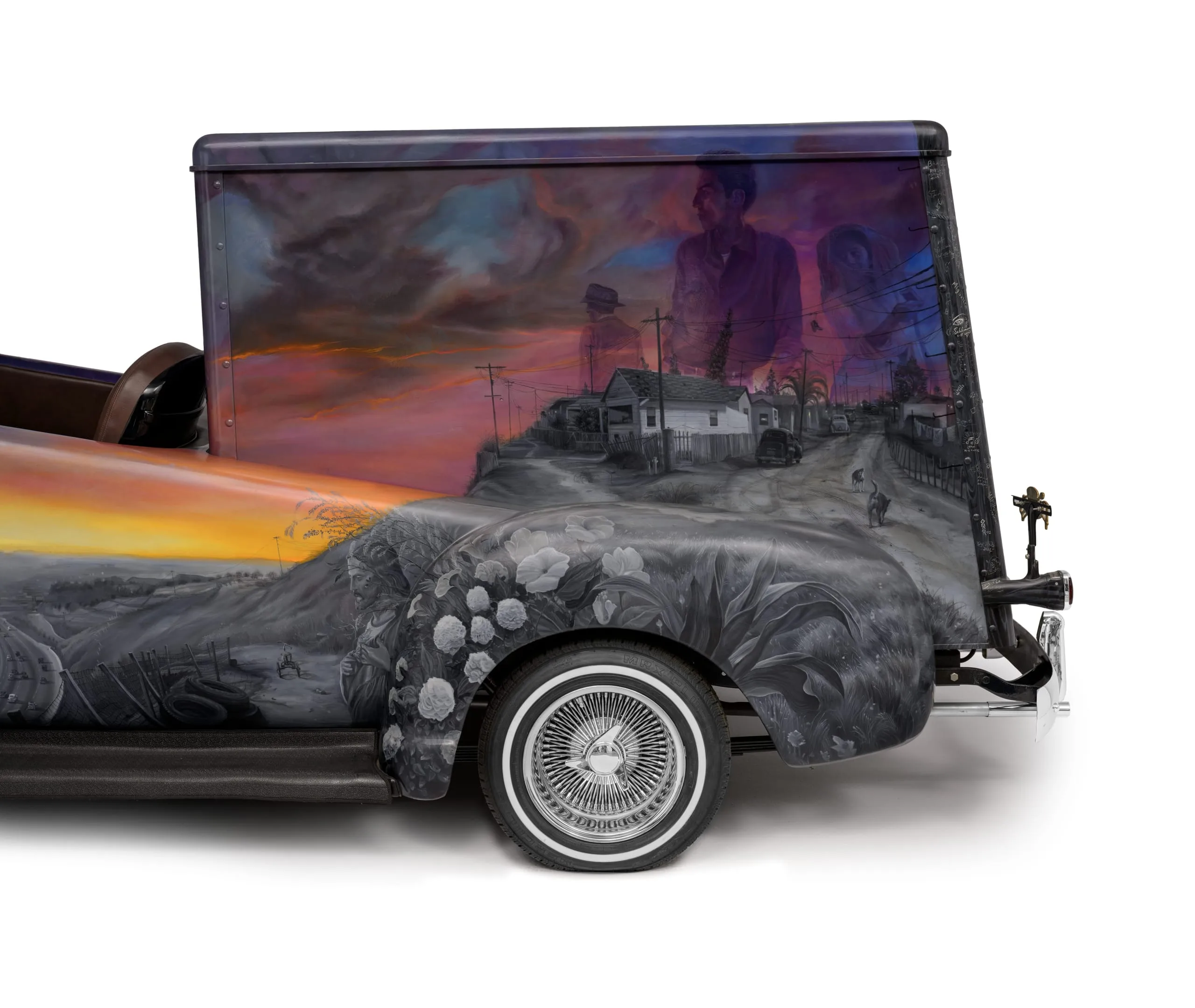
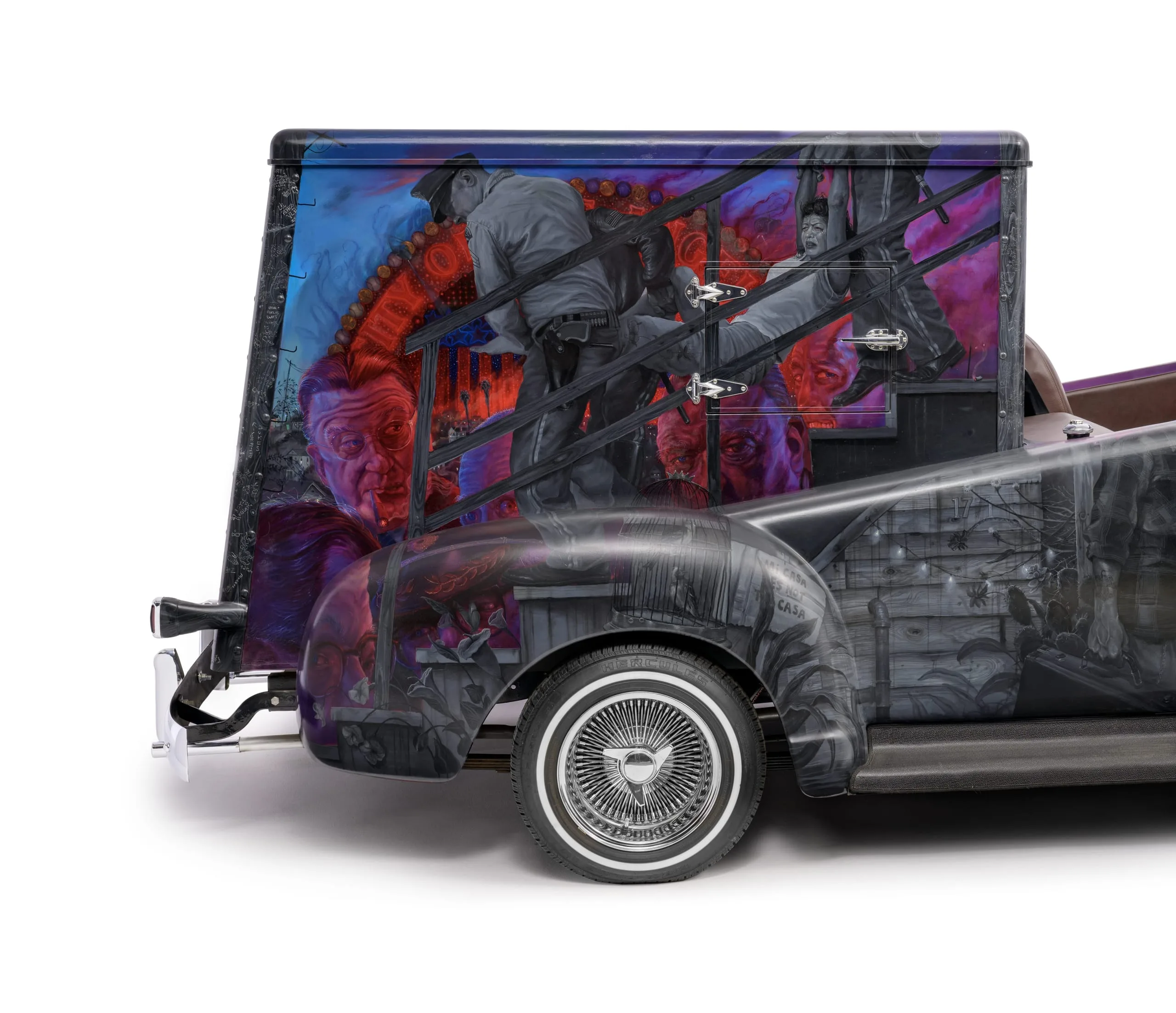
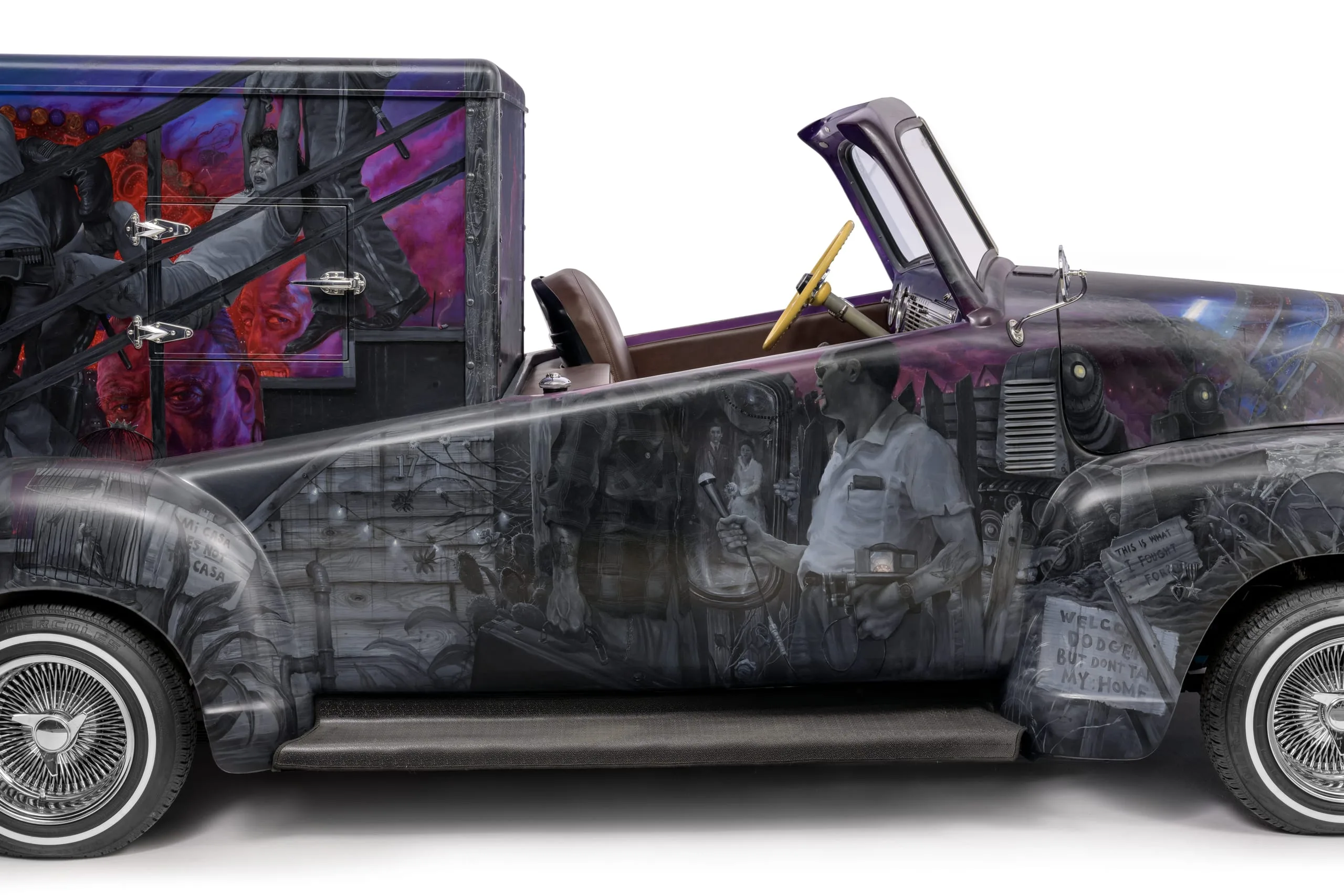
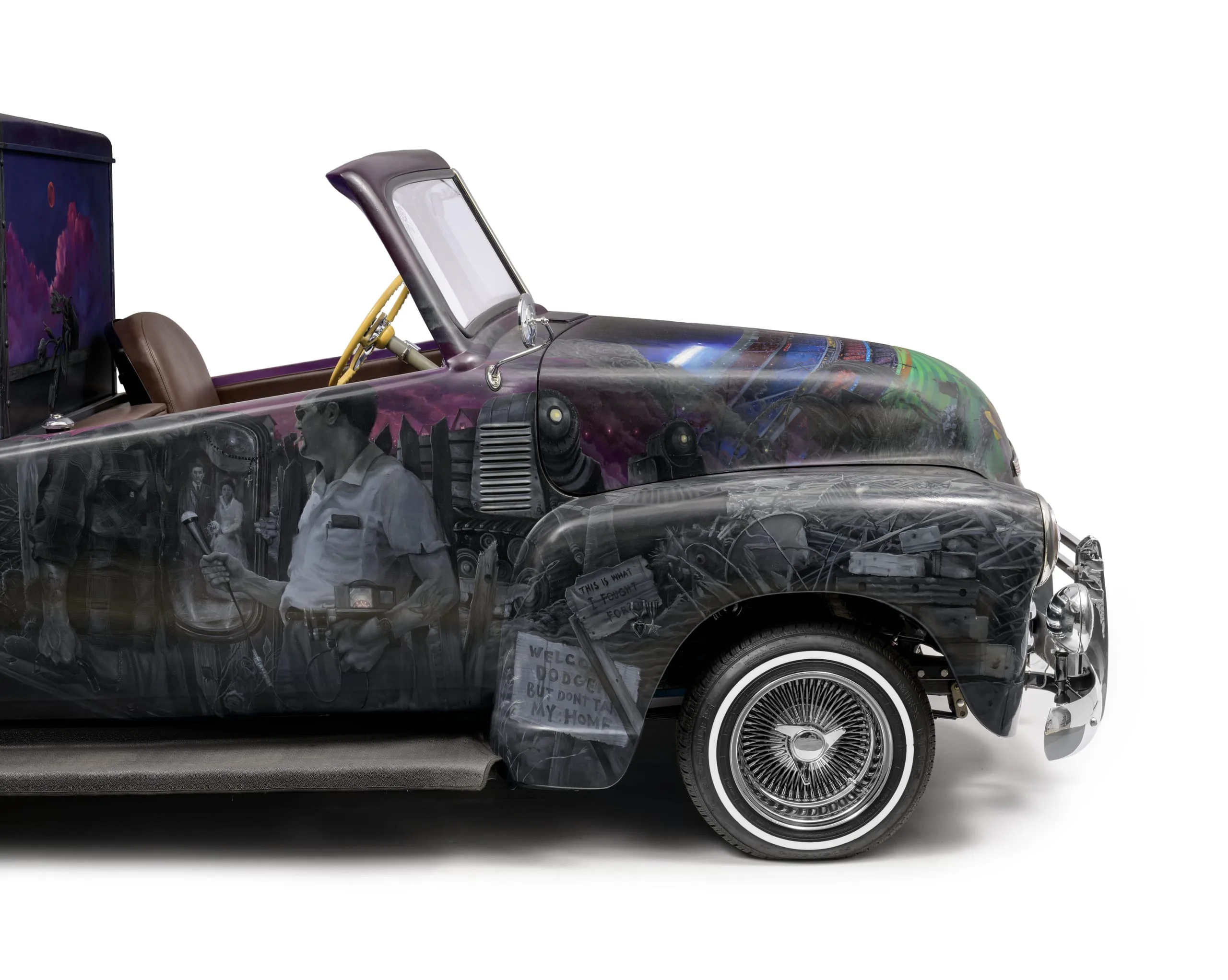
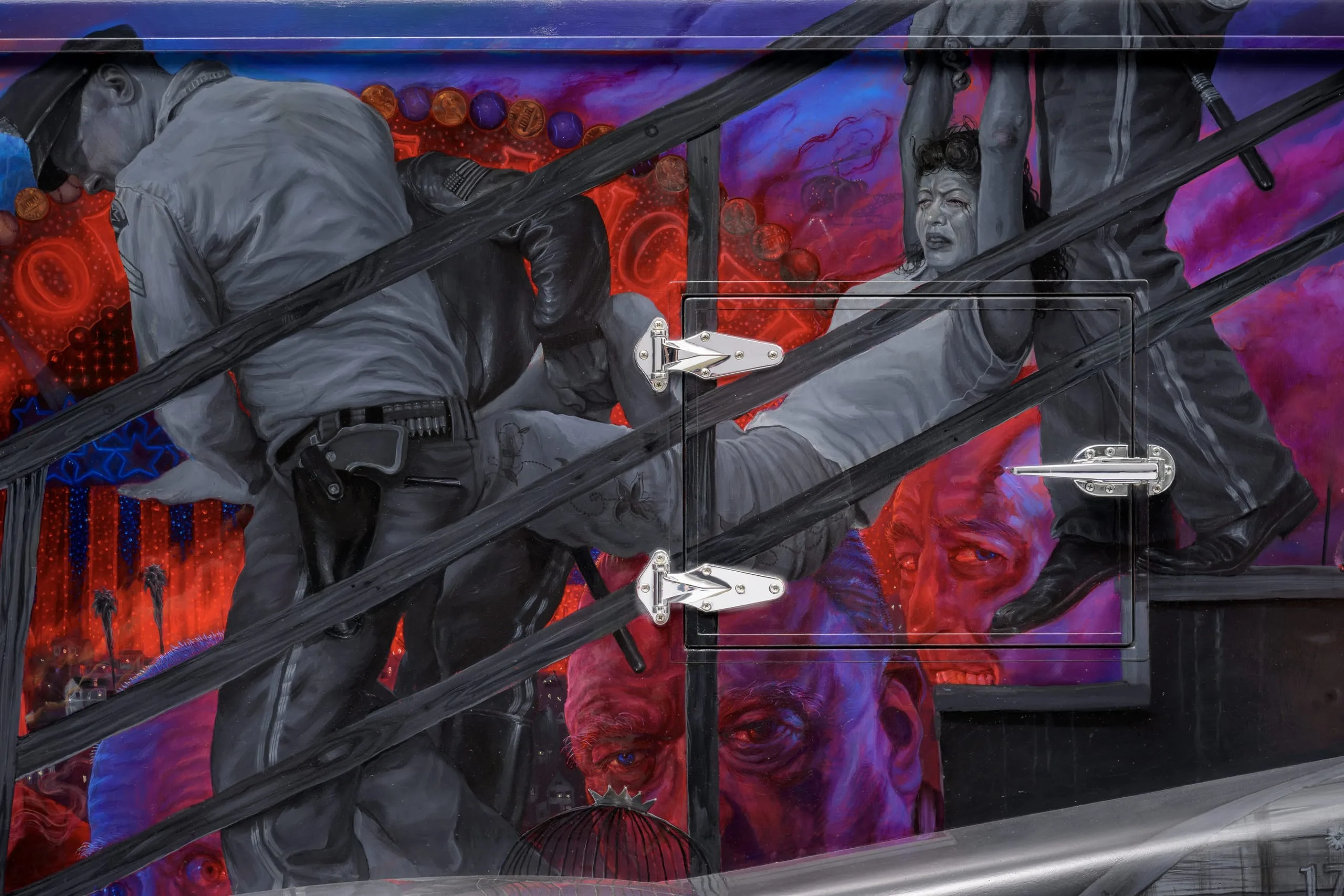
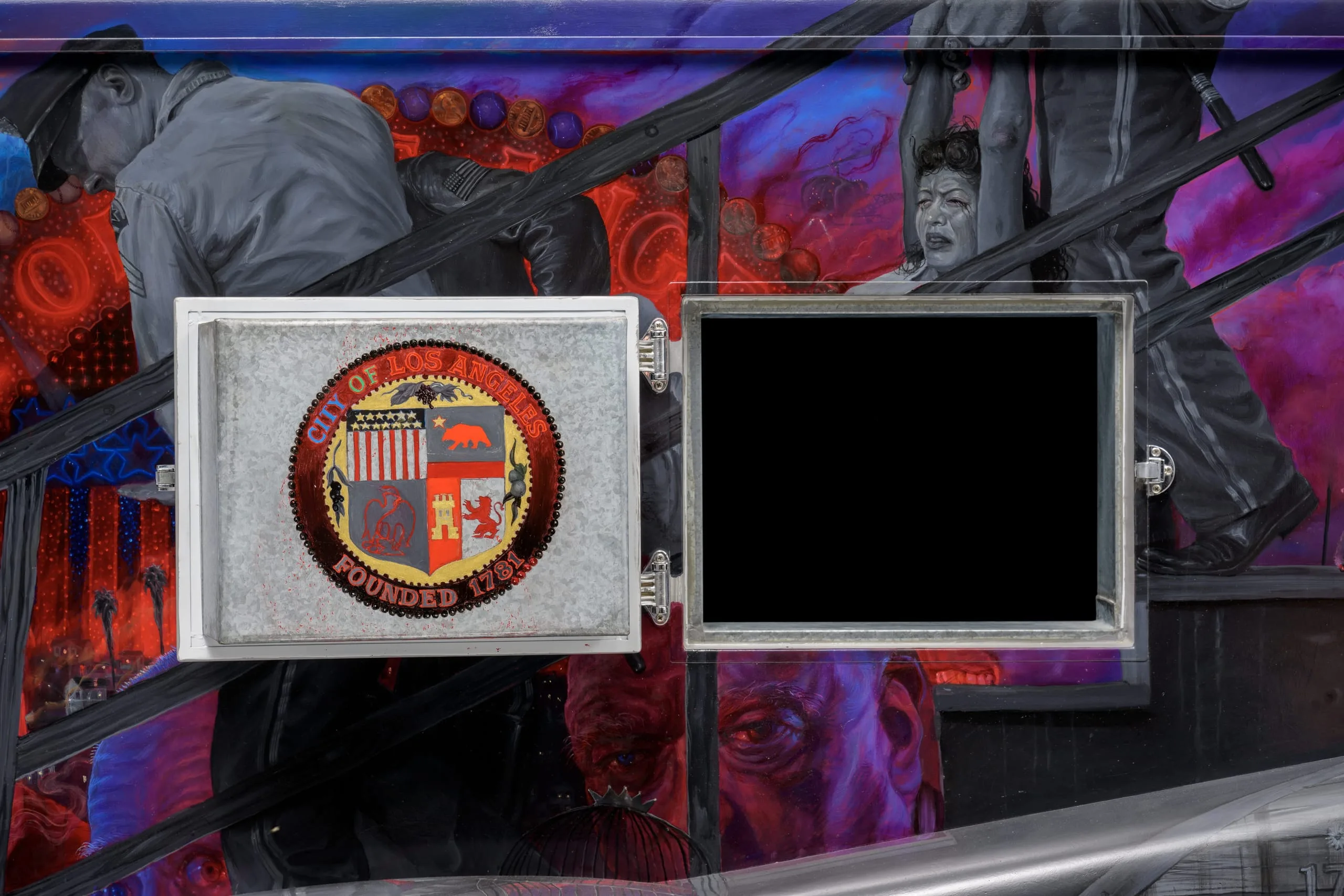
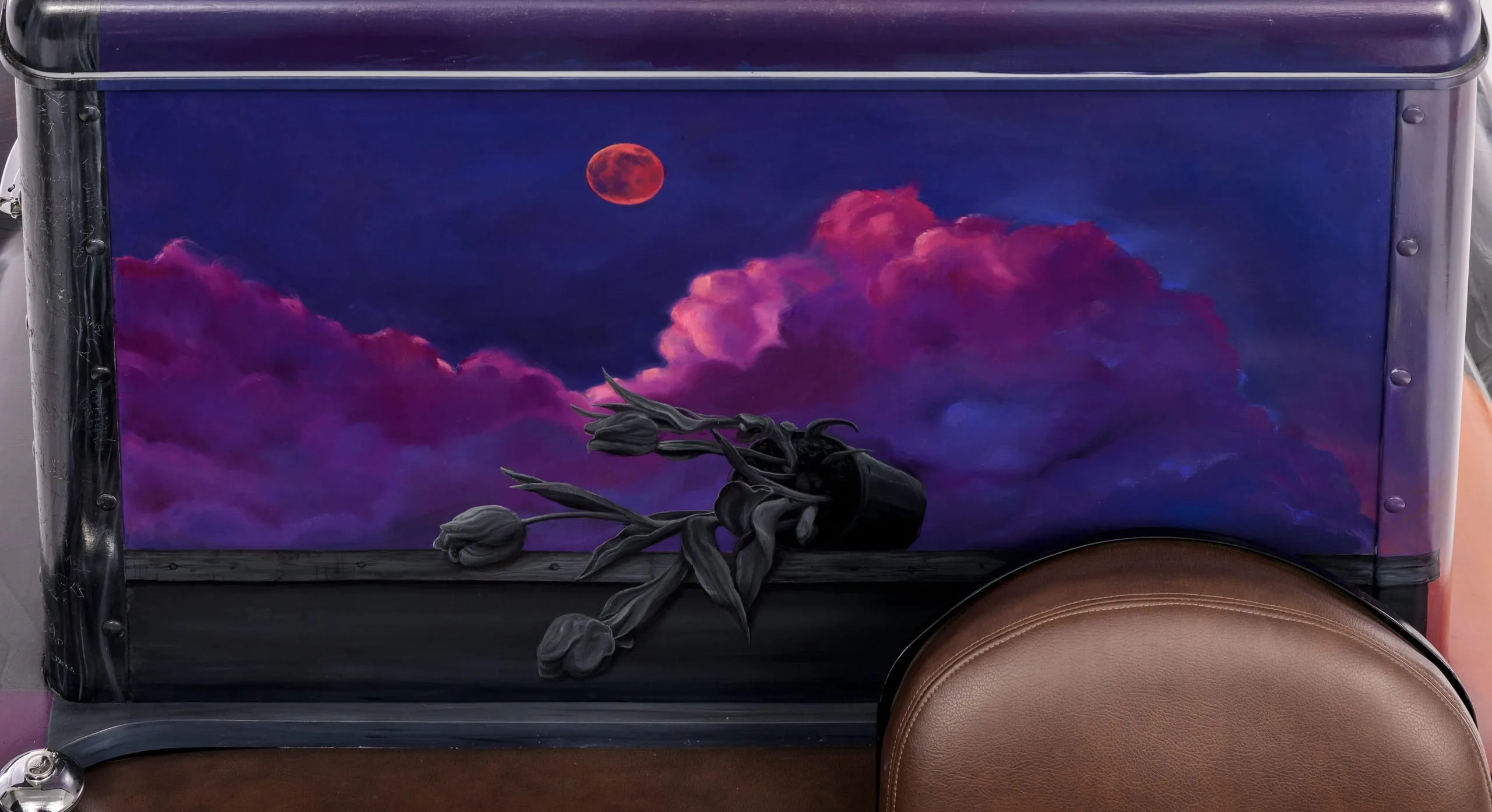
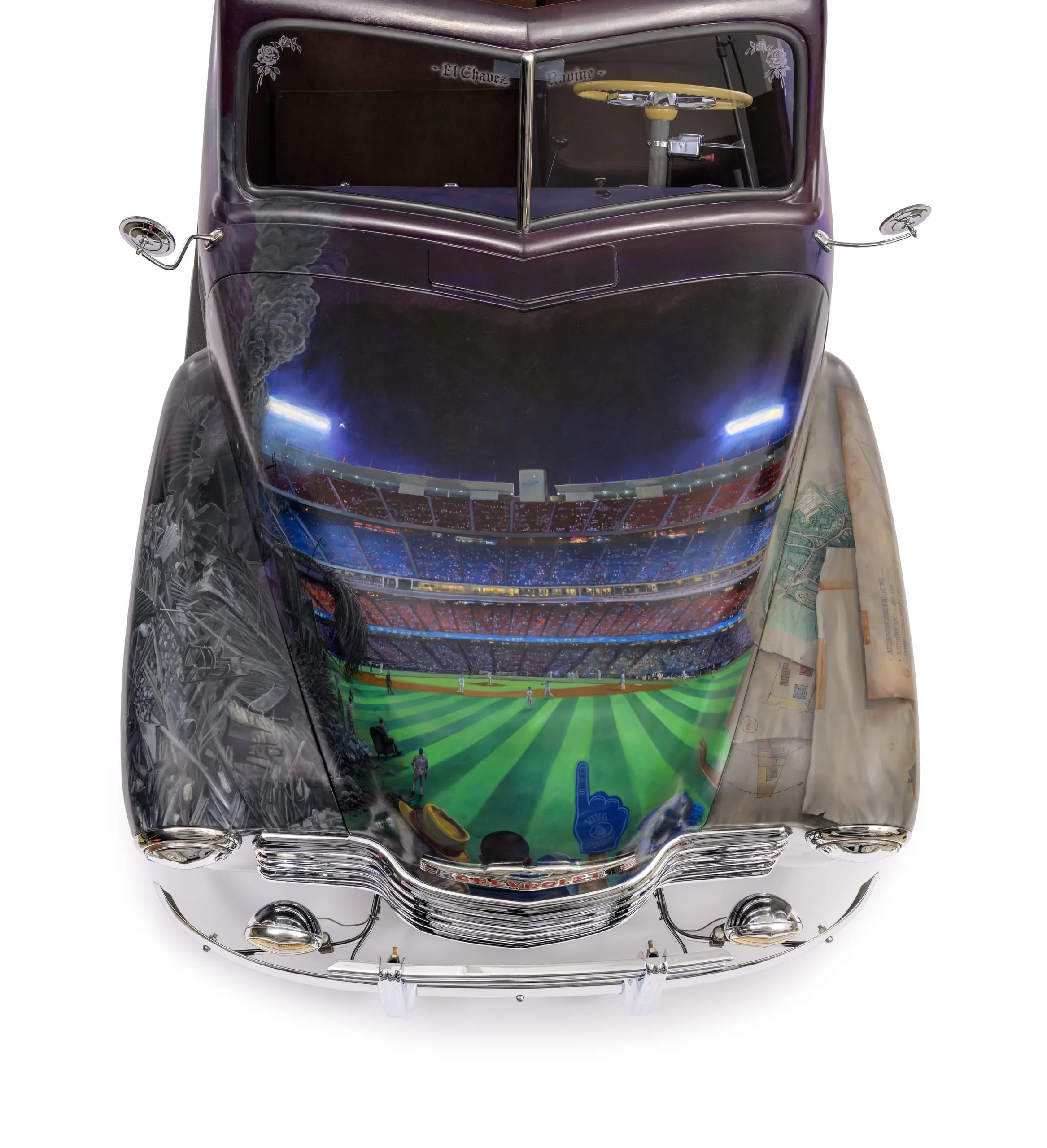
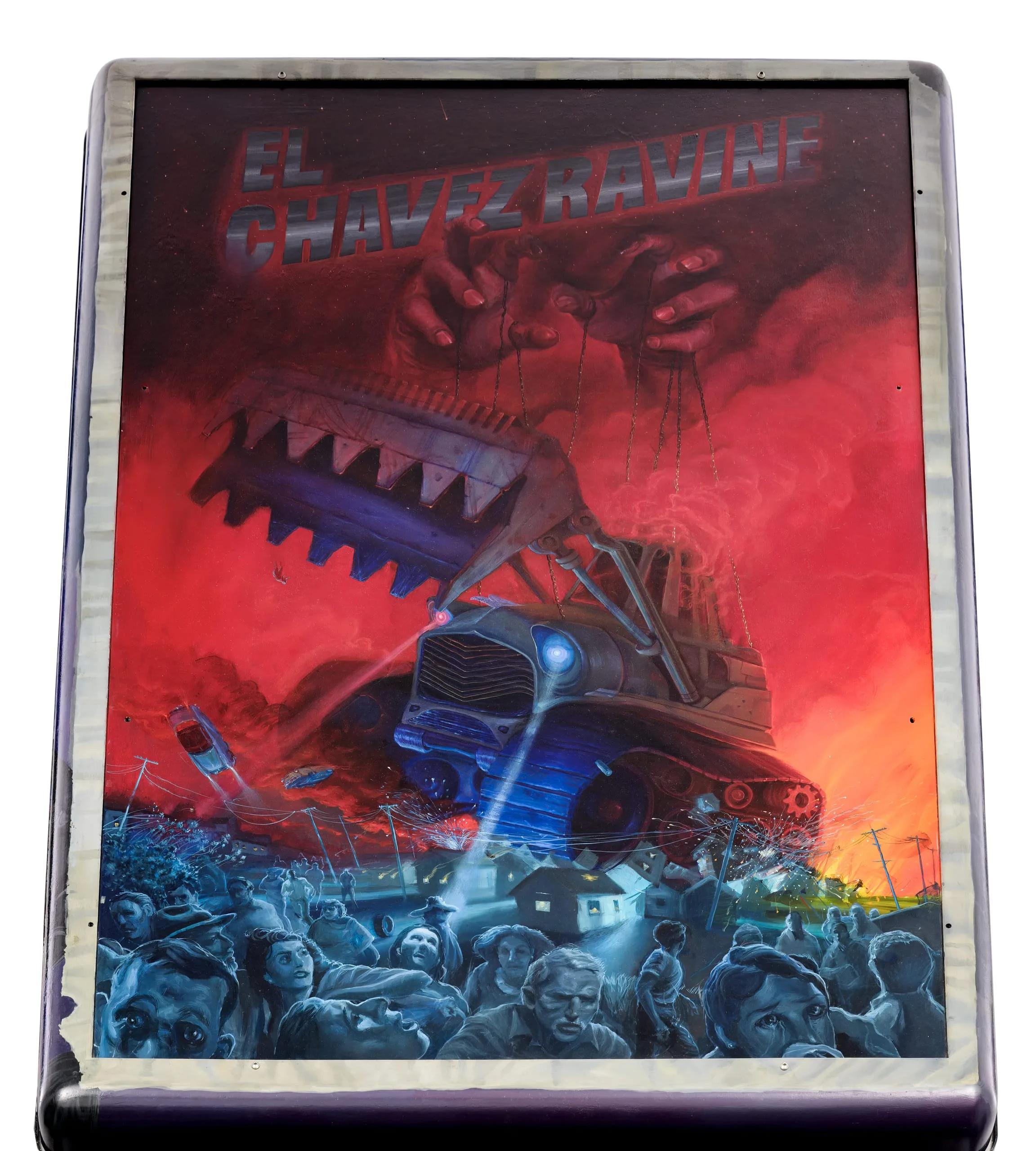
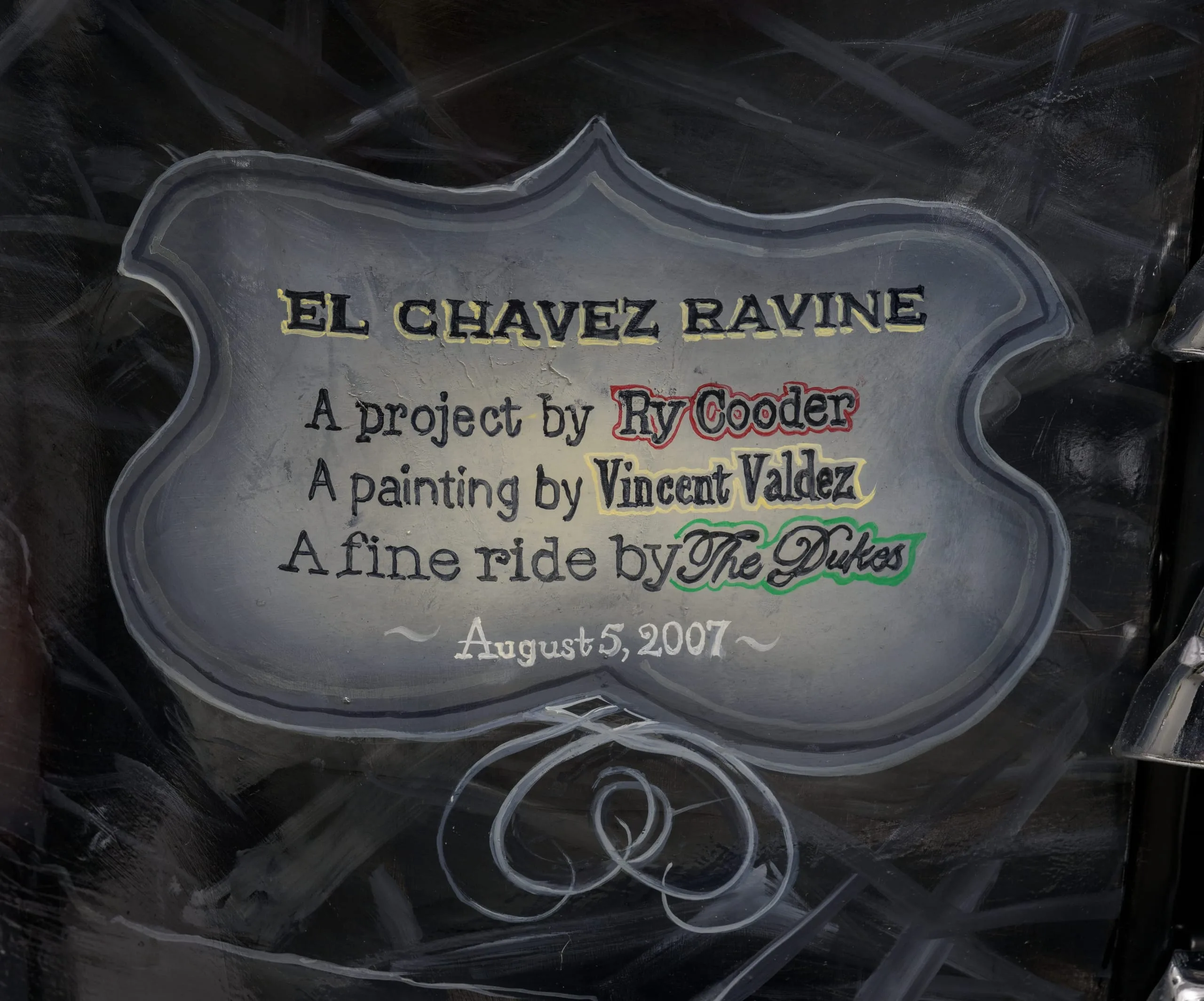
Vincent Valdez started painting in his teenage years as an apprentice to muralist Alex Rubio. He established his reputation as an astute commentator on U.S. history, especially as related to Mexican American communities, with his painting Kill The Pachuco Bastard! (2000), a frenetic and color-saturated rendering of the 1943 Zoot Suit Riots. In 2004, musician Ry Cooder invited Valdez to make a pictorial companion piece to a concept album devoted to Chavez Ravine, a once-thriving Los Angeles neighborhood that was demolished in the late 1950s to make way for Dodger Stadium. Cooder provided the artist with a studio space in Boyle Heights and, to use as a support for the painting, an automobile patterned after a Good Humor ice cream truck, customized by the Dukes Car Club. Valdez drew inspiration from car painters as well as muralists like Gilbert “Magu” Luján and Judy Baca, whose epic collaborative Great Wall of Los Angeles includes a section titled “The Division of the Barrios and Chavez Ravine.” In her profile of Valdez, Los Angeles Times journalist Lynell George described the narrative that unfolds across the vehicle: “This day in the life of a neighborhood, a time-tripping panorama spanning 1949 to 1959, looks almost like an intricate tattoo, but in the glowing, concentrated hues of a Los Angeles sky in summer—blood orange, violets, lipstick reds—all of it done in oil paints on metal applied meticulously by brush, painted and repainted, layer upon layer.”
Valdez excavates forgotten histories. Here, Dodgers president Walter O’Malley and former LAPD chief William H. Parker preside over the violence of forcible eviction and displacement. As an intervention in the ongoing erasure of L.A.’s working-class history, El Chavez Ravine insists that we remember the graveyard of homes and families on which the stadium was built.
Rita Gonzalez and Dhyandra Lawson
2023