LACMA

ShopMembershipMyLACMATickets
LACMA
Los Angeles County Museum of Art
5905 Wilshire Blvd.
Los Angeles, CA 90036
info@lacma.org
(323) 857-6000
Sign up to receive emails
Subscribe
© Museum Associates 2025

Museum Hours

Monday

11 am–6 pm

Tuesday

11 am–6 pm

Wednesday

Closed

Thursday

11 am–6 pm

Friday

11 am–8 pm

Saturday

10 am–7 pm

Sunday

10 am–7 pm


  • About LACMA
  • Jobs
  • Building LACMA
  • Host An Event
  • Unframed
  • Press
  • FAQs
  • Log in to MyLACMA
  • Privacy Policy
© Museum Associates 2025
Collections

John Singleton Copley
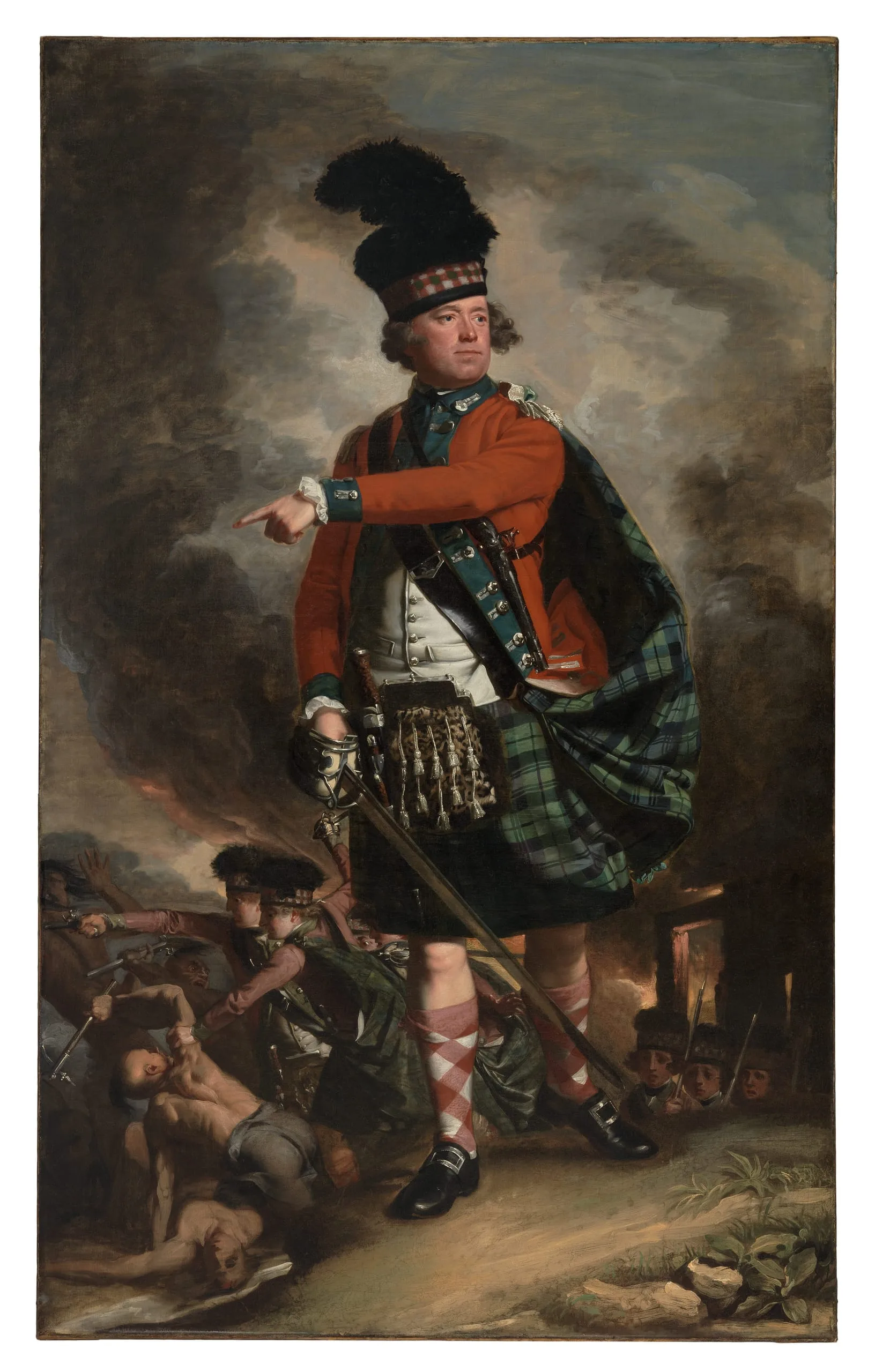
Portrait of Hugh Montgomerie, Later Twelfth Earl of Eglinton1780

Not on view
Full-length oil portrait of a man in 18th-century Scottish Highland military uniform — red coat, tartan plaid and kilt, feathered bonnet — pointing left against a stormy battle backdrop
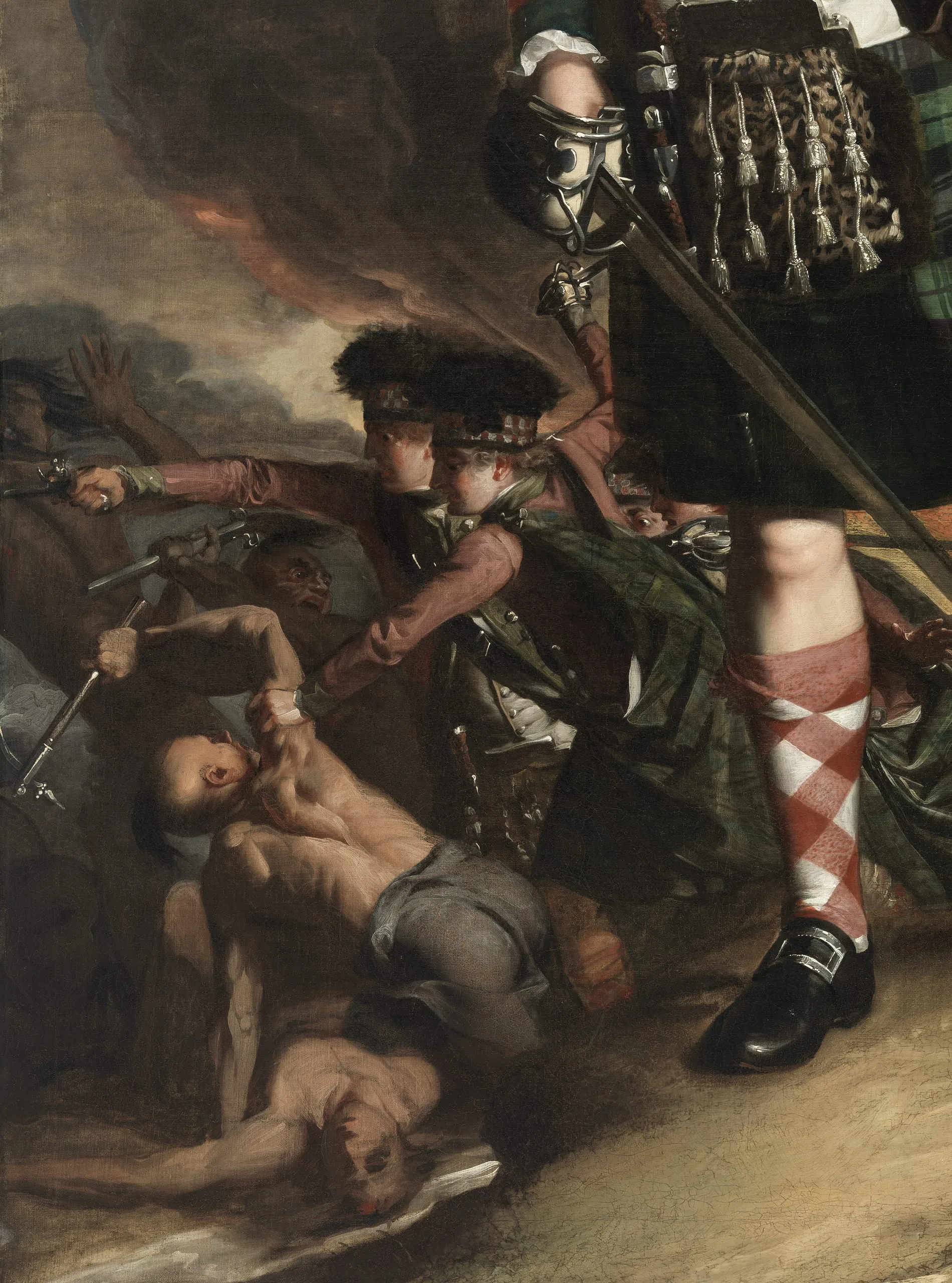
Oil painting detail of a battle scene with dramatic dark smoke; soldiers in Highland military dress with red-and-white tartan hose engage fallen figures on the ground, rendered with painterly brushwork.
Artist or Maker
John Singleton Copley
United States, 1738-1815
Title
Portrait of Hugh Montgomerie, Later Twelfth Earl of Eglinton
Place Made
United States
Date Made
1780
Medium
Oil on canvas
Dimensions
Canvas: 94 1/2 × 59 3/4 in. (240.03 × 151.77 cm) Frame: 106 1/2 × 69 1/2 × 6 in. (270.51 × 176.53 × 15.24 cm)
Credit Line
Gift of Andrew Norman Foundation and Museum Acquisition Fund
Accession Number
M.68.74
Classification
Paintings
Collecting Area
American Art
Curatorial Notes

In 1780, at the time this portrait was painted, it was forbidden to wear Scottish tartan in England unless one was serving in the British military. Scotsman Hugh Montgomerie is portrayed here commanding a British battalion, wearing traditional attire; his clan tartan reflects at once his Scottish heritage and the recent military expansion of the British Empire into the Scottish Isles following the 1746 Battle of Culloden. Montgomerie stands in the victorious classical pose of the Apollo Belvedere above a group of fallen Tsalagi (Cherokee) amid an ambush. However, the portrait does not tell the truth: Although Montgomerie fought for the British in the colonies, he did not take part in the battle depicted here, which occurred in 1760, twenty years prior to the execution of this painting. More significantly, the Cherokee did not capitulate in this battle as Copley’s painting suggests. A few weeks after Britain’s attack, the Cherokee prevailed and European troops retreated from the area.

Such images of conquest inevitably contribute to the erasure of those portrayed as the defeated, generating an assumption that once the depicted battle was lost, these groups or peoples disappeared. But a single flattering portrait–cum–history painting does not constitute abiding truth—the British went on to lose the American Revolutionary War, the Cherokee Nation would become the largest tribe in the territory known as the United States, and, as of this writing (2021), a significant political movement for independence from the United Kingdom persists in Scotland.

Selected Bibliography
  • Esguerra, Clarissa, and Michaela Hansen. Lee Alexander McQueen: Mind, Mythos, Muse. Los Angeles: Los Angeles County Museum of Art, 2022.
  • Esguerra, Clarissa M., Michaela Hansen, Katie Somerville, and Danielle Whitfield, editors. Alexander McQueen: Mind, Mythos, Muse. Melbourne: National Gallery of Victoria; Los Angeles: Los Angeles County Museum of Art, 2022.