- Title
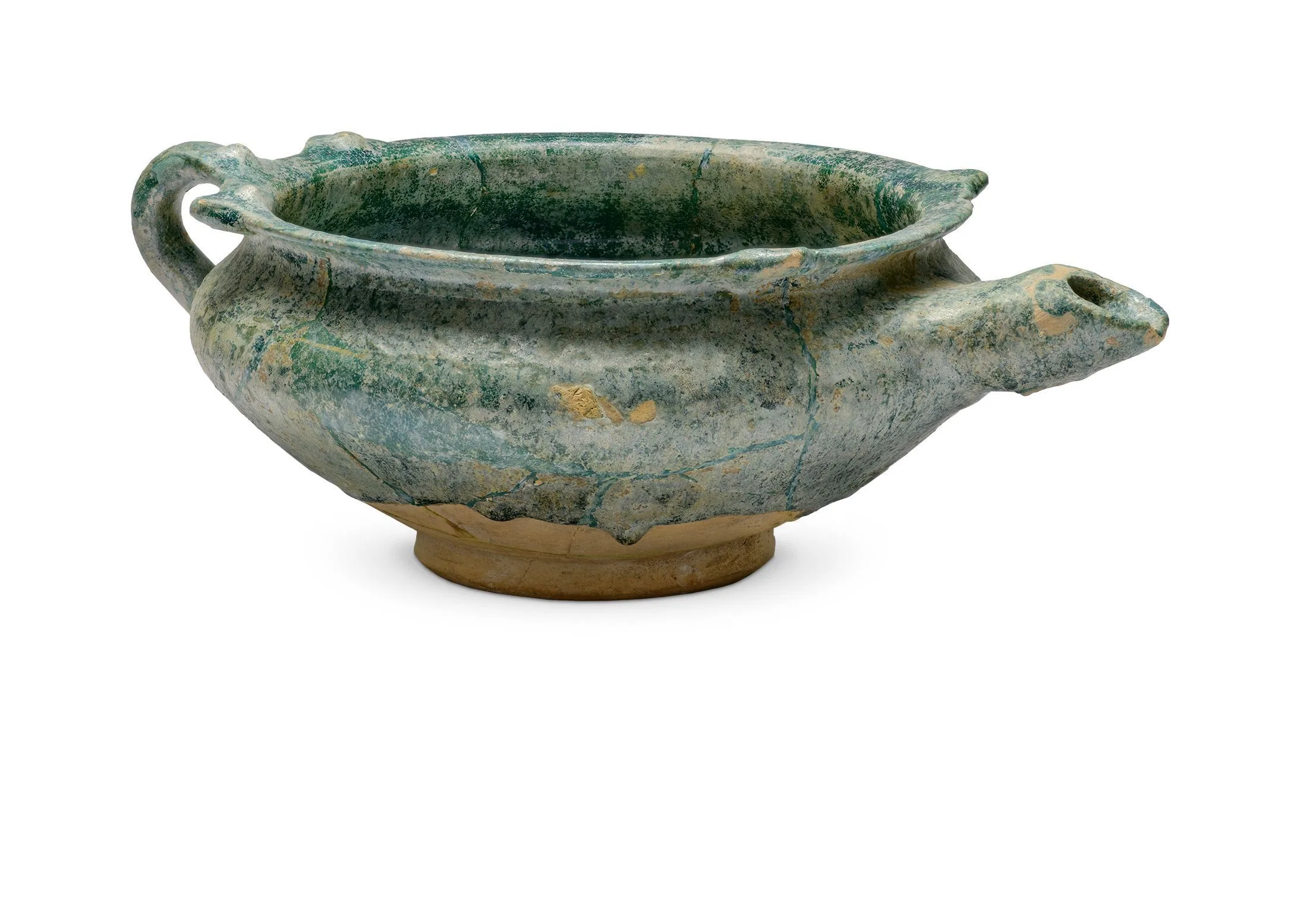
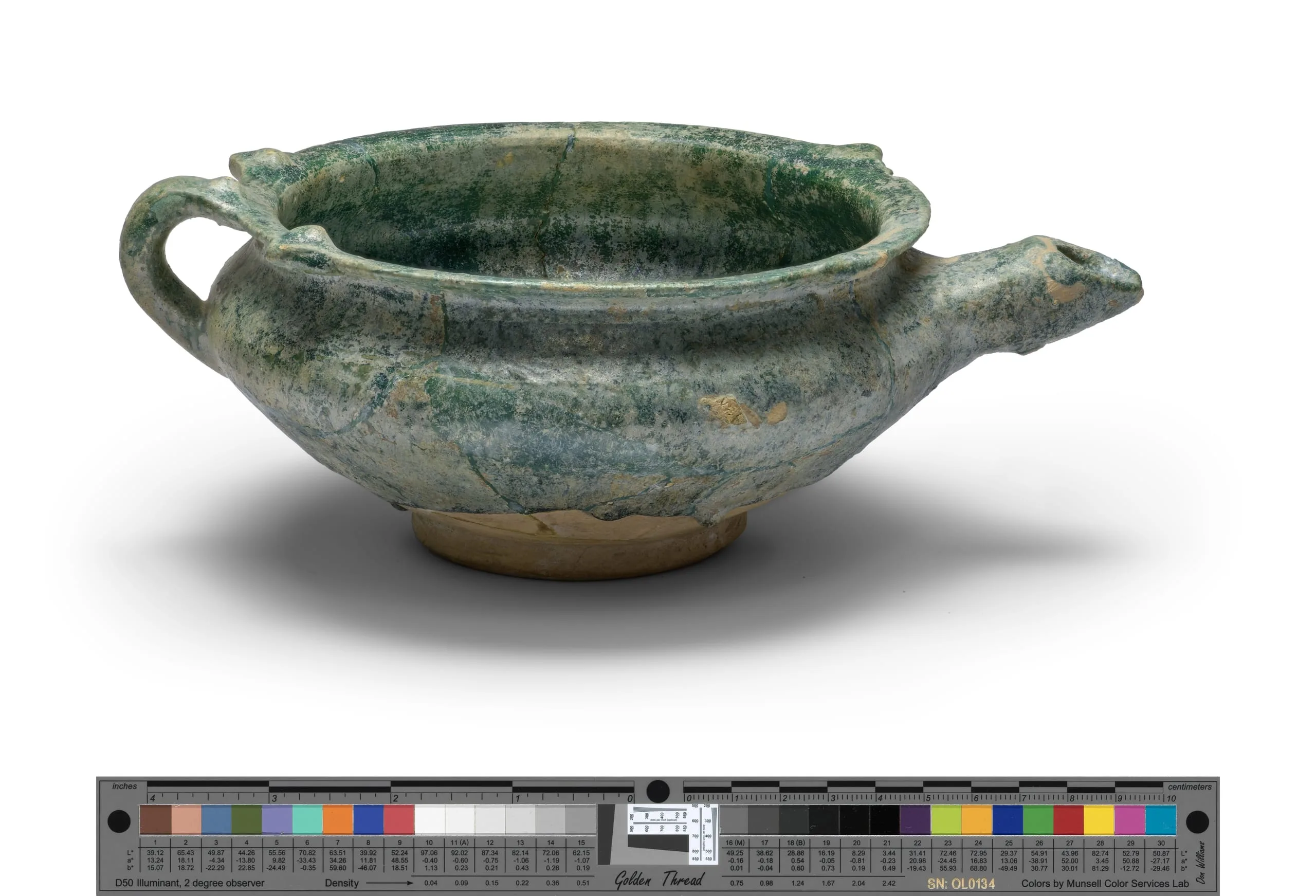
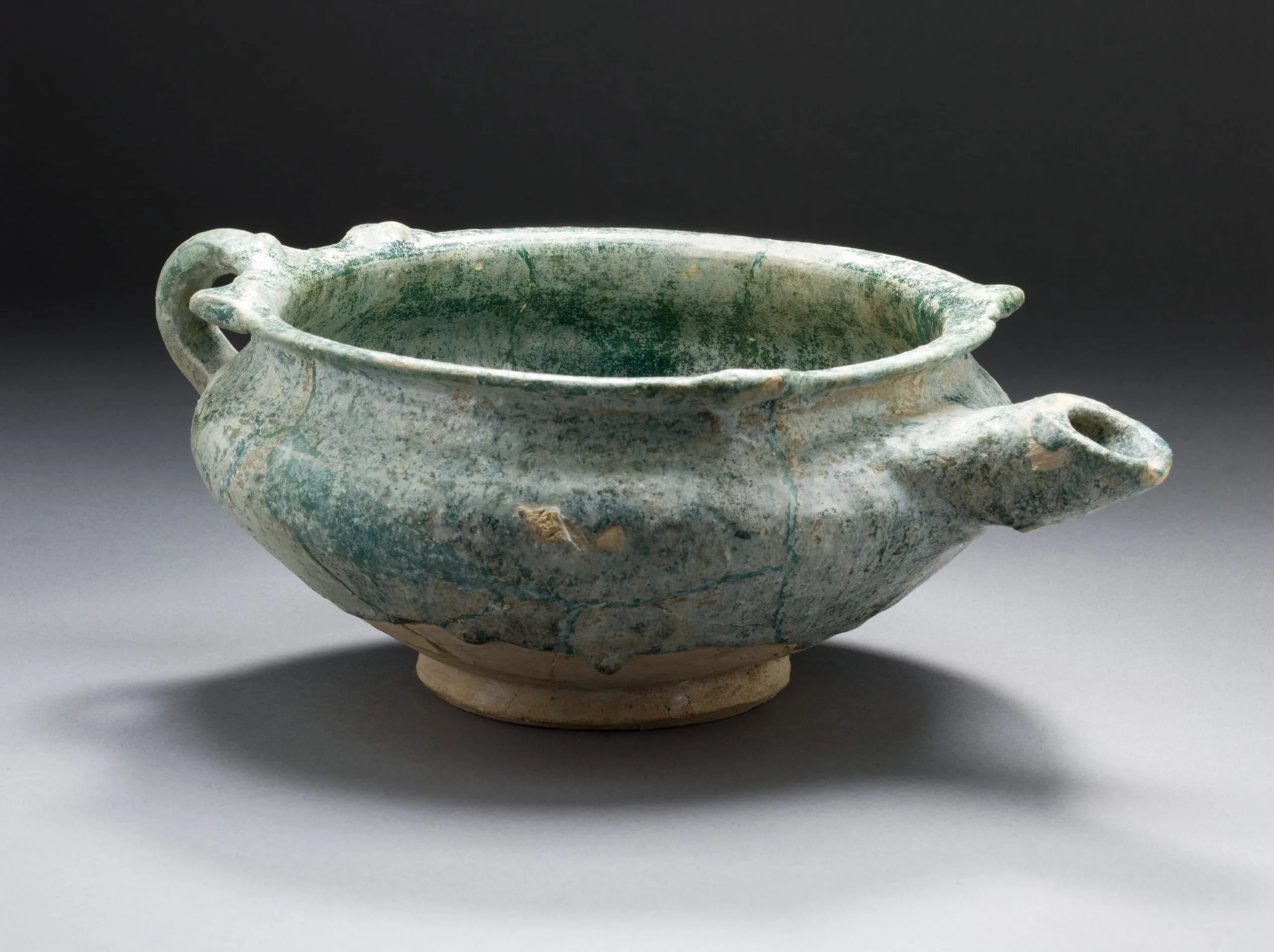
- Spouted Bowl
- Date Made
- Sasanian period (225-650 A.D.)
- Medium
- Earthenware, glazed
- Dimensions
- Height: 3 3/4 (9.53 cm); Diameter: 7 1/2 in. (19.05 cm)
- Accession Number
- M.68.37.2
- Curatorial Notes
Utilitarian but attractive household items such as this spouted bowl help to fill in the picture of fine dining in Sasanian Iran (224−651), for which relatively little information survives by comparison with the succeeding Islamic era. Indeed, most of the relevant textual sources belong to the first centuries of Muslim rule. Foodstuffs were largely seasonal, based on what was grown or hunted, and regional, in terms of imports from adjacent lands. Local and imported herbs and spices were used for seasoning. Wine making has a long history in Iran, and drinking wine was a key component of a Sasanian feast. This glazed ceramic vessel was not likely used at the table. Rather, since it was clearly intended for pouring, perhaps it was meant for decanting wine into a bottle made of a more precious material (see AC1992.152.82).
2024
- Selected Bibliography
- Komaroff, Linda, editor. Dining with the Sultan: The Fine Art of Feasting. Los Angeles: Los Angeles County Museum of Art; New York: DelMonico Books, 2023.