Like the ancient Egyptians and the Chinese, pre-Columbian peoples interred their dead with furnishings for the afterlife. In coastal Peru's dry climate ancient textiles have survived in remarkable numbers, emerging from their long darkness with astonishing freshness of color. Some date to two thousand years before Spanish contact.
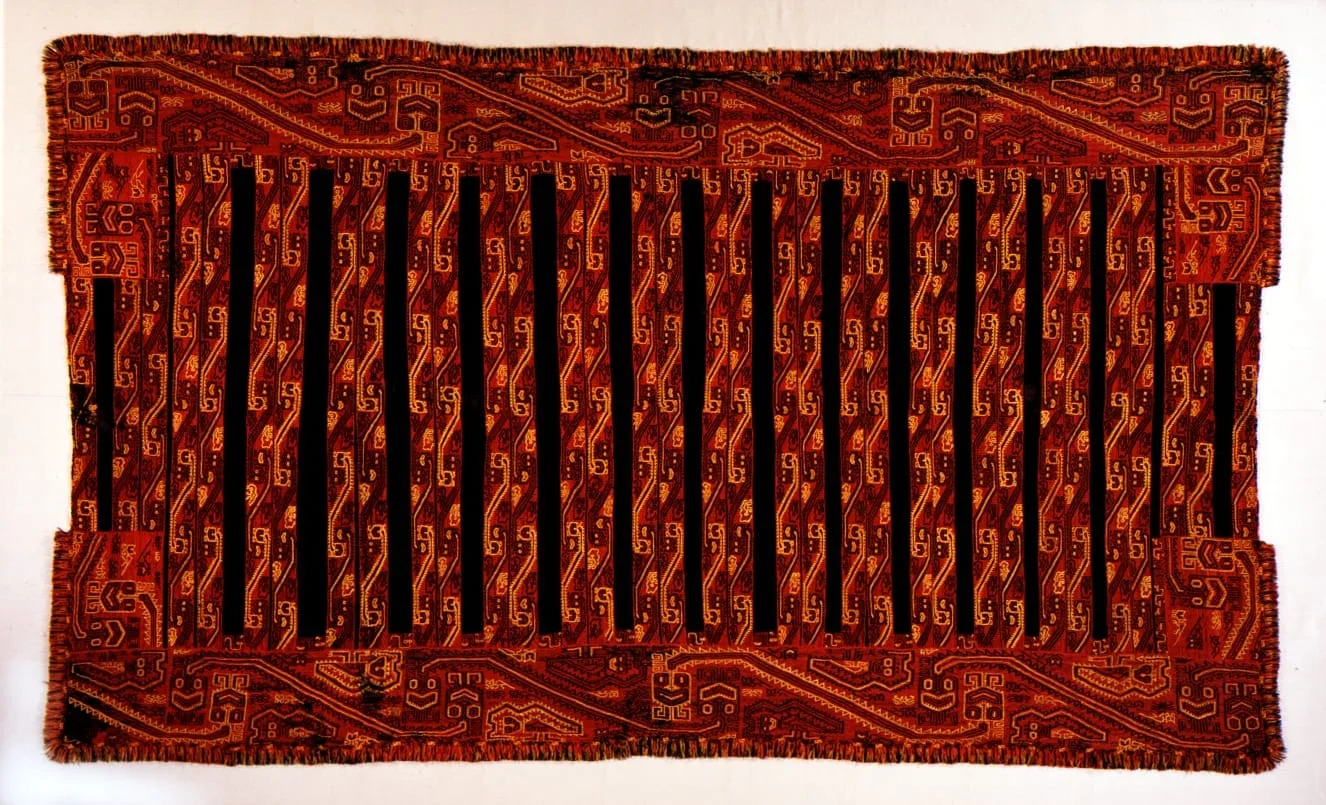
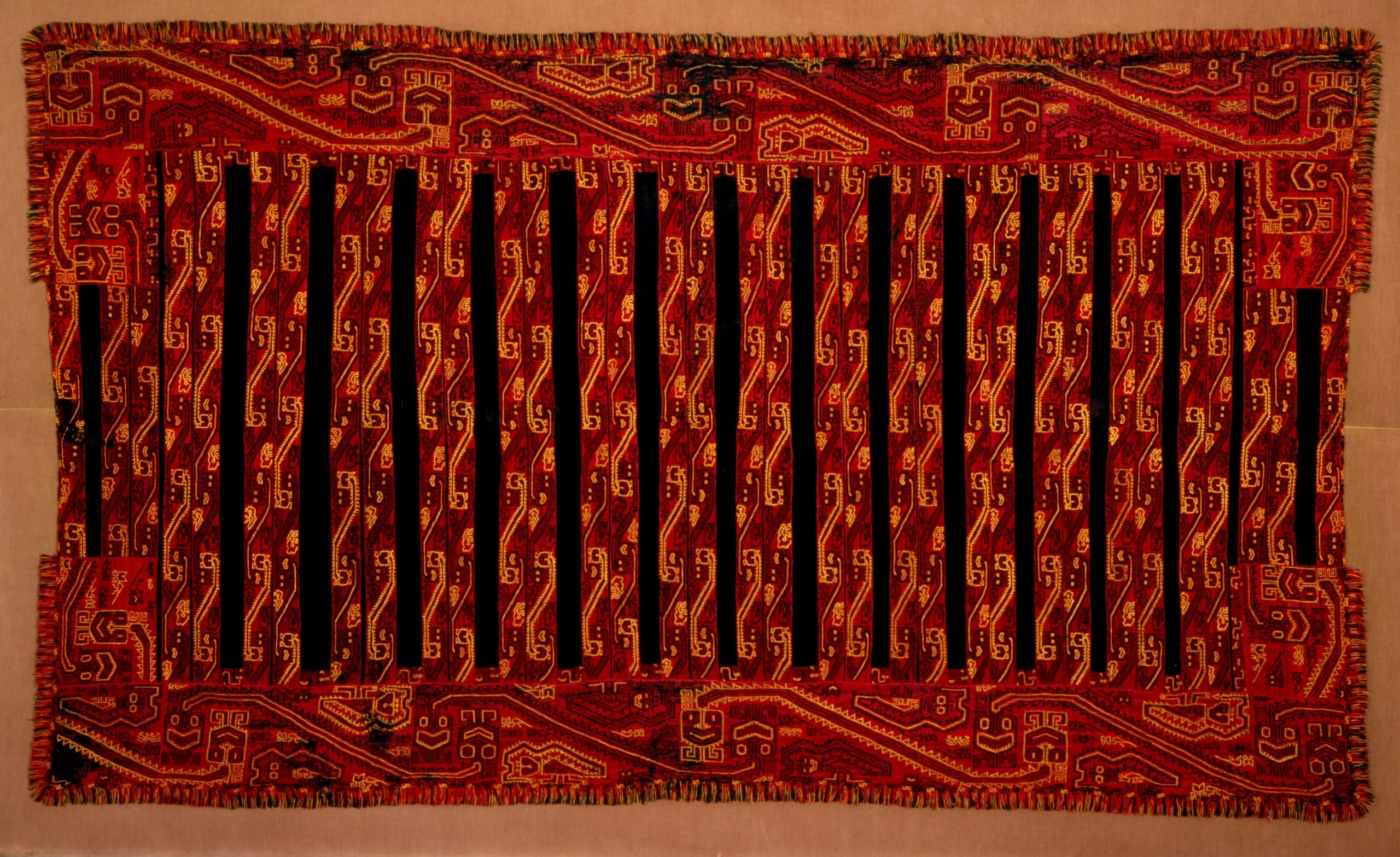
Mantles, turbans, ponchos, shirts, and belts were wrapped in as many as four layers around the body to form a conical mummy bundle; a single burial might include as many as twenty pieces of clothing. This mantle, a precious early example of the weaver's craft, was found in the necropolis at Paracas on the south coast of Peru. Its vivid coloration is typical, as is its composition of native alpaca wool woven on cotton warps.
Weaving in Peru goes back to about 2000 b.c. and displays considerable sophistication and technical expertise. This mantle is composed of two longitudinal pieces and the borders, which have been sewn together and then embroidered with stitches, such as stem and buttonhole, still used today in hand sewing.
The design includes motifs typical of Paracas textiles: reversed interlocking figures, often with frontal heads, and composite animals. Here the double-headed serpent of the borders has a cat's head; another feline creature provides a secondary motif. These catlike creatures are probably jaguars, shamanic animals of ancient mythological lineage and a frequently used motif in pre-Columbian textiles.