- Title
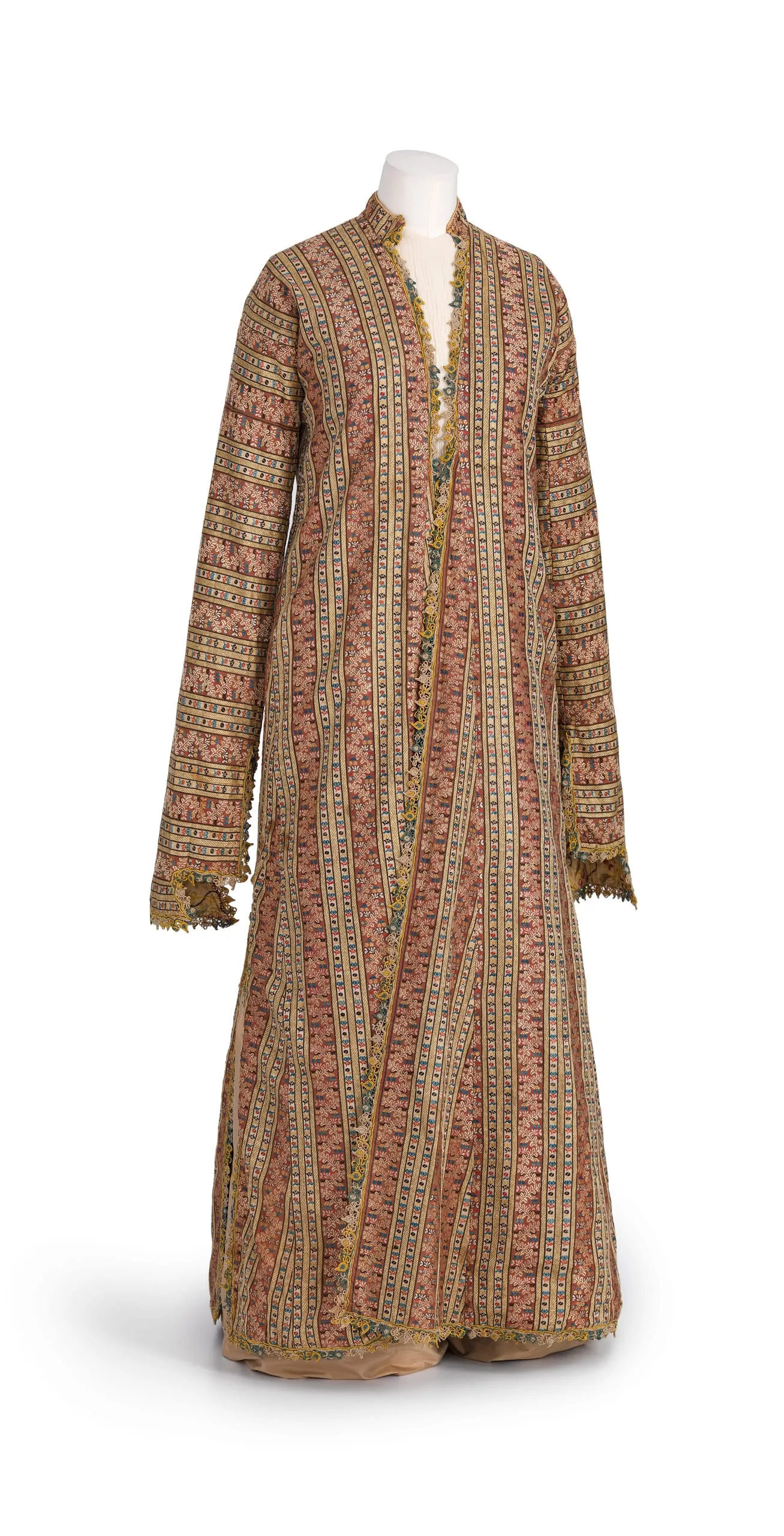
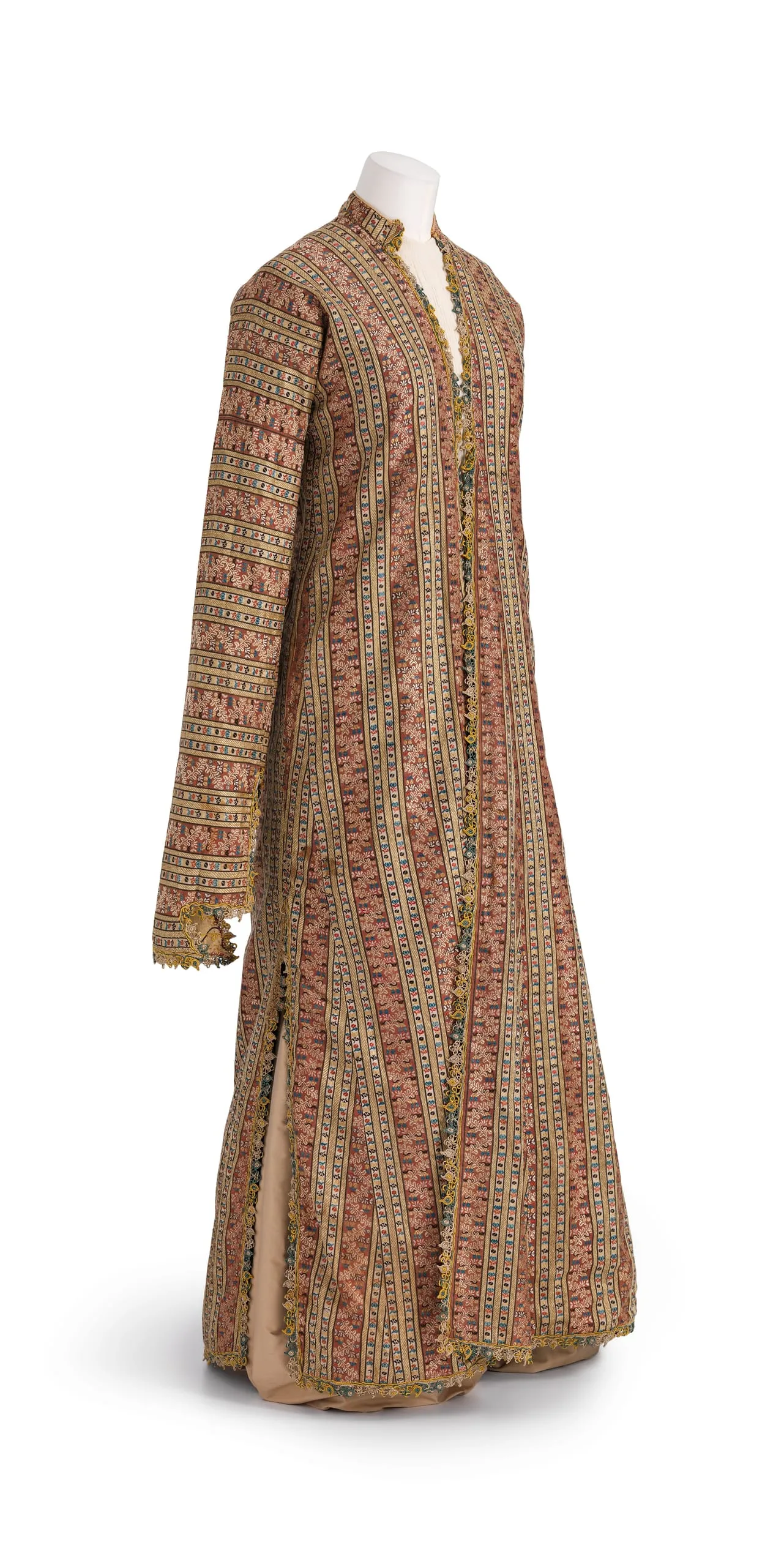
- Woman's Robe (Üçetek Entari)
- Date Made
- mid-19th century
- Medium
- Silk plain weave with silk supplementary-weft patterning and silk warp patterning, silk passementerie, and cotton plain weave with silk embroidery
- Dimensions
- Center back length: 50 in. (127 cm)
- Accession Number
- M.2019.225
- Curatorial Notes
The üçetek entari (“three-skirt robe”) is a long-sleeved, ankle-length Ottoman garment. It is generally constructed with a front opening and two high-cut side slits that divide the skirt into three sections. Although widely associated with Ottoman dress, the entari derives from Central Asian clothing made to accommodate horseback riding. The style persisted as a staple component of Turkish men’s and women’s attire into the late nineteenth century, typically worn over a chemise and full trousers and accessorized with a belt or sash.
This example features a striped silk textile woven with stylized multicolored foliate motifs within alternating dark pink and pale yellow stripes. Patterned stripes have been fashionable in Islamic textiles since the thirteenth century, at first with Arabic inscriptions and later with figurative motifs. The robe’s edges are finished with a delicate silk cord trim that echoes the colors and small foliate shapes of the patterned silk textile. The sleeves, which extend beyond the wearer’s hands, are cut in the Ottoman style, with a long slit and an angular hem, revealing a cotton lining decorated with multicolored tambour-embroidered flowering vines. These sleeve linings were probably repurposed from a textile dating to the second half of the eighteenth century. The reused cloth suggests a preciousness of textiles; although entari were shaped to fit the shoulders and subtly flare at the skirt, they were generally constructed with both rectangular and triangular panels, which resulted in very little wasted fabric.
Clarissa M. Esguerra
2024