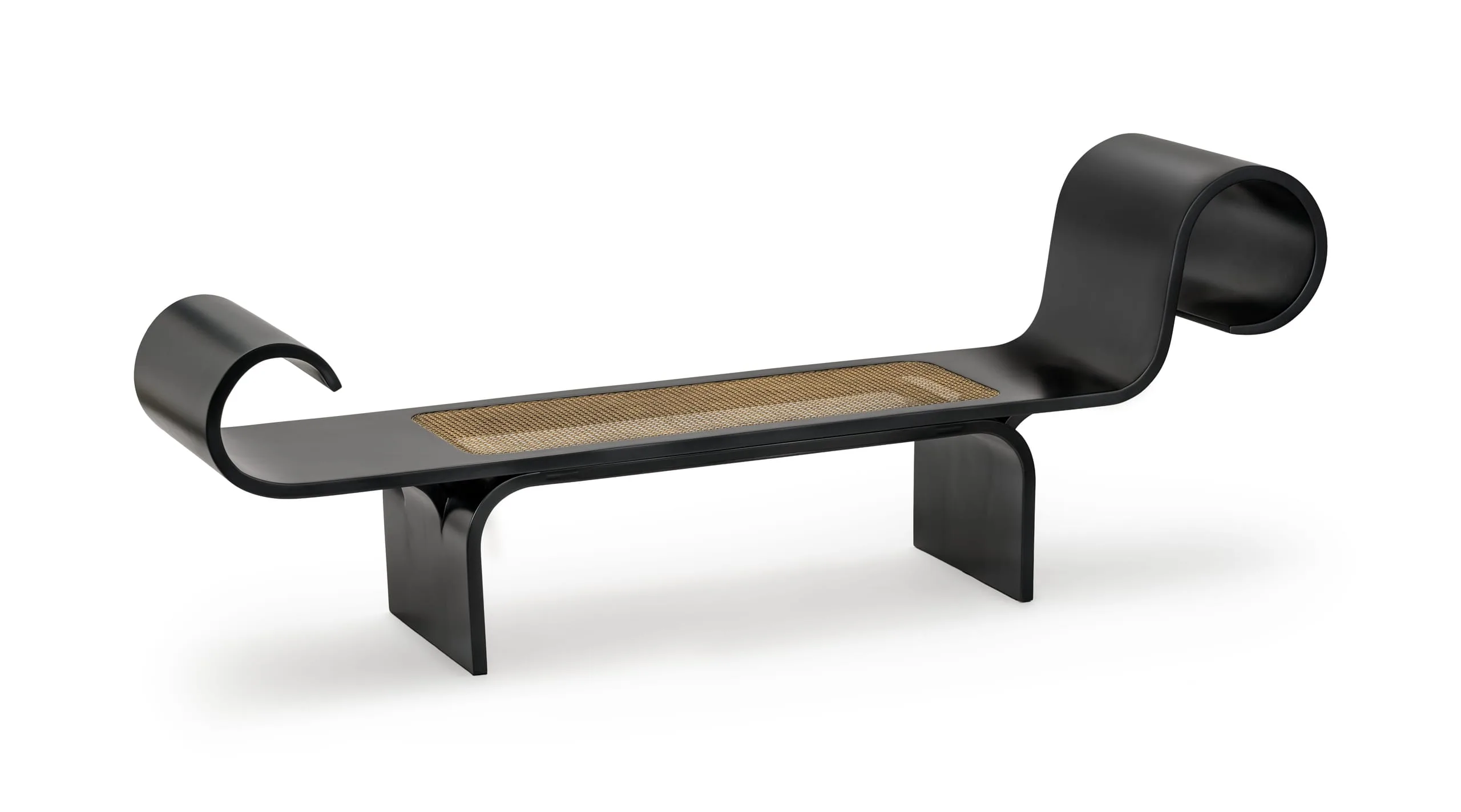
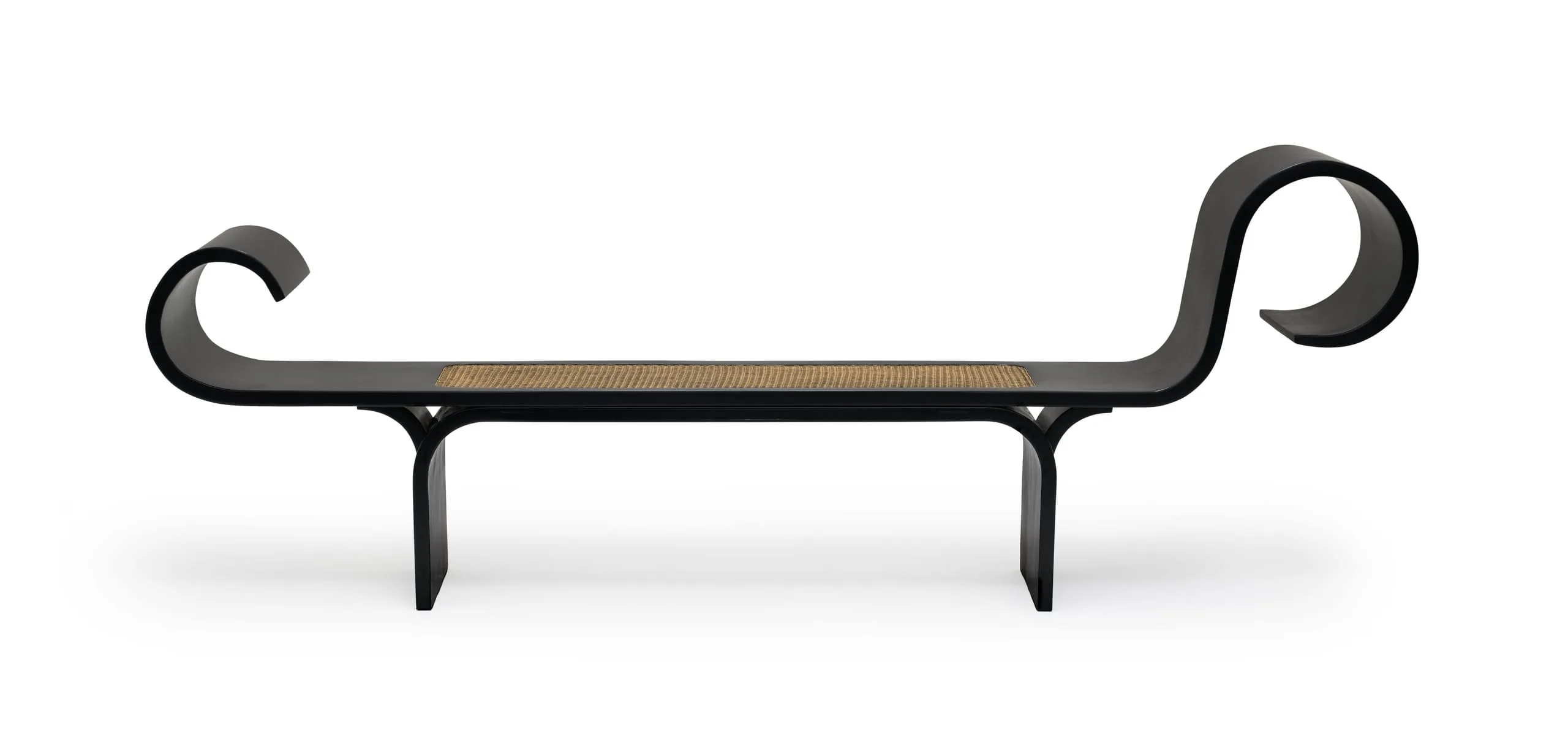
The Marquesa Bench is an iconic example of Oscar Niemeyer’s furniture design. By the 1940s, many artists in Latin America began to systematically adapt local materials to new design prototypes. The use of plywood and straw, combined with the delicate scrolled ends, endows the bench with a striking sculptural yet sensuous quality. “I am not attracted to straight angles or to the straight line, hard and inflexible, created by man,” Niemeyer explained of his preference for organic forms. “I am attracted to free-flowing, sensual curves. The curves that I find in the mountains of my country, in the sinuousness of its rivers, in the waves of the ocean, and the body of the beloved woman. Curves make up the entire universe.” The bench’s sinuous lines also recall the exuberant Baroque architecture and sculpture of Aleijadinho (1738–1814; see http://pastexhibitions.guggenheim.org/brazil/aleijadinho_01.html) in Ouro Preto, Minas Gerais, a place that vividly captured Niemeyer’s imagination.
Early in his career, Niemeyer worked as a draftsman for Le Corbusier (1887–1965) in Rio de Janeiro. His most emblematic project of the 1950s was Brasília, which represented the ultimate rebuttal of functionalism in favor of a more ductile and organic approach to architecture. Brazil’s military coup of 1964 brought the country to its knees, ushering in a period of increased repression, violence, and instability. In 1967, Niemeyer—a vocal member of the Brazilian communist party—left for Paris, where he lived for the next twelve years. It was in the French capital that he began designing furniture in 1971 in collaboration with his daughter Anna Maria Niemeyer. Designed in 1974, the Marquesa Bench was put into production in 1978 by the Japanese-owned manufacturer Tendo Brasileira in São Paulo. After Tendo closed in the late 1980s, Niemeyer’s prototypes remained in production by the company Móveis Teperman (also in São Paulo), attesting to the wide appeal of the model.
Ilona Katzew
2024