- Title
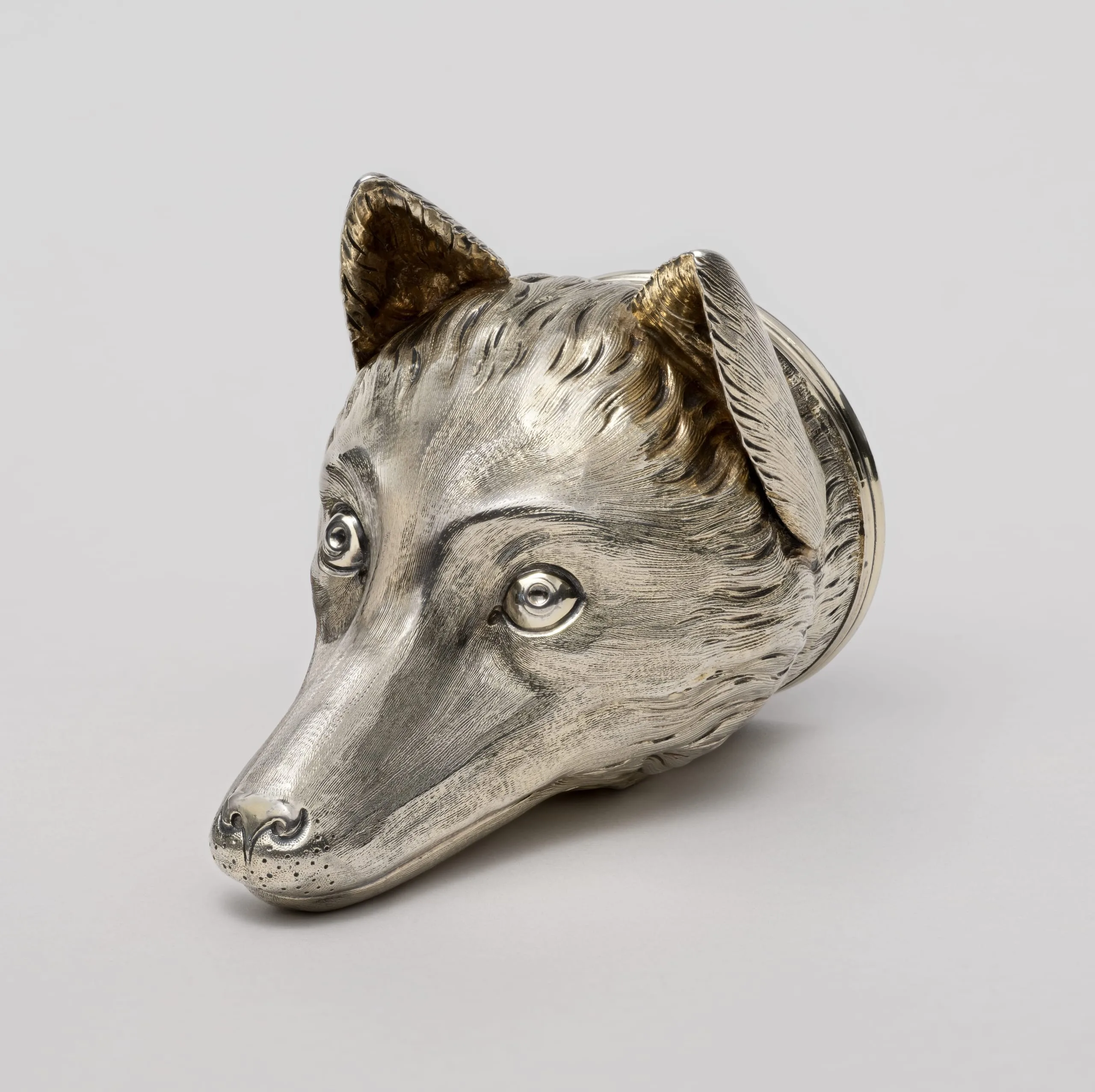
- Fox Head Stirrup Cup
- Date Made
- 1793-1794
- Medium
- Silver with gilding
- Dimensions
- 4 × 3 1/2 × 5 in. (10.16 × 8.89 × 12.7 cm)
- Accession Number
- M.2019.206
- Curatorial Notes
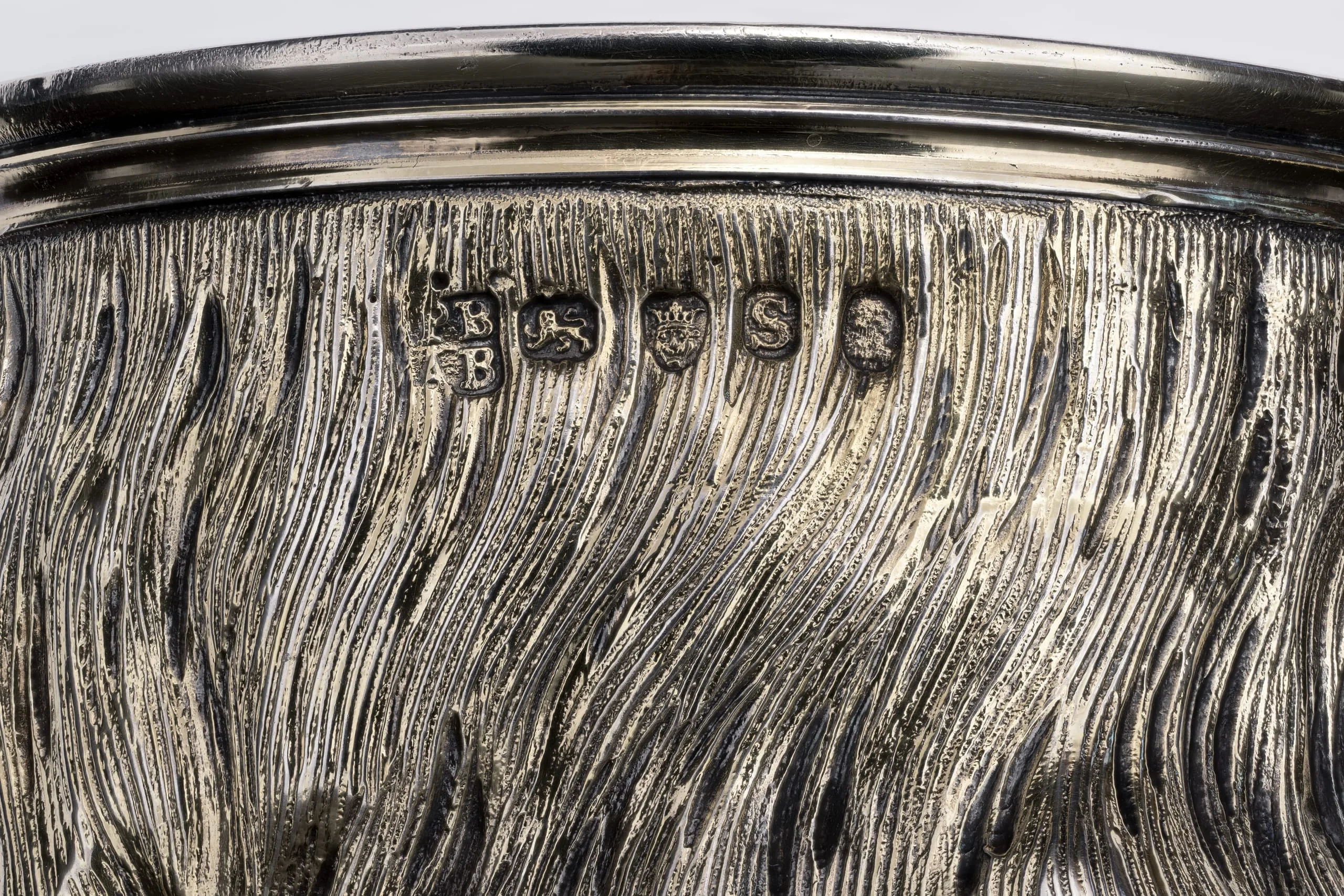
A stirrup cup refers to a small alcoholic farewell drink offered to horse riders "in the stirrups," as well as the vessel in which this libation was served. Stirrup cups in the form of a fox’s heads are a distinctly British type developed in the second half of the eighteenth century for use in the elite sport of hunting foxes on horseback. The prevailing Neoclassical design style was inspired by excavations of the ancient Italian sites of Herculaneum and Pompeii that had been buried by the volcanic eruption of Mount Vesuvius in 79 CE. Catering to their wealthy clients’ antiquarian tastes, craftspeople studied ancient cups in the form of animal heads illustrated in catalogs of famous archaeological collections such as those belonging to the British ambassador to Naples, Sir William Hamilton (1730-1803). The particular design of this stirrup cup was produced by a silver workshop where women held prominent roles. Although married women in Britain could not own property until 1870, widows could, and the marking system established to guarantee the purity of precious metal documents their participation in the silver trade. Hallmarked for Peter and Ann Bateman (a brother- and widowed sister-in-law partnership), this cup was cast in a mold made when Ann’s widowed mother-in-law Hester Bateman (1709-1794) ran the firm, and demonstrates continuity across this multigenerational family business.
Rosie Mills, The Rosalinde and Arthur Gilbert Foundation Associate Curator, Decorative Arts and Design, 2019