LACMA

ShopMembershipMyLACMATickets
LACMA
Los Angeles County Museum of Art
5905 Wilshire Blvd.
Los Angeles, CA 90036
info@lacma.org
(323) 857-6000
Sign up to receive emails
Subscribe
© Museum Associates 2025

Museum Hours

Monday

11 am–6 pm

Tuesday

11 am–6 pm

Wednesday

Closed

Thursday

11 am–6 pm

Friday

11 am–8 pm

Saturday

10 am–7 pm

Sunday

10 am–7 pm


  • About LACMA
  • Jobs
  • Building LACMA
  • Host An Event
  • Unframed
  • Press
  • FAQs
  • Log in to MyLACMA
  • Privacy Policy
© Museum Associates 2025
Collections

Rania Matar
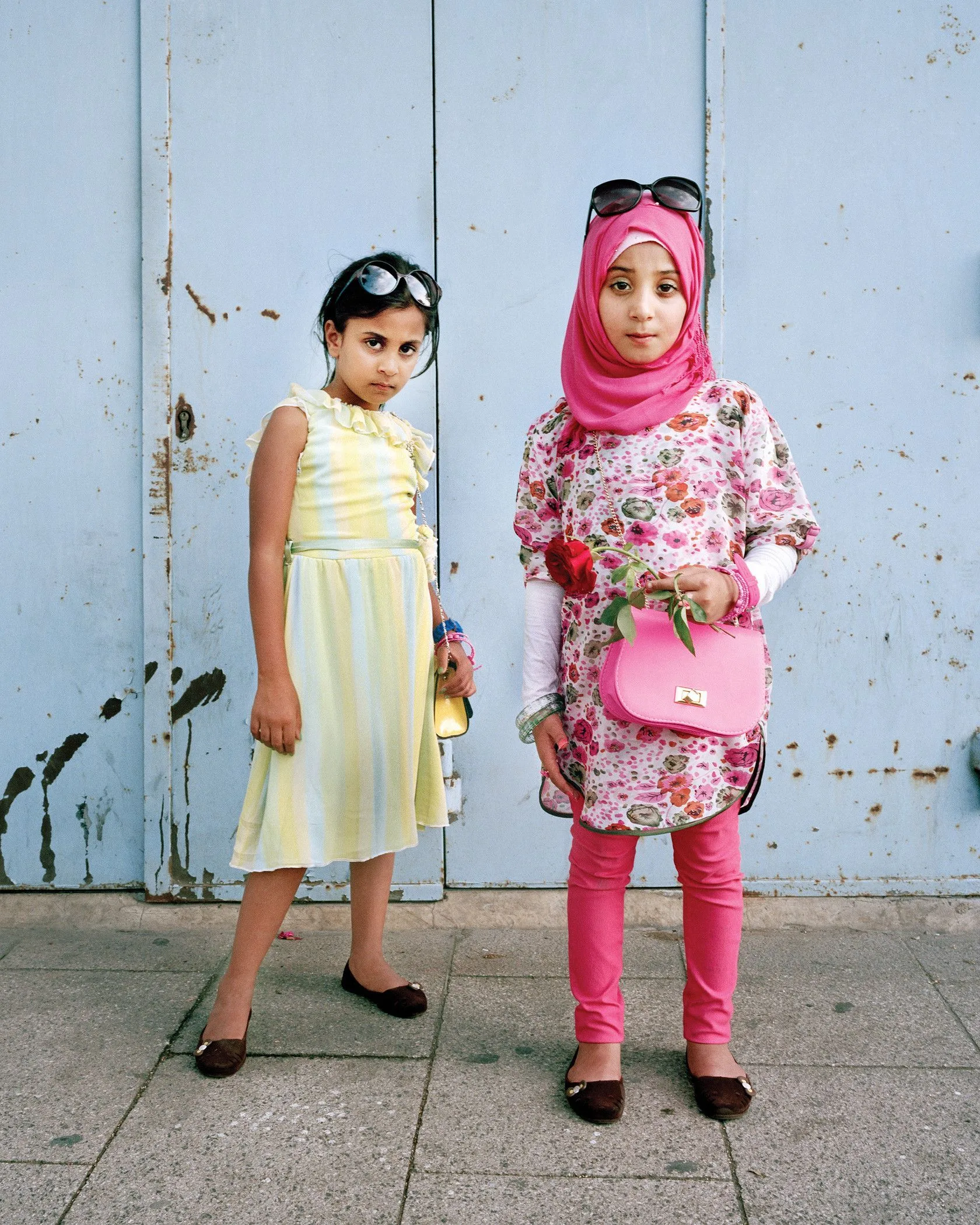
Darine 7 and Dania 82014

Not on view
Color photograph of two girls standing before a weathered pale blue metal wall — one in a yellow striped dress, one in a pink hijab and floral tunic holding a red rose
Artist or Maker
Rania Matar
Lebanon, born 1964, active Boston, Massachusetts
Title
Darine 7 and Dania 8
Date Made
2014
Medium
Archival pigment print
Dimensions
Image: 36 × 28 13/16 in. (91.44 × 73.15 cm) Sheet: 47 3/8 × 44 in. (120.33 × 111.76 cm)
Credit Line
Purchased with funds provided by JoAnn Busuttil.
Accession Number
M.2019.169
Classification
Photographs
Collecting Area
Art of the Middle East: Contemporary
Curatorial Notes
Photographer Rania Matar’s practice focuses on portraying girls and young women as they see themselves. To that end, she
encourages them to have a say in their pose, clothes, accessories and surroundings. Her series L’Enfant Femme was inspired by her
own daughters’ evolution from girlhood to adulthood. Here, Darine and Dania (possibly sisters) look confidently at the camera, their
individual senses of self emerging through their body language and dress. Their chosen accessories and matching shoes reflect
their creativity in constructing their own identities and the childlike fun of playing dress-up. Born in Beirut to a Palestinian family, Matar moved to the United States in 1984 during the Lebanese Civil War (1975–90). Originally trained as an architect, she shifted to photography
after the September 11 attacks with the intent to counter negative stereotypes about the Middle East. Primarily photographing girls
and women in the United States and Lebanon, her work highlights shared commonalities across cultural lines.