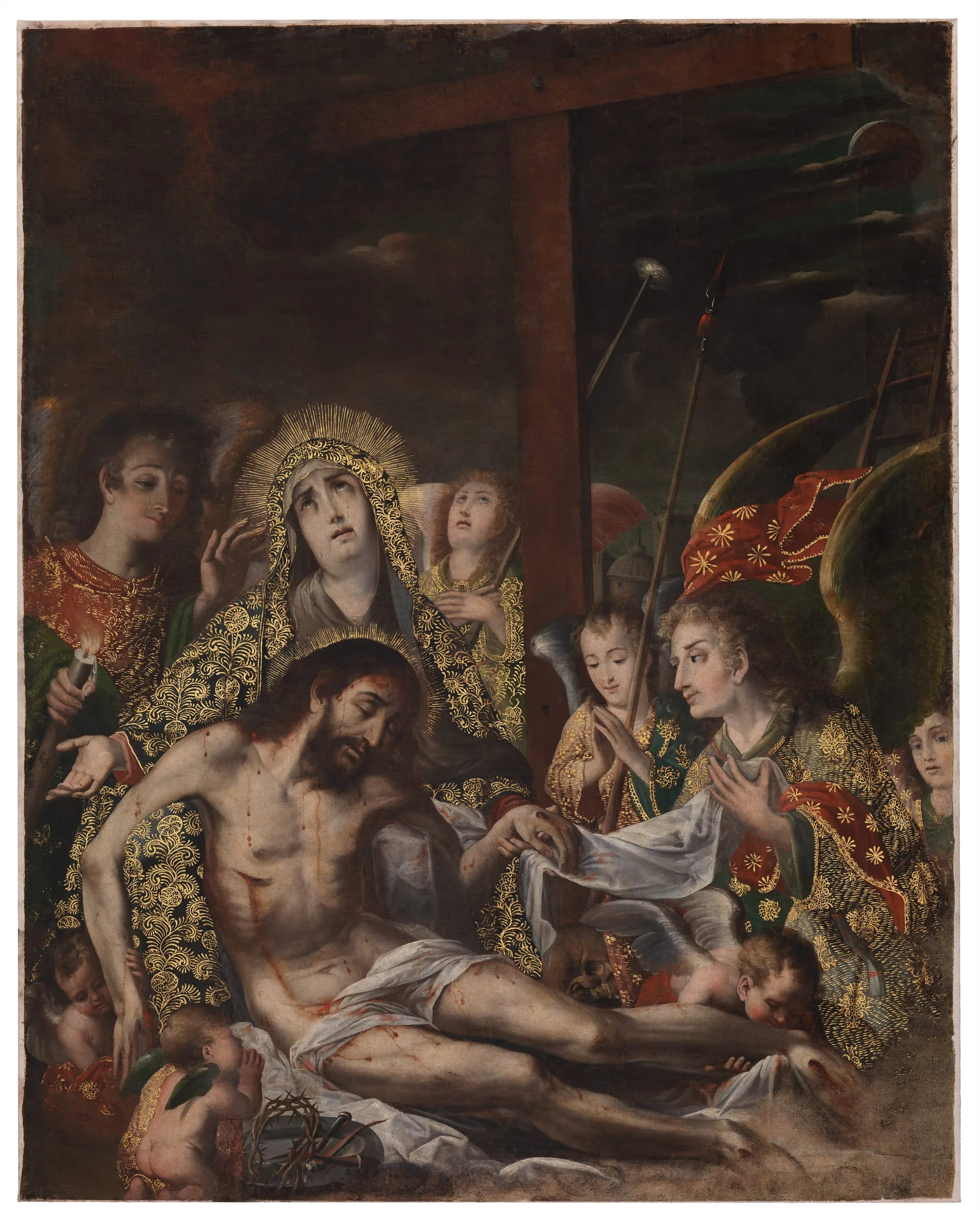
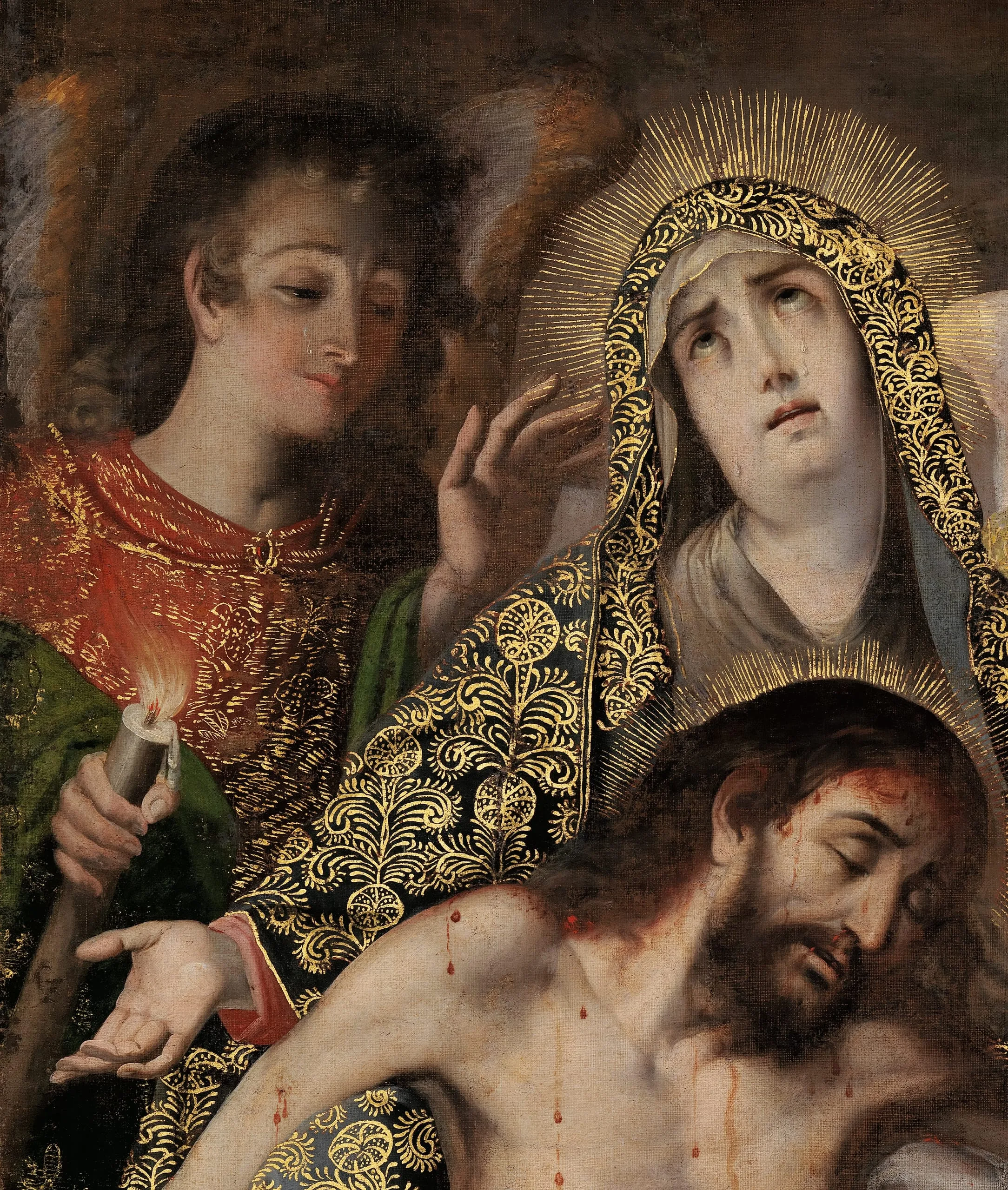
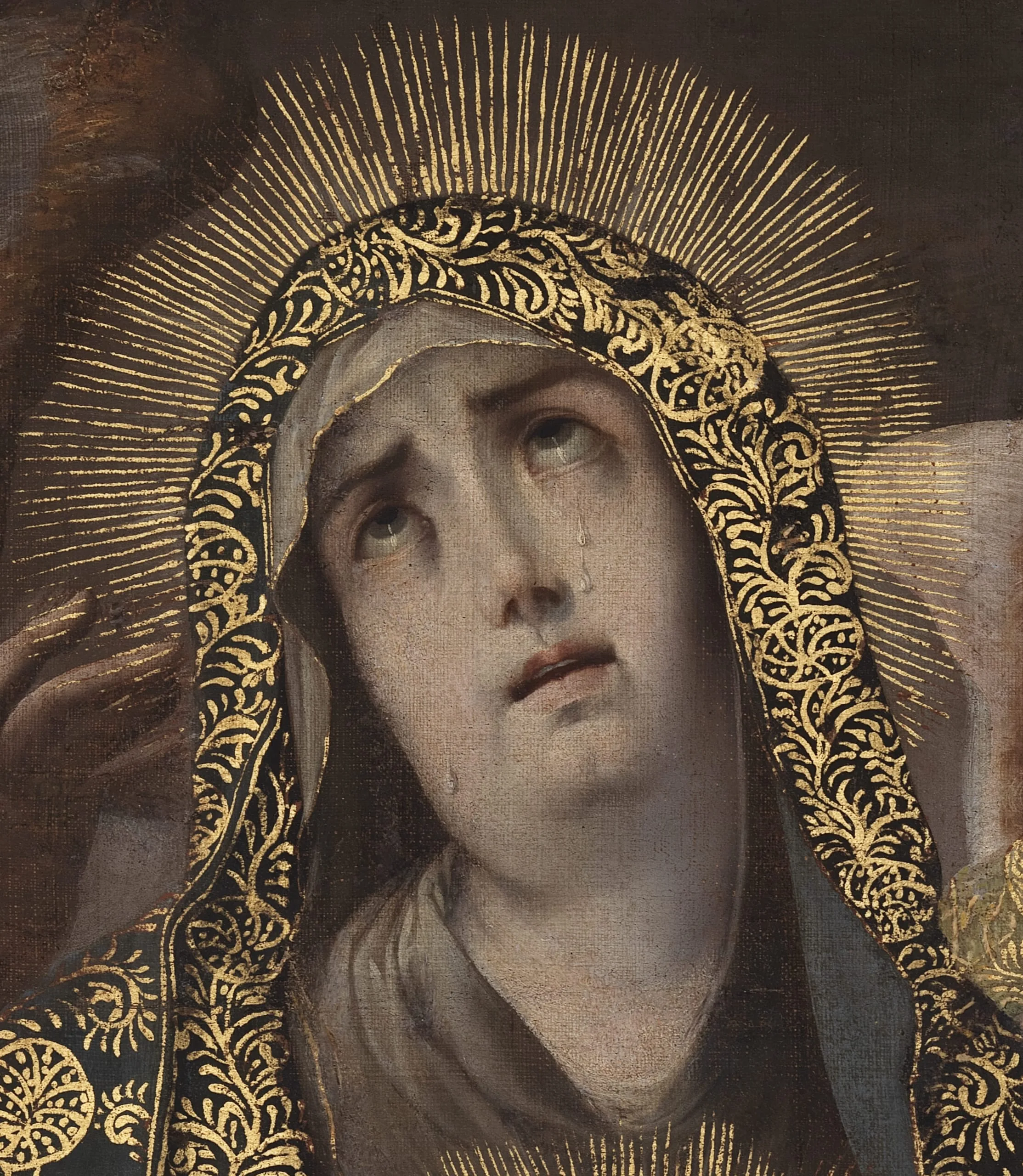
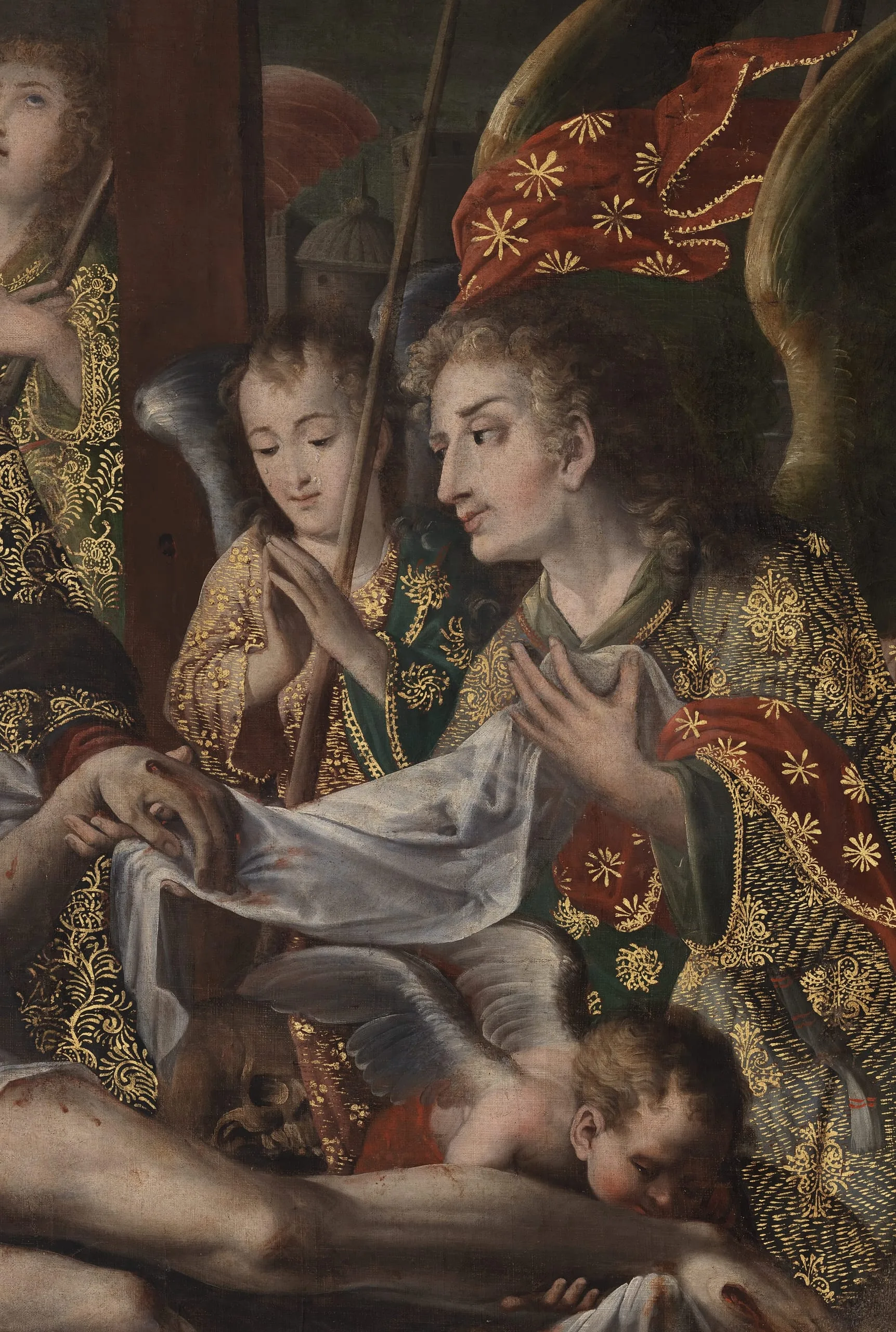
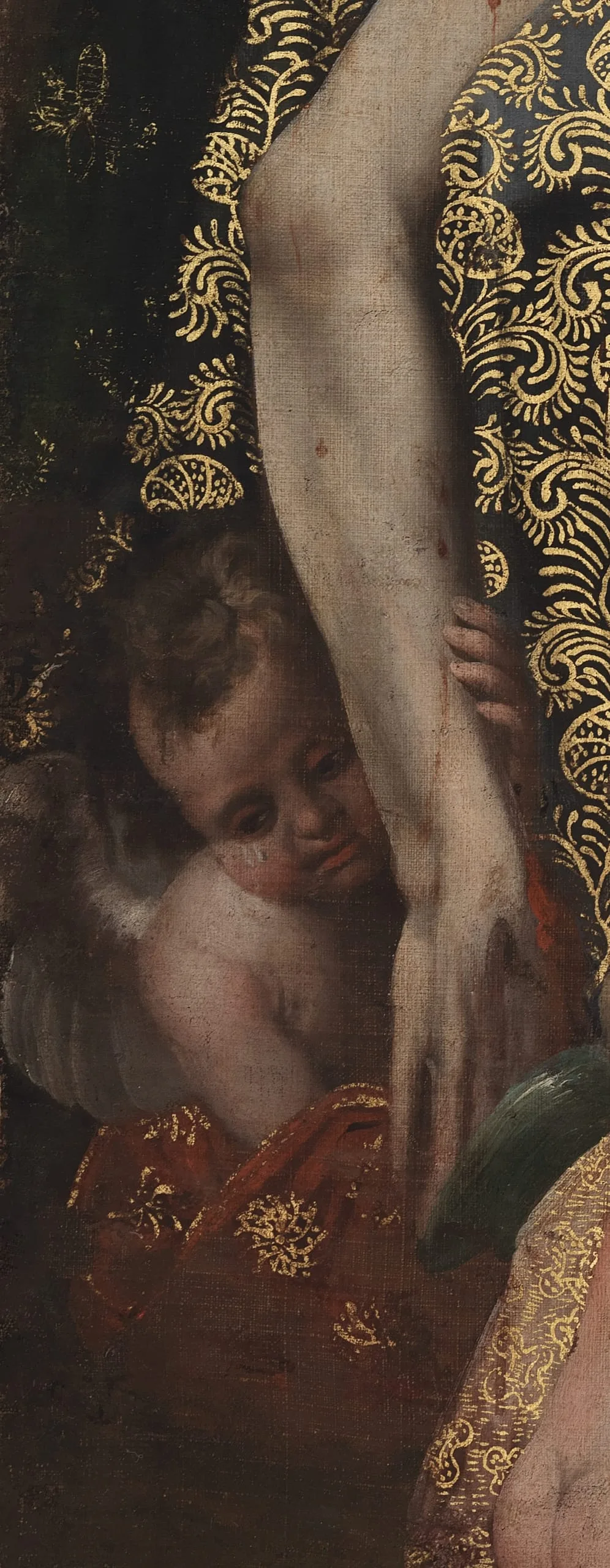
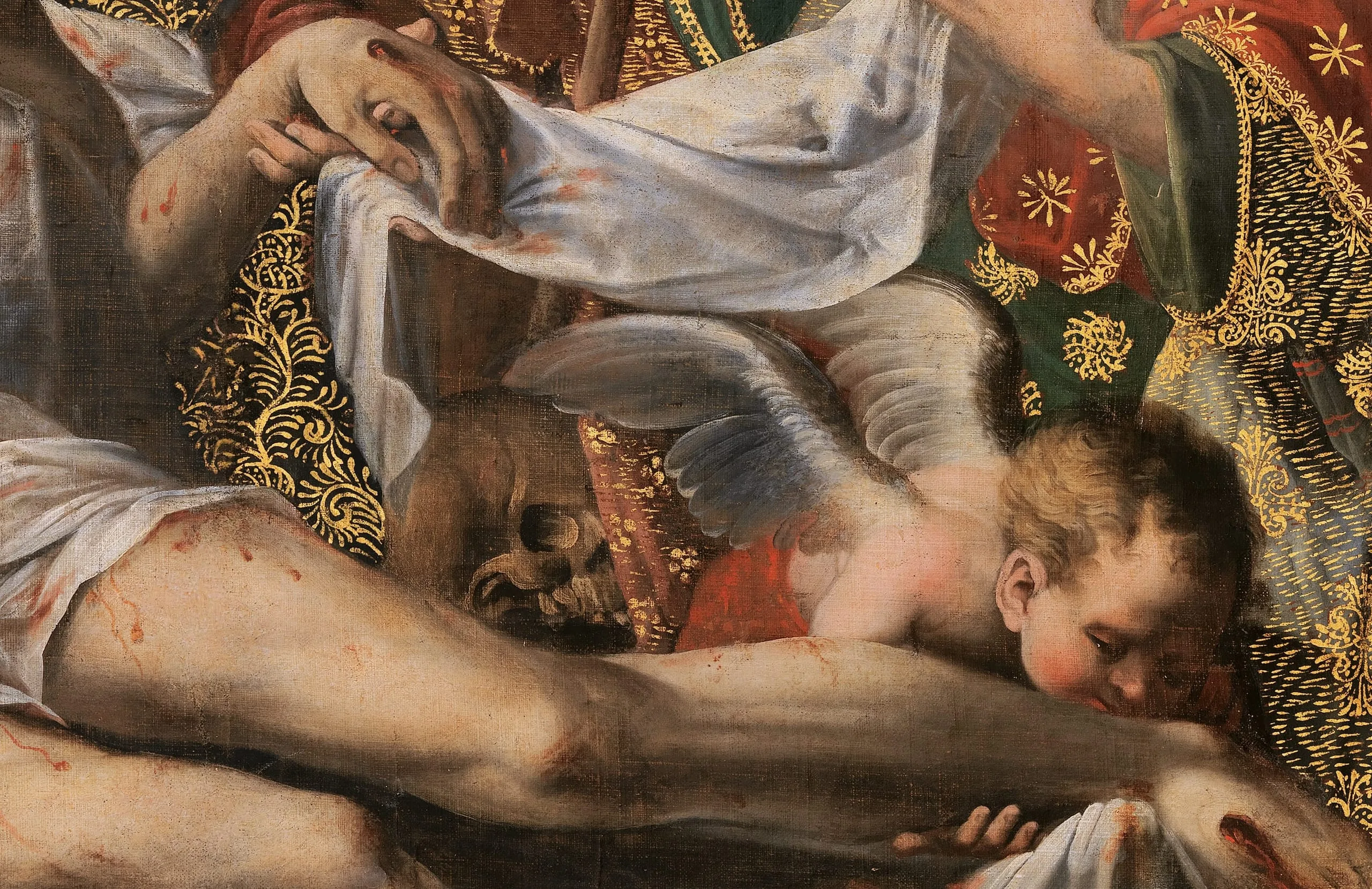
In this deeply moving Pietà, Christ lies gently on the Virgin’s lap, surrounded by angelic figures lamenting his gruesome fate. Through the strategic use of complementary colors of green and red and the profusion of gold applications (a fashionable technique known as brocateado), Melchor Pérez Holguín achieved a powerful devotional image designed to invoke piety and arouse the senses, all while appealing to local forms of taste and religiosity.
Holguín was regarded as one of the most important painters of Bolivia (part of the Viceroyalty of Peru). He was born in Cochabamba, and by 1678 he is documented in the thriving mining town of Potosí. Known as the “Treasure of the World,” the Imperial Villa of Potosí was one of the highest (at 13,200 feet above sea level), wealthiest, most densely populated, and ethnically diverse places in the world. Surely enticed by the opportunities of a city that became the epitome of unlimited riches and squander—but also of profound religious fervor—Holguín established his workshop there. Although nothing is known about his artistic training, by 1678 he was signing his works, some inscribed with the word imbentor (inventor) to signal his creative capacity and his rising popularity. He fulfilled commissions for a number of religious orders, including for the Jesuits and the Mercedarians, as well as for the Indigenous parish of San Lorenzo.
Ilona Katzew
2024