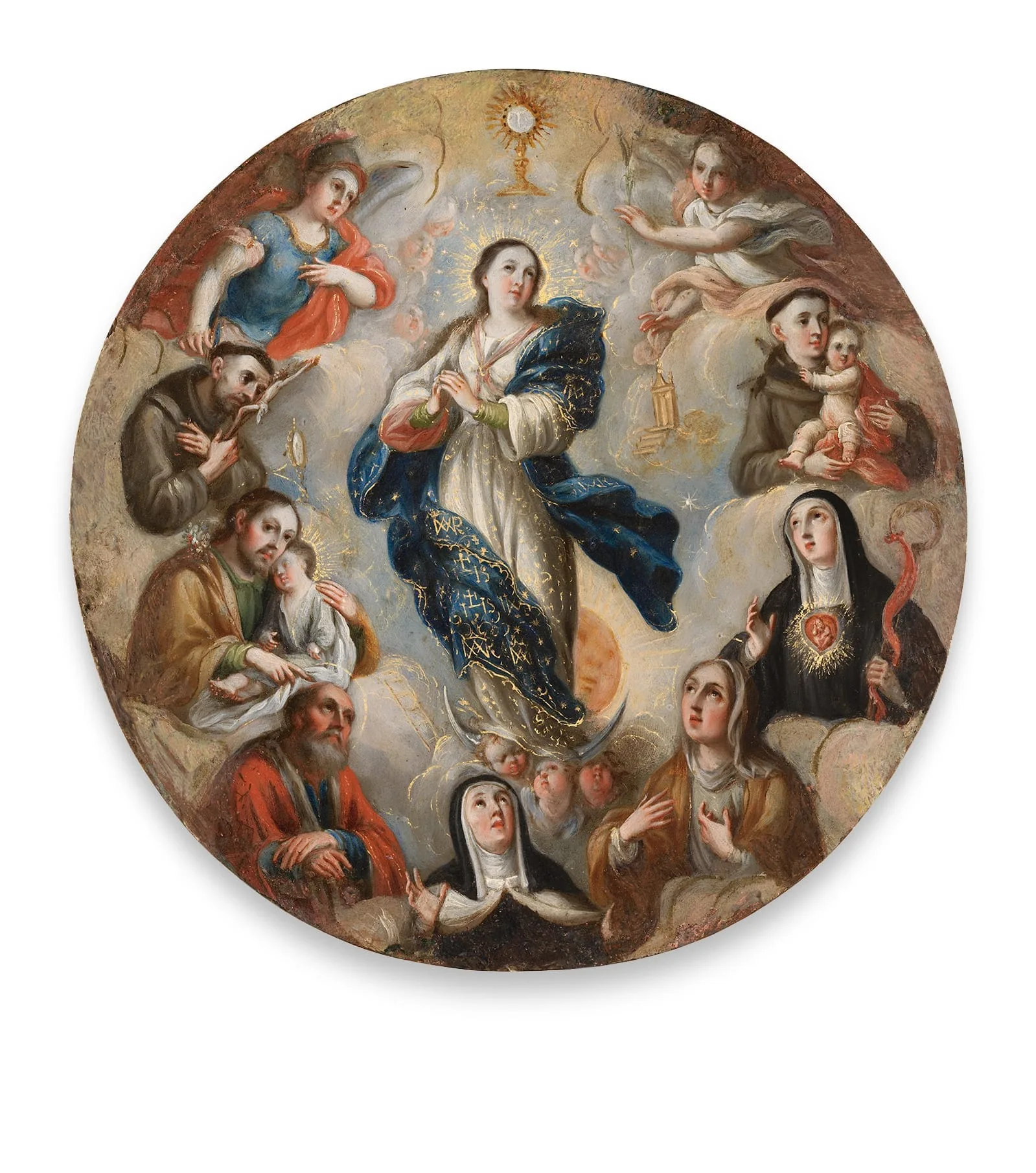
In Mexico, badges were a central ornament of a nun’s habit, especially on her day of profession. The most common themes are the Immaculate Conception and the Annunciation; the perimeter is typically crowded with a choir of saints, which includes the most important devotions for the order and cults of particular interest to the owner. Worn close to the body, badges often carried political messages and were painted by the best artists of the day.
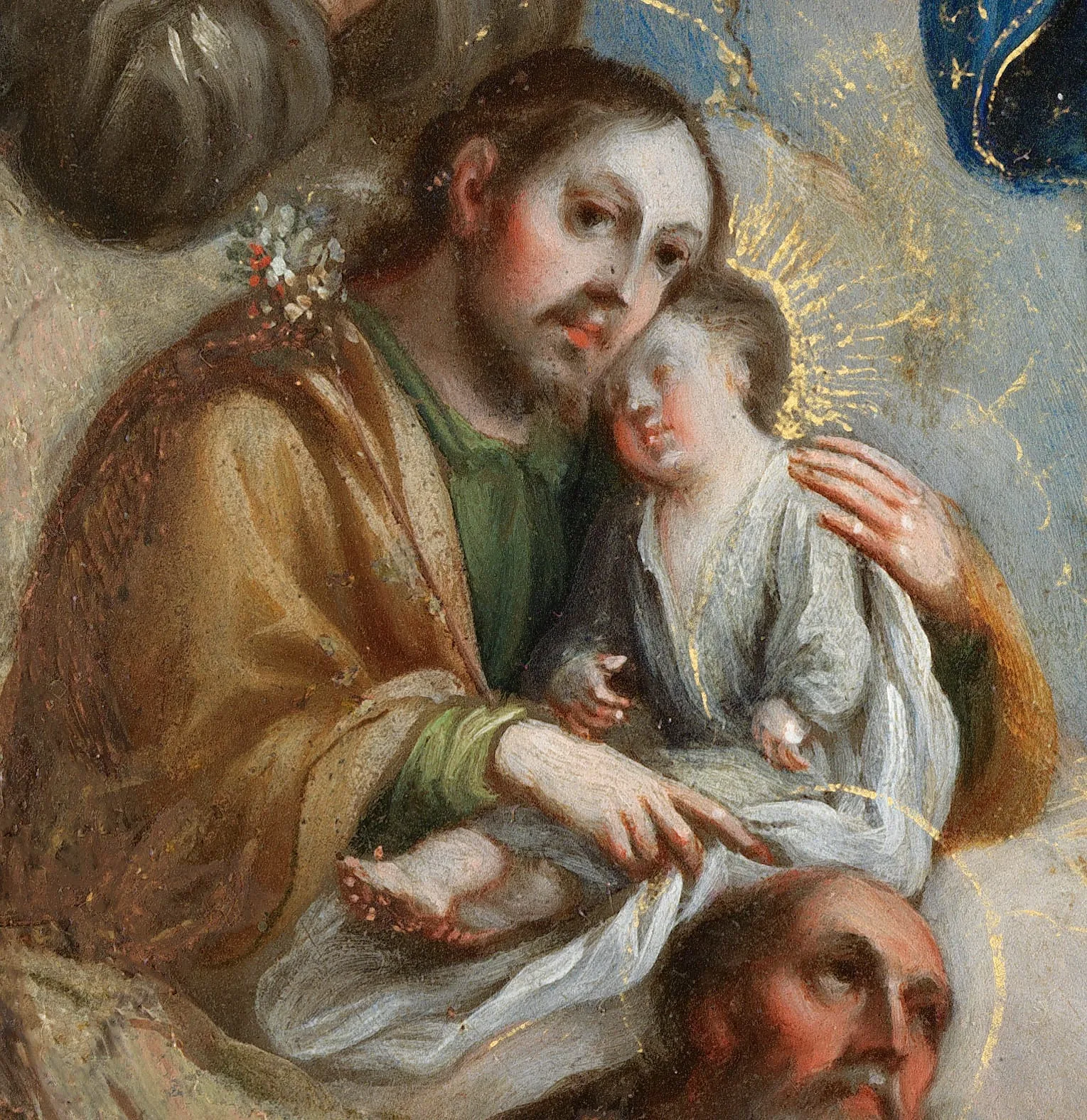
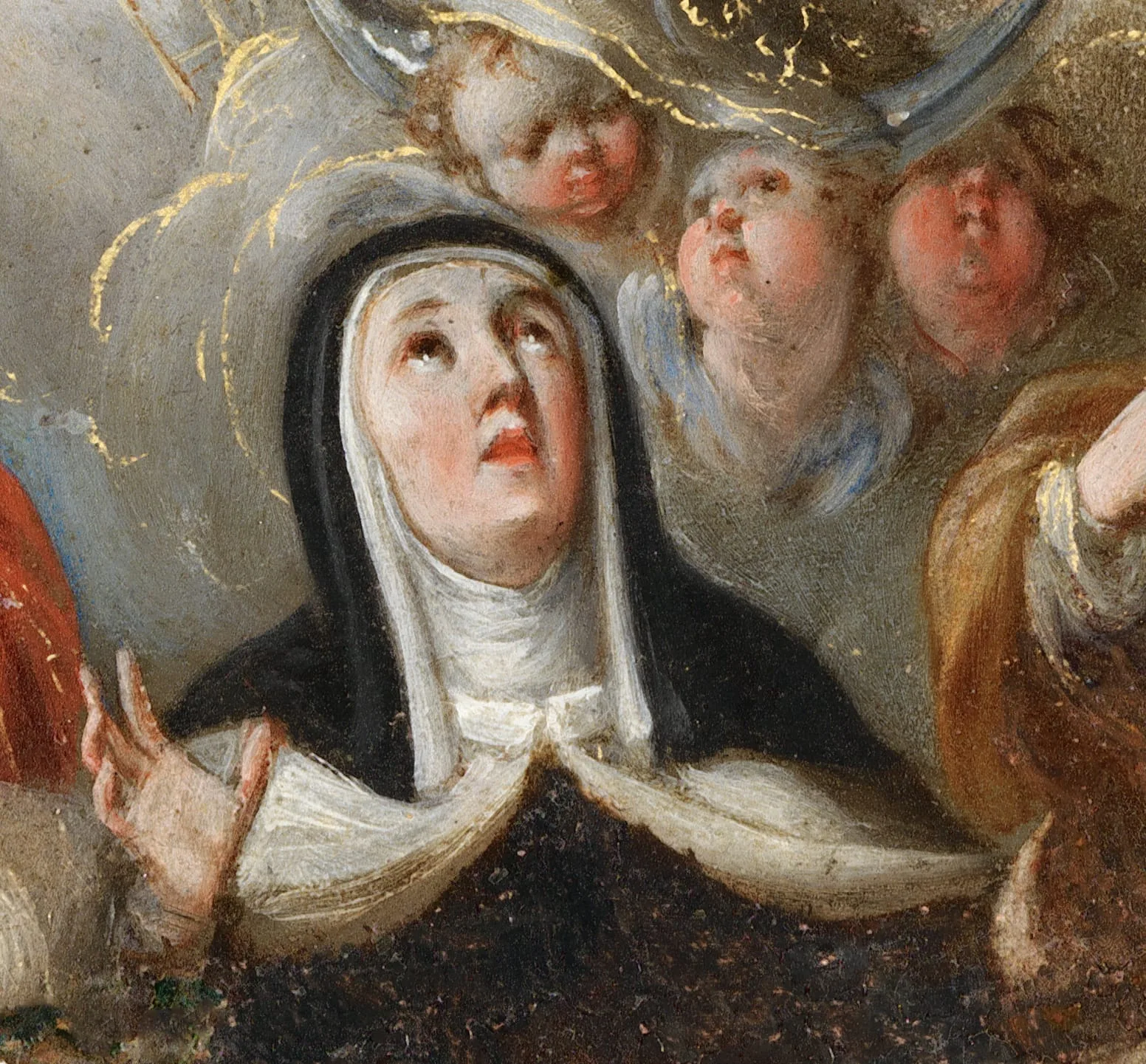
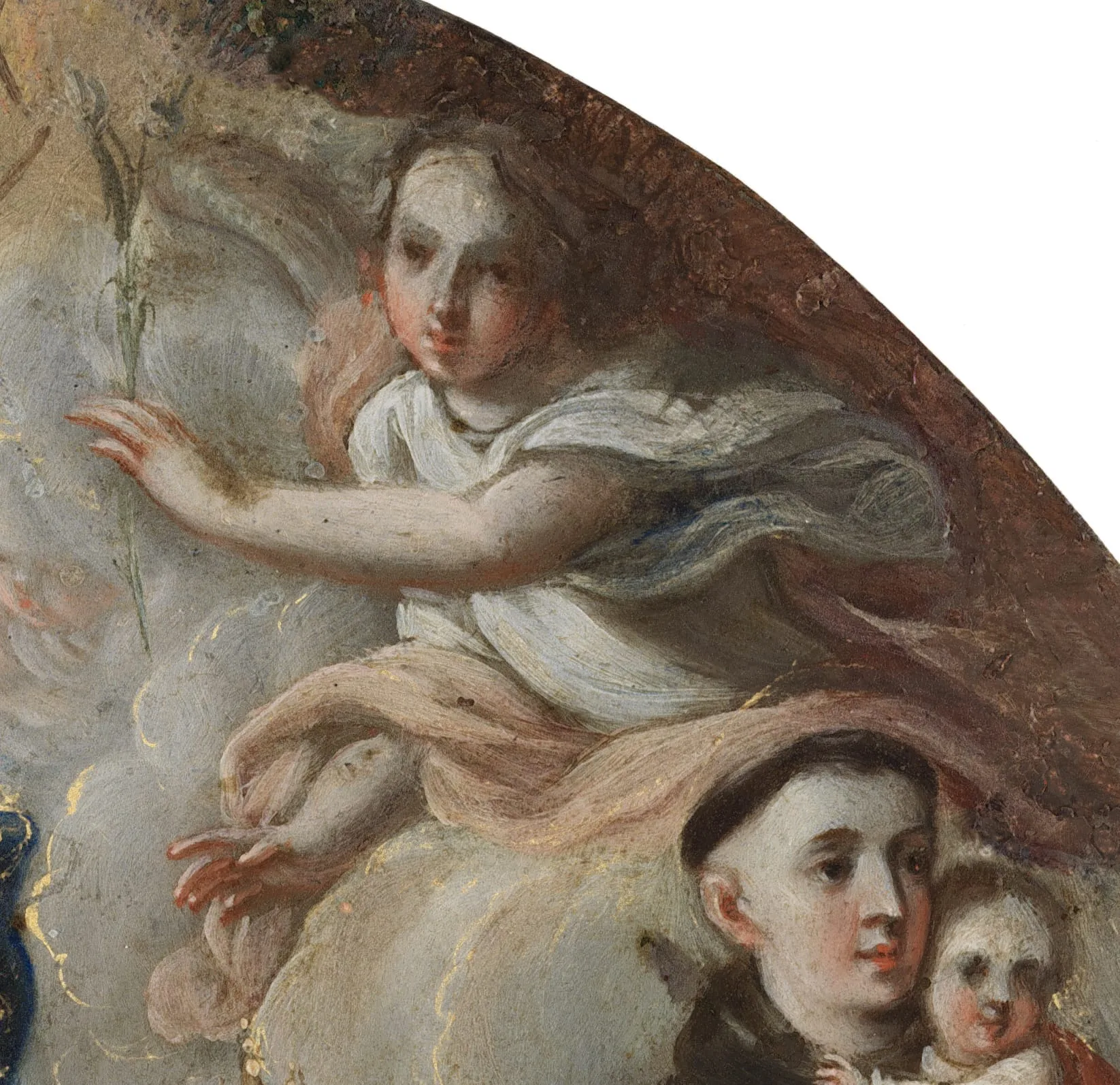
The work bears the unmistakable style of Antonio de Torres, who is credited with impelling an important stylistic shift in the early eighteenth century. He catered to several patrons in Mexico City, as well as some in other towns, and also shipped a considerable number of works to Spain. Here, a cascade of gently arranged figures encircles an image of the Immaculate Conception crowned by the Eucharist. On the left, in descending order, are Saint Michael, Saint Francis of Assisi, Saint Joseph cradling the sleeping Christ Child, and Saint Joachim; on the right are Saint Anthony, Saint Gertrude with a flaming heart, and Saint Anne. At the feet of the Virgin is the famed Spanish mystic Saint Teresa of Ávila (1515–1582), a model of religious perfection and a particularly suitable choice for this kind of object. The figures’ distinctive aquiline noses and pale complexions with rosy cheeks, as well as the upward gazes of those contemplating the Virgin, closely resemble the types in Torres’s series of the Life of the Virgin (1719; Colegio Apostólico de Propaganda Fide de Guadalupe, Zacatecas, Mexico), as does the work’s soft palette with pastel tonalities. Another distinguishing similarity is the angel on the right looking out and pointing toward the Virgin, as if inviting the viewer to reflect on her mystery.
From exhibition Archive of the World, 2022 (for more information see the catalogue entry by Ilona Katzew in the accompanying publication, cat. no. 19, pp. 118–24)