LACMA

ShopMembershipMyLACMATickets
LACMA
Los Angeles County Museum of Art
5905 Wilshire Blvd.
Los Angeles, CA 90036
info@lacma.org
(323) 857-6000
Sign up to receive emails
Subscribe
© Museum Associates 2026
  • About LACMA
  • Jobs
  • Building LACMA
  • Host An Event
  • Unframed
  • Press
  • FAQs
  • Log in to MyLACMA
  • Privacy Policy
© Museum Associates 2026
Collections

Attributed to Miguel Cabrera
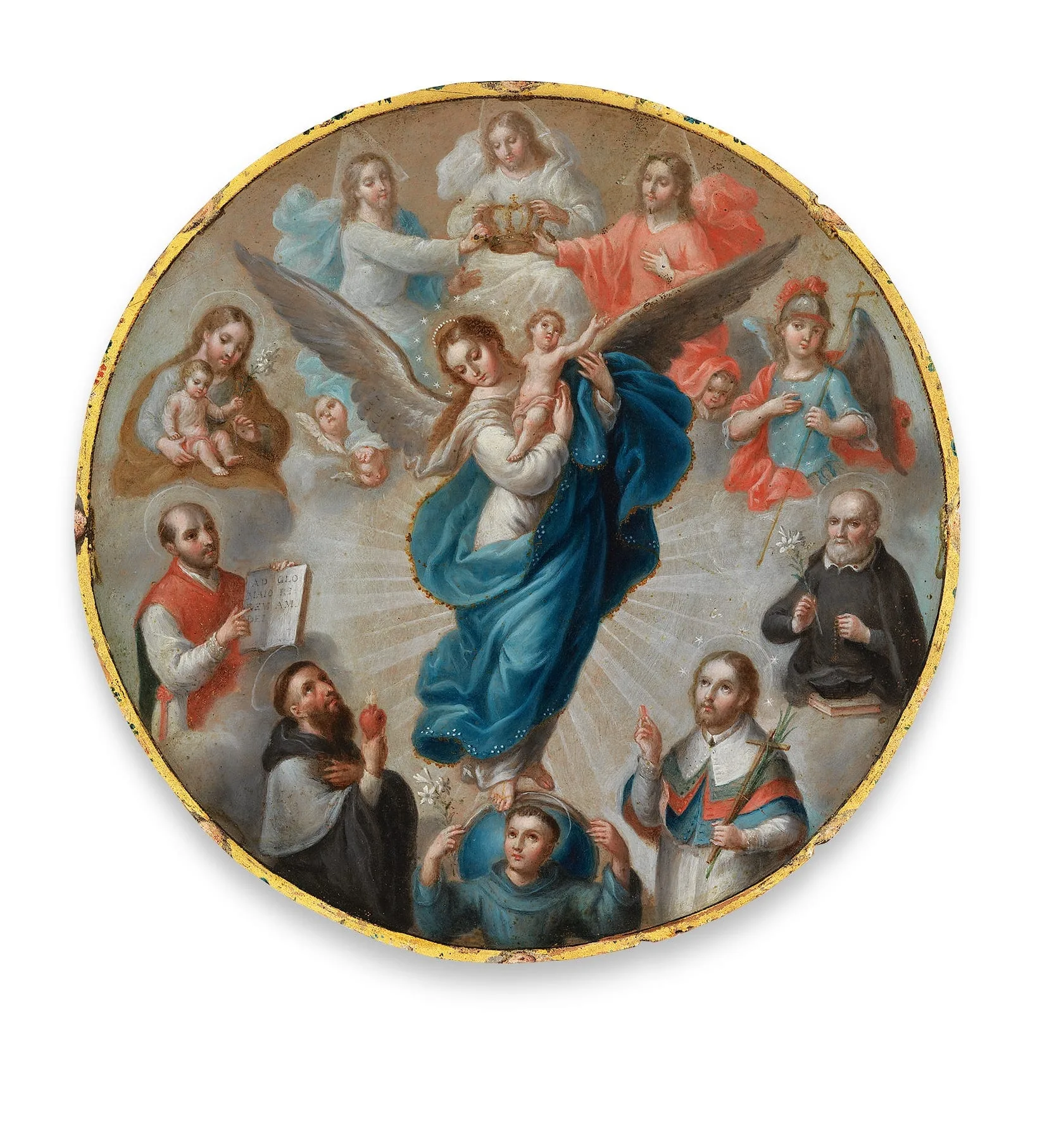
Nun’s Badge with the Virgin of the Apocalypse and Saints (Medallón de monja con la Virgen de la Apocalipsis y santos)circa 1760
On view:
Geffen Galleries
Circular oil painting, tondo format with gold rim, depicting a crowned woman in blue holding an infant, surrounded by angels above and haloed saints below
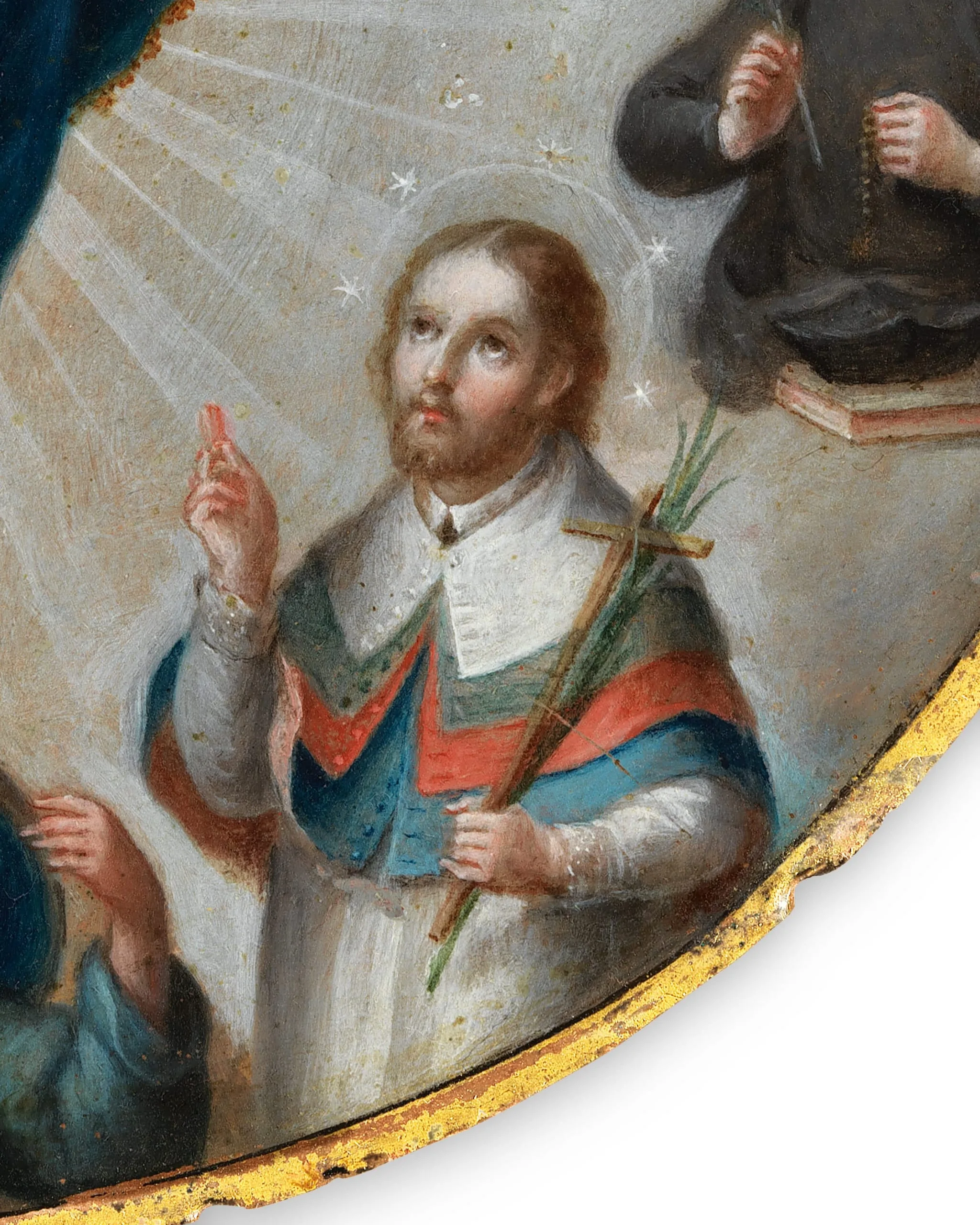
Oil painting, oval format with gilded edge, depicting a bearded male figure in white vestments with blue and red chevron-patterned cope, holding a palm frond and cross, one hand raised, surrounded by a halo and radiating white rays with star-like points; a second robed figure visible at upper right holding a rosary.
Artist or Maker
Attributed to Miguel Cabrera
Mexico, circa 1710-1768
Title
Nun’s Badge with the Virgin of the Apocalypse and Saints (Medallón de monja con la Virgen de la Apocalipsis y santos)
Date Made
circa 1760
Medium
Oil on copper
Dimensions
Diameter: 7 in. (17.8 cm)
Credit Line
Purchased with funds provided by the Bernard and Edith Lewin Collection of Mexican Art Deaccession Fund
Accession Number
M.2018.177.2
Classification
Paintings
Collecting Area
Latin American Art
Curatorial Notes

In Mexico, badges were a central ornament of a nun’s habit, especially on the day of her profession of vows. The most common themes were the Immaculate Conception and the Annunciation; the perimeter was typically crowded with a choir of saints, which included the most important devotions for the order and cults of particular interest to the owner. Worn close to the body, badges often carried political messages and were painted by the best artists of the day. Here, Saint John of Nepomuk stands on the lower right holding up the attribute of his tongue. He features next to the founders of other important orders in New Spain: Saints Francis (carrying the Virgin), Augustine (offering a flaming heart), Philip Neri (next to a biretta resting on a book), and Ignatius of Loyola (holding a book inscribed “Ad Maiorem Dei Gloriam” [For the greater glory of God], the Latin motto of the Society of Jesus). The badge is conceived as a sacra conversazione (sacred conversation) among the orders, symbolizing their support of the Jesuits at the dawn of their expulsion (1767).

Painted badges originated in Mexico in response to religious reforms introduced by the archbishop Francisco Manso y Zúñiga (r. 1629–35), who attempted to curtail the luxury and privilege of convent life. He forbade nuns to wear shields made of gold, precious stones, and enamel. Nuns circumvented this rule by commissioning shields painted on copper or parchment and set into frames made of tortoiseshell.

Ilona Katzew

2024

Provenance
Private collection, New York; David Smernoff Fine Art, New Haven, Connecticut, 2010s; Osuna Art & Antiques Ltd. (Ramón Osuna), Washington, DC, 2010s; Peyton Wright Gallery, Santa Fe, New Mexico, 2018; LACMA, 2018.
Selected Bibliography
  • Katzew, Ilona, ed. Archive of the World: Art and Imagination in Spanish America, 1500–1800: Highlights from LACMA’s Collection. Exh. Cat. Los Angeles: Los Angeles County Museum of Art; New York: DelMonico Books/D.A.P., 2022.
Selected Exhibition History
  • Archive of the World: Art and Imagination in Spanish America, 1500–1800. June 12, 2022 - October 30, 2022
  • Archive of the World: Art and Imagination in Spanish America, 1500–1800. October 20, 2023 - January 28, 2024
  • Archive of the World: Art and Imagination in Spanish America, 1500–1800. June 22, 2024 - September 08, 2024

Related Exhibitions