- Title
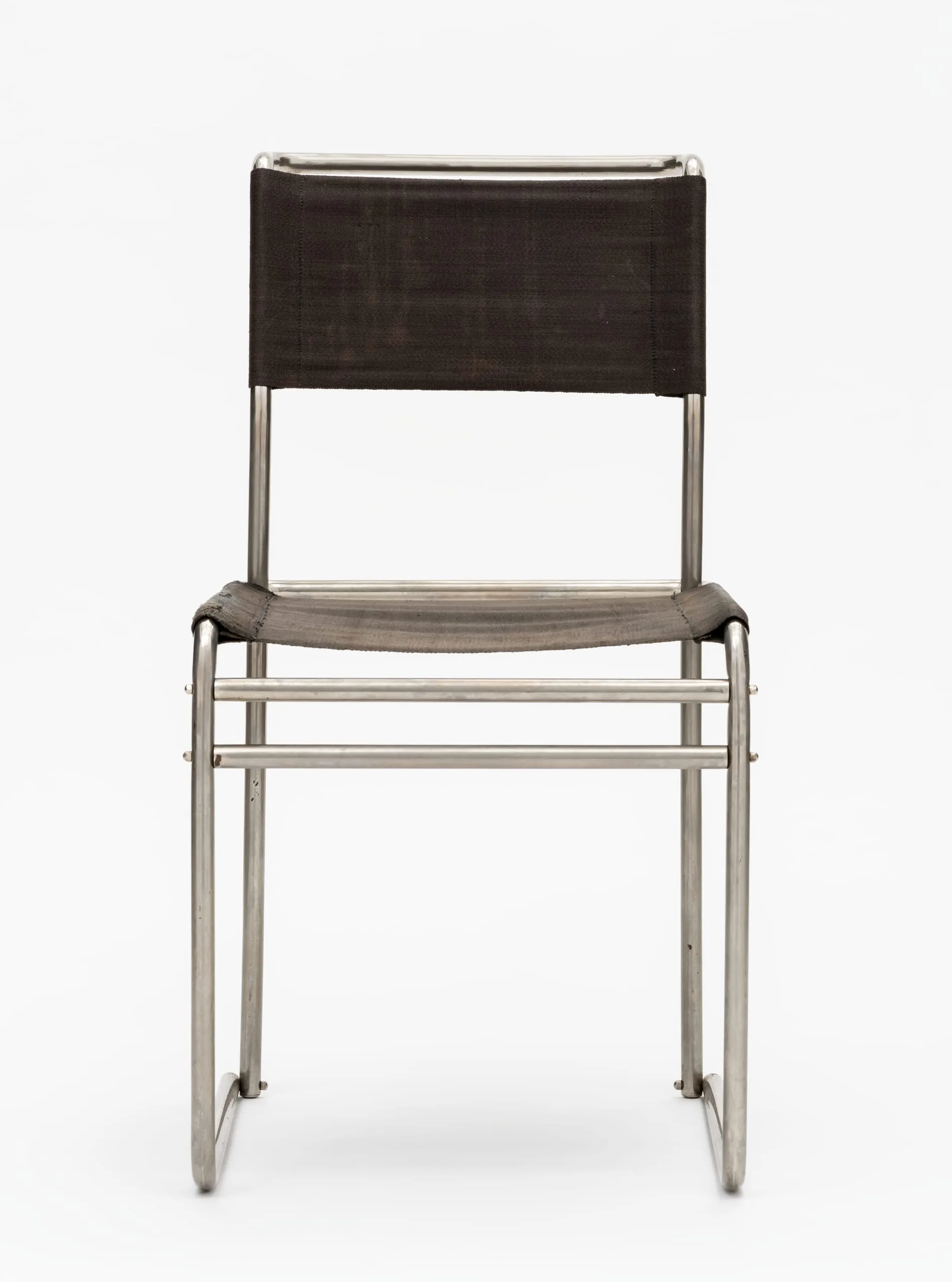
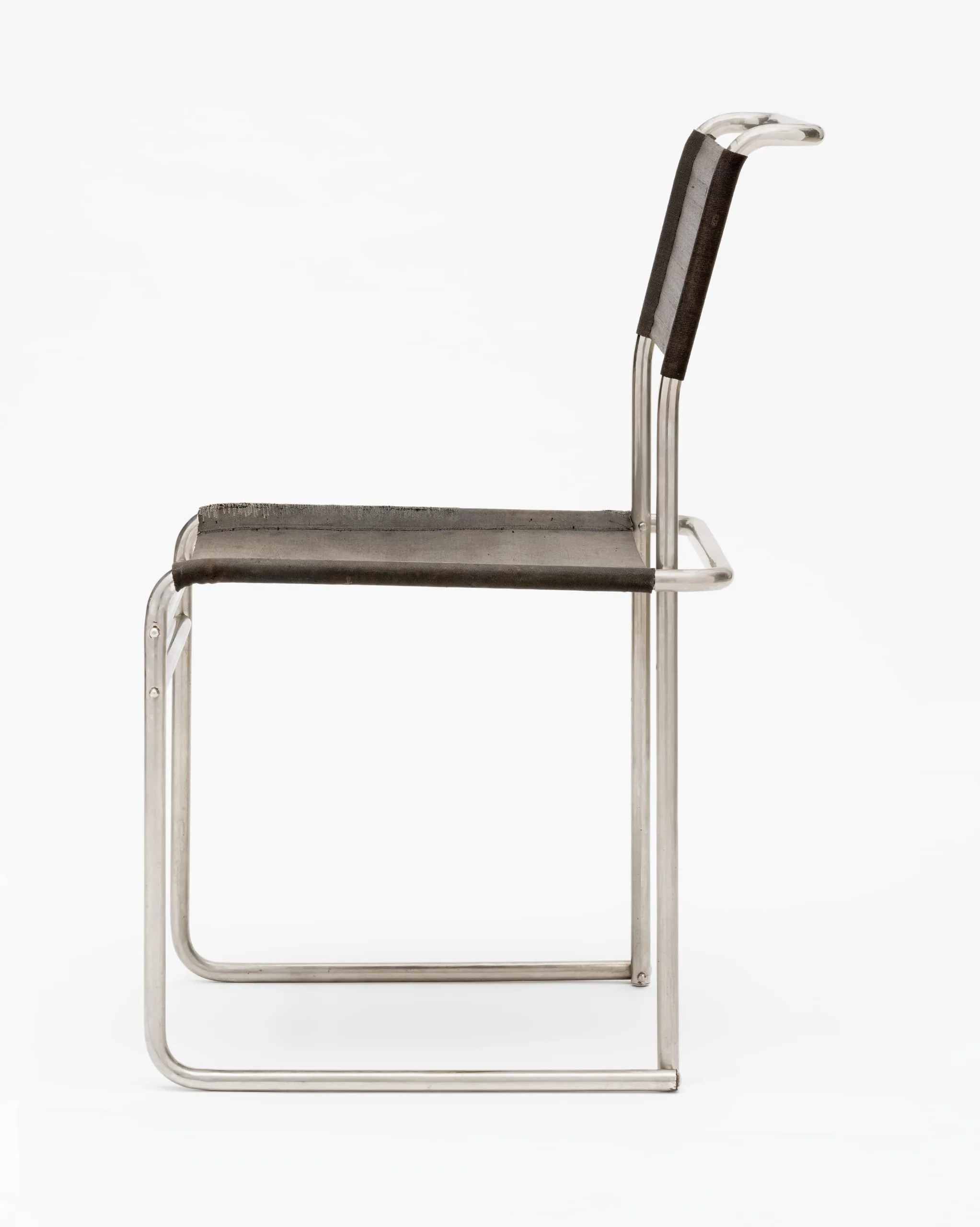
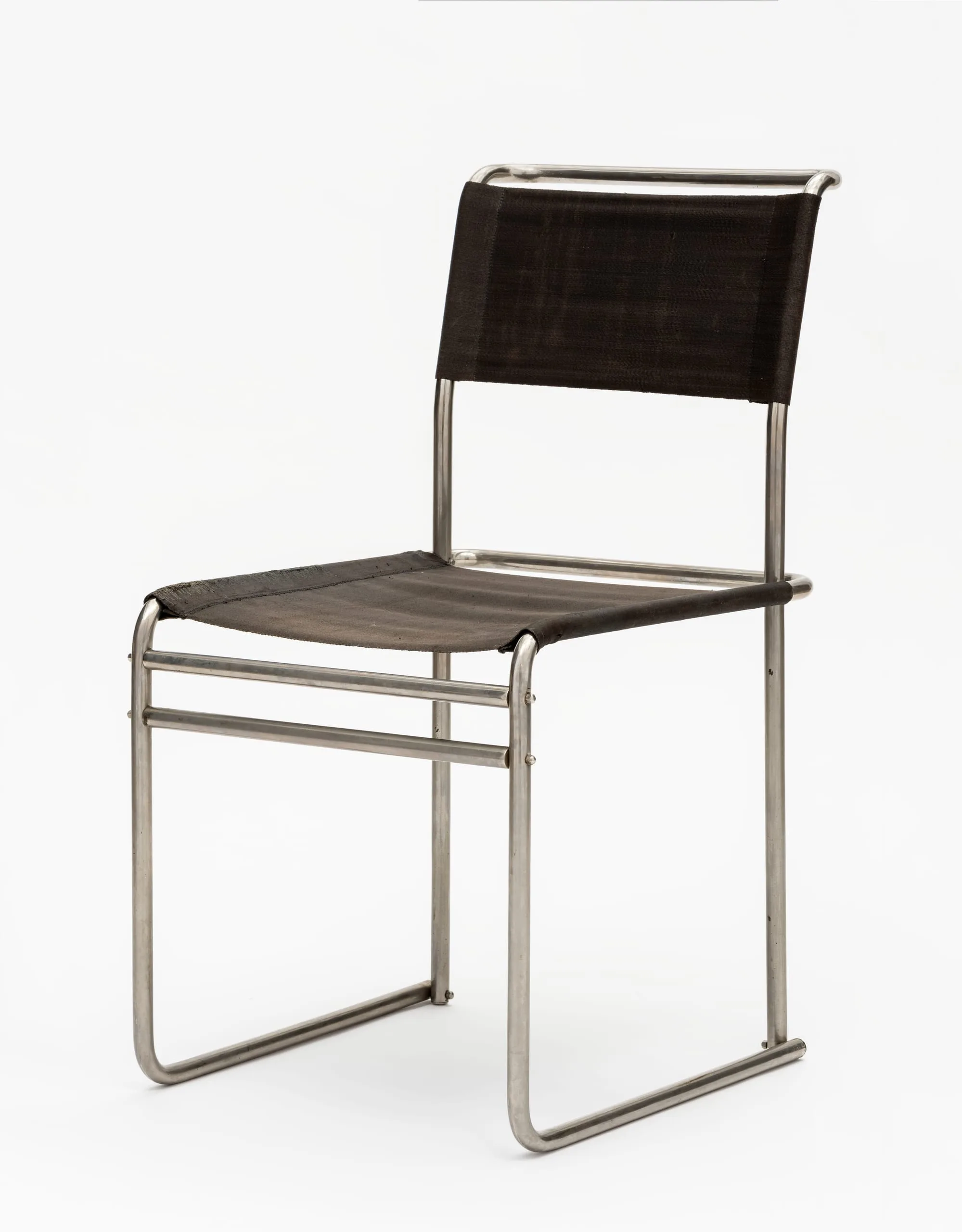
- B5 chair
- Date Made
- 1926-1927
- Medium
- Steel, Eisengarn fabric
- Dimensions
- 34 × 18 1/2 × 18 1/2 in. (86.36 × 46.99 × 46.99 cm)
- Accession Number
- M.2018.113
- Curatorial Notes
The geometric austerity of Marcel Breuer’s B5 side chair makes it a quintessential example of modern German design. Breuer became interested in tubular metal as a material for furniture after observing its strength and durability on the bicycle that he rode around the Bauhaus, the progressive Weimar-era school of art and design where he both studied and taught. The B5 chair demonstrates his mastery of orthogonal form while preserving subtle visual detail, such as the parallel front stretchers and rhyming handle and seat ever so slightly protruding from the back. Breuer stripped the design to the bare minimum—simple geometries comprised of a cubic base and perpendicular planes of fabric. One of four tubular-steel designs that he developed in the mid-1920s, the B5 chair was part of the Breuer-furnished dining room of Erwin Piscator, the German avant-garde theater director. The chair was first produced by the Berlin firm Standard-Möbel (this example is from that brief period). When the firm was sold to the Viennese furniture company Thonet in 1928, production continued, and the chair remained in demand for decades. LACMA’s B5 chair is not only a very early example of its type, it also retains its original Eisengarn (“iron yarn”) fabric, a specially developed, ultra-durable, waxed cotton.
Bobbye Tigerman
2018