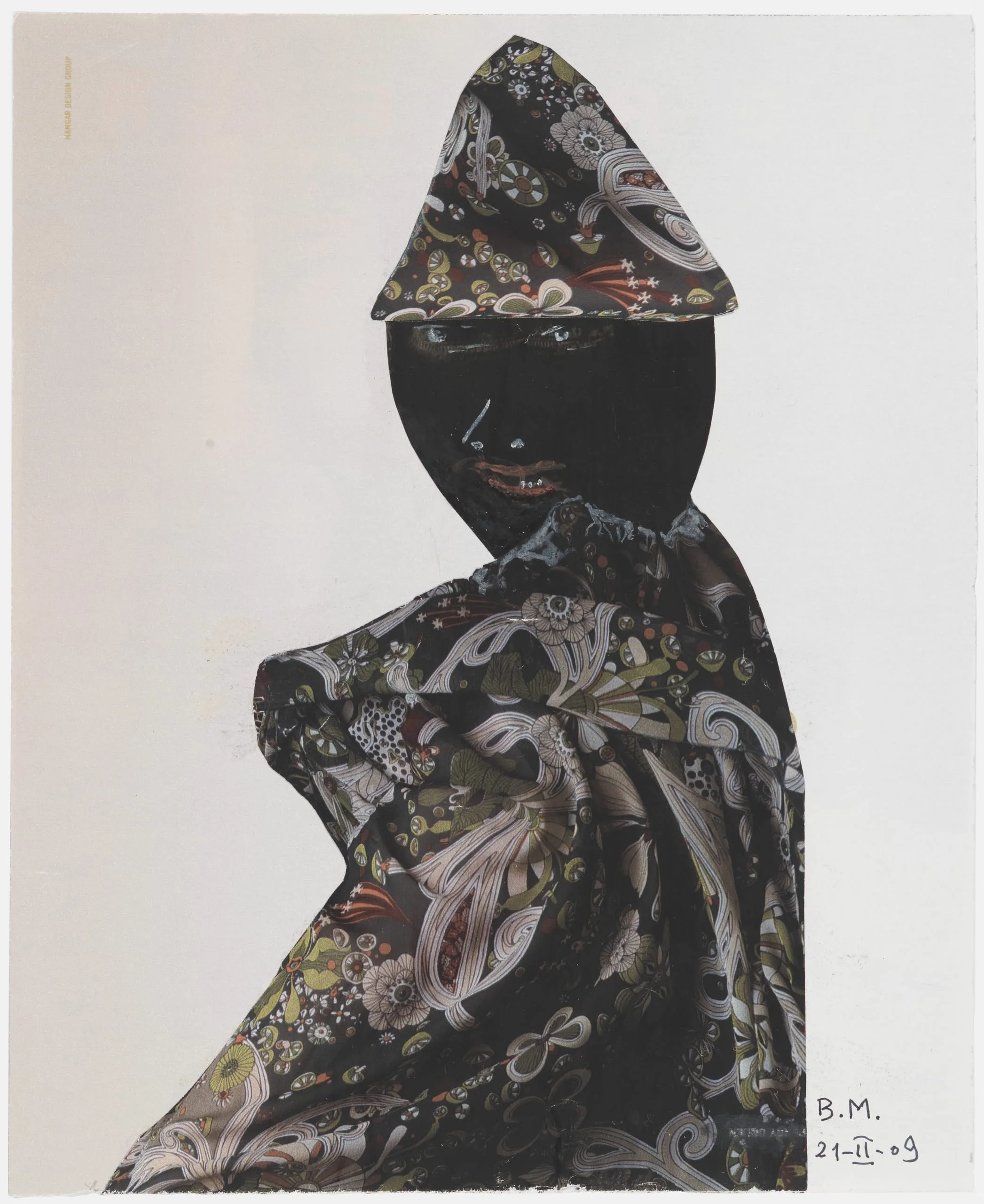
One of Iran’s most celebrated modern artists, Bahman Mohassess was a prolific painter,sculptor, and set designer as well as a translator and theater director. Born in the Caspian region, Mohassess began studying painting as a teenager and soon thereafter joined an avant-garde movement of literary and visual artists in Tehran. He remained active there until the fall of Mosaddegh in 1953 when he moved to Rome, which remained his home for the majority of his life until his death in 2010. During the Islamic Revolution, most of the public works by Mohassess were destroyed, while the artist himself subsequently destroyed all of his remaining works in Iran. Mohassess also created collages using images from newspapers and magazines, which he referred to as assemblages. While the first of these were created as early as the 1970s, he returned to this medium increasingly in his later years, often taking up the same themes as his paintings and sculptures; five such assemblages are included in LACMA’s permanent collection.
This collage functions as a portrait of a figure whose hand-drawn face meets the viewer’s gaze with a sly smile. The triangular hat, matching billowy top, and dark visage resonate with two archetypal figures, one from an Italian context and the other from an Iranian context. In the masked theatre tradition commedia dell’arte of Renaissance Italy, the harlequin is a trickster servant often shown in diamond-patterned costume and a mask of black or brown leather, an unspoken reference to his racial identity or rural peasant background. Mohassess’s figure from 2009, who trades in a paisley pattern for the more traditional checkered design, serves to reflect on the history of Western art in its reference to a trope that remained popular long after 16th-century Italy in the pantomime traditions of Victorian England and the work of modernist painters like Picasso and Cezanne. However, the figure also recalls Hajji Firuz, a comic character of Iranian folklore who appears during Nowruz, or Persian New Year. Often clad in red with a pointed hat, this jovial character sings and dances in the street to wish everyone a happy new year. Like the harlequin, he is traditionally shown with a black face, a reminder of his origin within Afro-Iranian communities of southern Iran.