LACMA

ShopMembershipMyLACMATickets
LACMA
Los Angeles County Museum of Art
5905 Wilshire Blvd.
Los Angeles, CA 90036
info@lacma.org
(323) 857-6000
Sign up to receive emails
Subscribe
© Museum Associates 2025

Museum Hours

Monday

11 am–6 pm

Tuesday

11 am–6 pm

Wednesday

Closed

Thursday

11 am–6 pm

Friday

11 am–8 pm

Saturday

10 am–7 pm

Sunday

10 am–7 pm


  • About LACMA
  • Jobs
  • Building LACMA
  • Host An Event
  • Unframed
  • Press
  • FAQs
  • Log in to MyLACMA
  • Privacy Policy
© Museum Associates 2025
Collections

James Bassler
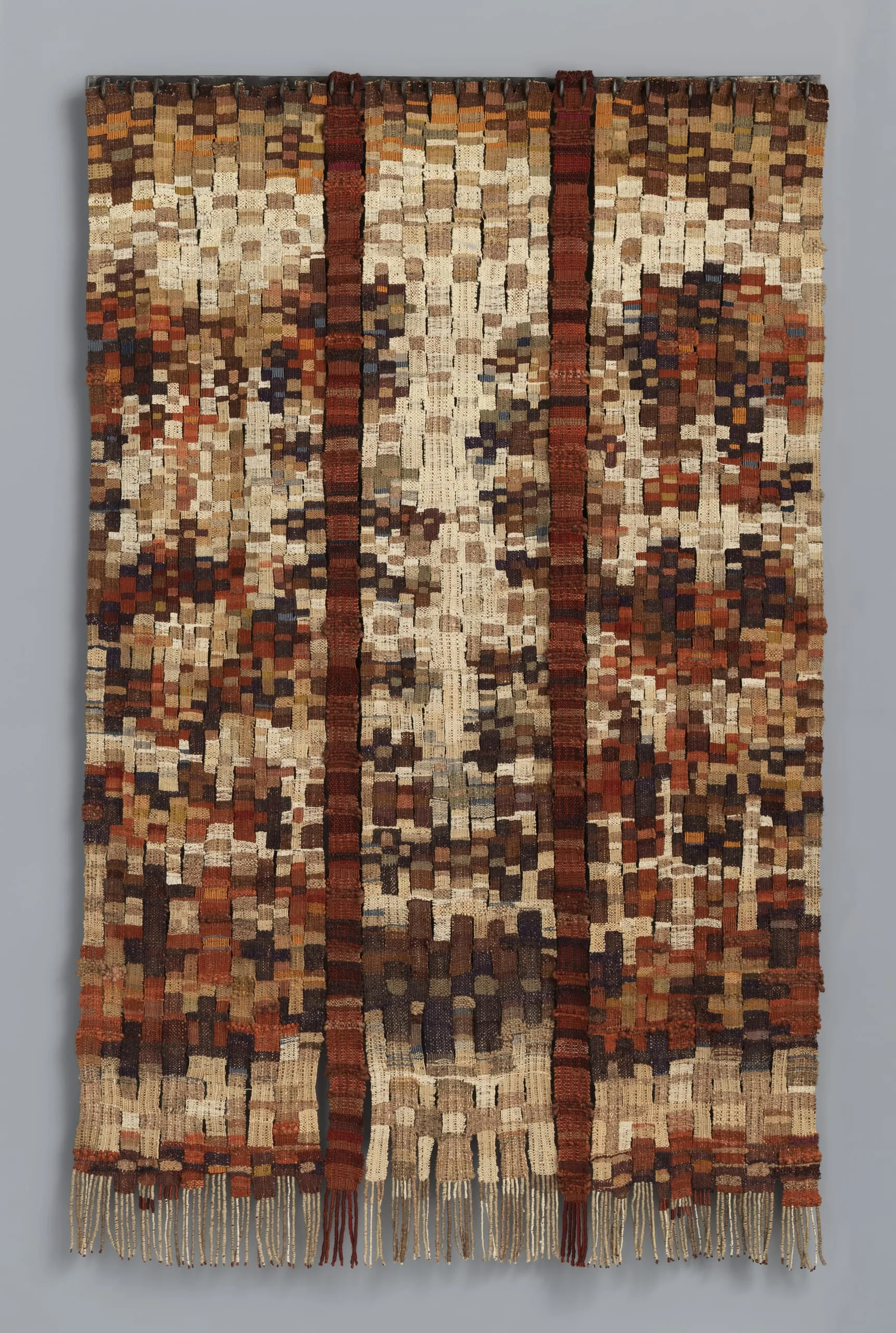
Huipil1974

Not on view
Vertical woven textile wall hanging with a pixelated mosaic pattern in cream, tan, brick red, brown, and indigo, with three vertical crimson bands and cream fringe along the bottom edge
Artist or Maker
James Bassler
United States, born 1933
Title
Huipil
Date Made
1974
Medium
Silk, wool, cotton, natural and synthetic dyes
Dimensions
65 1/2 × 44 in. (166.37 × 111.76 cm) Width across top edge: 42 in. (106.68 cm) Width across bottom edge: 43 in. (109.22 cm) Bar mount: 1 1/2 × 40 3/4 × 1 3/4 in. (3.81 × 103.51 × 4.45 cm)
Credit Line
Gift of Martha and Bruce Karsh through the 2018 Decorative Arts and Design Acquisition Committee (DA²)
Accession Number
M.2018.121
Classification
Textiles
Collecting Area
Decorative Arts and Design
Curatorial Notes

California weaver James Bassler adapts textile traditions from around the world, exploring issues of global exchange, politics, and other aspects of contemporary life. An influential educator, Bassler taught at the University of California, Los Angeles for twenty-five years, and led workshops at prestigious programs such as the Arrowmont School of Arts and Crafts, and the Penland School of Crafts.


In the 1970s, Bassler and his wife Veralee, a ceramist, ran a summer program for American teenagers in Oaxaca. Awed by the region’s indigenous textiles, Bassler incorporated many local techniques and forms into his own work. The three-panel structure of this 1974 hanging references a ubiquitous Mesoamerican tunic called a huipil. The piece exemplifies Bassler’s cross-cultural melding: he acquired the native silks from a Zapotec artisan and dyed them using materials gathered both in the Santa Monica Mountains and in Mexico.

Staci Steinberger, Associate Curator, Decorative Arts and Design, 2021
Selected Bibliography
  • Phipps, Elena. "An Artist's Journey." Hali no.219 (2024): 138-147.