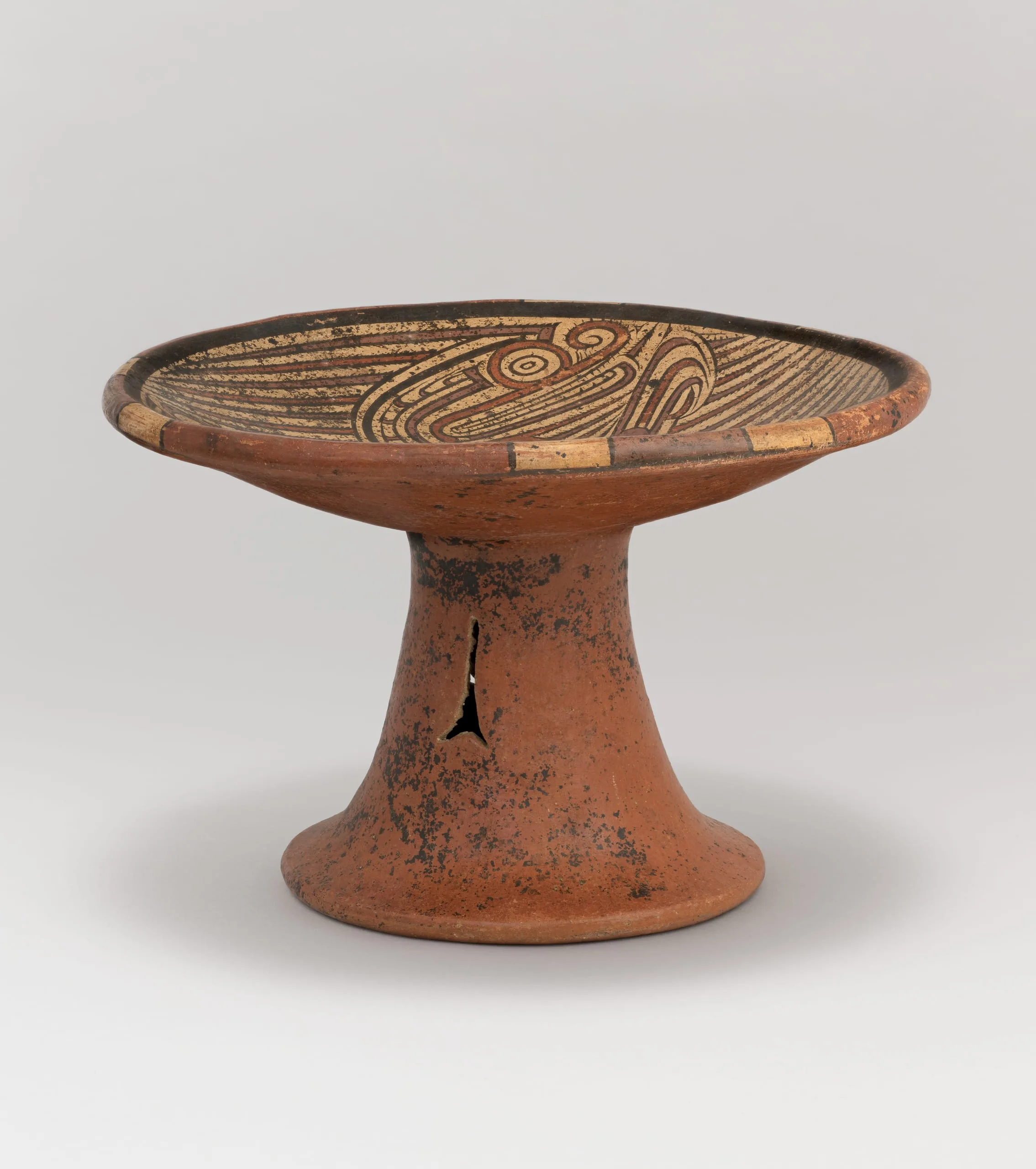
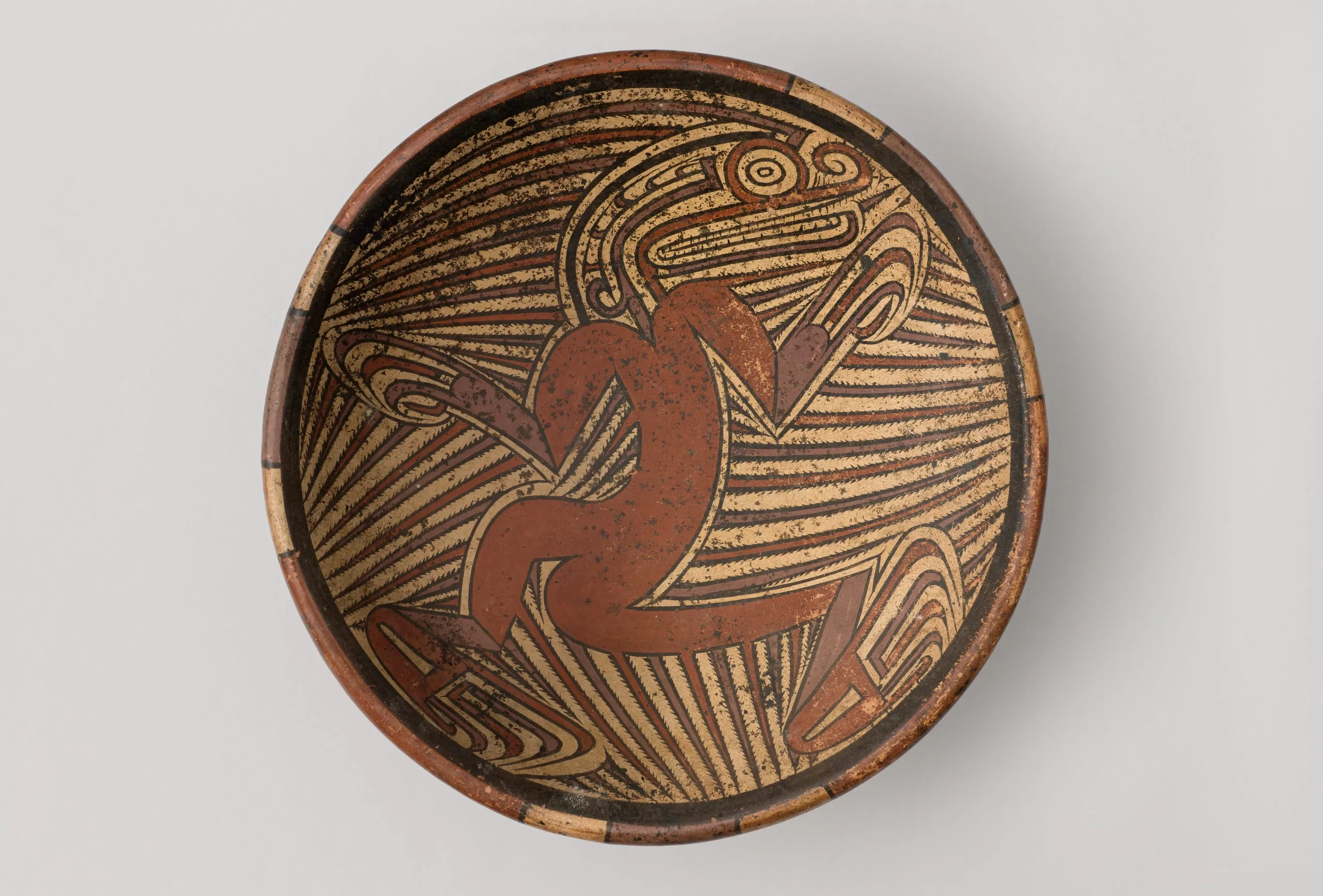
This scene may depict a shaman caught in the middle of transformation, with a human body and crocodilian head and claws. Crocodiles were associated with origin myths, and their behavior of drifting half-submerged in water made them an ideal metaphor for the original earth monsters floating in a primordial sea. That said, compositions featuring such creatures (sometimes called Crocodile Gods) are often shown in dynamic twisted or dancelike poses. The crocodile is ubiquitous in the arts of Sitio Conte (see also M.2001.168.4), and the alternating red, cream, and purple along the rim are typical of the Macaracas style.
Stingray spines, which were used for ceremonial bloodletting, radiate from the body of the main figure, colored in alternating red and purple and completely filling the surrounding space. Their depiction here may signal a bleeding ritual that resulted in visions of or transformation into a composite animal spirit. At the same time, the spines may function as a design device used to convey the energy and life force emanating from the central being, similar to those painted on and around many of the figures or beings seen on ancient Panamanian ceramics.
Panamanian pedestal plates with their tall, slim stems were produced by artists in the thousands for burial alongside what we assume were elites of their society. Some scholars relate this vessel form to that of the hallucinogenic mushroom, seeing parallels in the long stems and flaring tops. This would lend support to interpretations of the complex imagery often found on them as being representations of shamanic visions and the result of ritual practices involving hallucinogenic substances.
Selected Bibliography
Helms, Mary W. Creations of the Rainbow Serpent: Polychrome Ceramic Designs from Ancient Panama. Albuquerque: University of New Mexico Press, 1995.
Grinnell, Alan. Painting the Cosmos: Art and Iconography of the Ceramics of Ancient Panama. Albuquerque: University of New Mexico Press, 2025.