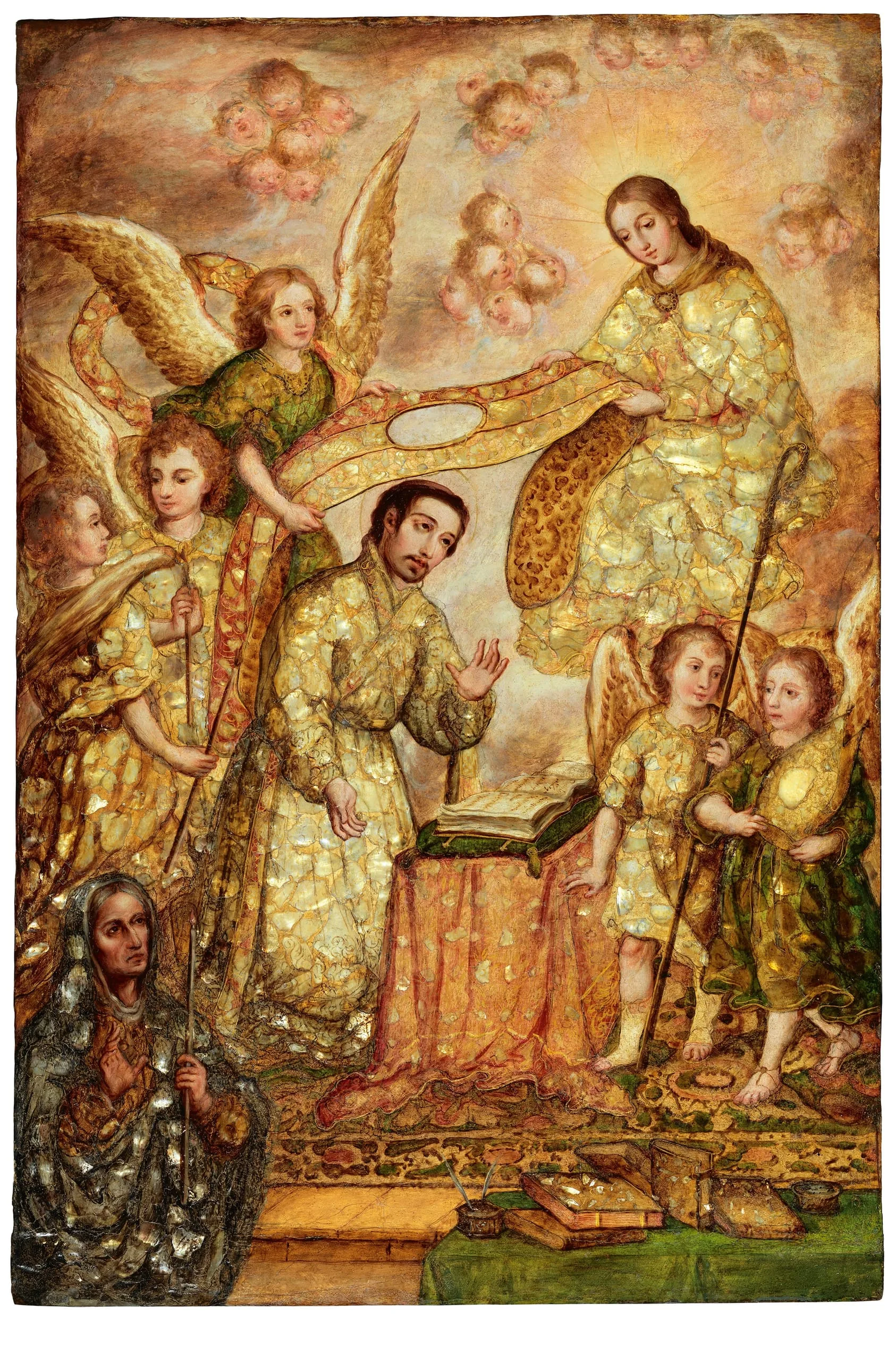
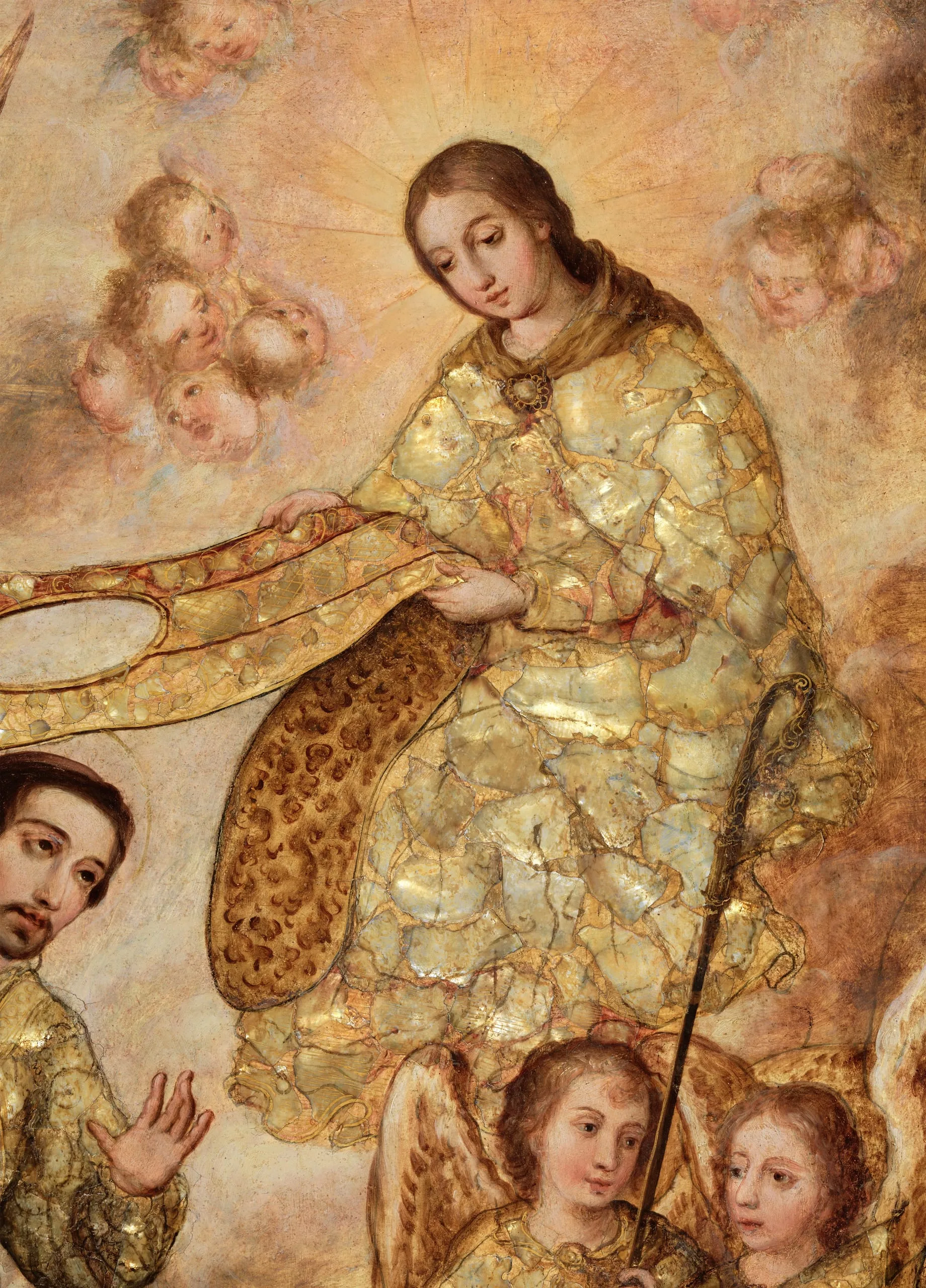
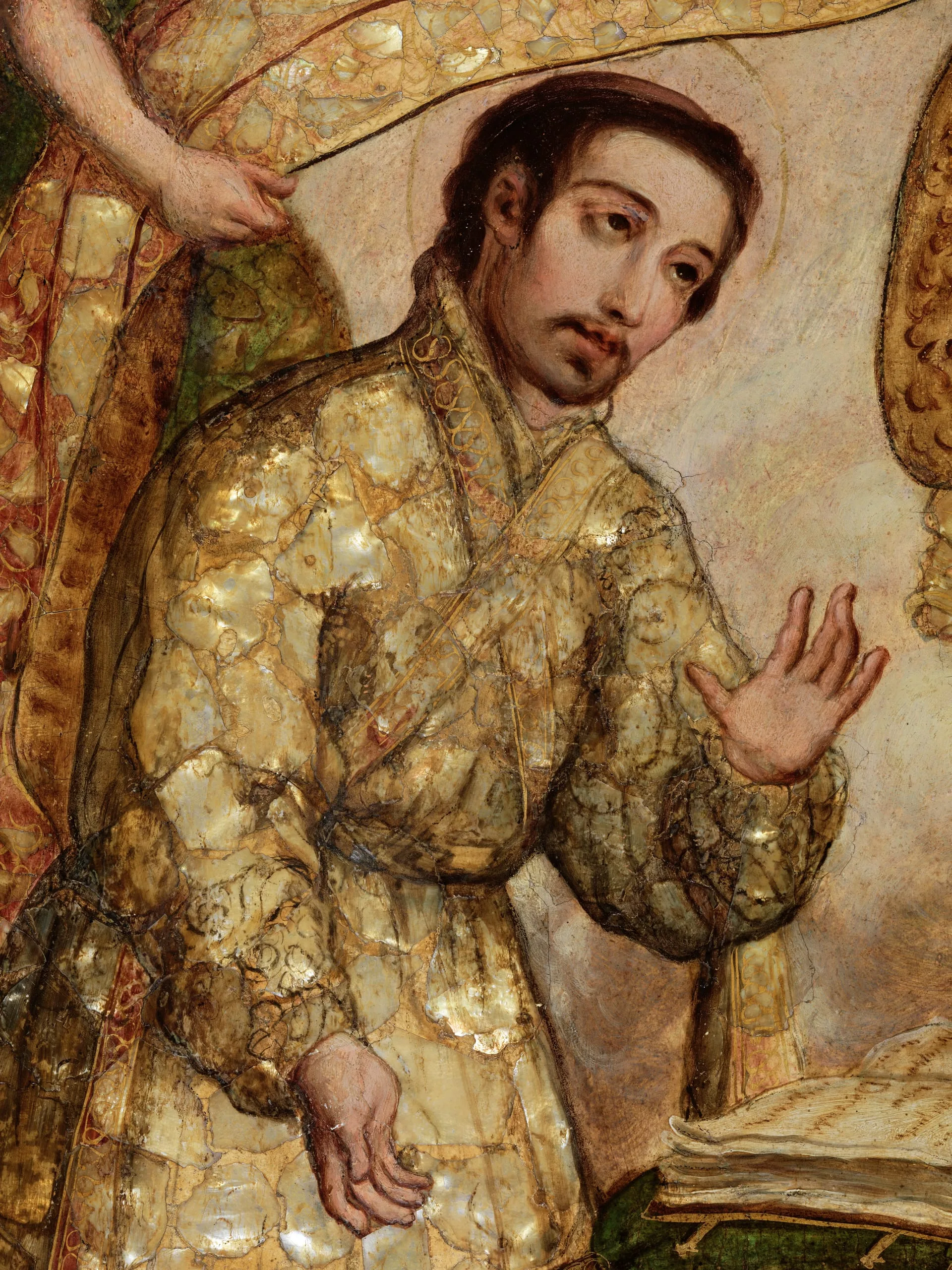
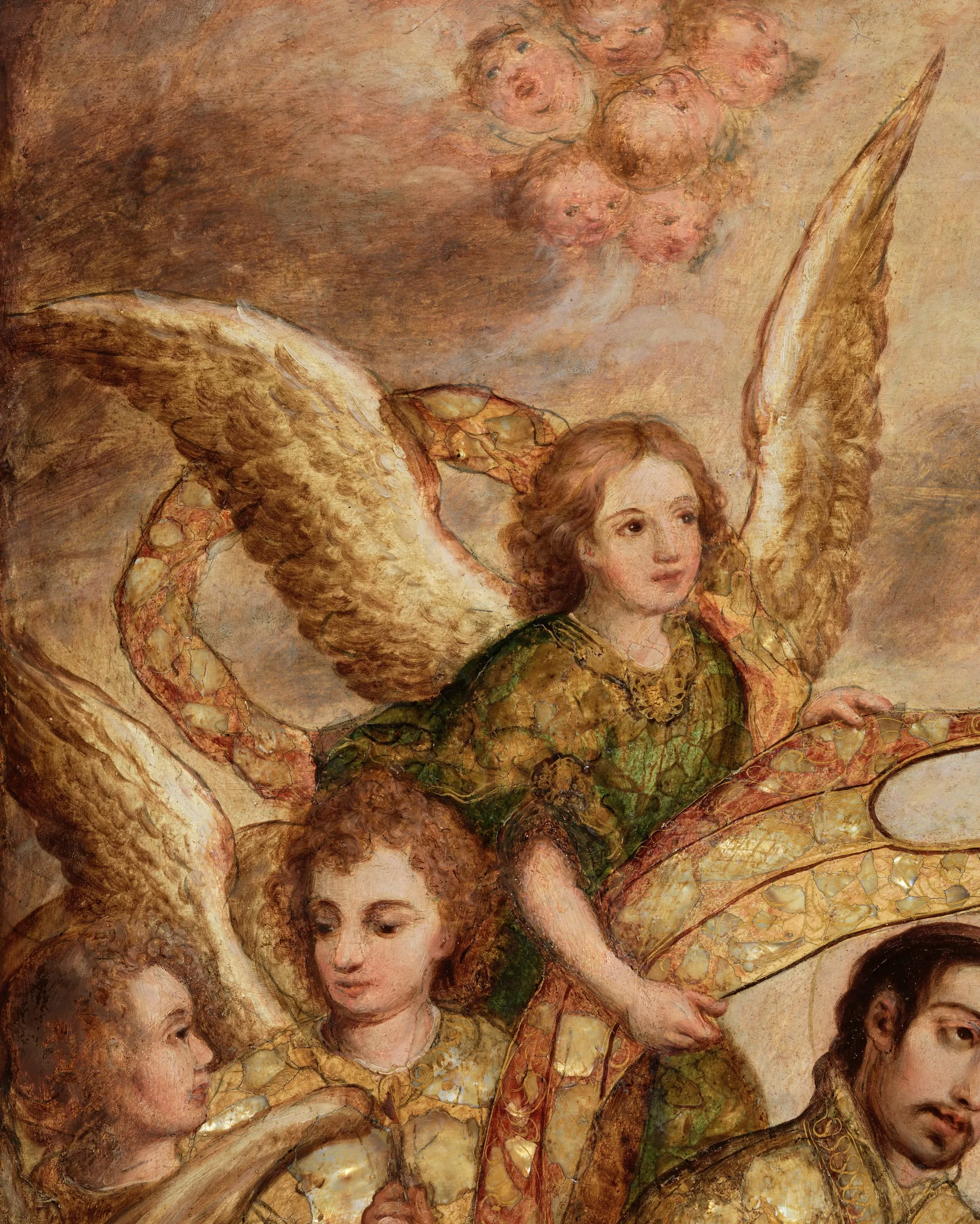
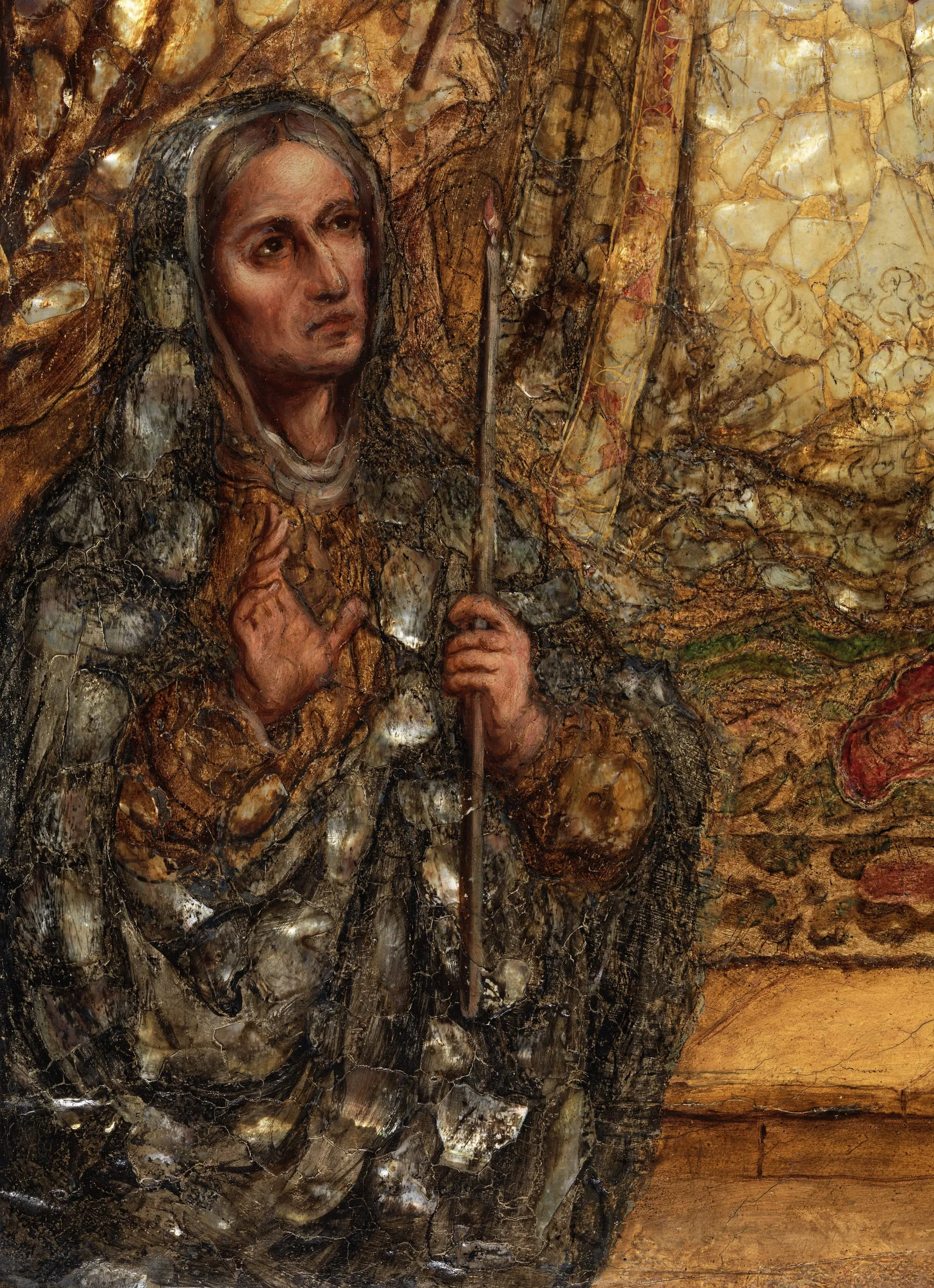
The painting depicts a well-known episode in the life of the bishop of Toledo, Saint Ildephonsus (607–667), whose cult underwent a resurgence in the sixteenth and seventeenth centuries, particularly in the Iberian world. According to legend, on the eve of the Feast of the Annunciation, the saint walked to the church carrying his book devoted to the Virgin and suddenly a radiant light engulfed the church. Ildephonsus knelt before the altar in prayer and, upon raising his eyes, saw Mary surrounded by a choir of angels, rewarding him with a priestly vestment from her son’s treasury. Here, the books and quills symbolize the saint’s writings, while the old woman holding a candle witnesses the miraculous appearance.
Among the most dazzling paintings invented in New Spain were those encrusted with small sheets of mother-of-pearl (or concha de perla), known as enconchados. The application of this material, which endows paintings with a unique glow, references a range of Asian decorative arts that flowed in through various trade networks. Pearls had also been associated with the legendary riches of the Americas since the Spanish conquest. Their use in works such as this connoted imperial power, ostentation, and wealth. The genre reached its apogee from roughly 1680 to 1700, and Nicolás Correa was among its most salient practitioners. With their mixed technique, the opalescent enconchados stood at the juncture of imperial vision, global trade, religious fervor, and colonial invention.
Ilona Katzew
2024