LACMA

ShopMembershipMyLACMATickets
LACMA
Los Angeles County Museum of Art
5905 Wilshire Blvd.
Los Angeles, CA 90036
info@lacma.org
(323) 857-6000
Sign up to receive emails
Subscribe
© Museum Associates 2026
  • About LACMA
  • Jobs
  • Building LACMA
  • Host An Event
  • Unframed
  • Press
  • FAQs
  • Log in to MyLACMA
  • Privacy Policy
© Museum Associates 2026
Collections

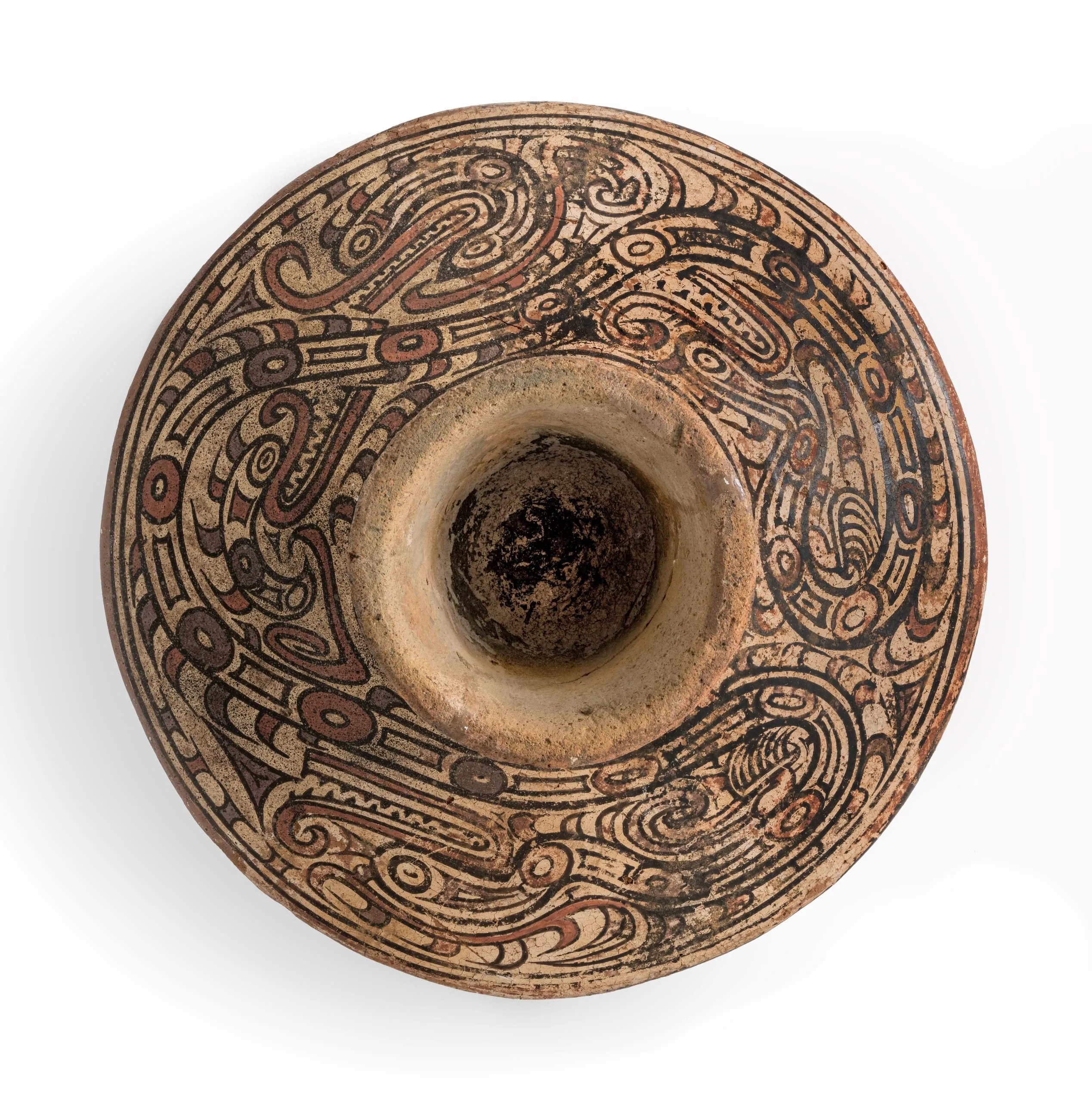
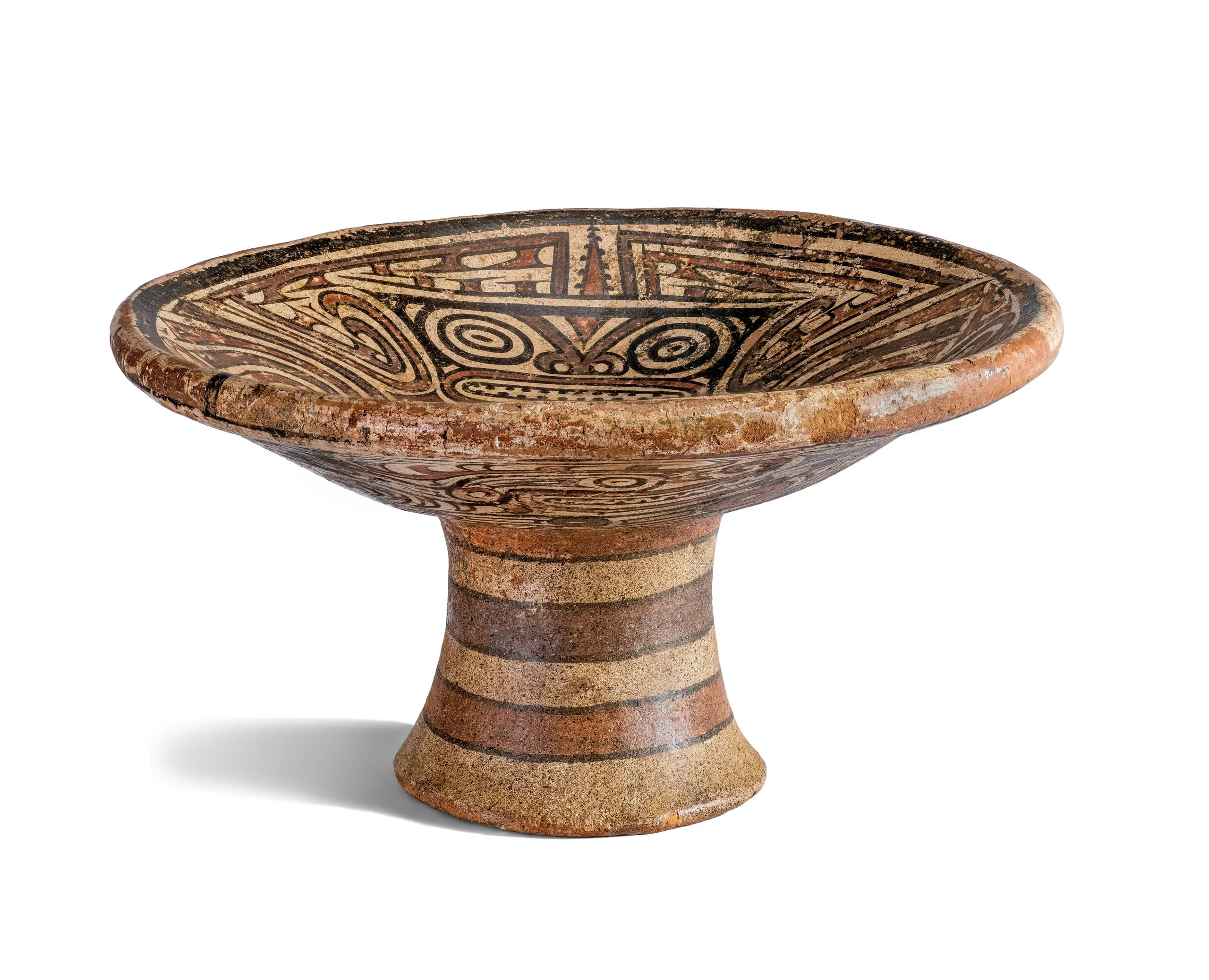
Pedestal Plate with Supernatural Anthropomorphic Being and Saurians800–1000 CE

On view:
Geffen Galleries
Ceramic dish or vessel lid seen from directly above, with a wide sloping surface densely painted in dark brown, near-black, and brick red swirling scrolls and glyph-like motifs on a tan ground, surrounding a small central opening
Ceramic footed bowl with wide, shallow dish on a cylindrical pedestal base. Interior decorated with painted geometric patterns including concentric circles, spirals, and angular motifs in dark brown on a reddish-tan ground. Pedestal features horizontal dark brown bands.
Title
Pedestal Plate with Supernatural Anthropomorphic Being and Saurians
Culture
Greater Coclé
Place Made
Panama, Herrera or Los Santos Province, Macaracas style
Date Made
800–1000 CE
Style
Macaracas
Medium
Engobe-painted earthenware
Dimensions
Overall (Diameter): 5 1/2 × 12 in. (13.97 × 30.48 cm)
Credit Line
Gift of Alan Grinnell and Feelie Lee
Accession Number
M.2016.348.2
Classification
Ceramics
Collecting Area
Art of the Ancient Americas
Curatorial Notes

Wide eyes stare out from swirling background elements and appendages attached to a somewhat human body with clawlike hands and feet and a stingray spine emerging from its head. The composition may depict a transforming shaman. Shamans extends their reach into other realms of the cosmos by acquiring elements of land and sea creatures. Panamanian chiefs were buried with multiple objects bearing this type of imagery, which seems to indicate that their status had more to do with cosmology, transformation, and shamanism than with warfare and secular power.

Panamanian pedestal plates with their tall, slim stems were produced by ancient artists in the thousands for burial alongside what we assume were elites of their society. Some scholars relate this vessel form to that of the hallucinogenic mushroom, seeing parallels in the long stems and flaring tops. This would lend support to interpretations of the complex imagery often found on them as being representations of shamanic visions and the result of ritual practices involving hallucinogenic substances.

Julia Burtenshaw

2018/2024

Bibliography

Helms, Mary W. Creations of the Rainbow Serpent: Polychrome Ceramic Designs from Ancient Panama. Albuquerque: University of New Mexico Press, 1995.