LACMA

ShopMembershipMyLACMATickets
LACMA
Los Angeles County Museum of Art
5905 Wilshire Blvd.
Los Angeles, CA 90036
info@lacma.org
(323) 857-6000
Sign up to receive emails
Subscribe
© Museum Associates 2026
  • About LACMA
  • Jobs
  • Building LACMA
  • Host An Event
  • Unframed
  • Press
  • FAQs
  • Log in to MyLACMA
  • Privacy Policy
© Museum Associates 2026
Collections

Unknown
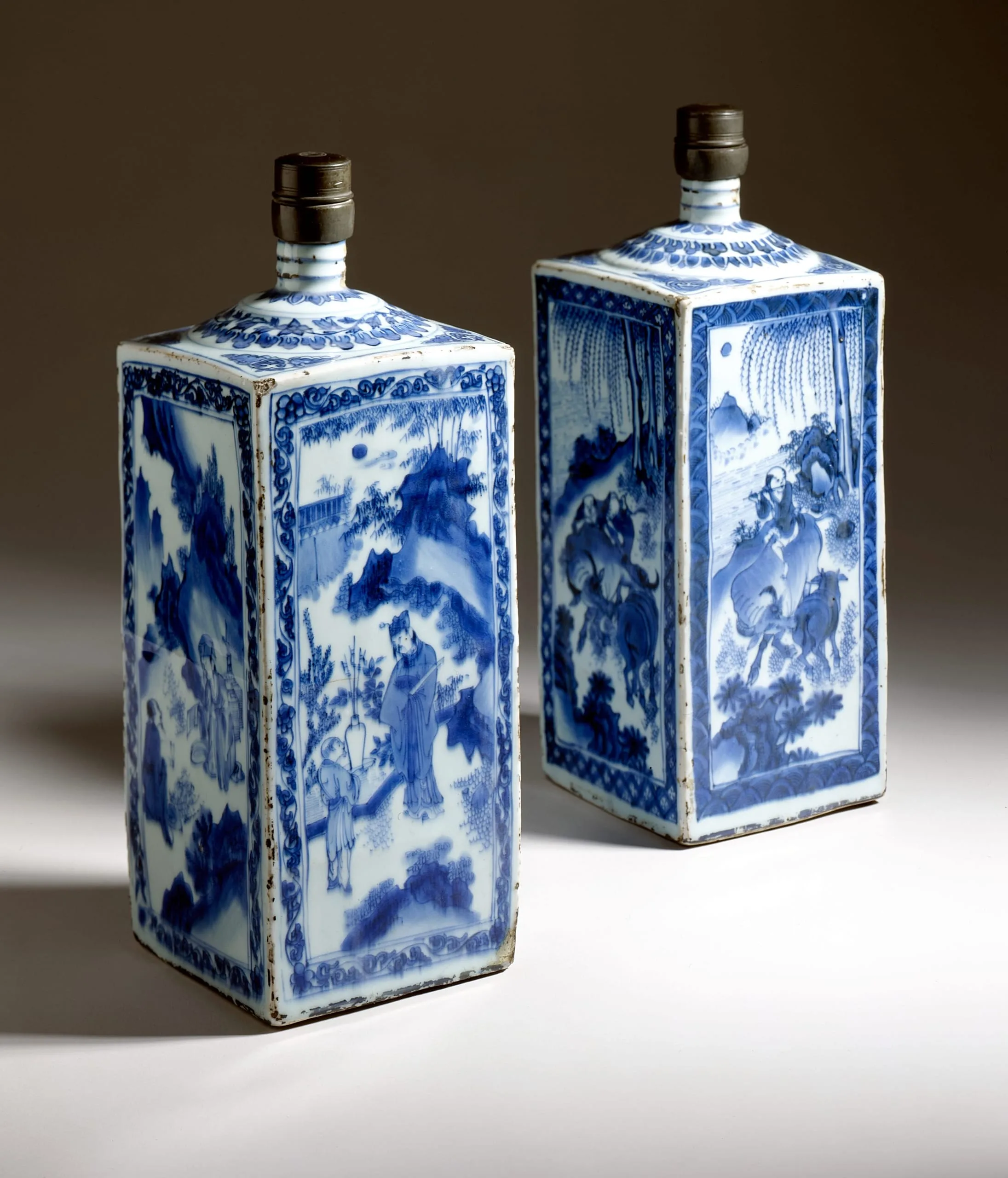
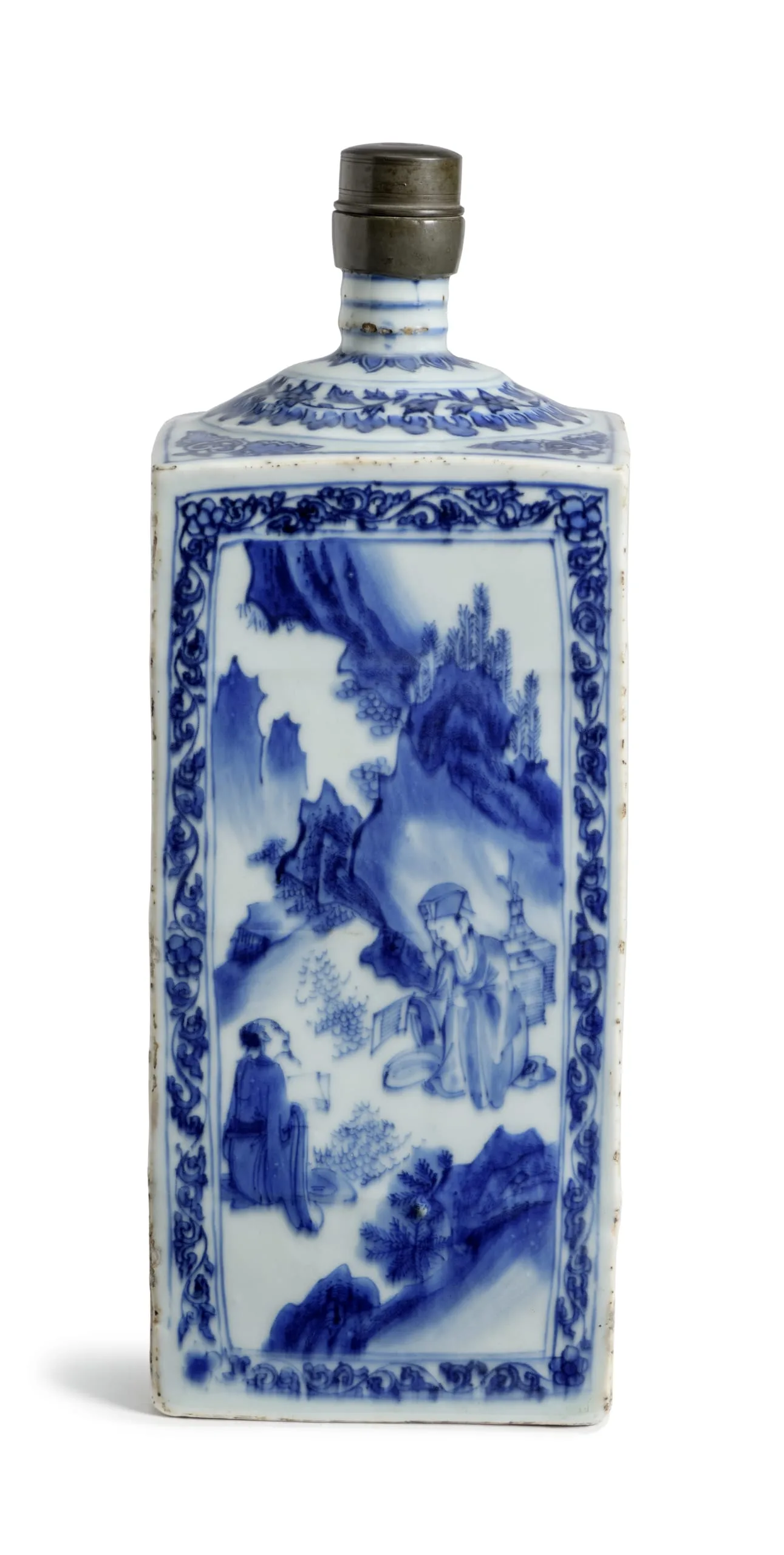
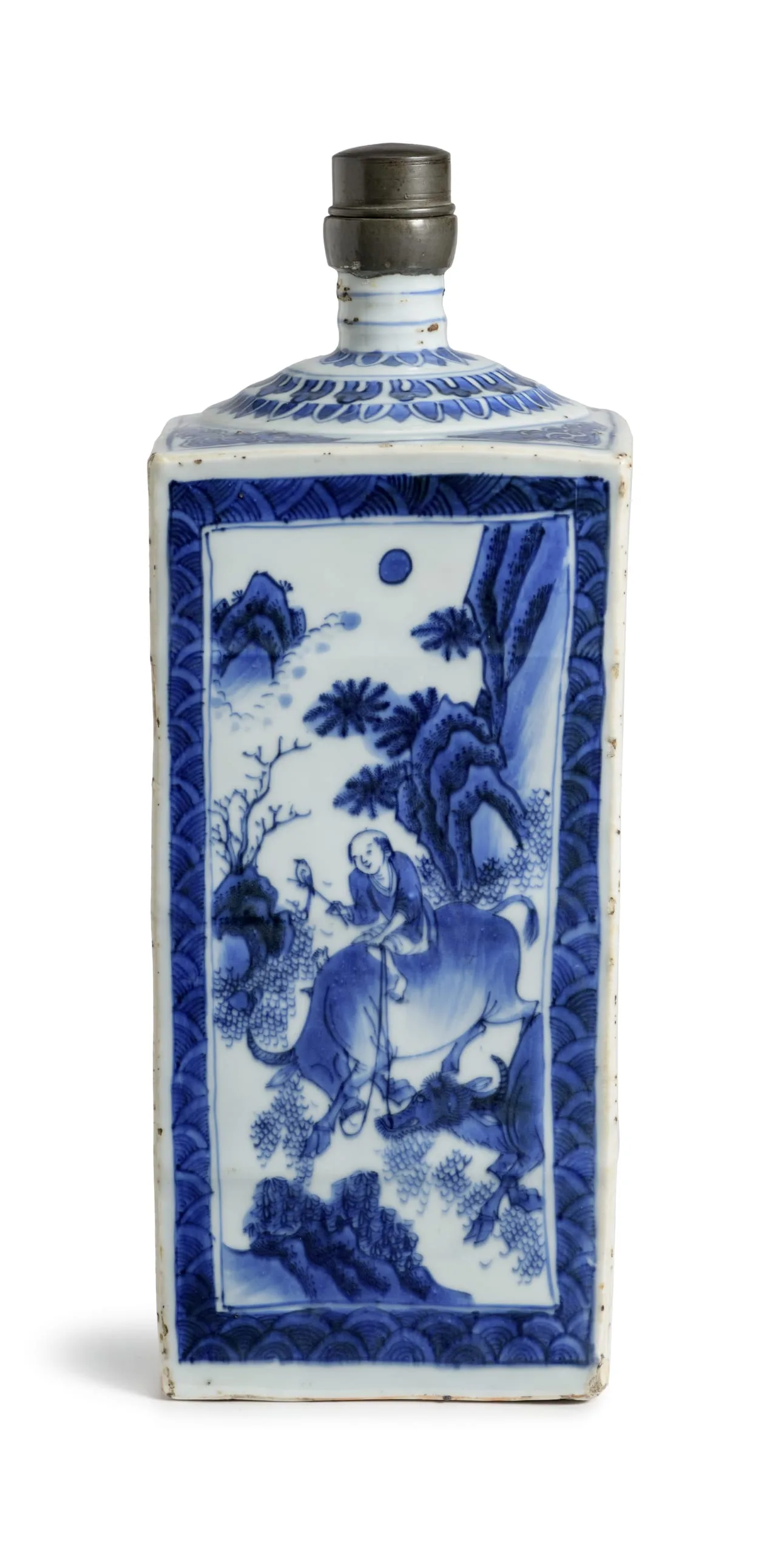
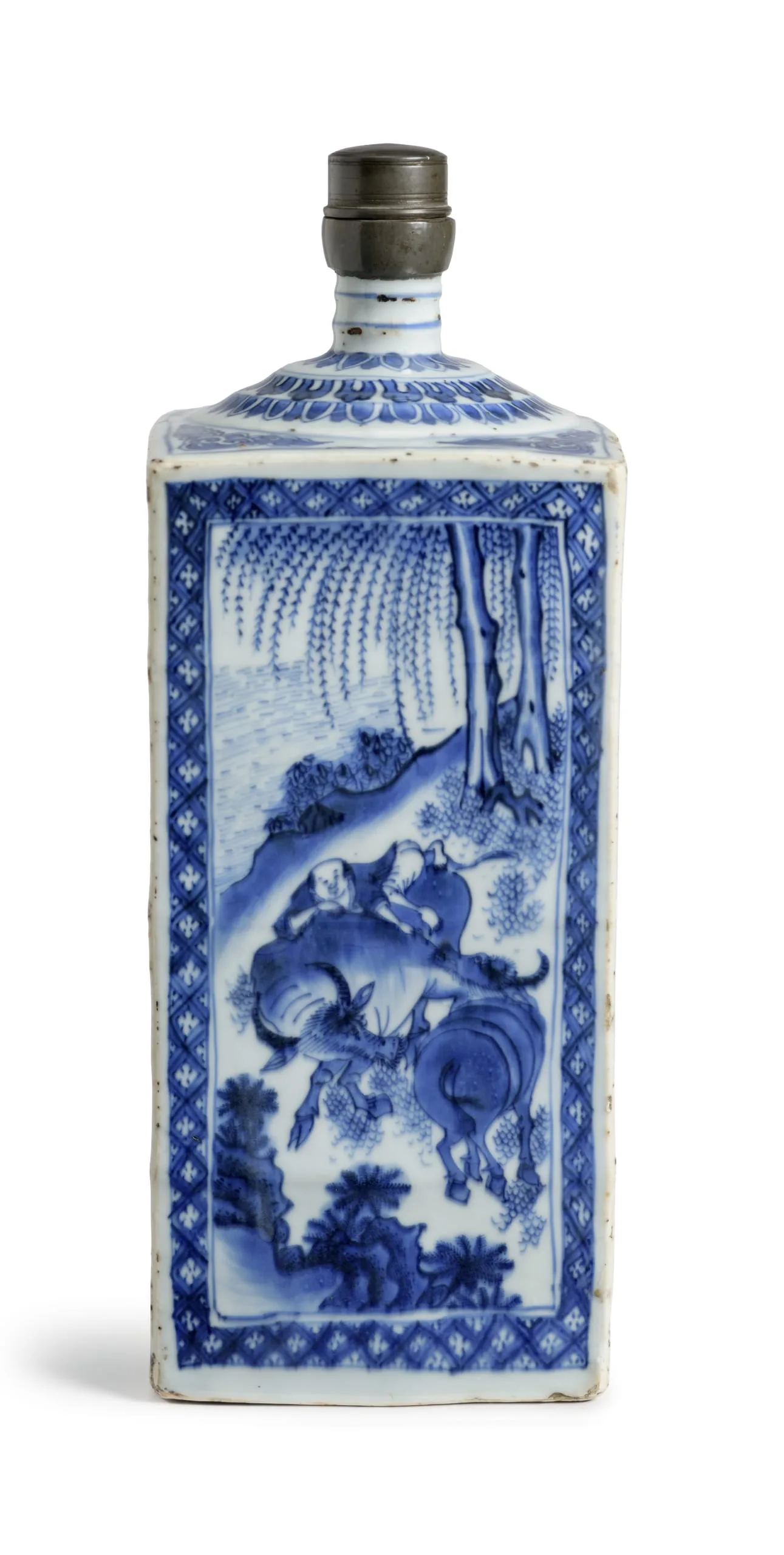
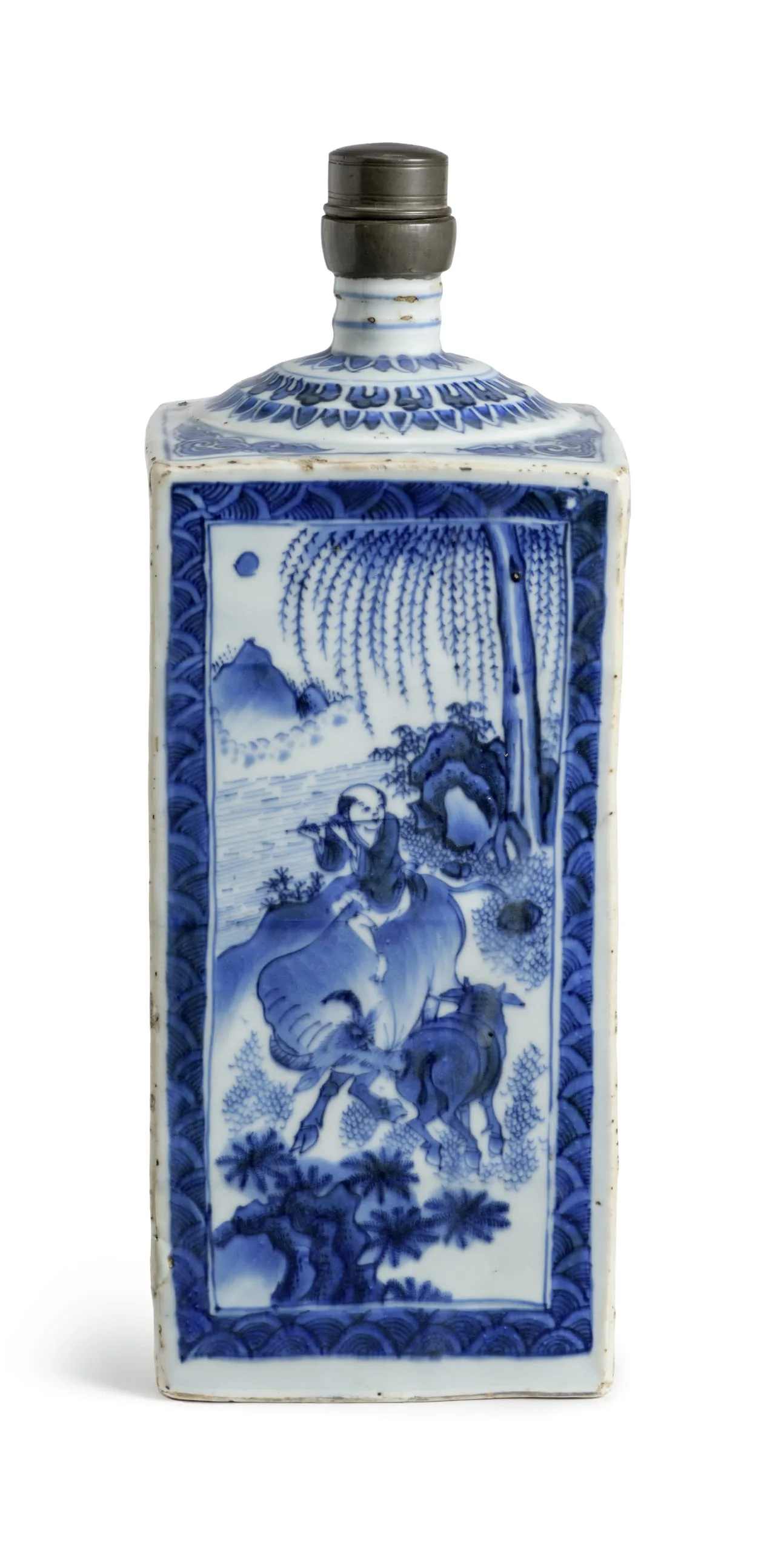
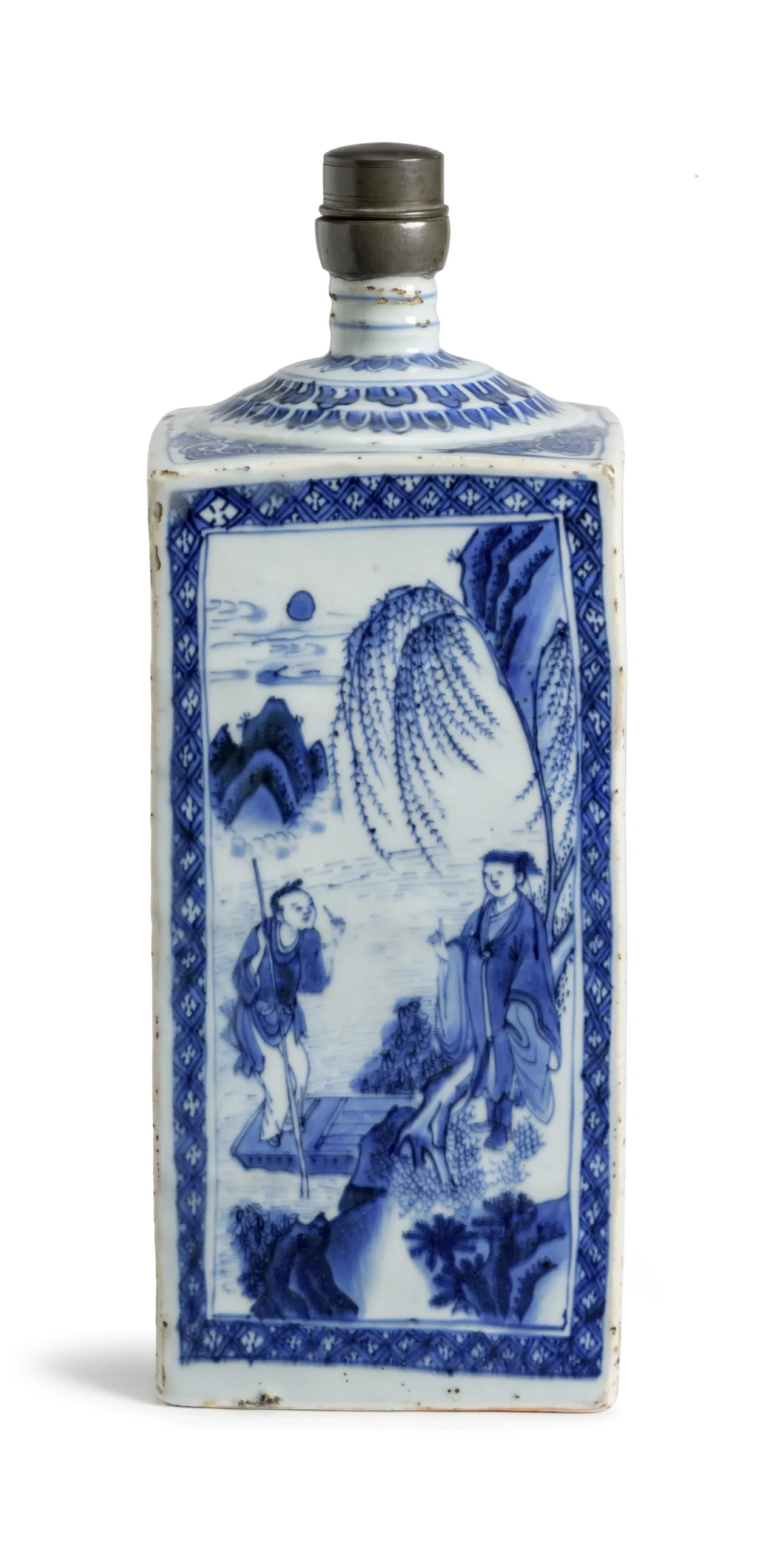
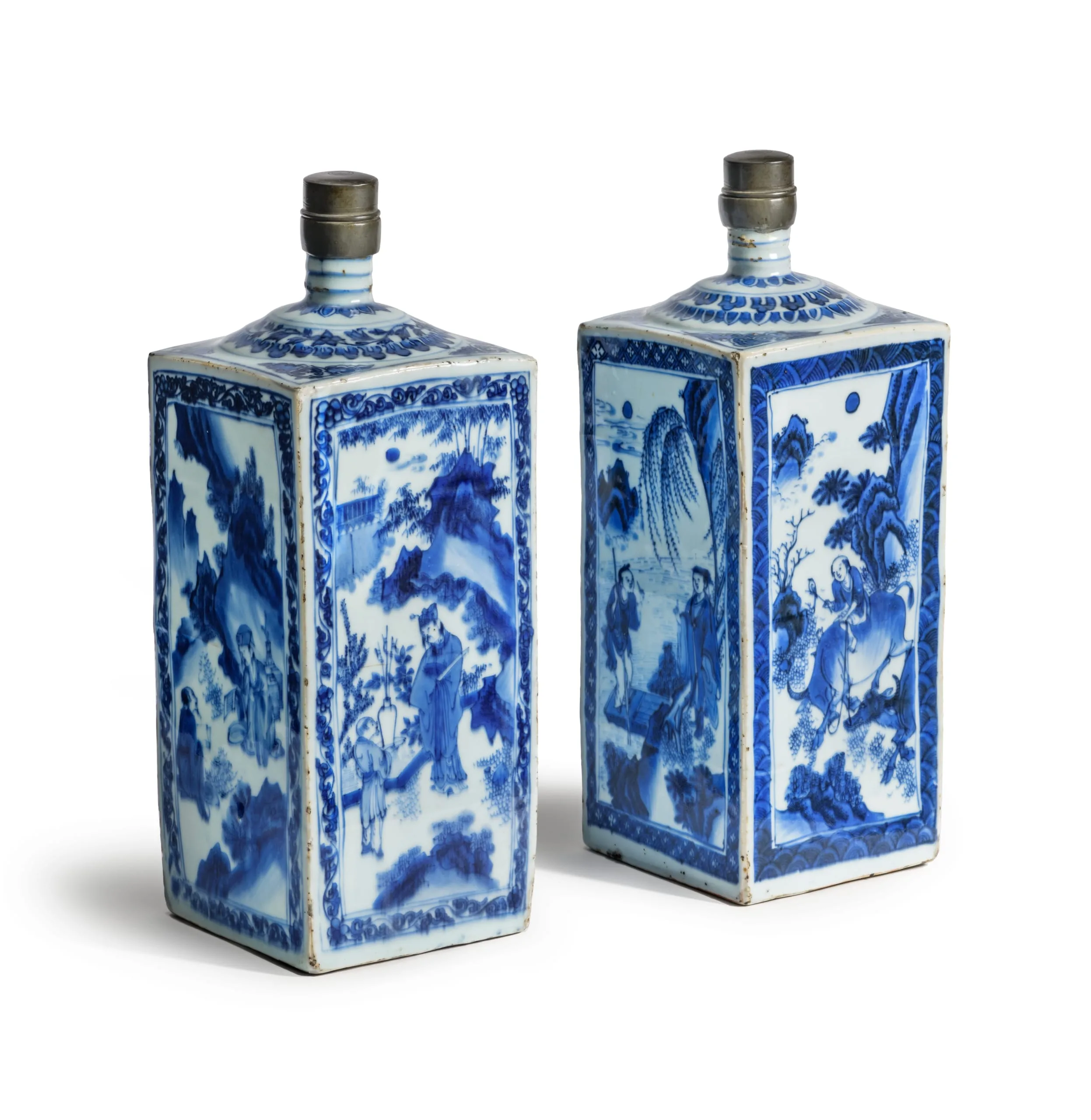
Pair of BottlesMing dynasty, Tianqi (1621-27) or Chongzhen (1628-44) reign

Not on view
Pair of Chinese blue-and-white square porcelain vessels with figural landscape panels, later fitted with metal lamp mounts at the neck
Pair of Chinese blue-and-white porcelain square-section bottles with metal fittings at neck, each face painted with figural and landscape scenes including figures in garden settings and animals among rocks and foliage, framed by scrolling border patterns.
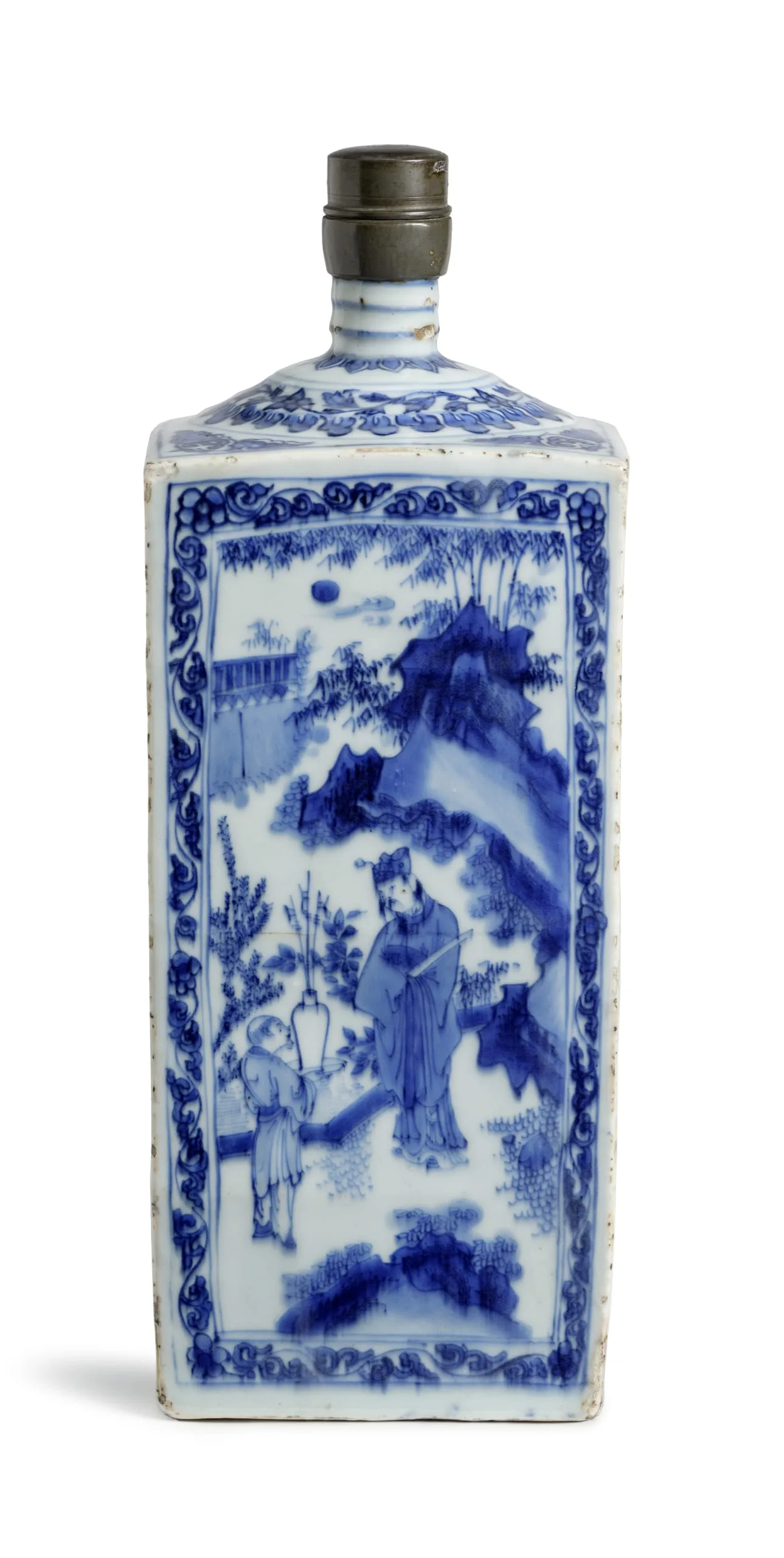
Tall rectangular Chinese porcelain bottle with metal stopper, decorated in underglaze blue and white with a garden scene featuring two standing figures, rocks, bamboo, and a pavilion, framed by scrolling floral borders on each panel.
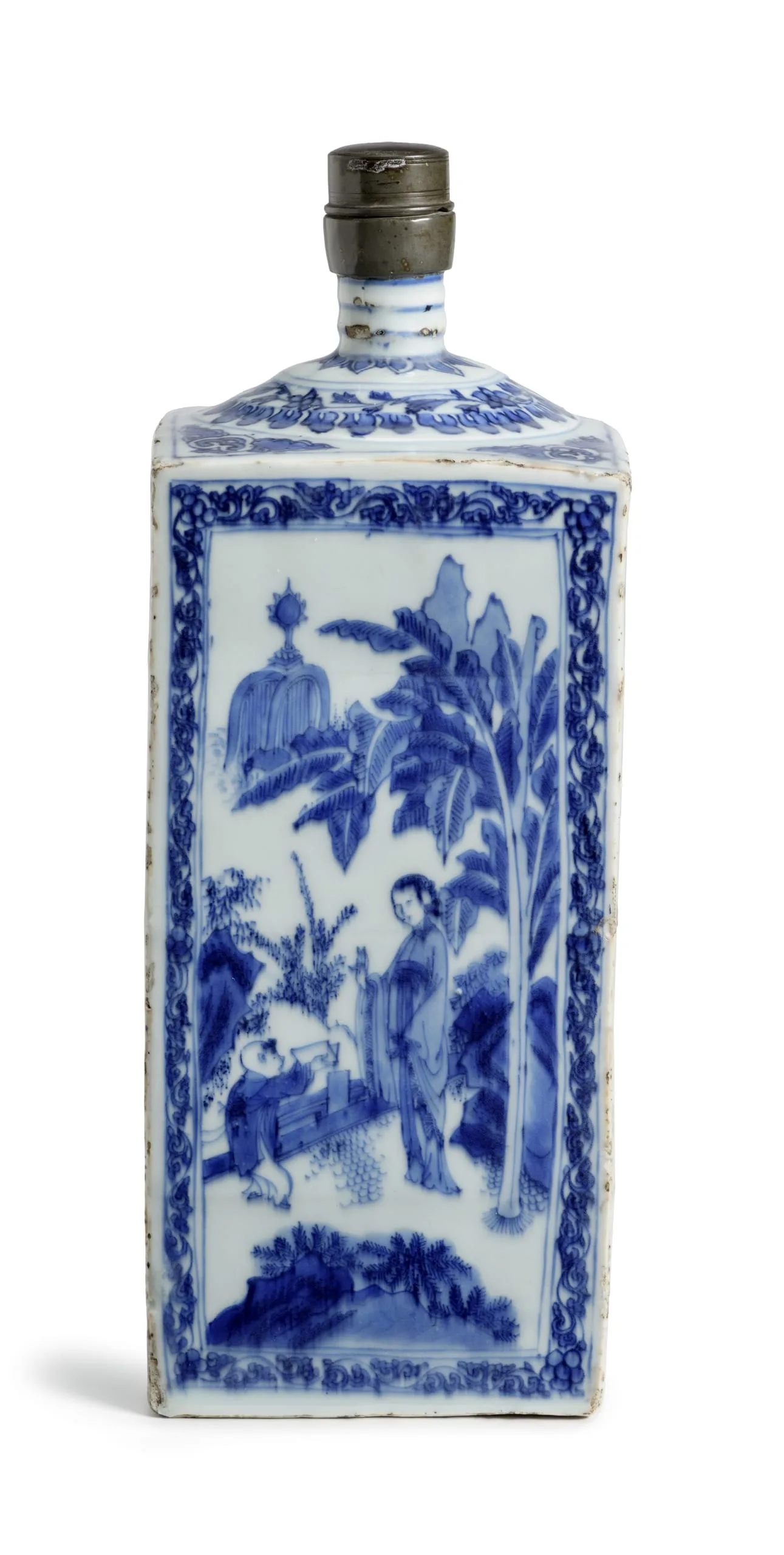
Chinese blue-and-white porcelain square bottle with metal stopper, painted with a garden scene depicting two figures among rocks, banana trees, and foliage within a decorative border.
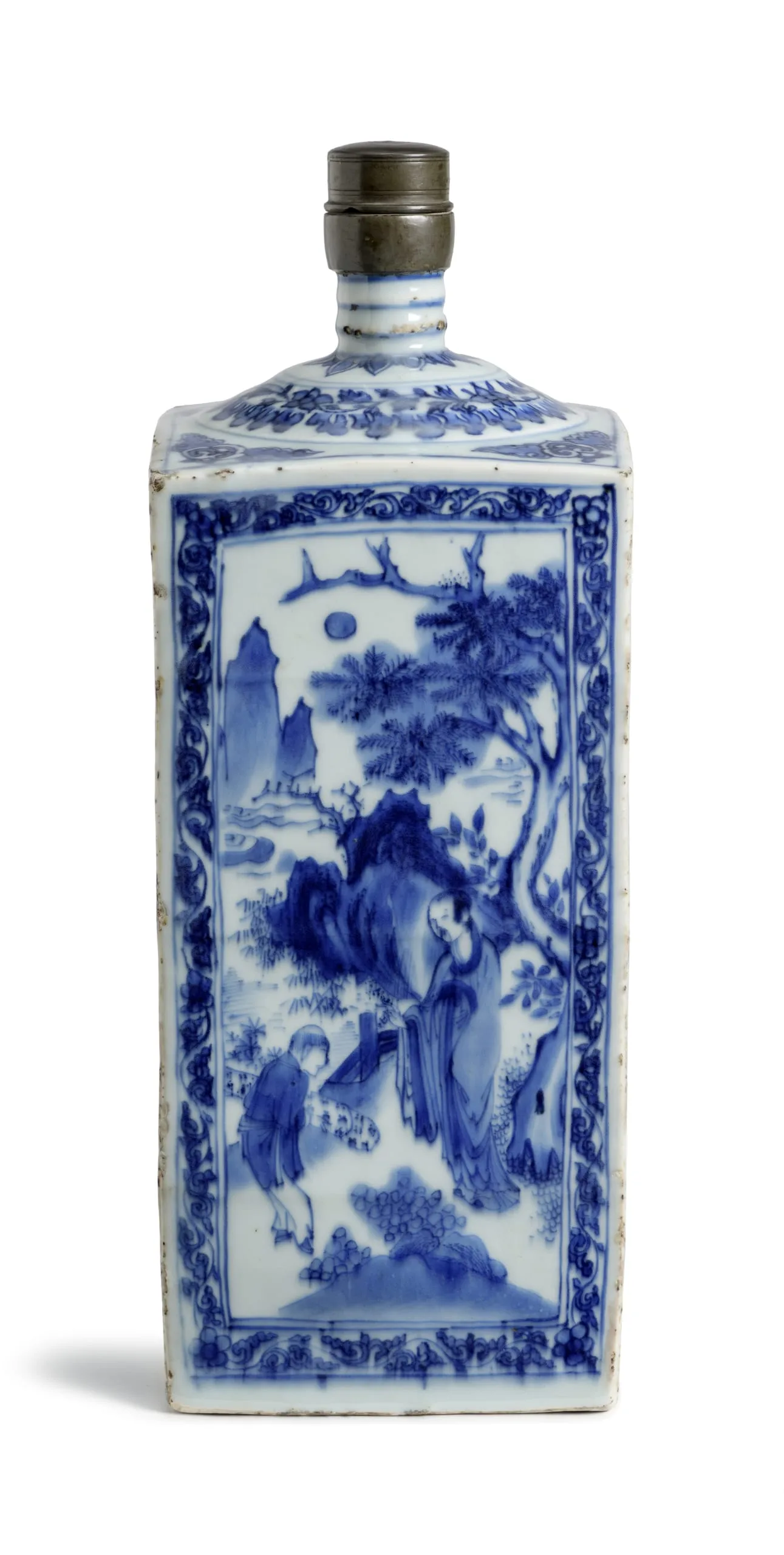
Chinese blue-and-white porcelain bottle with rectangular form and metal-fitted neck, decorated with a landscape scene showing two figures beneath a gnarled tree with rockwork and distant mountains, framed by scrolling foliate borders.
Chinese porcelain blue-and-white square bottle with metal-fitted neck, decorated with a landscape panel showing two robed figures among rocky outcroppings, framed by scrolling floral borders.
Chinese blue-and-white porcelain bottle of rectangular form with metal stopper, decorated with a painted panel depicting a robed figure beside a water buffalo in a landscape with rocks, trees, and a moon; bordered by wave-pattern bands.
Blue-and-white porcelain rectangular bottle with metal stopper, decorated with a painted scene of a figure on horseback beneath willow and pine trees, framed by a diaper-pattern border.
Chinese blue-and-white porcelain bottle with rectangular form and metal-mounted neck, decorated with a painted landscape scene of a robed figure on horseback beneath willow trees and a moon, framed by a scalloped wave-pattern border.
Blue-and-white porcelain flask with rectangular form and metal collar at neck; painted panel depicts two robed figures in a landscape with willow tree, rocks, and sun; geometric diaper border at shoulder.

Unknown, Pair of Bottles, Ming dynasty, Tianqi (1621-27) or Chongzhen (1628-44) reign, Los Angeles County Museum of Art, Gift of Mrs. James Porter Fiske, photo © Museum Associates/LACMA

Artist or Maker
Unknown
Title
Pair of Bottles
Place Made
China
Date Made
Ming dynasty, Tianqi (1621-27) or Chongzhen (1628-44) reign
Medium
Blue-and-white Porcelain
Dimensions
Height: 12 1/2 in. (31.75 cm); Diameter: 4 1/2 in. (11.43 cm) each
Credit Line
Gift of Mrs. James Porter Fiske
Accession Number
62.10.12-.13
Classification
Furnishings
Collecting Area
Decorative Arts and Design
Curatorial Notes

Beginning about 1635, Dutch East India Company merchants placed orders for specific types of porcelain vessels from kilns in Jingdezhen, sometimes including drawings and wood models. Dutch merchants often requested familiar European shapes decorated with Chinese motifs. The form of these porcelain bottles is possibly based on European glass bottles that were conveniently stackable for transport in crates.

The figural scenes on each side are characteristic of narrative images painted on porcelain objects made for the domestic Chinese market during the reign of the Chongzhen emperor (1628−44). In one scene, a boy holds a touhu (vase of arrows) up to a scholar-official; this refers to a drinking game known in English as pitch-pot, in which players try to throw arrows into the neck of a tall, narrow vase. Other scenes include the education of Mengzi, an early Confucian scholar, and a herd boy riding a water buffalo, an animal that, when tamed, symbolizes the enlightened mind in Zen Buddhism. Although these scenes are not directly related, they all center on upright human behavior and good government, focal points of Confucian teachings that reflect a nostalgia for the more stable rule of China’s remote antiquity.

Such bottles circulated within Dutch East India Company networks. Company officials would commission sets of these rectangular bottles, usually containing liquor or scented oils, to give as diplomatic gifts when meeting with rulers and dignitaries across Asia and Africa. Consumers in Europe often referred generically to imported blue-and-white porcelain as “Chinese,” regardless of actual origin. In response to the growing demand for porcelain, Dutch ceramists began producing glazed earthenware, known as Delftware, which imitated Chinese motifs and sometimes intermingled them with European decorations. In this process, the motifs’ original meanings were effaced, and “Chineseness” in the European imaginary grew increasingly aestheticized and removed from cultural specificity.

Diva Zumaya, The World Made Wondrous (2023), 90
Selected Bibliography
  • Zumaya, Diva. The World Made Wondrous: the Dutch Collector's Cabinet and the Politics of Possession. Los Angeles: Los Angeles County Museum of Art, 2023.
Selected Exhibition History
  • Chinese Ceramics from The Los Angeles County Museum of Art. Tuesday, January 24, 2017 - Saturday, July 22, 2017

Related Exhibitions