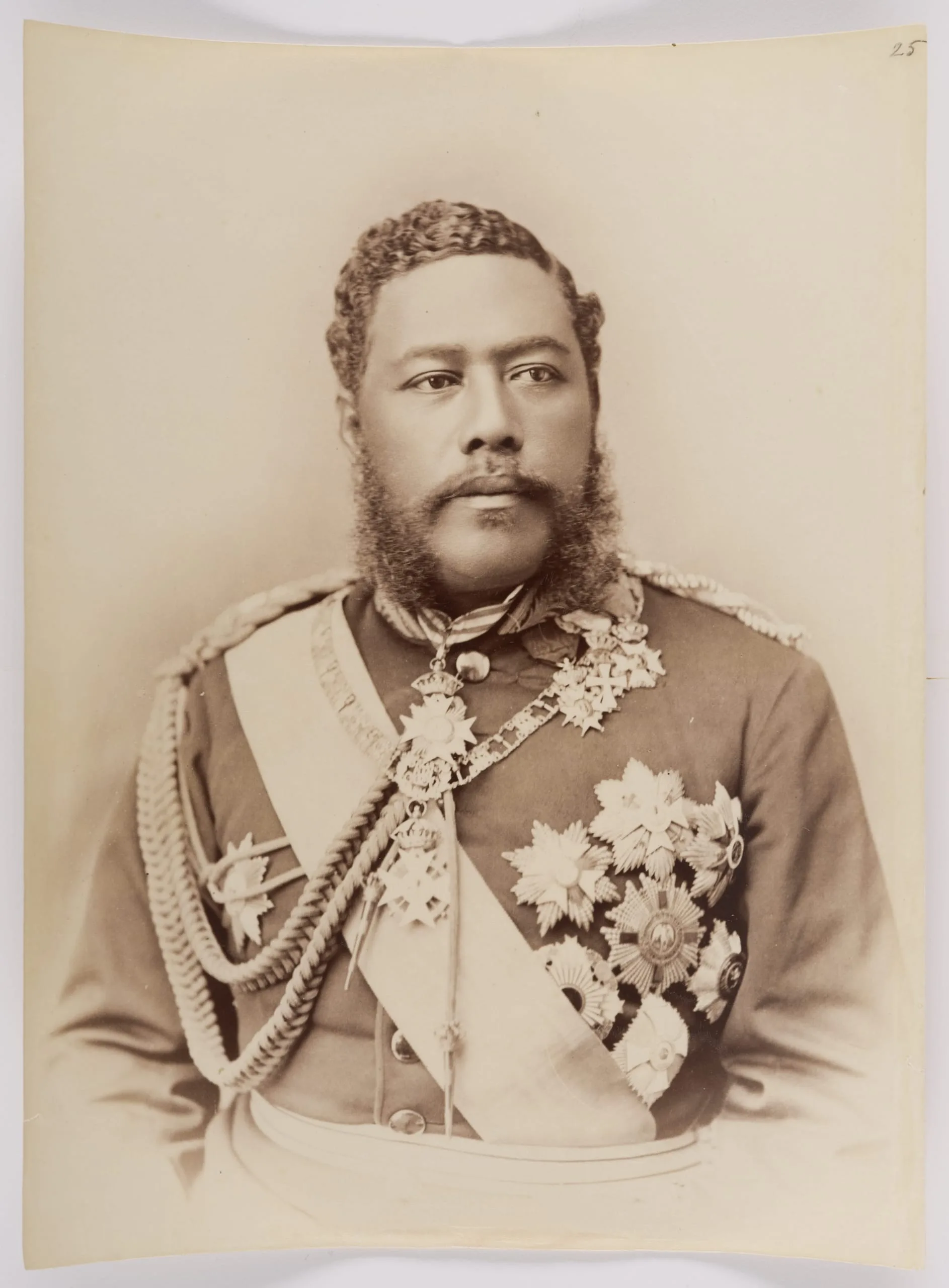
The son of a high chief, Kalākaua was a candidate to the throne in 1873 but lost the election to Lunalilo. When Lunalilo died the following year, the legislature then elected Kalākaua.
For many decades under Christian missionary teachings, Hawaiian beliefs and traditions were suppressed. Kalākaua did not support such teachings, and instead he and his queen, Kapi'olani, lived by the motto, “Ho'oulu Lahui,” Increase the Nation. He advocated for a renewed sense of pride in all things Hawaiian such as the arts, medicine, music, and hula. 'Iolani Palace, constructed during Kalākaua’s reign, was not only a symbol of Hawaiian ingenuity and sovereignty, but of the grandeur and lavishness of his rule as well.
Ancient Hawaiians had no written language, but used oral traditions like chant and hula to record such things as genealogy, mythology, history, and religion. Hula, the dance of Hawaiian people, was one means by which culture was expressed and chronicled. The King not only relied on these traditional forms of documentation, but during a time of heightened literacy in the islands, Kalākaua spoke with kupuna, elders, eventually compiling their stories into a book, “Legends and Myths of Hawaii.” By supporting the practice and expression of Hawaiian knowledge, Kalākaua ensured that future generations would inherit a robust Hawaiian heritage.
King David Kalākaua commemorated his 50th birthday with a two-week celebration of Hawaiian culture on the 'Iolani Palace grounds. Known as the “Silver Jubilee,” the 1886 festivities featured ho'opa'a (chanters) and 'olapa (dancers) performing in public for the first time in years.
A parade wound its way through downtown Honolulu to the palace, where throngs of well-wishers lined up to offer gifts and pay their respects to Kalākaua. One gift was a book, “Na Mele 'Aimoku,” compiling 48 chants honoring the king, past rulers, and other traditional compositions passed down through the generations. Today, this rich source of traditional chants provides us with insights into the poetic expressions of the Hawaiian language.
On January 16, 1893 the Hawaiian Kingdom was invaded by United States marines which led to the illegal overthrow of the Hawaiian government the following day.
Photo also on Hawaii State Archives, call number: PPWD-15-4-018. date circa 1882, and photographer: JJ Williams.