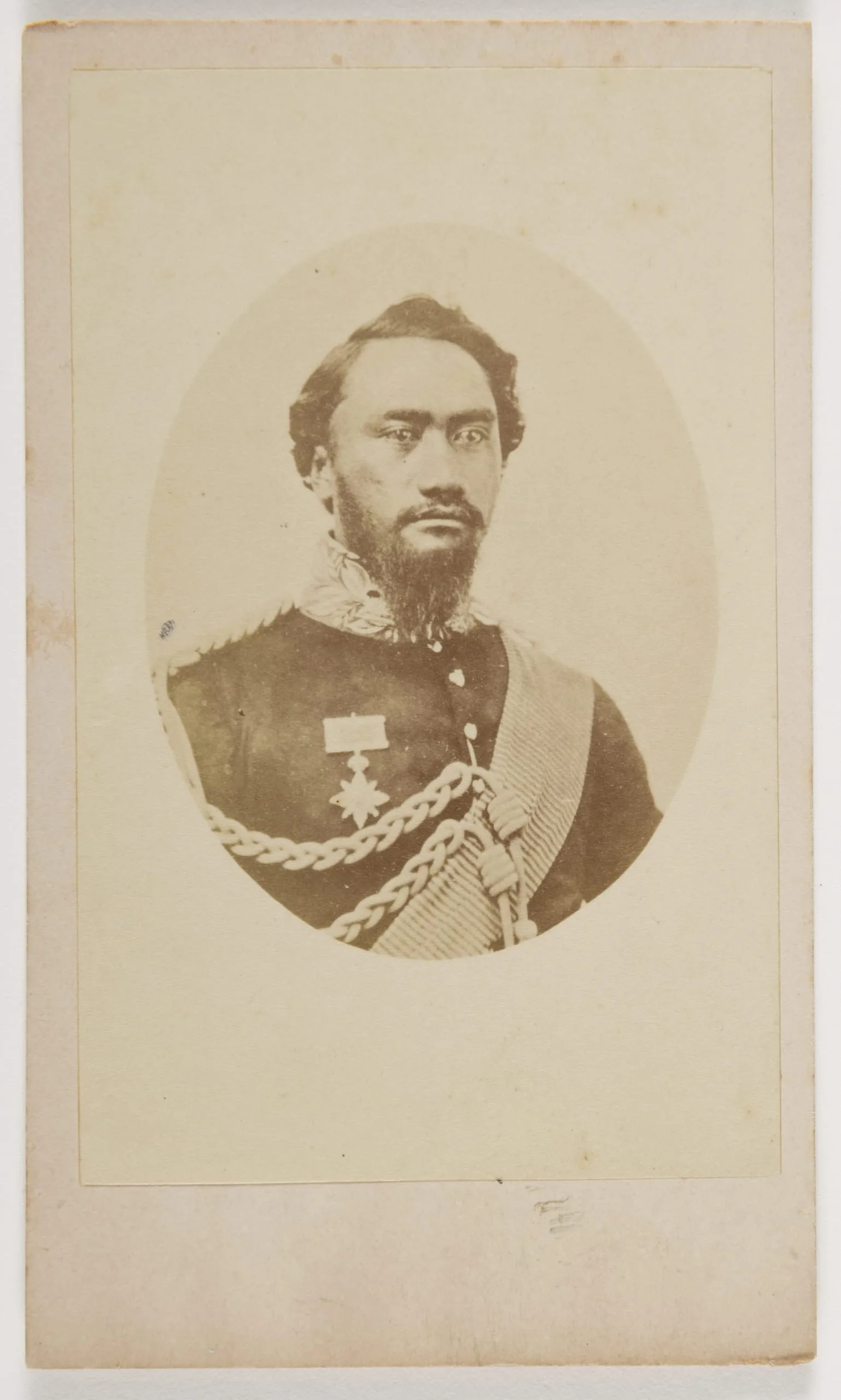
Upon the death of Kamehameha III, Alexander Liholiho succeeded as King Kamehameha IV. Concerned with the decimation of the Hawaiian people from introduced diseases, Kamehameha IV and his wife, Queen Emma, strongly opposed the annexation of their kingdom by the United States and strove to protect and provide for their subjects. They were responsible for introducing a number of social and economic reforms to improve island life including building the Queen's Hospital in Honolulu in 1860. They expanded Hawaii's commercial interests by establishing the first chamber of commerce and developed good foreign relations with other nations to counteract the increasing dominance of the United States. They worked worked tirelessly to control the influence that other nations had on island life, in an attempt to preserve Hawaiian island culture. They were also influential in establishing the Episcopal Church in Hawai‘i. The death of their only child Prince Albert Edward Kauikeaouli had a devastating effect on the King who withdrew from public life in 1862 to mourn his young son. The King died of chronic asthma the following year. He was buried next to his son at Mauna Ala.
On January 16, 1893 the Hawaiian Kingdom was invaded by United States marines which led to the illegal overthrow of the Hawaiian government the following day.
Photo is from the book The Pilgrims of Hawai'i: Their Own Story of Their Pilgrimage from New England and Life Work in the Sandwich Islands, Now Known as Hawai'i (1918) by Orramel Hinckley Gulick, Ann Eliza Clark Gulick. page.56.