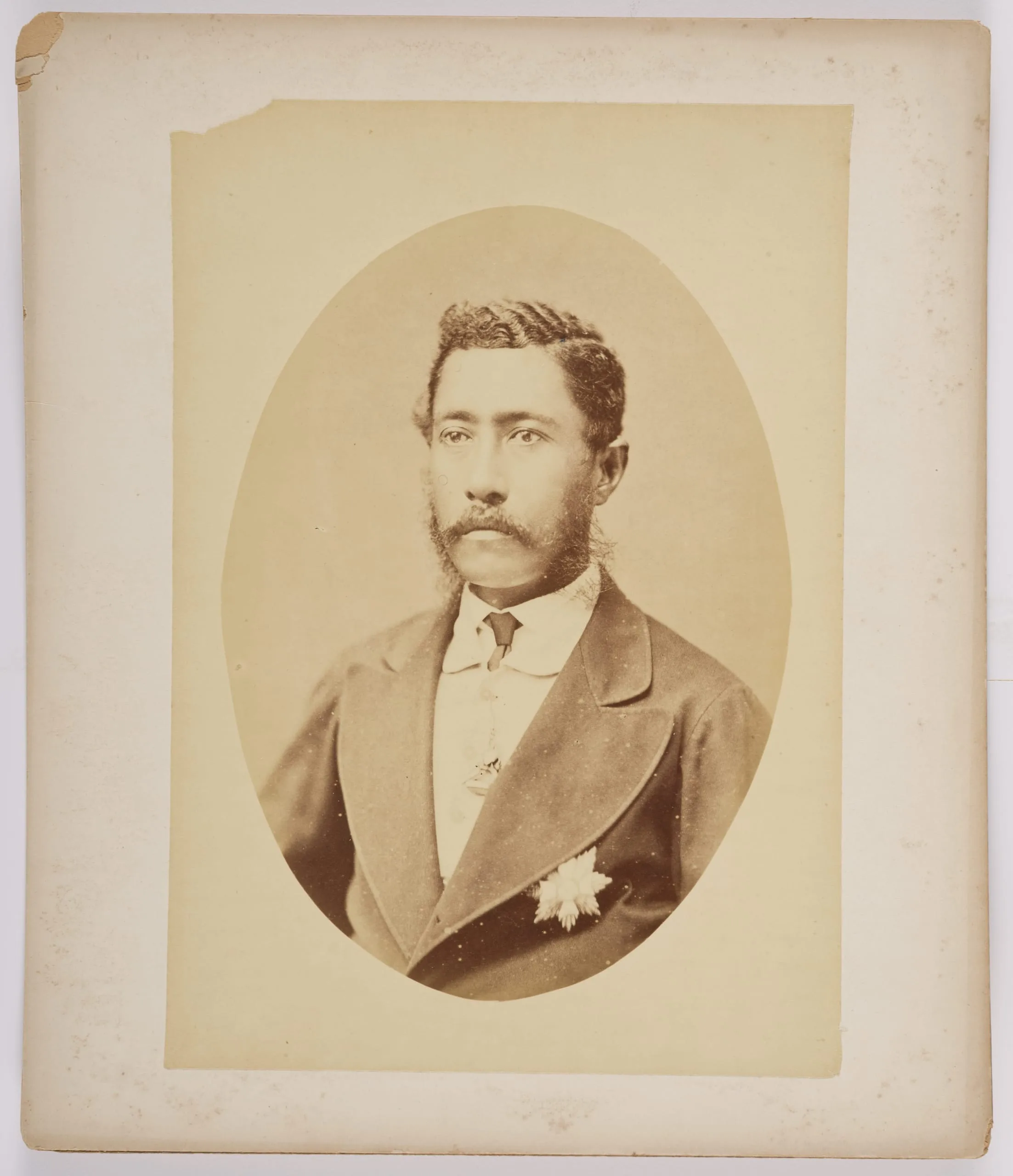
Photo also found in Hawai'i State Archives digital collections.
Prince William Charles Lunalilo was born on January 31, 1835 to High Chiefess Miriam ʻAuhea Kekāuluohi (Kuhina Nui, or Premier of the Hawaiian Kingdom and niece of Kamehameha I) and High Chief Charles Kanaʻina. Lunalilo’s grandparents were Kalaʻimamahū (half brother of Kamehameha I) and Kalākua (sister to Kaʻahumanu). His great grandfather was Keōuakupupāikalaninui (father of Kamehameha I).
From a very young age, he loved to write, and his favorite subjects in school were literature and music. He composed Hawaiʻi's first national anthem, E Ola Ke Aliʻi Ke Akua, or, “God Save the King.”
In the Hawaiʻi Constitutional Convention of 1864, Lunalilo strongly supported the cause of the people against unnecessary interference by any ruler and also the proposal for a more democratic government with two houses of the legislature, a House of Nobles and a House of Representatives. He wanted a constitution that favored the people and gave less power to the king.
Kamehameha V had not named a successor to the throne before he died on December 11, 1872. Lunalilo wanted his people to choose their next ruler in a democratic manner and requested a plebiscite to be held on New Year's Day. Prince David Kalākaua and others not in the Kamehameha lineage chose to run against Lunalilo. The people on every island unanimously chose Lunalilo as King.
As a proponent of democracy and more freedom of choice for his people, he did not name a successor before his death because he believed that the people should, again, choose their leader. His trait of “Lokomaikaʻi” followed him in death because of his desire to do what was best for the people.
On January 16, 1893 the Hawaiian Kingdom was invaded by United States marines which led to the illegal overthrow of the Hawaiian government the following day.