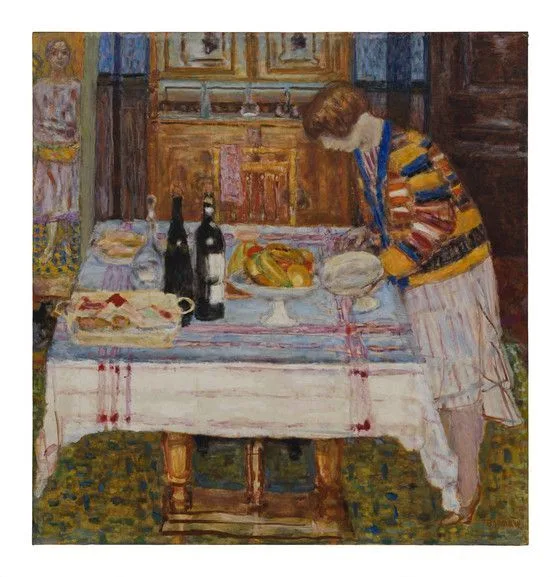
The artist, sold November 1925 to; [Galerie Bernheim-Jeune, Paris, to]; Gaston Bernheim de Villers (1870–1953), Paris, by as early as 1938. [Sam Salz (1894–1981) Inc., New York, probably c. 1950].(1) William (1903–1969) and Edith Mayer (1905–1988) Goetz, Los Angeles (sale, New York, Christie’s, 14 November 1988, lot 27, to);(2) A. J. Perenchio (1930–2017), Los Angeles, gifted 2025 to; Los Angeles County Museum of Art
Footnotes
(1) The Getty Research Institute Photo Archive and the National Gallery of Art’s Art Dealer Archives contain a Sam Salz black-and-white photograph of this painting with a Sam Salz Archive stamp and label on the verso. A label on the back of the painting also refers to Sam Salz: “SS 174 New York.”
(2) Film producer William Goetz and his wife, Edith, the daughter of the film mogul Louis B. Mayer, were part of Hollywood’s heyday, and by the 1940s they had started amassing what would become one of the finest West Coast collections of Impressionist and modern art. In addition to this Bonnard, the Goetzes owned Cézanne’s The Rondest House, l’Hermitage, Pontoise, cat. 7. They probably purchased the work from Sam Salz.