LACMA

ShopMembershipMyLACMATickets
LACMA
Los Angeles County Museum of Art
5905 Wilshire Blvd.
Los Angeles, CA 90036
info@lacma.org
(323) 857-6000
Sign up to receive emails
Subscribe
© Museum Associates 2025

Museum Hours

Monday

11 am–6 pm

Tuesday

11 am–6 pm

Wednesday

Closed

Thursday

11 am–6 pm

Friday

11 am–8 pm

Saturday

10 am–7 pm

Sunday

10 am–7 pm


  • About LACMA
  • Jobs
  • Building LACMA
  • Host An Event
  • Unframed
  • Press
  • FAQs
  • Log in to MyLACMA
  • Privacy Policy
© Museum Associates 2025
Collections

Unknown
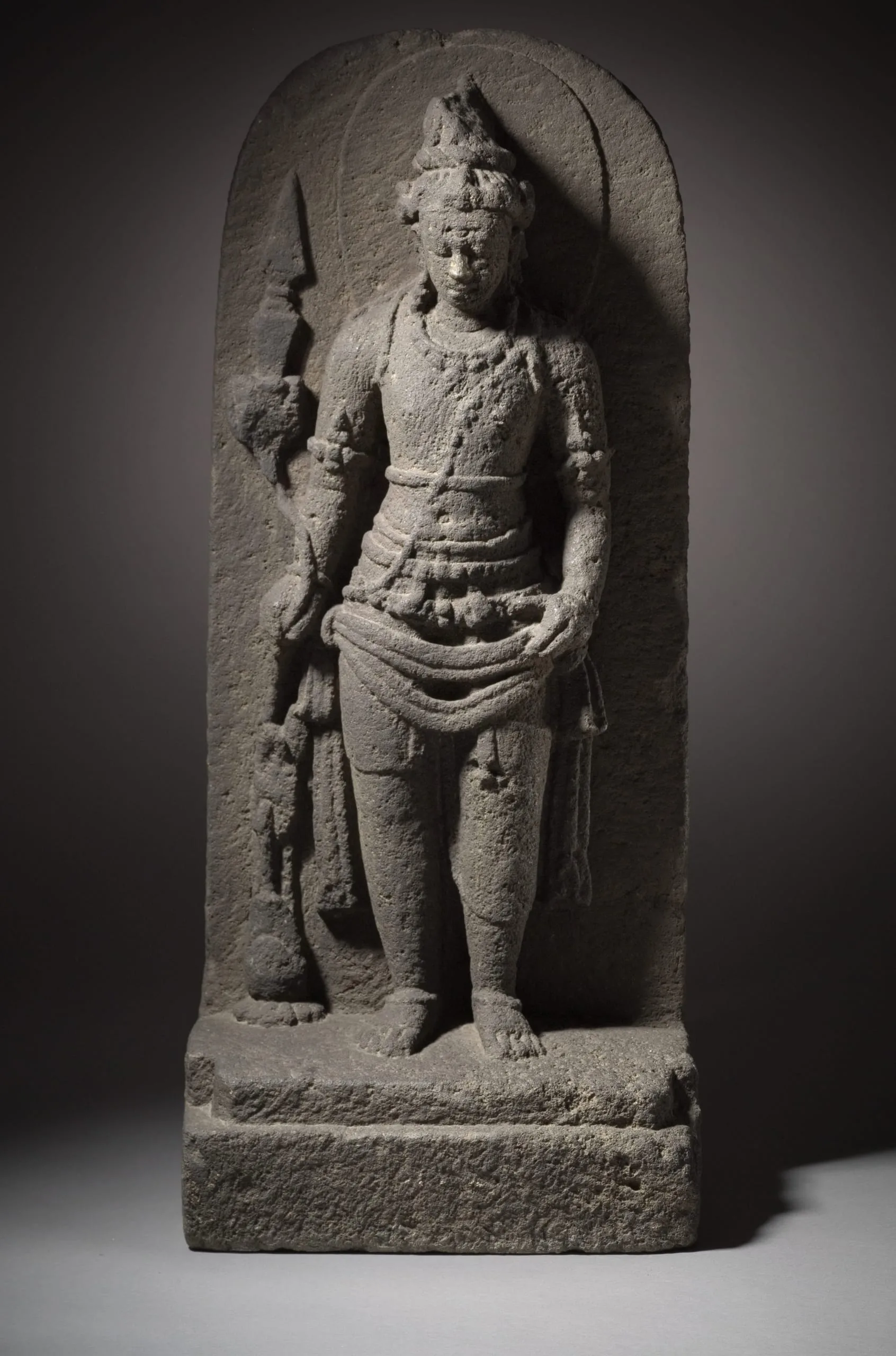
Indra, Chief of the Gods9th century

On view:
Geffen Galleries, Navigating Pacific Asia
Gray stone relief sculpture of a standing male figure in elaborate headdress, jewelry, and draped cloth, carved against an arch-topped slab
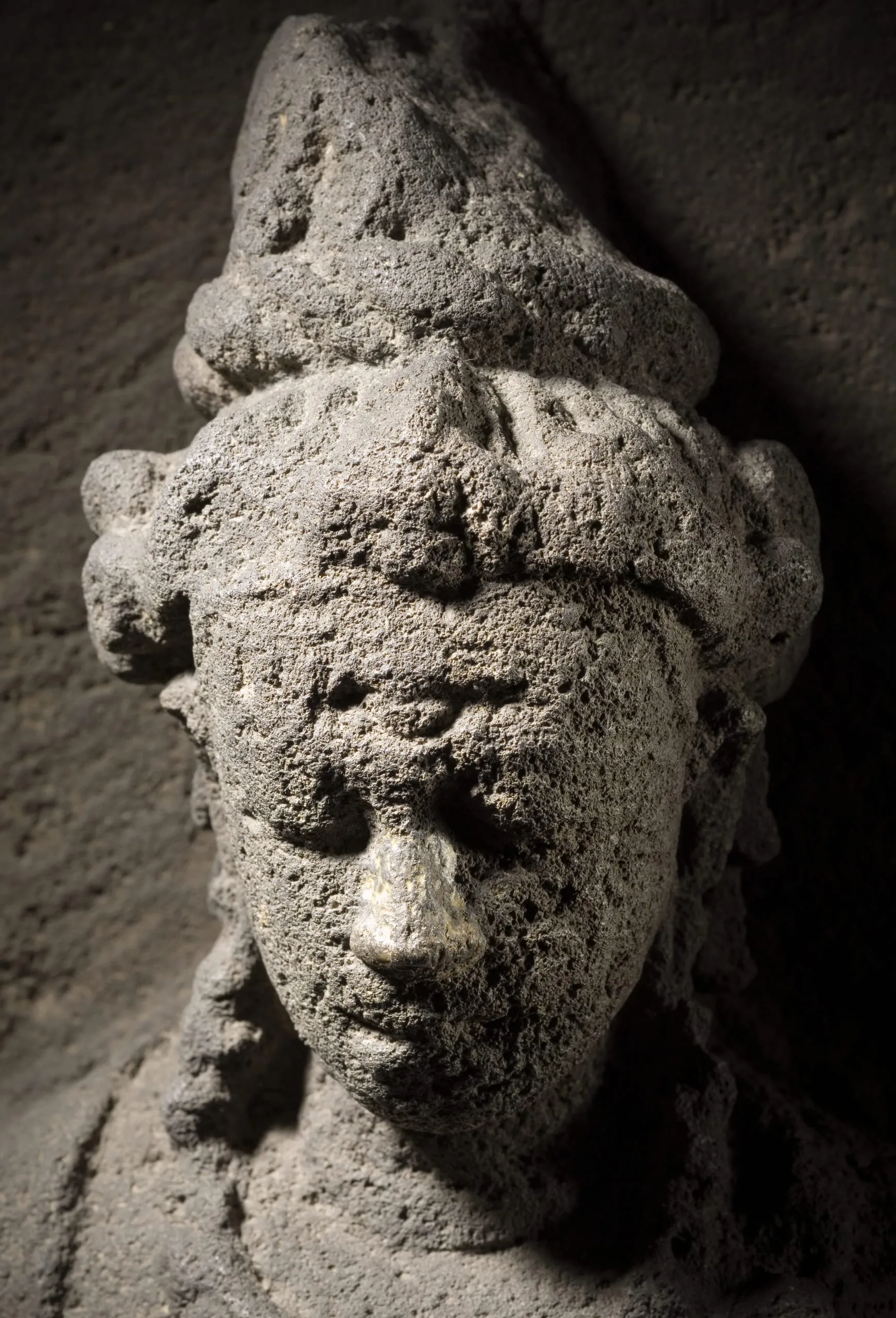
Stone sculptural head with heavily weathered, porous surface, facing slightly downward; features an elaborate stacked headdress, with carved facial details partially eroded, photographed against a dark background.
Artist or Maker
Unknown
Title
Indra, Chief of the Gods
Place Made
Indonesia, Central Java
Date Made
9th century
Medium
Volcanic stone
Dimensions
33 3/4 x 14 1/2 x 11 3/4 in. (85.73 x 36.83 x 29.85 cm)
Credit Line
Los Angeles County Fund
Accession Number
60.52.2
Classification
Sculpture
Collecting Area
South and Southeast Asian Art
Curatorial Notes

Like his Norse counterpart, Thor, the Vedic (proto-Hindu) deity Indra, was considered the god of lightning and thunder, and was intimately associated with the life-giving monsoonal rains. In this rare and possibly unique extant Central Javanese image of Indra (Brown 2008, 86-87), he can be identified by his primary attribute of the thunderbolt (vajra) that is positioned vertically on top of a lotus growing out of a vase beside his right foot, and by the horizontal eye on his forehead. His right hand holds the lotus stock and his left hand rests on his hip. He is nimbate, crowned, and wears profuse jewelry, including the Brahmanical sacred thread (yajnopavita) worn over his left shoulder. In addition to his religious role as the king of the gods, Indra also served an auxiliary function as a directional guardian (dikpala) in which he was the Divine Regent of the East (see M.2013.57a-b). In this context, the image may have been erected in a subsidiary shrine devoted to the directional guardians.
Selected Bibliography
  • Brown, Robert L. "Selections From the Southeast Asian Art Collection of the Los Angeles County Museum of Art." Arts of Asia 38 (3): 75-87 (May-June 2008)