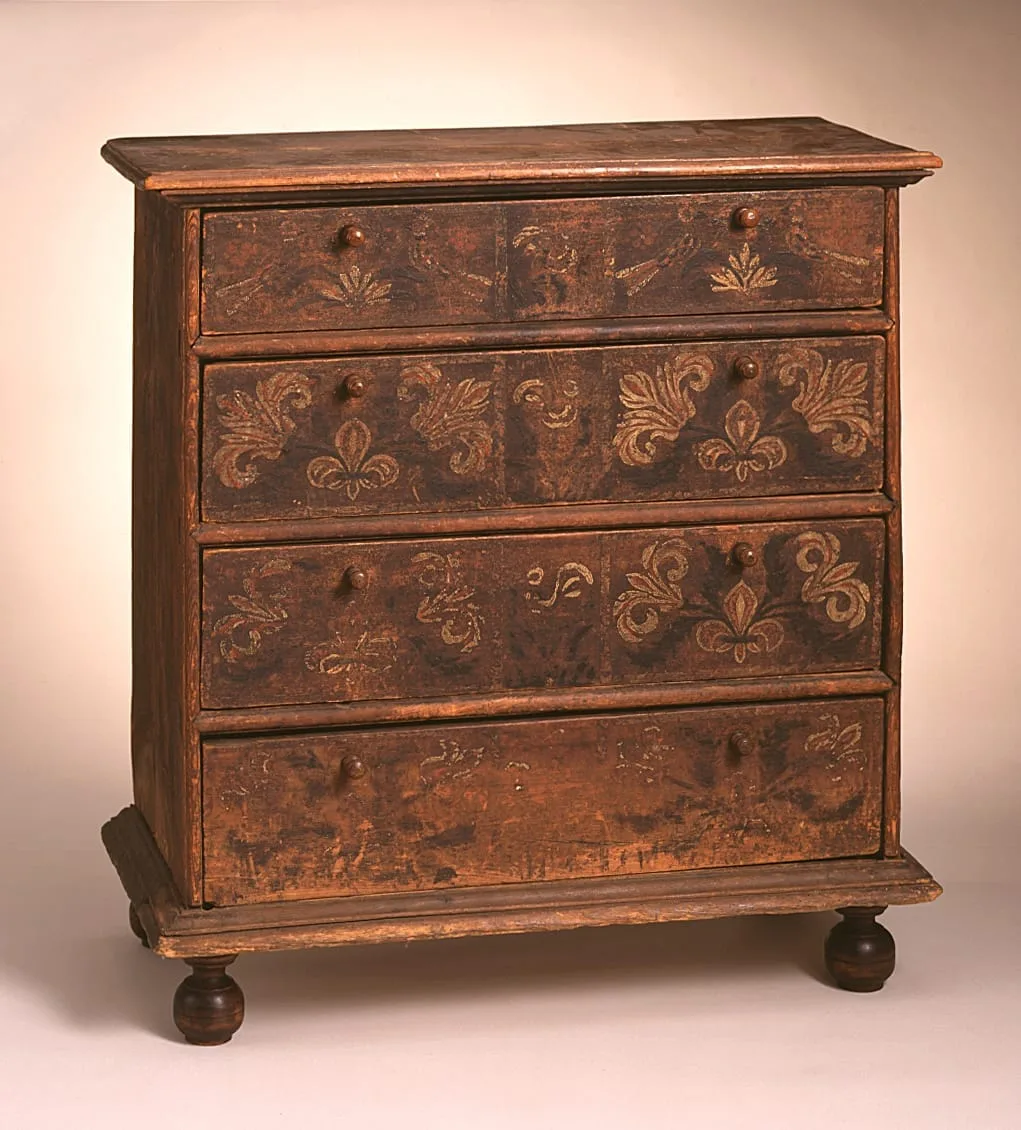
Boards almost inch thick forms the drawers of this early eighteenth-century chest, in its time an innovative piece of furniture. From the Middle Ages onward householders had used lidded chests for storage, and their simple forms changed only very slowly. The addition of pull drawers to the lift-top chest was a successful modification, and during the seventeenth century two- and even three drawer chests were made. Finally cabinetmakers did away with the lidded compartment altogether, creating this type of four-drawer chest, which is still found today.
In many ways this chest cheerfully pretends to a status it does not possess. The once-vivid painted decoration of birds, fleurs-de-lis, and flowers was intended to suggest the elaborate inlaid and japanned designs found on more complicated European pieces. The painted decoration relates to other examples generally attributed to coastal Connecticut.
The chest's construction is both solid and sophisticated. Single dovetails join drawer fronts and sides. Along with the heavy construction and use of side runners to support the drawers, these features suggest an early eighteenth-century date in a period of rapidly changing technology and form.