LACMA

ShopMembershipMyLACMATickets
LACMA
Los Angeles County Museum of Art
5905 Wilshire Blvd.
Los Angeles, CA 90036
info@lacma.org
(323) 857-6000
Sign up to receive emails
Subscribe
© Museum Associates 2025

Museum Hours

Monday

11 am–6 pm

Tuesday

11 am–6 pm

Wednesday

Closed

Thursday

11 am–6 pm

Friday

11 am–8 pm

Saturday

10 am–7 pm

Sunday

10 am–7 pm


  • About LACMA
  • Jobs
  • Building LACMA
  • Host An Event
  • Unframed
  • Press
  • FAQs
  • Log in to MyLACMA
  • Privacy Policy
© Museum Associates 2025
Collections

Alexander Fisher
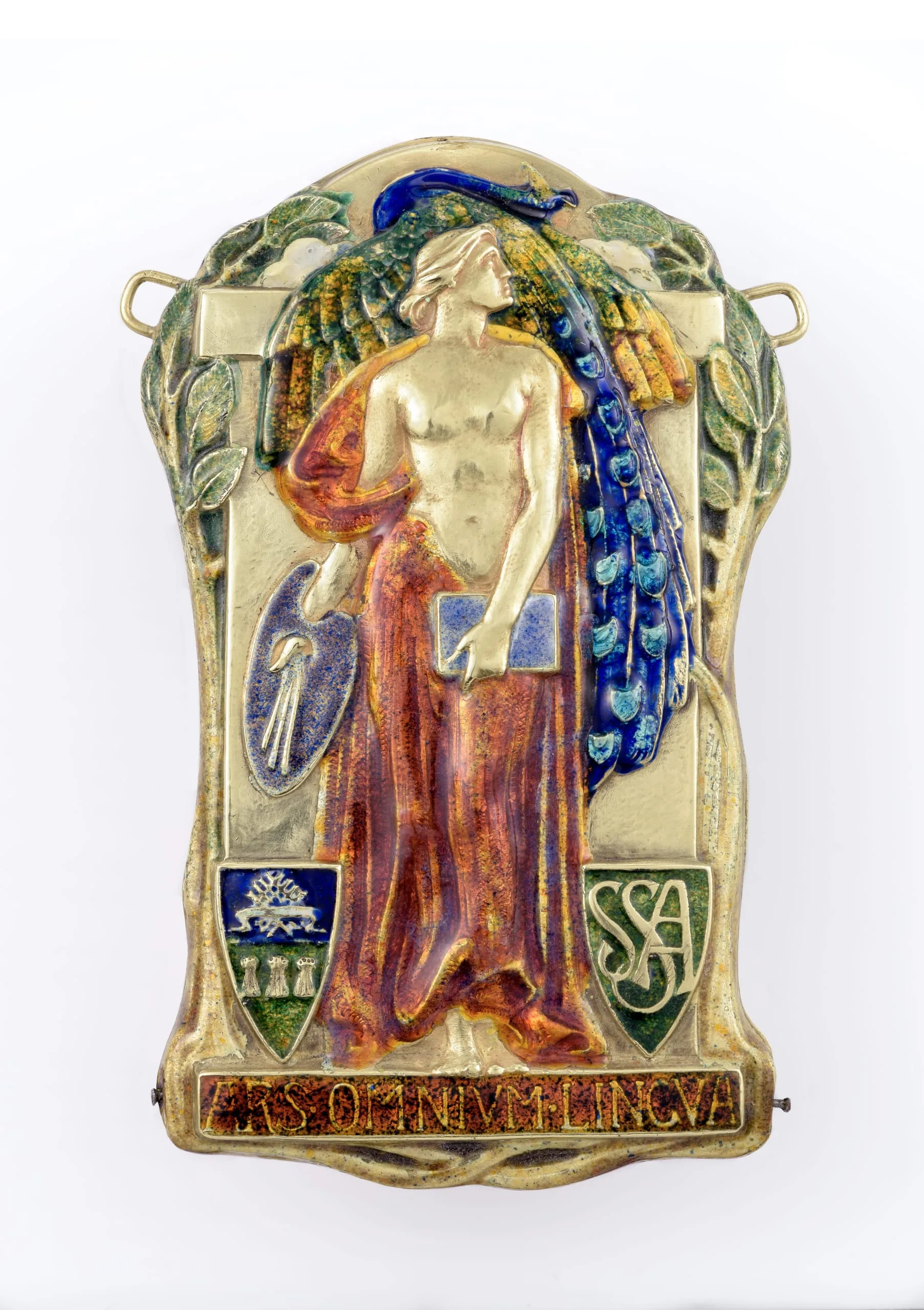
Badge in honor of the Sheffield Society of Artists1903

On view:
Geffen Galleries, Responses to Industrialization
Rectangular metal and enamel plaque with a standing female figure in russet drapery, a peacock, heraldic shields, and the Latin inscription 'ARS OMNIVM LINGVA'
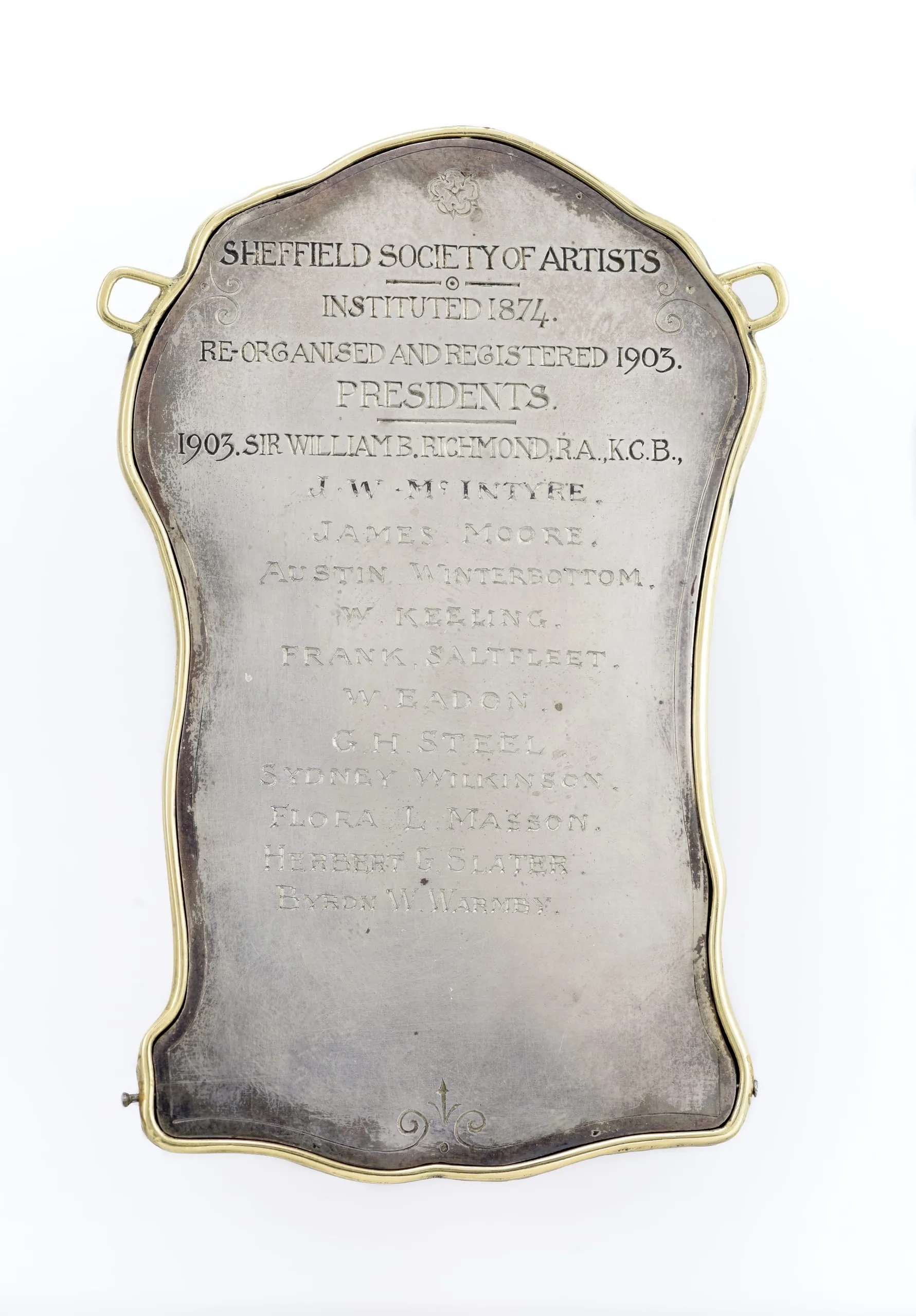
Silver metal plaque with gilt border and shaped cartouche outline, engraved with the text 'Sheffield Society of Artists, Instituted 1874' and a list of Presidents' names, with small loop handles at the top corners.
Artist or Maker
Alexander Fisher
England, 1864-1936
Title
Badge in honor of the Sheffield Society of Artists
Date Made
1903
Medium
Enamel on gilded copper, silver
Dimensions
3 5/8 × 2 1/2 × 1/4 in. (9.21 × 6.3 × 0.64 cm)
Credit Line
Decorative Arts and Design Council Fund
Accession Number
M.2016.136
Classification
Jewelry and Adornments
Collecting Area
Decorative Arts and Design
Curatorial Notes

A distinguished metalworker and teacher, Alexander Fisher played a central role in the early twentieth-century revival of enamelwork in Britain. During his studies at the progressive South Kensington schools in London, Fisher attended a series of lectures on enameling by Sèvres craftsman M. Louis Dalpeyrat and enthusiastically took up the art form. Fisher taught and wrote extensively on enameling and is responsible for training many of Britain’s leading practitioners in the period.


In 1903, Fisher made this remarkable badge (or pendant). It was commissioned in honor of the Sheffield Society of Artists’ reorganization that year, probably by a Society member. This incredibly well documented design was illustrated twice in Britain’s most prominent art journal, the Studio (first as a drawing and then as executed), and it was specifically described there in 1904. As T. Martin Wood discussed in his 1904 profile on Fisher for The Studio, the badge featured "white roses for York and a peacock for beauty; the recent birth of the society is represented by the edge of the Sun appearing to rise above the design. In addition to this iconography, the work also included the Sheffield coat of arms as well as the art society’s insignia and motto "Ars Omnium Lingua" (art of all language). Fisher’s use of gilded copper here seems a particularly fitting celebration of an artists’ group in Sheffield, a city known for its manufacture of plated metalwork.

Abbey Chamberlain Brach, Curatorial Assistant, Decorative Arts and Design, 2016