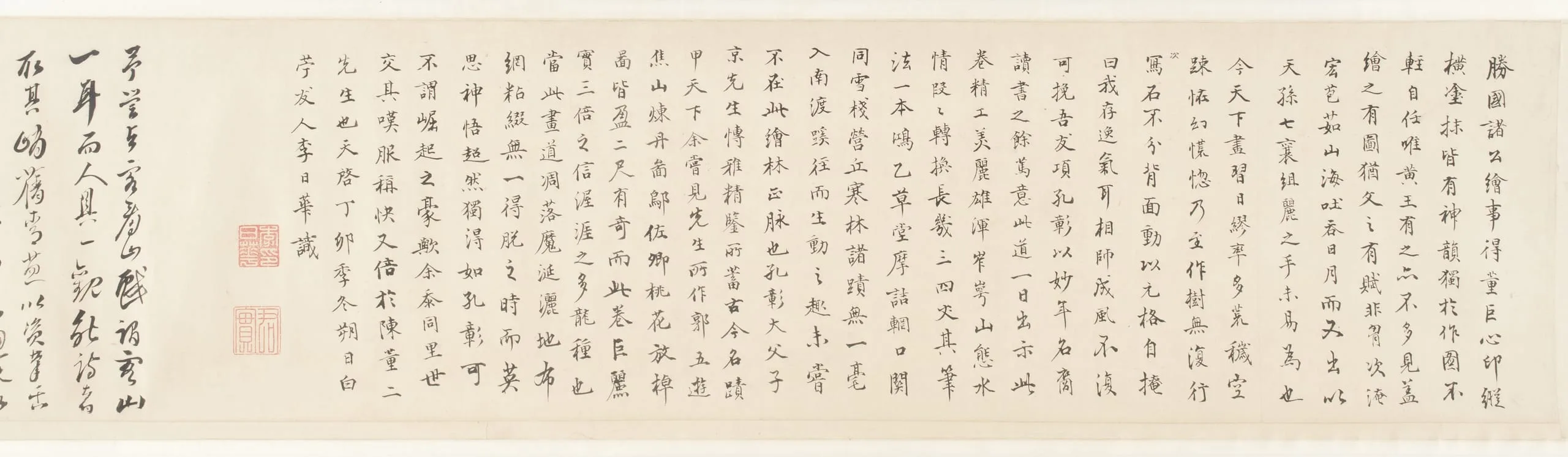
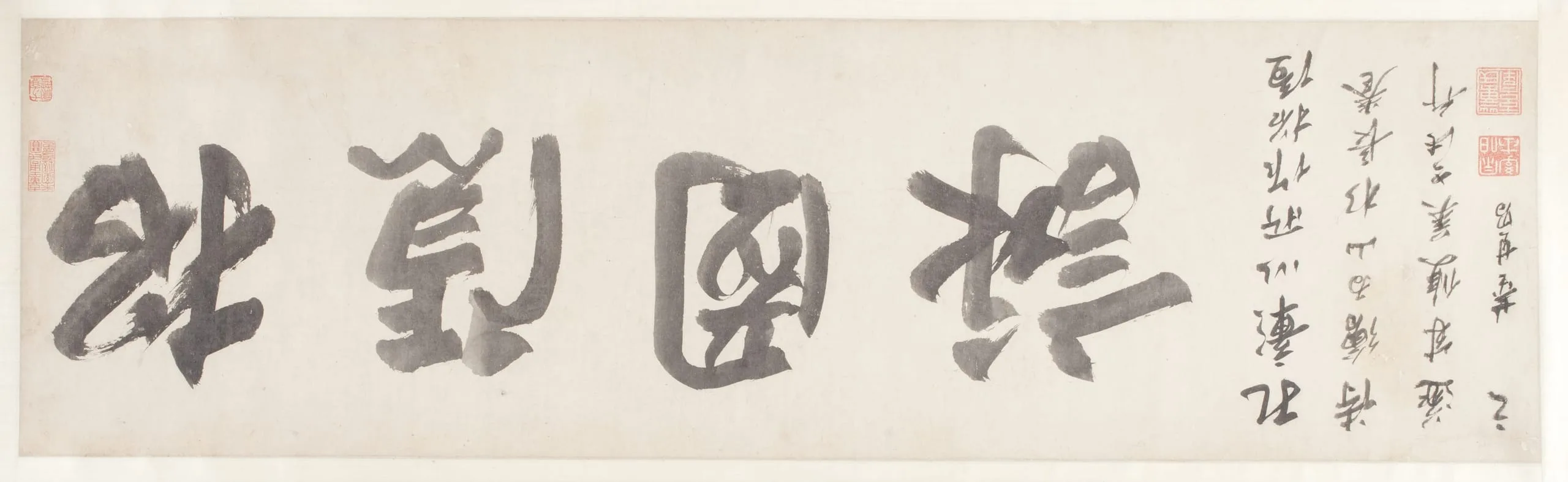
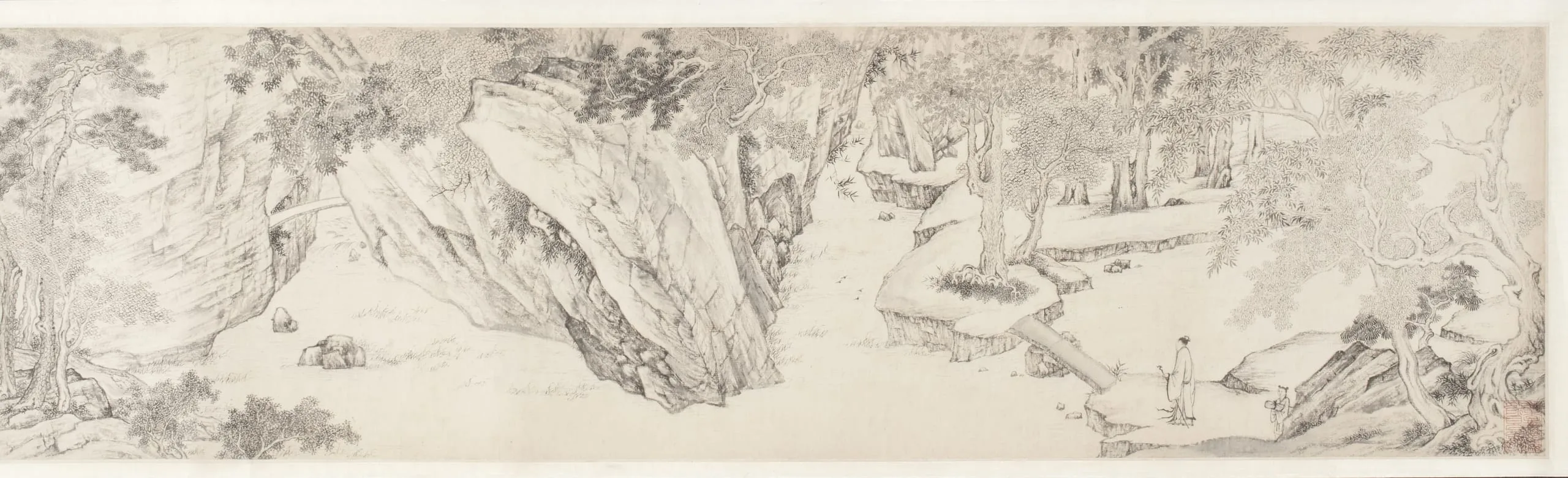
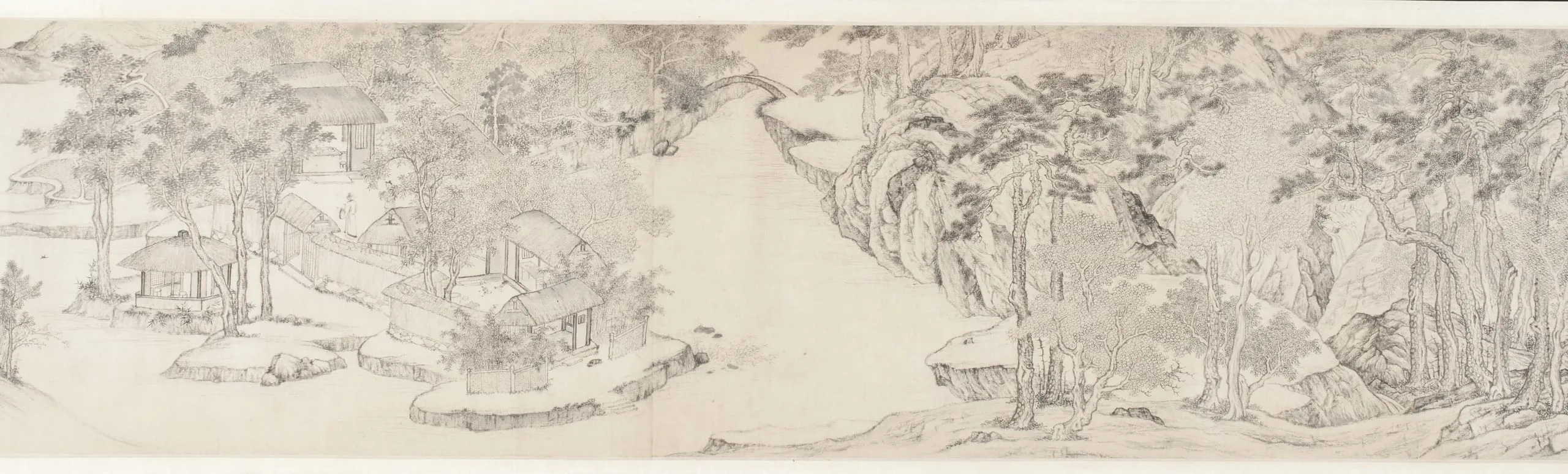
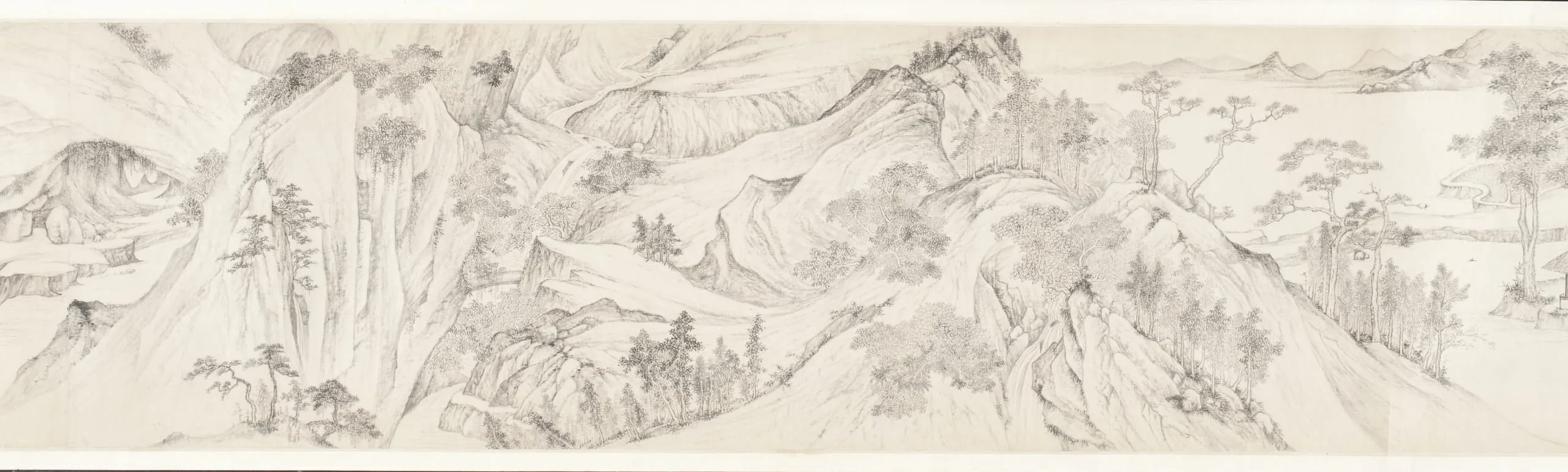
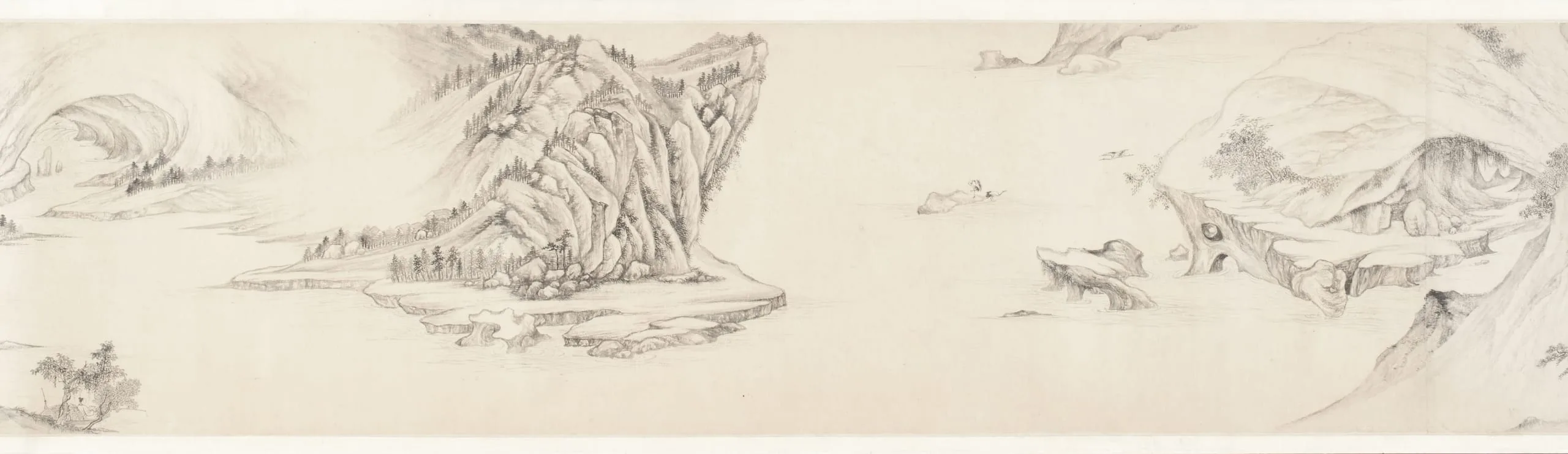
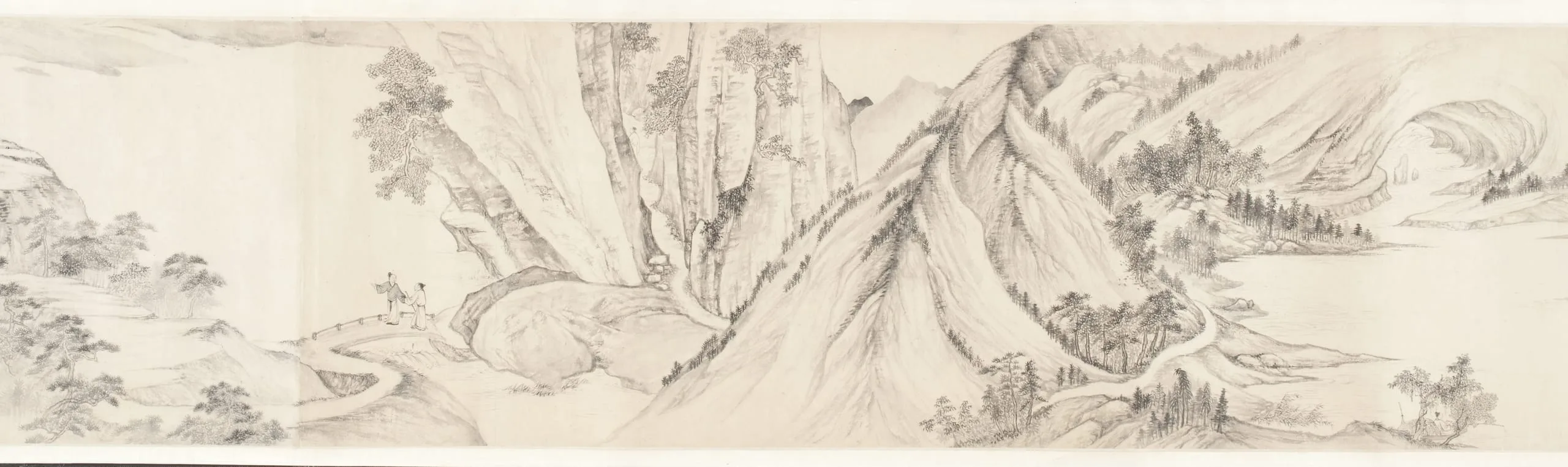
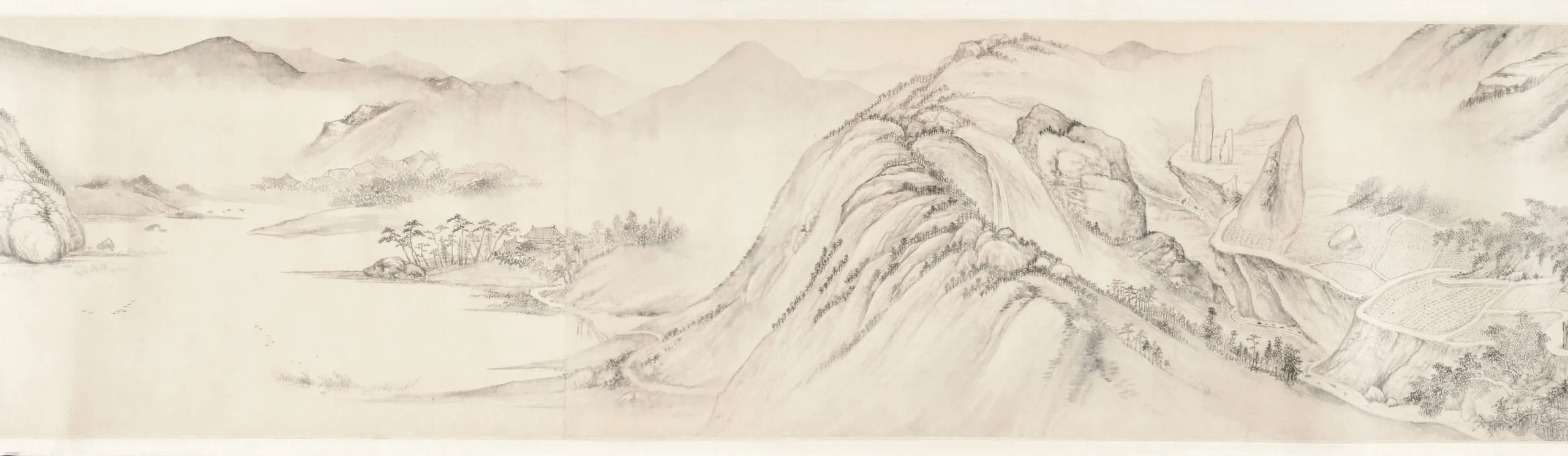
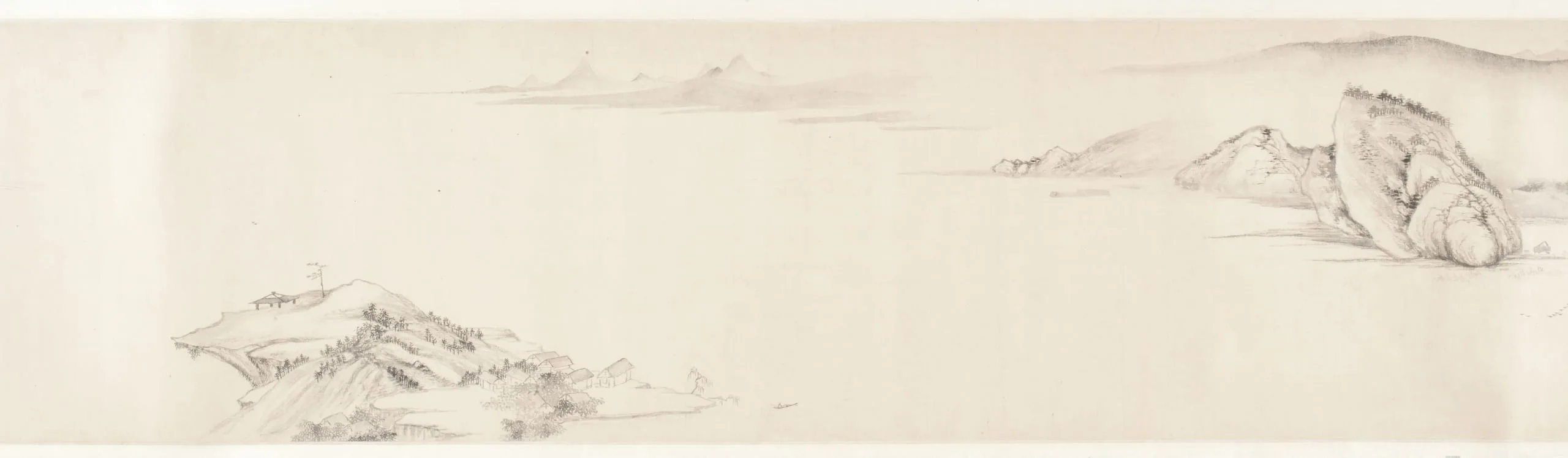
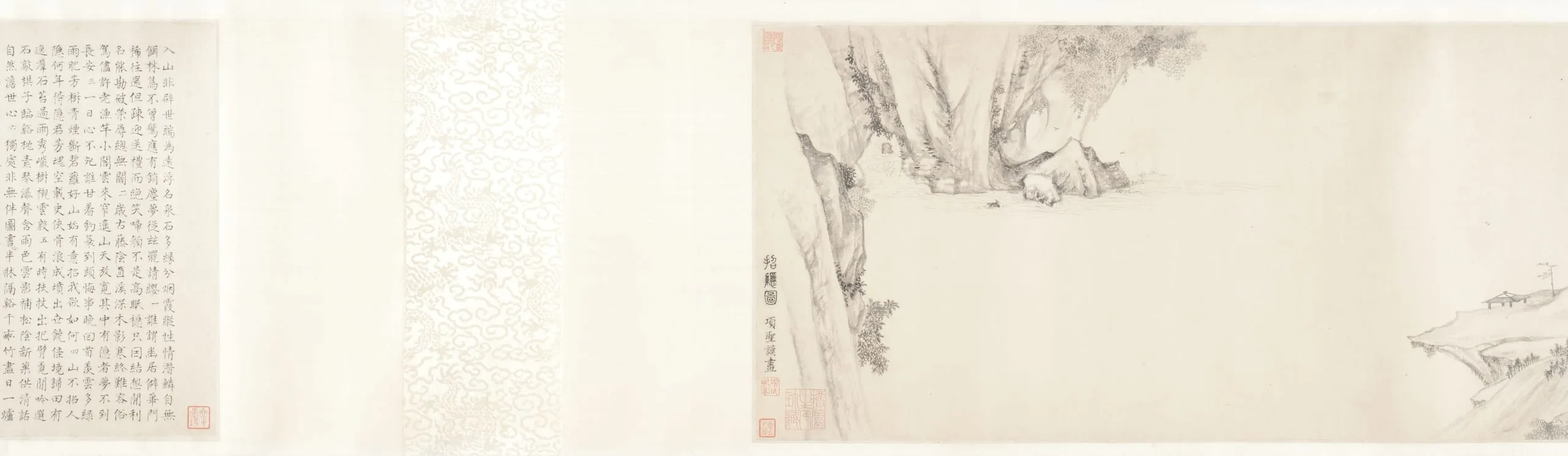
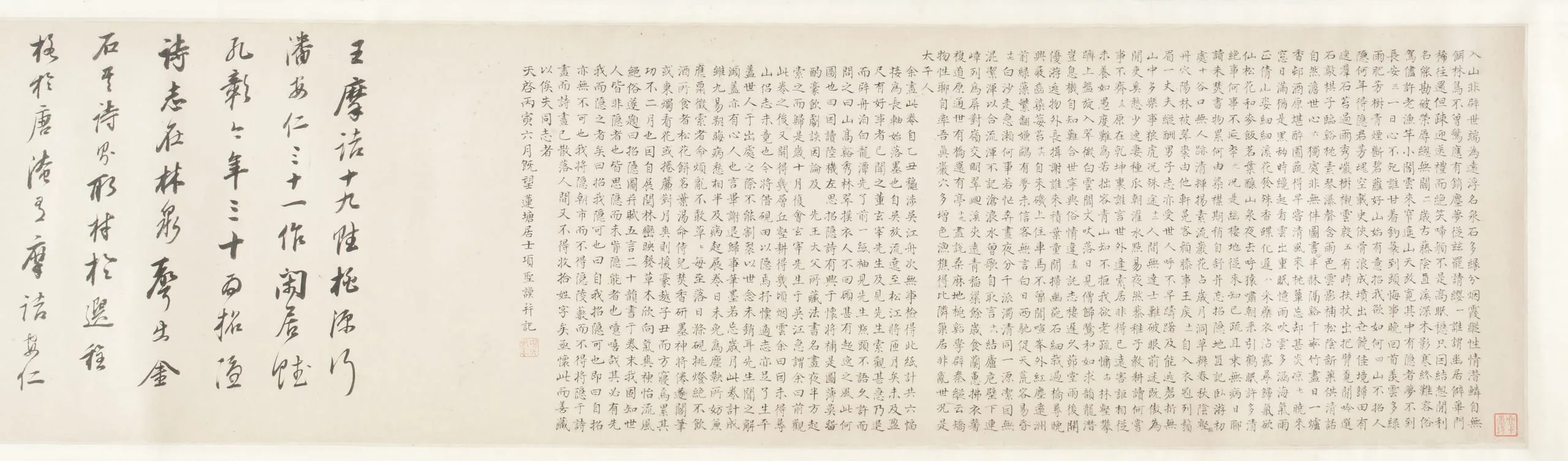
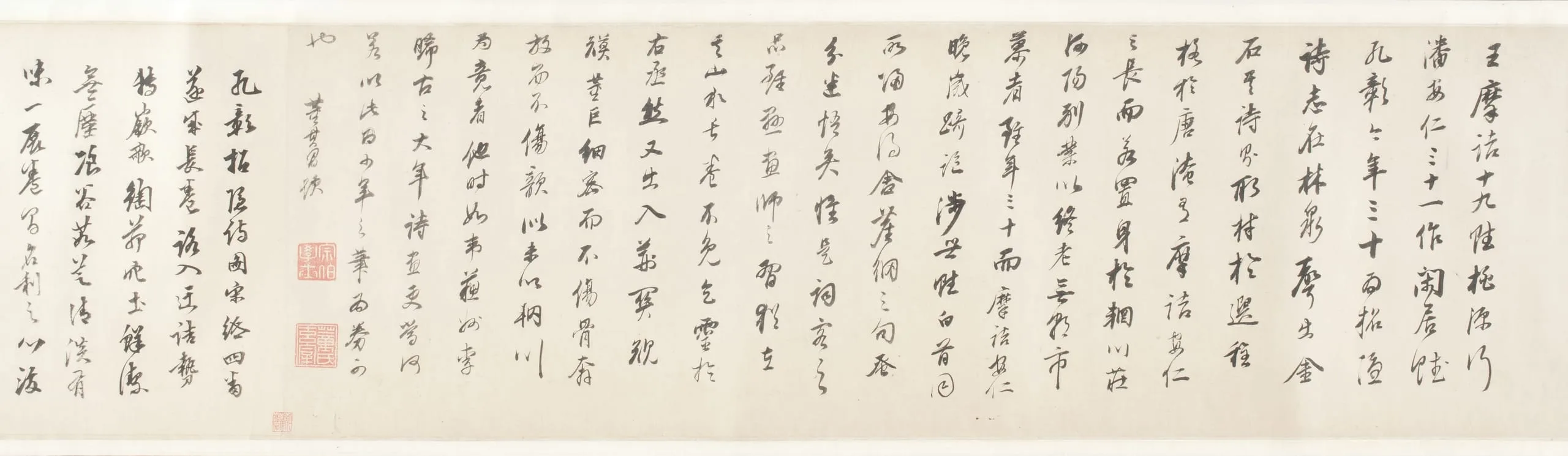
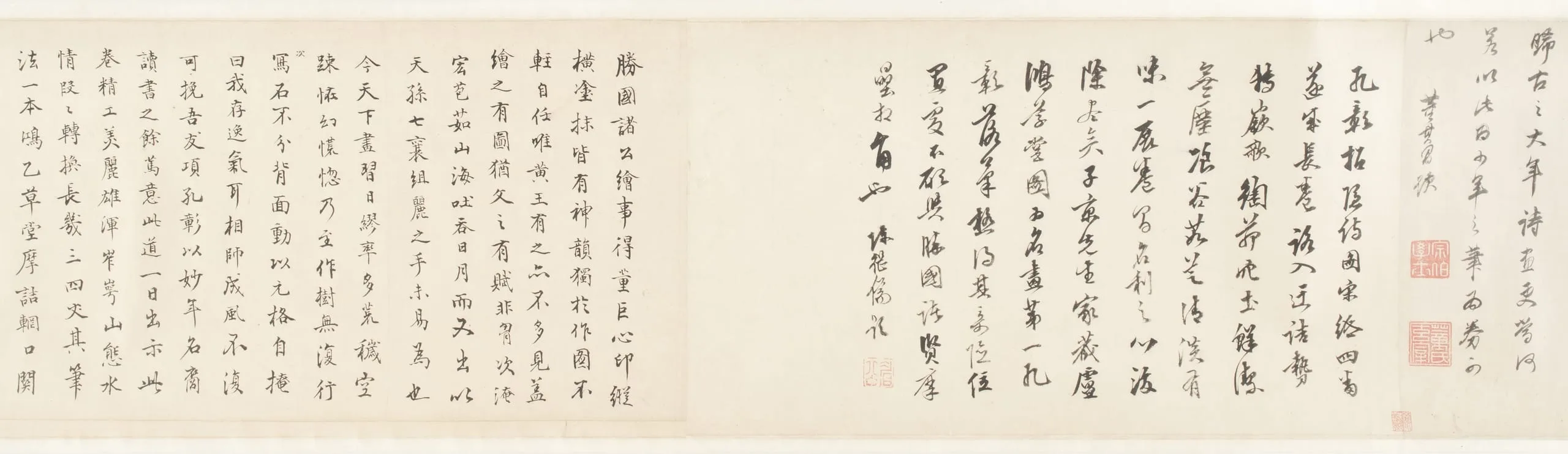
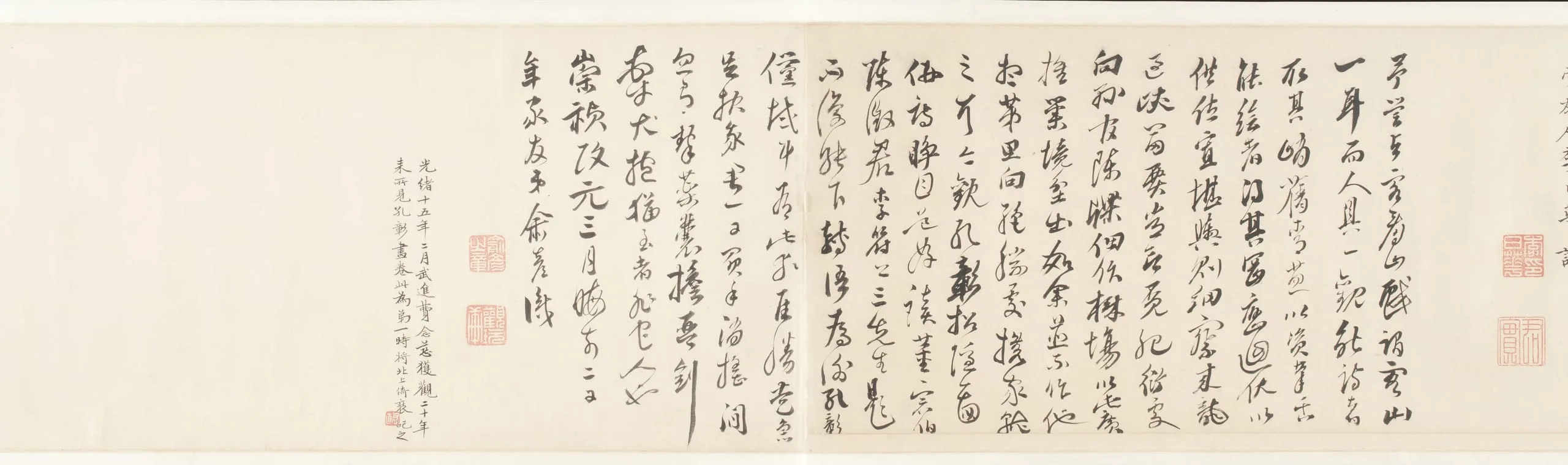
Born into one of the wealthiest and most cultured families of his era, Xiang Shengmo had the unparalleled privilege of studying the remarkable collection of ancient paintings and calligraphy amassed by his grandfather Xiang Yuanbian. The influential painter and calligrapher Dong Qichang was a frequent visitor to Xiang Shengmo’s home, and from a young age he was in close contact with the artists of Dong’s circle, including Chen Jiru and Li Rihua. All three wrote colophons to this painting, adding to its art-historical significance.
The ambitious scroll’s theme of reclusion, captured in the title Beckoning of Solitude, was popular in the 1620s, when the notorious eunuch Wei Zhongxian held sway at the court and orchestrated the persecution of high-ranking scholar-officials. Xiang’s landscape is accompanied by twenty of his poems on the same theme, as well as a long description of the painting’s context, all written in the meticulous xiaokai (small standard) script consistent with the artist’s painstakingly detailed style. The description tells us that Xiang was inspired by the Zhaoyin (Beckoning the Recluse) poems composed by Lu Ji and Zuo Si during the Wei-Jin periods (220−420), and that Dong Qichang monitored the painting’s progress. Dong also contributed a title frontispiece and an admiring commentary on Xiang’s work. From the colophons of Chen Jiru and Li Rihua, we learn that the scroll was visually inspired by the famous Views from a Thatched Hut attributed to the eighth-century painter Lu Hong, which was among the great treasures in the collection of Xiang’s grandfather.
Wan Kong
2024
Bibliography
Sturman, Peter C., and Susan S. Tai, eds. The Artful Recluse: Painting, Poetry, and Politics in 17th-Century China. Munich: Prestel, 2012.