LACMA

ShopMembershipMyLACMATickets
LACMA
Los Angeles County Museum of Art
5905 Wilshire Blvd.
Los Angeles, CA 90036
info@lacma.org
(323) 857-6000
Sign up to receive emails
Subscribe
© Museum Associates 2025

Museum Hours

Monday

11 am–6 pm

Tuesday

11 am–6 pm

Wednesday

Closed

Thursday

11 am–6 pm

Friday

11 am–8 pm

Saturday

10 am–7 pm

Sunday

10 am–7 pm


  • About LACMA
  • Jobs
  • Building LACMA
  • Host An Event
  • Unframed
  • Press
  • FAQs
  • Log in to MyLACMA
  • Privacy Policy
© Museum Associates 2025
Collections

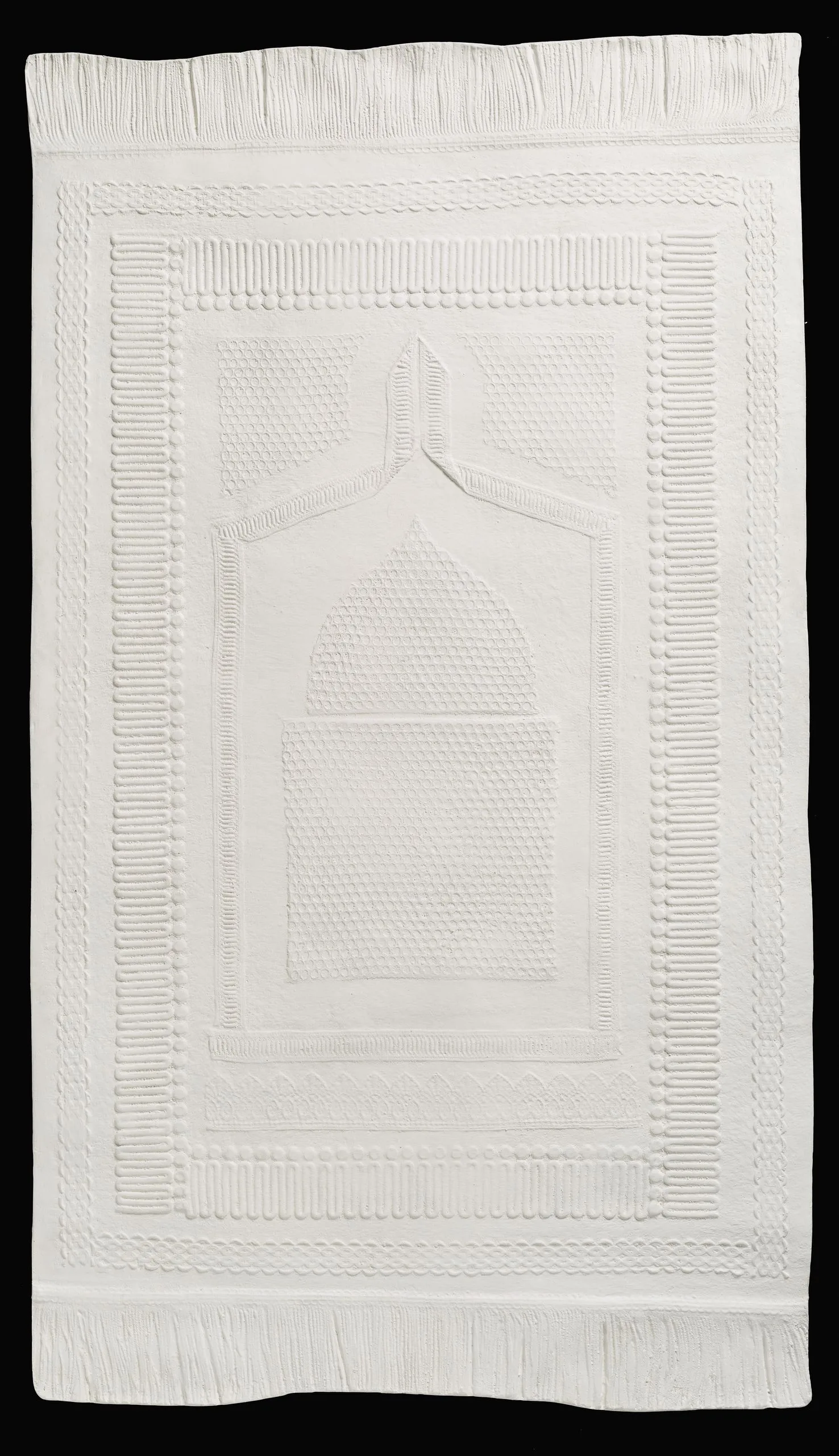
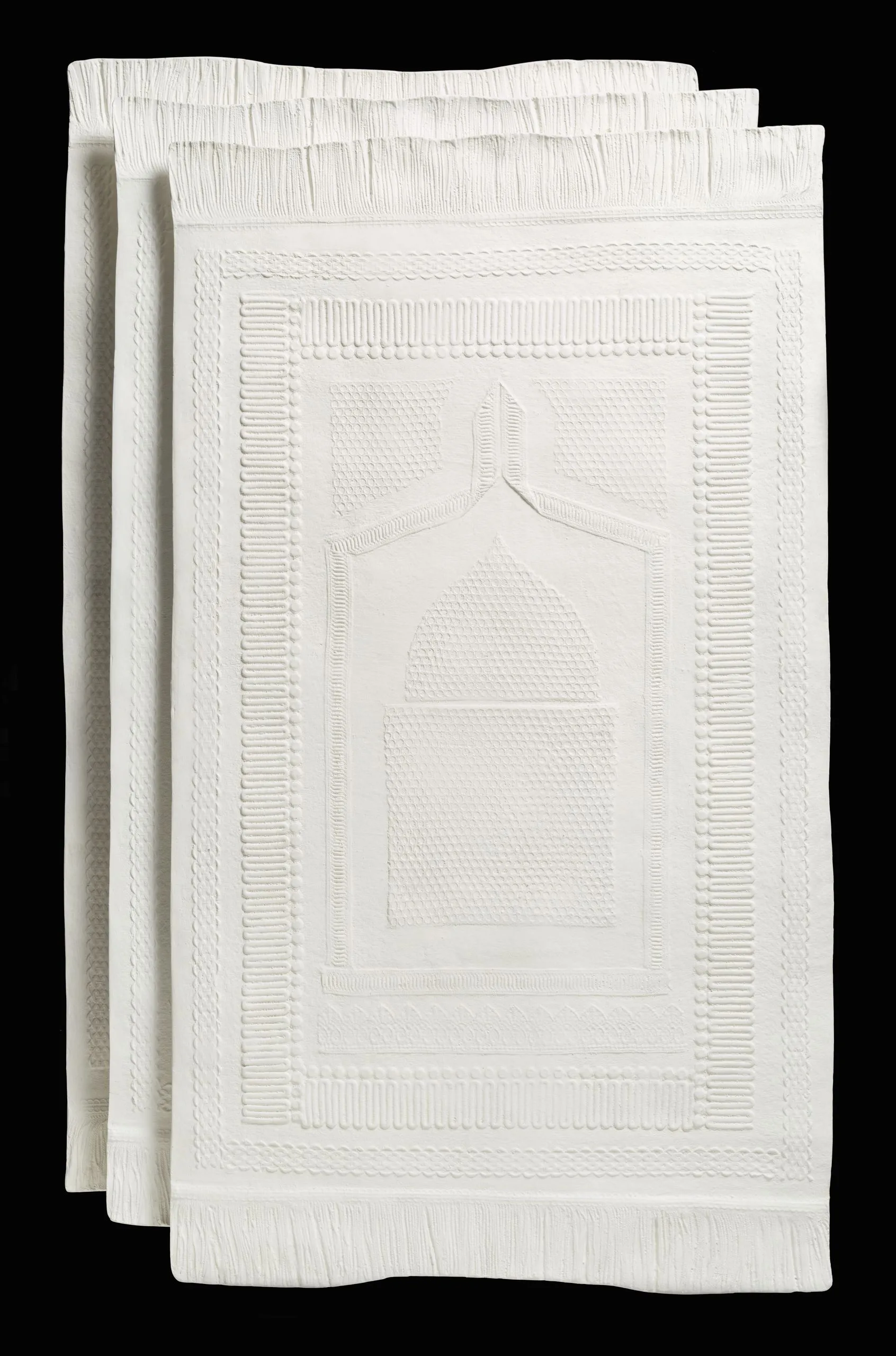
Maïmouna Guerresi
White Carpet2006

Not on view
Vertical ivory-white textile with fringed edges and an all-over raised woven pattern featuring a central pointed arch form within nested rectangular borders
Three stacked white woven prayer rugs with fringed edges, each featuring a raised mihrab arch design at center surrounded by geometric border patterns in tonal white-on-white relief
Artist or Maker
Maïmouna Guerresi
Italy, born 1951
Title
White Carpet
Date Made
2006
Medium
Resin
Dimensions
44 1/8 × 24 13/16 × 13/16 in. (112 × 63 × 2 cm)
Credit Line
Purchased with funds provided by JoAnn Busuttil
Accession Number
M.2016.1.4
Classification
Sculpture
Collecting Area
Art of the Middle East: Contemporary
Curatorial Notes

As part of their daily prayer rituals, Muslims perform a series of bows and prostrations while facing toward Mecca, which include touching their heads to the ground. Mats or rugs provide a soft, clean, and personal space, especially as prayer is often said in private rather than in congregation. This trio (see M.2016.1.3, .5) of mold-made resin carpets emulates the traditional prayer carpet with a niche design in the center pointing toward the qibla, or direction of prayer. Given their hard material, these are symbolic rather than functional carpets, signifying the importance of the act of prayer five times a day, which is one of the Pillars of Islam.

Maïmouna Guerresi is an Italian-born artist who converted to Islam, joining a Sufi community in Senegal in the early 1990s. Today she divides her time between Verona, Milan, and Dakar, working in photography, video, sculpture, and installation art. Her personal and professional background, along with the strong emphasis she places on her faith and spiritual transformation as visualized through her art, makes her a natural fit within the genre of Islamic art today. Her resin carpets demonstrate further her great versatility and help situate her work within the tradition of Islamic art.