- Title
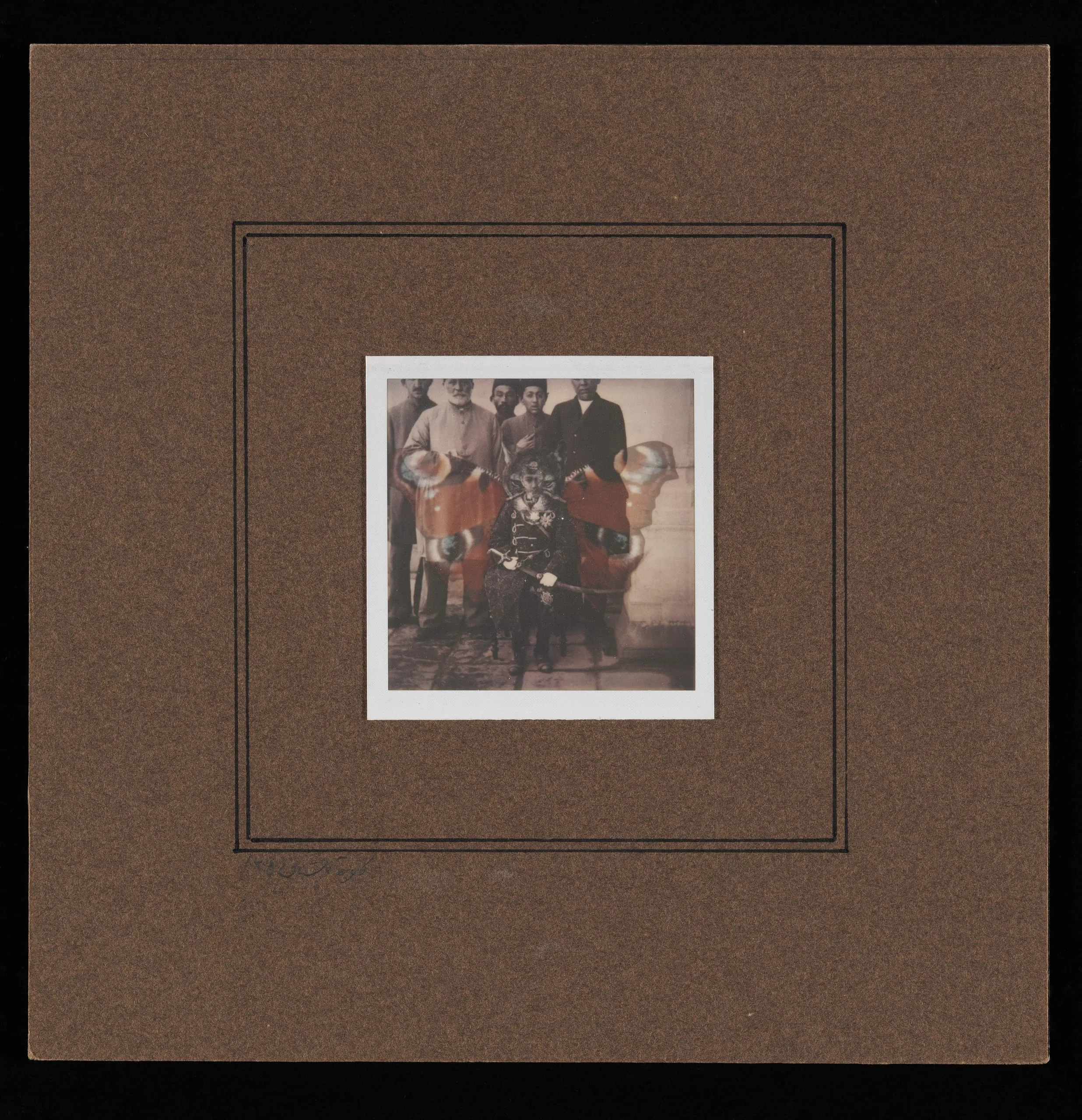
- Untitled
- Date Made
- 1976
- Medium
- Diffusion transfer print
- Dimensions
- Image: 3 3/16 × 3 3/16 in. (8.1 × 8.1 cm)
Primary support: 3 3/4 × 3 9/16 in. (9.53 × 9.05 cm)
Mount: 10 1/4 × 10 1/4 in. (26.04 × 26.04 cm)
- Accession Number
- M.2015.188.10
- Curatorial Notes
Kaveh Golestan was a documentary photographer, a pioneer of street photography, and an experimental photographer following in the footsteps of generations of Iranian artists practicing in a medium that was transplanted to Iran within a few years of its invention in Europe. Golestan began his career in 1972 recording the conflict in Northern Ireland for the Iranian daily newspaper Kayhan; his brilliant photographic documentation of the Islamic revolution in 1979 brought him the Robert Capa Gold Medal. In 2003, Golestan was killed by a landmine in Northern Iraq, while covering the war for the BBC. His work continues to influence and inspire many younger Iranian artists.
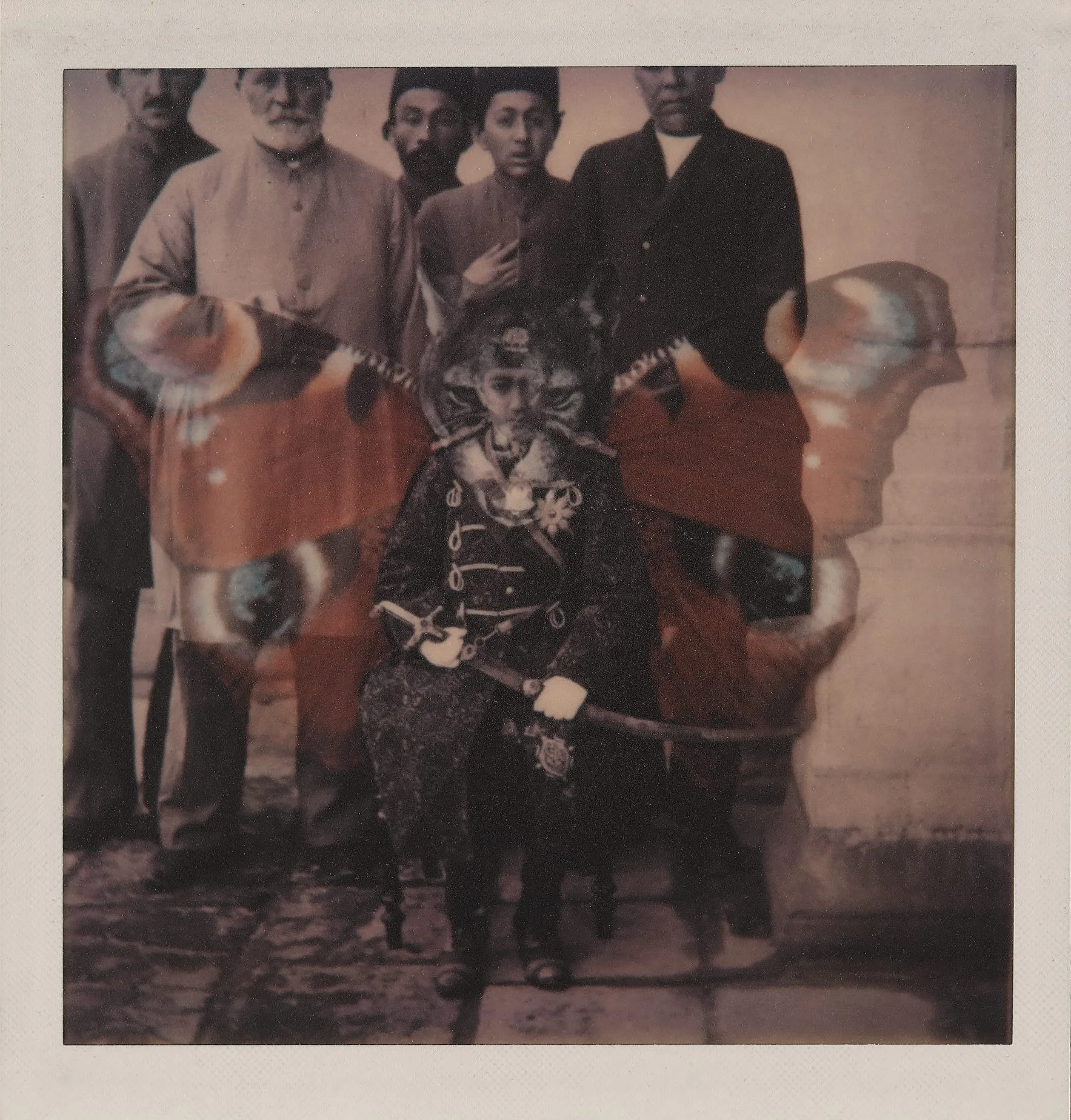
His groundbreaking 1976 series Az Div o Dad ("Of Demon and Beast" taken from a poem by Rumi "I am weary of demon and beast, I seek humanity") is comprised of innovative and striking images shot in Polaroid by moving collaged fragments in front of an open shutter over long exposures. The process produced surrealistic and fantastical pictures that seem to blend macabre fairytales with history, by appropriating found photographs and other images from the 19th and early 20th century, including previously untouchable depictions of Qajar monarchs. The collages create powerful visions of anthropomorphic, lizard-headed kings and leonine army officers, set against natural and architectural backgrounds referencing both the 1970s and the late Qajar era. These works introduce the experimental side of Golestan’s practice, which has received little critical attention to date although his satirical manipulation of historical figures, most notably members of the Qajar royal family, have prompted a new generation of artists to use images of deposed kings as a means of questioning and critiquing their own present-day leaders.
- Selected Bibliography
- Komaroff, Linda. In the Fields of Empty Days: The Intersection of Past and Present in Iranian Art. Los Angeles: Los Angeles County Museum of Art; Munich; New York: DelMonico Books-Prestel, 2018.
- Copyright
- © Kaveh Golestan Estate