LACMA

ShopMembershipMyLACMATickets
LACMA
Los Angeles County Museum of Art
5905 Wilshire Blvd.
Los Angeles, CA 90036
info@lacma.org
(323) 857-6000
Sign up to receive emails
Subscribe
© Museum Associates 2025

Museum Hours

Monday

11 am–6 pm

Tuesday

11 am–6 pm

Wednesday

Closed

Thursday

11 am–6 pm

Friday

11 am–8 pm

Saturday

10 am–7 pm

Sunday

10 am–7 pm


  • About LACMA
  • Jobs
  • Building LACMA
  • Host An Event
  • Unframed
  • Press
  • FAQs
  • Log in to MyLACMA
  • Privacy Policy
© Museum Associates 2025
Collections

Iman Safaei
Sepeleshk2014

Not on view
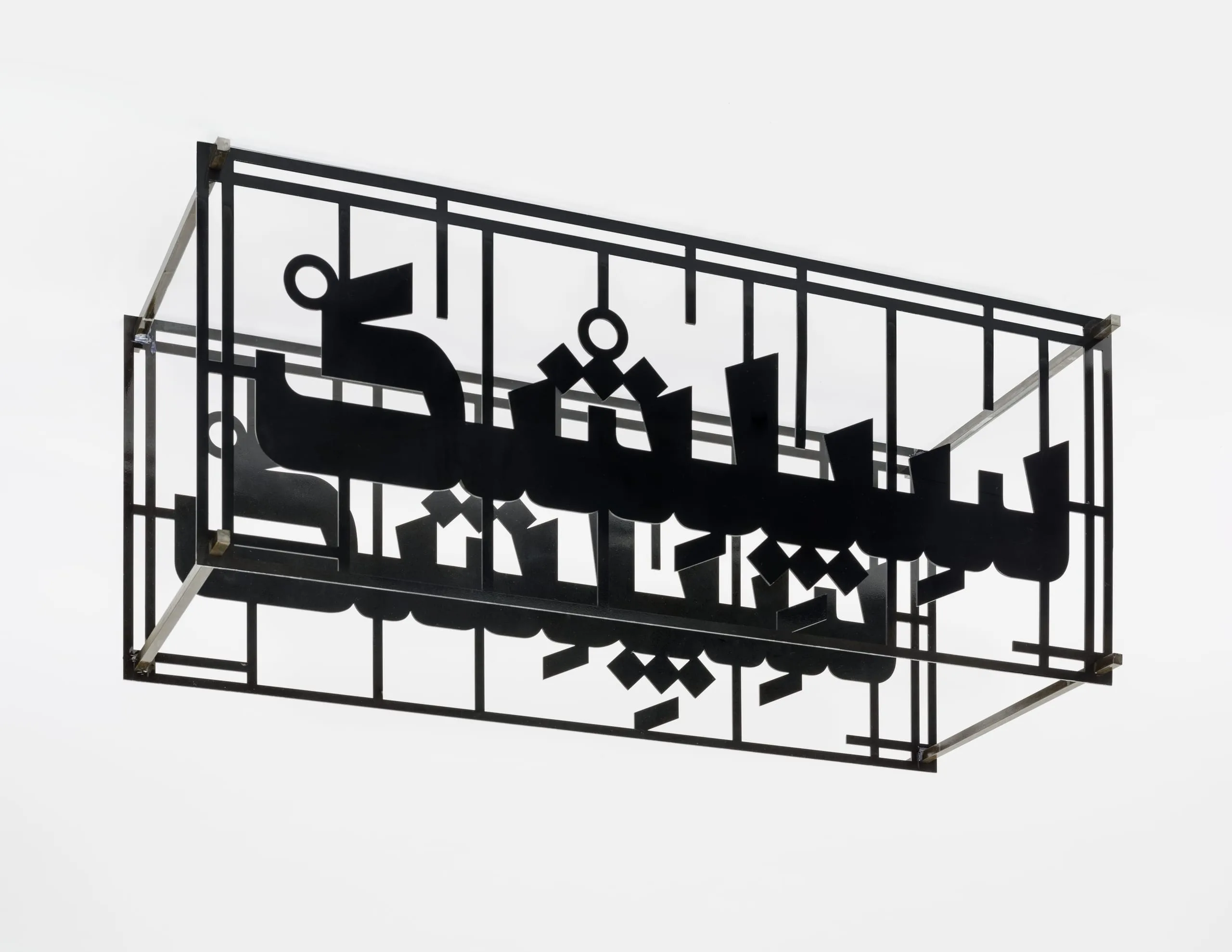
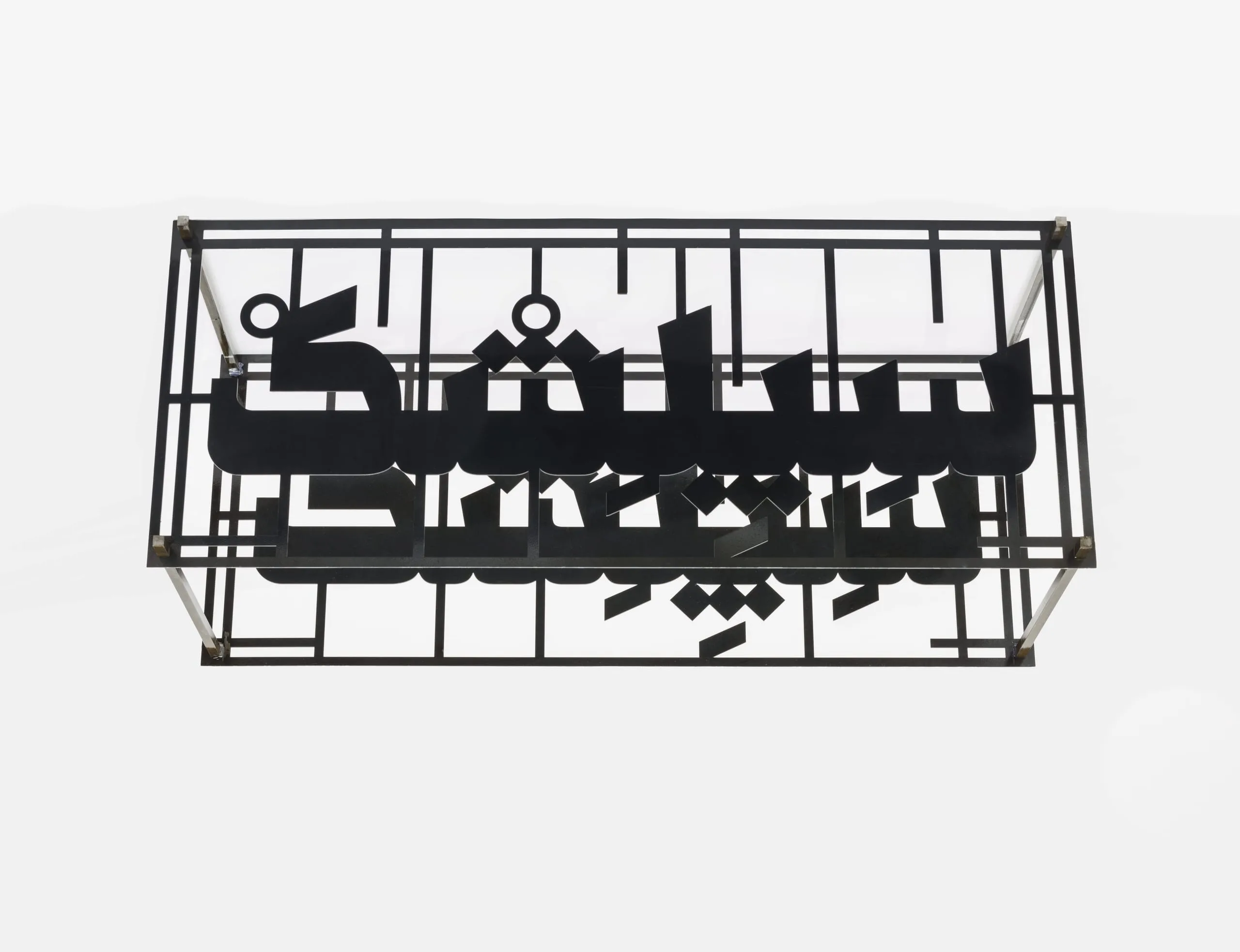
Horizontal black metal sculpture: a rectangular cage frame enclosing bold, geometric Arabic script letterforms suspended within
Rectangular black metal sculpture with a grid-like cage frame enclosing cut-out Arabic calligraphic letterforms, viewed slightly from above against a white background.
Artist or Maker
Iman Safaei
Iran, Tehran, born 1982
Title
Sepeleshk
Date Made
2014
Medium
Iron
Dimensions
18 7/8 × 46 1/4 × 20 1/4 in. (48 × 117.5 × 51.5 cm)
Credit Line
Purchased with funds provided by the HAND Foundation with additional funds provided by Clare Wagner
Accession Number
M.2015.181
Classification
Sculpture
Collecting Area
Art of the Middle East: Contemporary
Curatorial Notes

Calligraphy is the most pervasive element in Islamic art. The preoccupation with beautiful writing in both historical and contemporary art extends beyond scripture to secular and even banal texts. This calligraphic sculpture takes the form of the colloquial Persian expression Sepeleshk, which is roughly equivalent to the popular American phrase "no way." It has been suggested that this saying may have originated among gamblers unsuccessfully throwing dice, indicating that it once had a somewhat coarser meaning. Sepeleshk is one of a series of commonplace expressions, tongue twisters, nursery rhymes, and slogans that Iman Safaei has used in his calligraphic work, rendered in iron, brass, and neon, at small and large scale. These works speak to the ubiquity of writing in modern-day society as a means of both artistic expression and communication, regardless of the significance of the message.

Still best known in Iran, especially as a graphic artist, Safaei has participated in group and solo exhibitions in Tehran, as well as in London, New York, Miami, and Basel.

Selected Bibliography
  • Komaroff, Linda. "Islamic Art Now and Then." In Islamic Art: Past, Present, Future, edited by Sheila Blair and Jonathan Bloom, 26-56. New Haven, New York, and London: Yale University Press, 2019.