- Title
- Coconut-Shell Cup (Coco chocolatero)
- Date Made
- 17th-18th century
- Medium
- Polished and engraved coconut shell and silver
- Dimensions
- 5 1/4 × 4 3/4 × 2 1/2 in. (13.3 × 12.1 × 6.4 cm)
- Accession Number
- M.2015.69.2
- Curatorial Notes
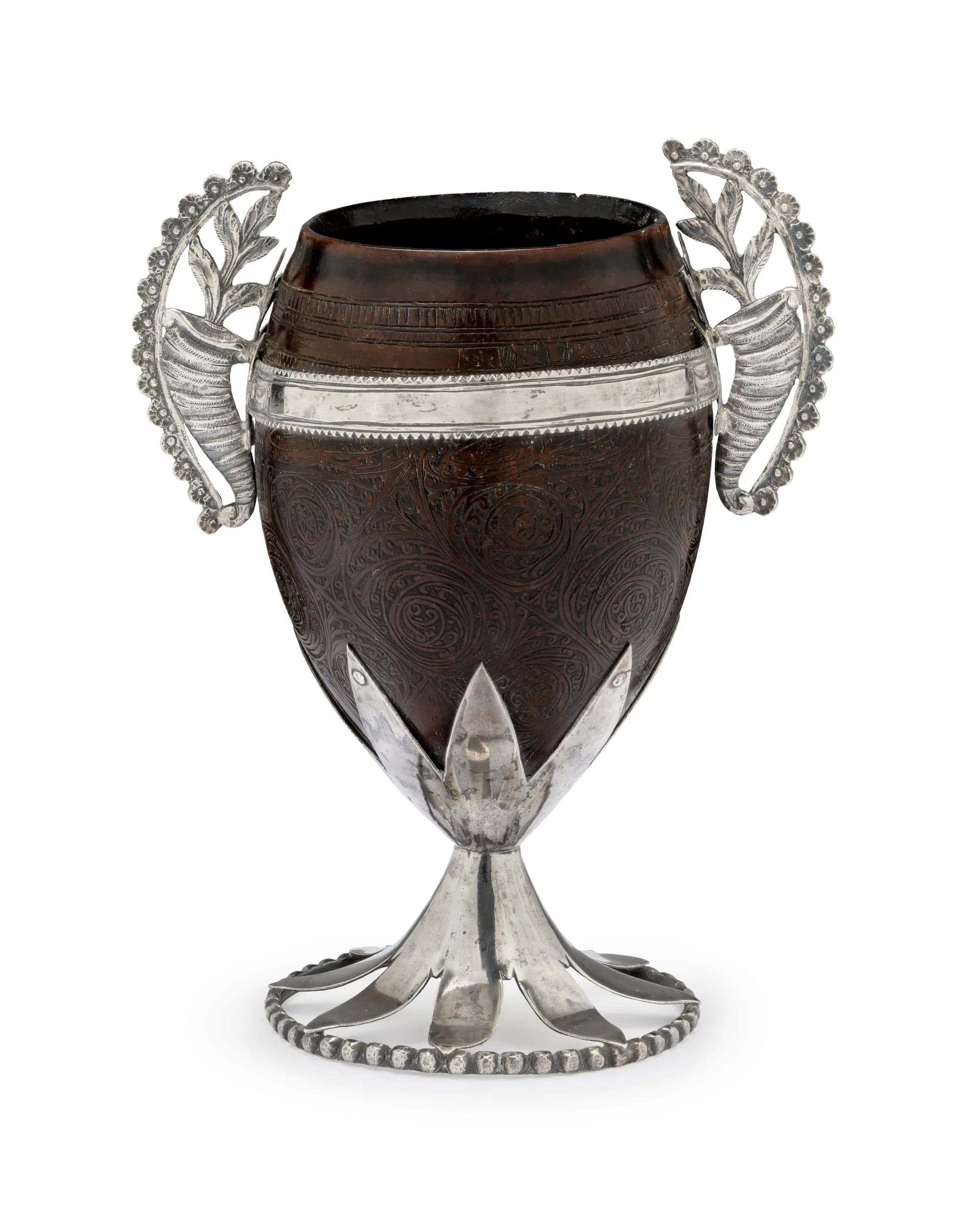
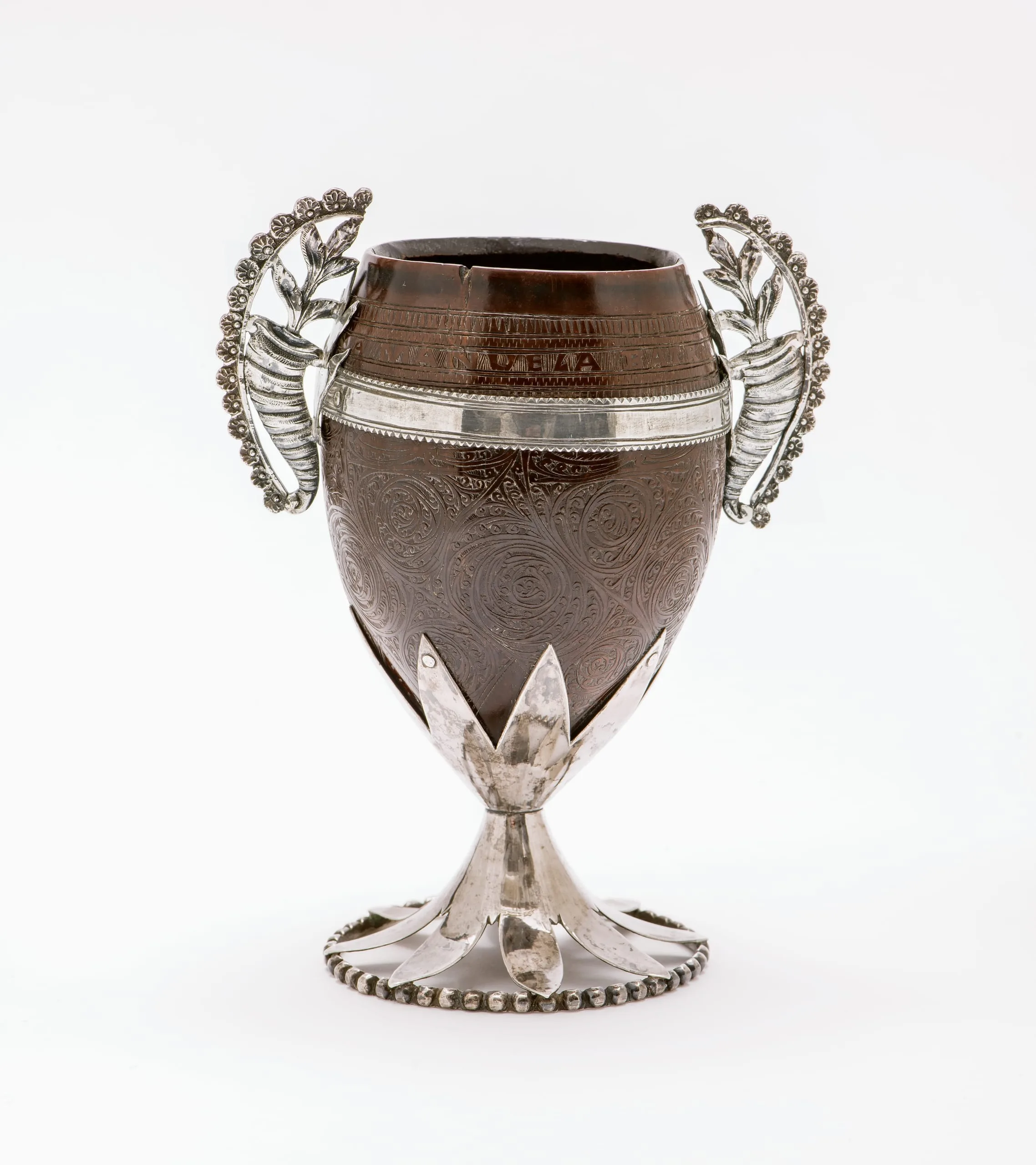
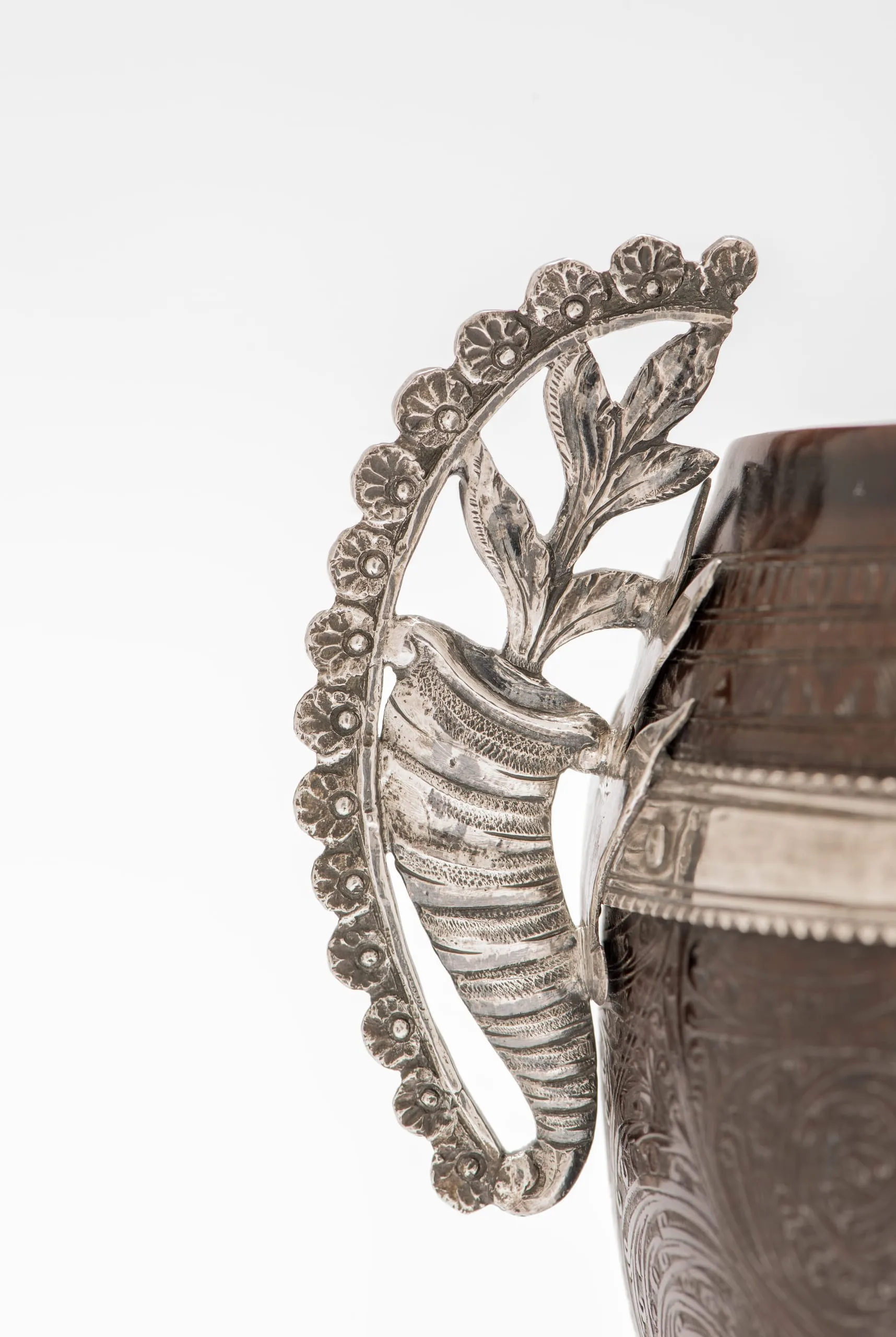
Coconut-shell cups used for drinking hot chocolate were ubiquitous in elite households in Spanish America and Spain. Fine examples, such as this one, were delicately carved, polished, and fitted with silver bases and handles. This cup is distinctive for its cornucopia handles and the intricate scrolling floral motif on the shell, displaying an excellent level of craftmanship. The engraved inscription at the top of the cup reads, “Sirvo a Doña Manuela Batres” (I serve Doña Manuela Batres), identifying both its purpose and its owner.
Cacao trees were native to the Americas, and before the arrival of Europeans, Mesoamerican nobility drank frothy chocolate, mostly in ritual contexts. The coconut palm, however, was introduced to Mexico from Asia in the sixteenth century. The appeal of both the exotic coconut cups and the precious drink made these objects highly desirable luxury exports.
Rachel Kaplan
2024
- Provenance
Estate of Lafayette “Lafe” Pence Speirs, Los Angeles; Abell Auction Company, Commerce, California, 2003; Ronald A. Belkin, Long Beach, California, 2003; LACMA, 2015.
- Selected Bibliography
- Katzew, Ilona, ed. Archive of the World: Art and Imagination in Spanish America, 1500–1800: Highlights from LACMA’s Collection. Exh. Cat. Los Angeles: Los Angeles County Museum of Art; New York: DelMonico Books/D.A.P., 2022.
- Selected Exhibition History
- Archive of the World: Art and Imagination in Spanish America, 1500–1800. June 12, 2022 - October 30, 2022
- Archive of the World: Art and Imagination in Spanish America, 1500–1800. October 20, 2023 - January 28, 2024
- Archive of the World: Art and Imagination in Spanish America, 1500–1800. June 22, 2024 - September 08, 2024