- Title
- Trunk (Baúl)
- Date Made
- second half of the 17th century
- Medium
- Wood, lacquer, and metal fittings
- Dimensions
- 25 1/2 × 43 1/2 × 18 1/2 in. (64.8 × 110.5 × 47 cm)
- Accession Number
- M.2015.69.1
- Curatorial Notes
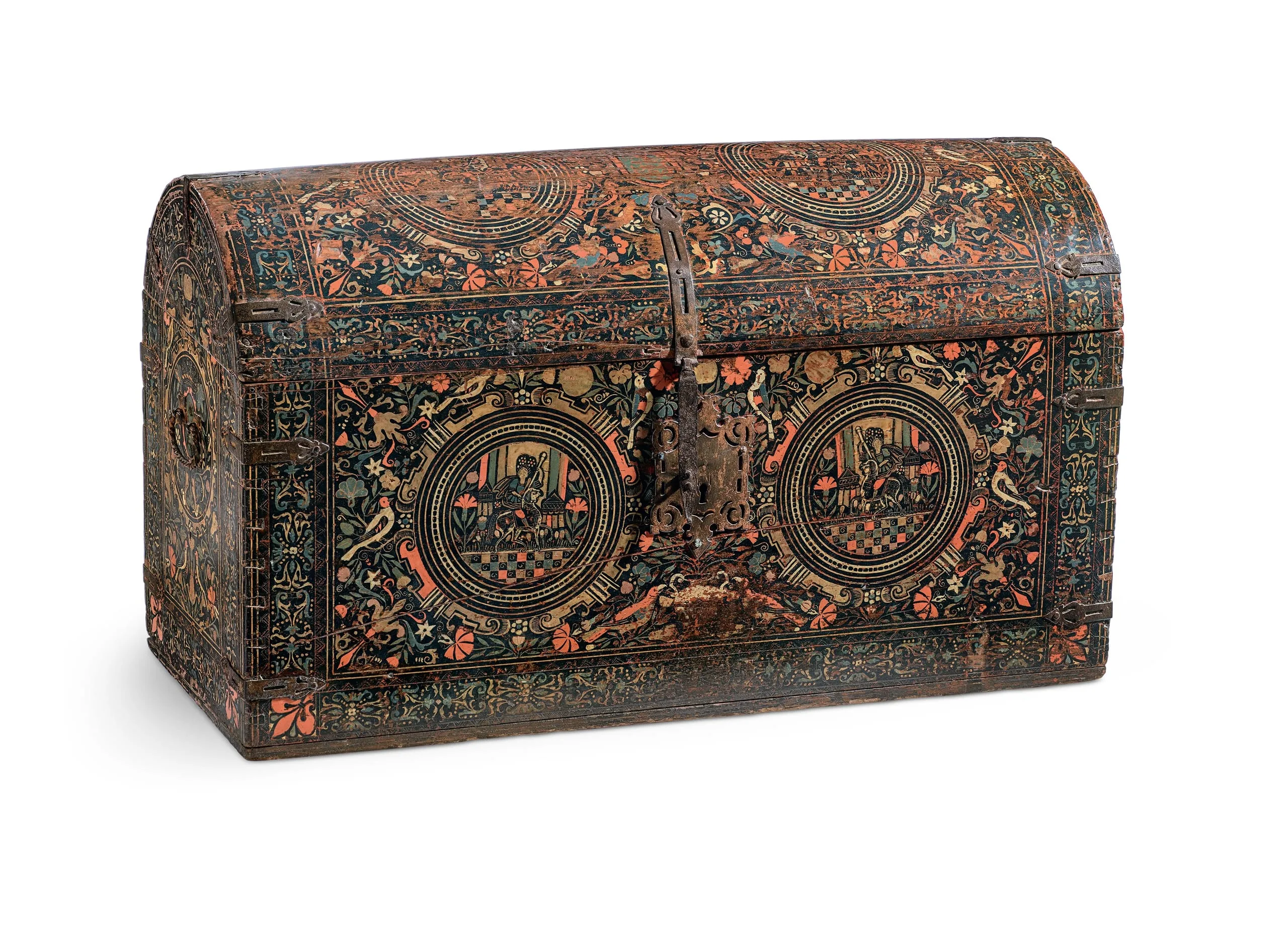
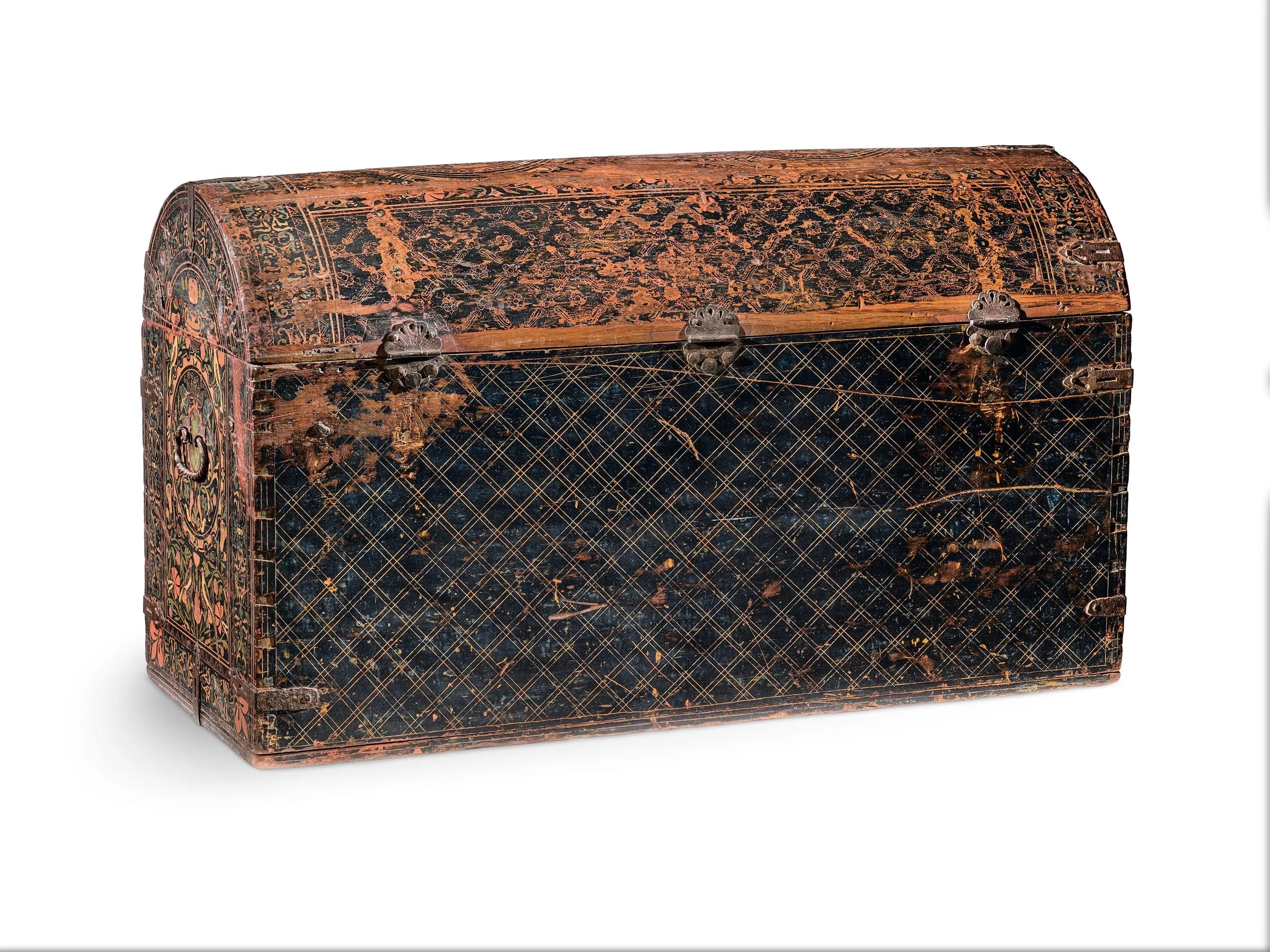
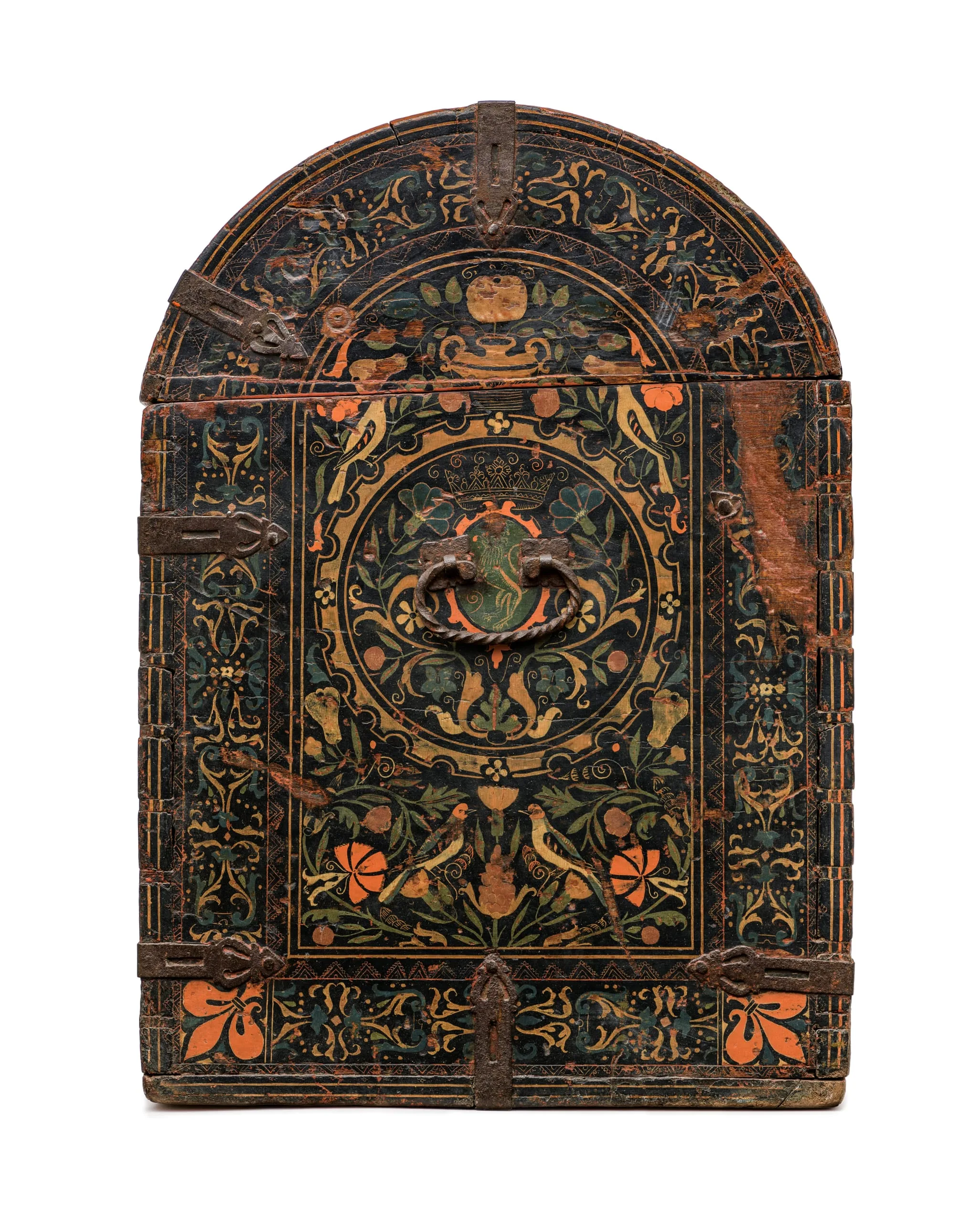
The front and lid of this trunk are decorated with two central medallions that depict mirror images of a man brandishing a sword and staff and riding an armored horse. The sides include a coat of arms with a rampant lion and crown symbolizing the Spanish monarchy. The motifs appear amid a profusion of local birds and plants, as well as pomegranates, first imported by the Spaniards.
In the region of Michoacán, in west-central Mexico, inlaid lacquered objects belonged to an ancient and refined tradition. After the Spaniards arrived in the 1500s, Indigenous artists adapted the technique to new types of artifacts. The inflow of Asian objects and the European craze for lacquer (chinoiserie and japanning) inspired local artists to create their own versions, garnering fervent admiration. The town of Peribán was an acclaimed production center for fine lacquerware.
Ilona Katzew
2024
- Provenance
Unknown consignment store, Santa Fe, New Mexico, c. 2002; Peter Grau Gallery Art & Antiques, Solana Beach, California, c. 2002; Ronald A. Belkin, Long Beach, California, 2002; LACMA, 2015.
- Selected Bibliography
- Gifts on the Occasion of LACMA's 50th Anniversary. Los Angeles: Los Angeles County Museum of Art, 2015.
- Katzew, Ilona, ed. Archive of the World: Art and Imagination in Spanish America, 1500–1800: Highlights from LACMA’s Collection. Exh. Cat. Los Angeles: Los Angeles County Museum of Art; New York: DelMonico Books/D.A.P., 2022.
- Selected Exhibition History
- Archive of the World: Art and Imagination in Spanish America, 1500–1800. October 20, 2023 - January 28, 2024
- Archive of the World: Art and Imagination in Spanish America, 1500–1800. June 22, 2024 - September 08, 2024