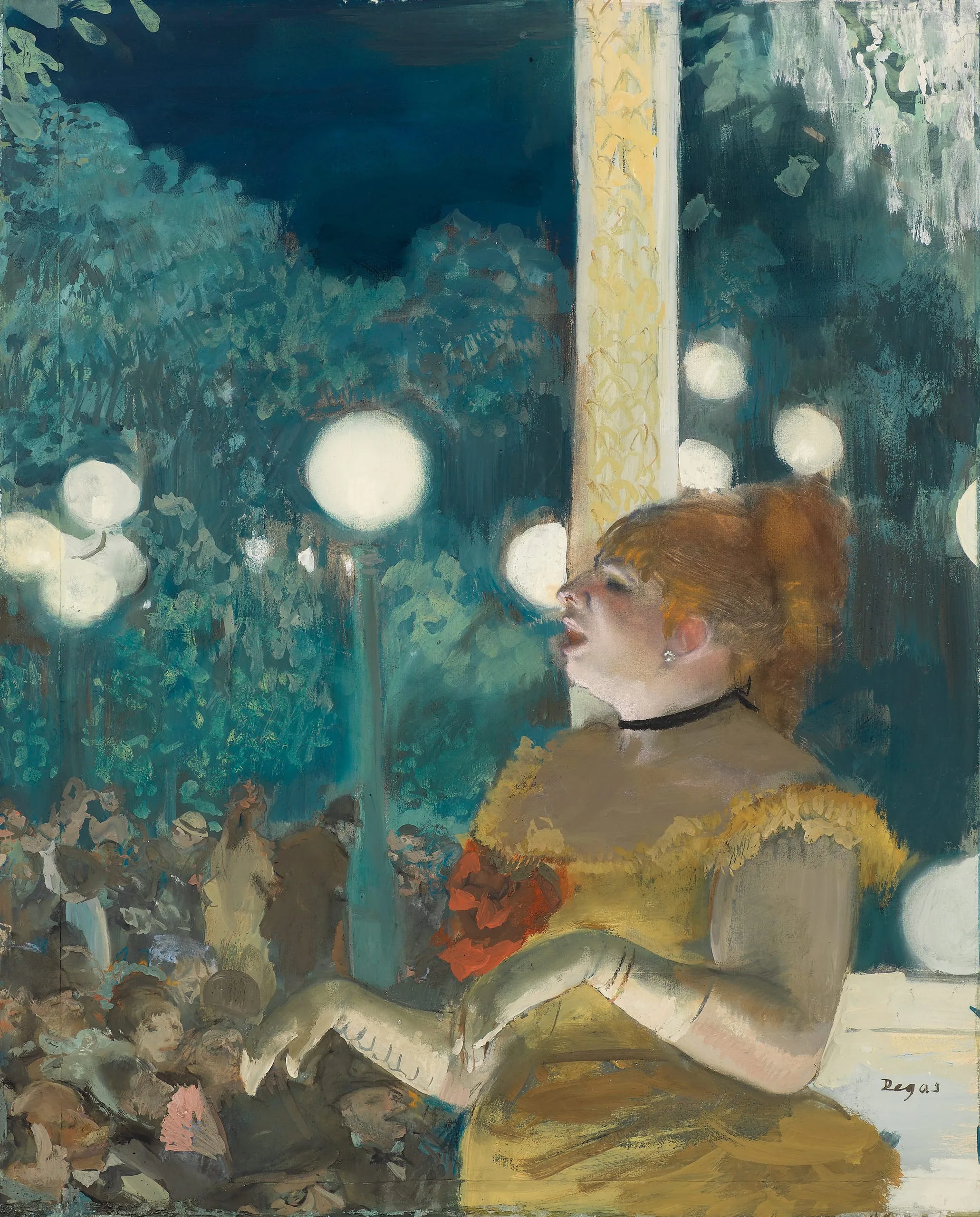
Henri Rouart (1833–1912), Paris (sale, Paris, Galerie Manzi-Joyant, 16–18 December 1912, lot 71, to);(1,2) [Galerie Durand-Ruel, Paris, for]; Mrs. H. O. (Louisine Waldron Elder) Havemeyer (1855–1929), New York, bequeathed to her son;(2) Horace O. Havemeyer (1886–1956), New York, bequeathed to his wife; Doris A. Dick Havemeyer (1890–1982) and Estate, New York (sale, New York, Sotheby Parke Bernet, 18 May 1983, lot 12, to); H. Wendell Cherry (1935–1991), Louisville and New York, sold 4 March 1987 through;(3) [Acquavella Galleries, New York, to]; A. J. Perenchio (1930–2017), Los Angeles, gifted 2025 to; Los Angeles County Museum of Art
Footnotes
(1) Stanislas-Henri Rouart (1833–1912), French industrialist, amateur Impressionist painter, and art collector, was Degas’s lifelong friend and supporter. In addition to this Degas, Rouart owned Degas’s Dancer Resting, cat. 10. A label appears on the upper left back of the mount: “No 71—Degas / au café concert / la chanson du chien / 1881,” which probably refers to the 1912 Rouart sale lot 71 and title, adding a presumed date of execution. It is uncertain if the label dates to the sale, and could have been applied by Durand-Ruel for the benefit of H. O. Havemeyer, given this information had already appeared in the Knoedler exhibition catalogue by 1915. For more information about Durand-Ruel buying for Mrs. Havemeyer at the Rouart sale, see Weitzenhoffer, The Havemeyers: Impressionism Comes to America, 207–09.
(2) Durand-Ruel confirms the ownership history and dates. The picture bears the Durand-Ruel photo no. 7556 in their archives, however, it was not entered in their stockbooks and therefore does not have a stock number (document prepared by Flavie and Paul-Louis Durand-Ruel for Leah Lehmbeck, 8 December 2015). An undated label on the back of the painting is related to the Havemeyer collection: “HOH / 316 / Chanson du chien / Degas.”
(3) Wendell Cherry, vice-chairman and co-founder of Humana Inc., based in Louisville, KY, formed his collection in a relatively short amount of time. According to Acquavella Galleries they had the painting on consignment from Cherry from September 1986 to 4 March 1987, when it was sold to A. J. Perenchio (email to Casie Kesterson, 27 August 2015)