LACMA

ShopMembershipMyLACMATickets
LACMA
Los Angeles County Museum of Art
5905 Wilshire Blvd.
Los Angeles, CA 90036
info@lacma.org
(323) 857-6000
Sign up to receive emails
Subscribe
© Museum Associates 2025

Museum Hours

Monday

11 am–6 pm

Tuesday

11 am–6 pm

Wednesday

Closed

Thursday

11 am–6 pm

Friday

11 am–8 pm

Saturday

10 am–7 pm

Sunday

10 am–7 pm


  • About LACMA
  • Jobs
  • Building LACMA
  • Host An Event
  • Unframed
  • Press
  • FAQs
  • Log in to MyLACMA
  • Privacy Policy
© Museum Associates 2025
Collections

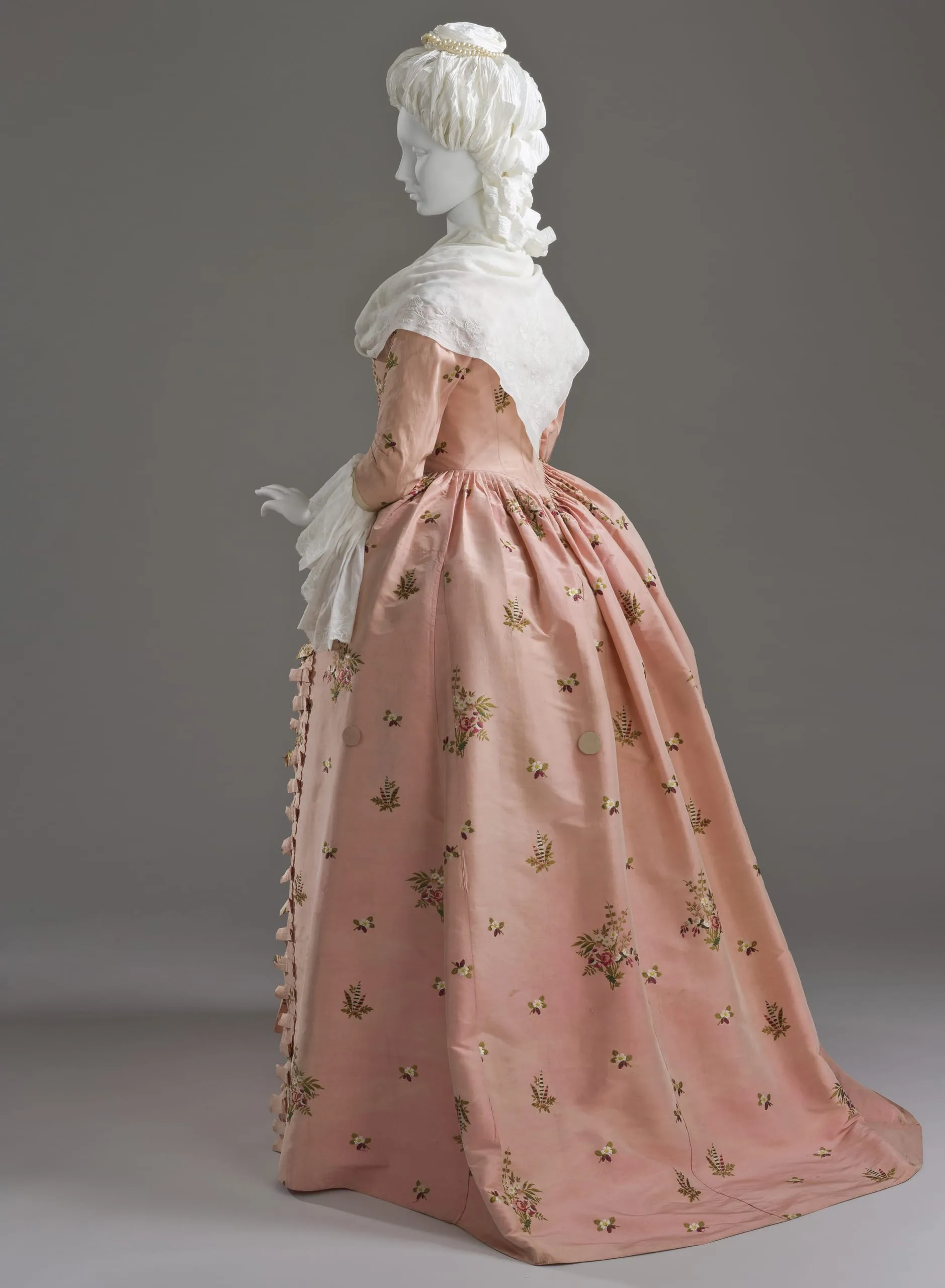
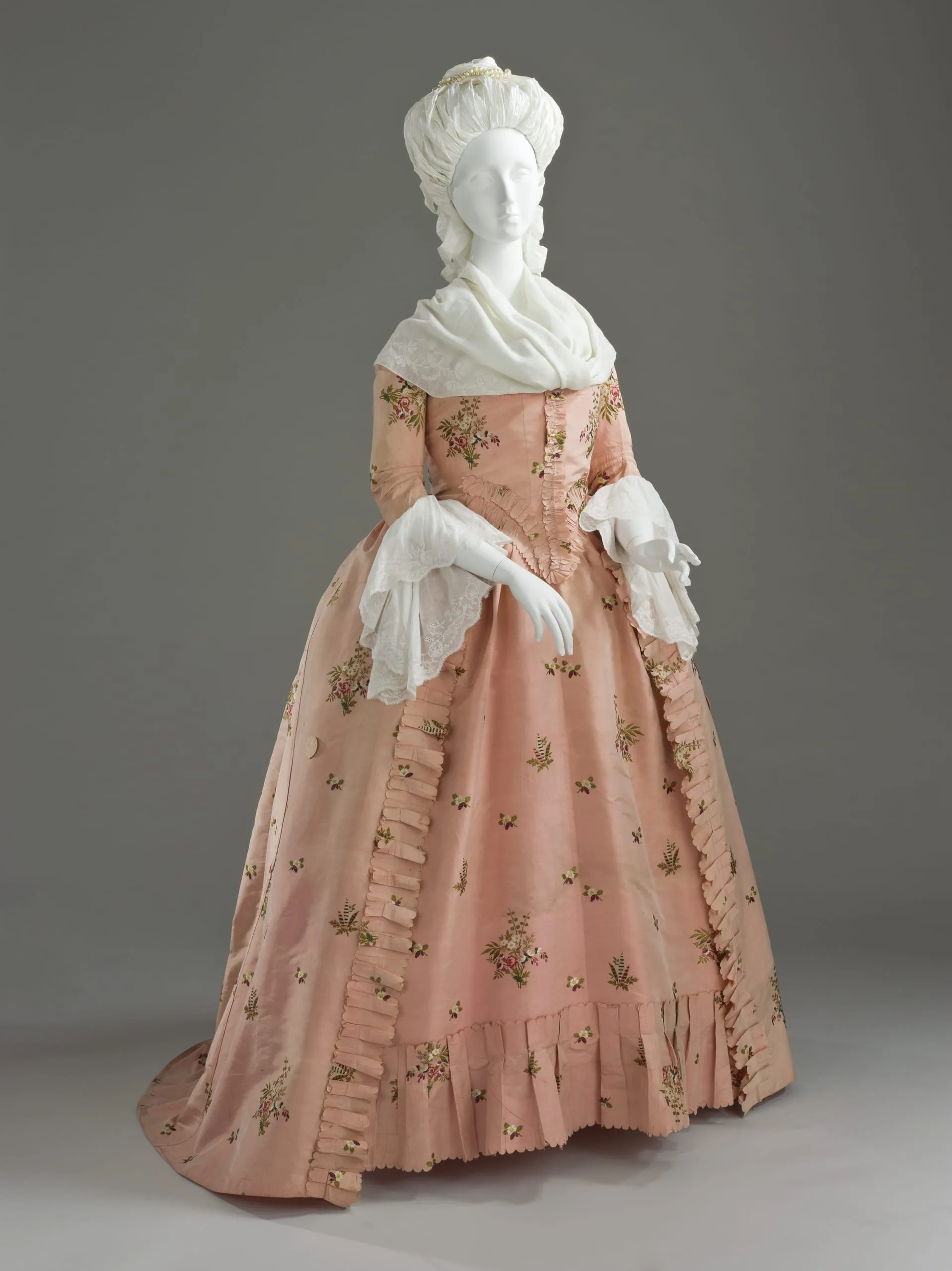
Woman's Dress and Petticoat (Robe à l'anglaise)1770-1780

Not on view
Full-length 18th-century salmon-pink silk gown on a white mannequin, with allover floral embroidery, pleated ruffle trim, wide panniers, and white lace accessories
18th-century pink silk robe à la polonaise displayed on a mannequin, three-quarter rear view, with small woven floral sprigs scattered across the fabric, pleated skirt with looped-up sides, and white linen fichu at the shoulders.
Title
Woman's Dress and Petticoat (Robe à l'anglaise)
Place Made
England
Date Made
1770-1780
Medium
Silk plain weave (taffeta) with discontinuous silk supplemetary weft patterning
Dimensions
Center back length (Dress): 63 1/2 in. (161.29 cm) Center back length (Petticoat): 43 5/8 in. (110.81 cm)
Credit Line
Costume Council Fund
Accession Number
M.57.24.8a-b
Classification
Costumes
Collecting Area
Costume and Textiles
Curatorial Notes
Wealthy and fashionable ladies from the 1740s to just before the French Revolution wore as their daily attire either the loosely pleated French gown or "sack," the tightly fitted English gown, or robe à la polonaise, with its hitched-up overskirt.
The pink color of this dress and its petticoat is typical of the late eighteenth century. The gown features a skirt shorter than its petticoat; buttons and braid hold the overskirt in draped swags at the back. This abundant display of two layers of fabric attested the wearer's wealth; at the same time her dressmaker's skill would have been judged at least in part by her ability to cut the narrow lengths of fabric without waste.
Making such a dress required enormous patience and ability. Each hand-sewn seam has about eight stitches to the inch, and the pinked edges of the ruching were probably done by a specialist using shears designed for the purpose. Despite this labor-intensive procedure, the chief expense by far would have been the very costly fabrics.
A vogue for high-piled hairstyles trimmed with ribbons and flowers reached its peak in the 1780s, contemporary with this gown. The combination of a bulky coiffure and a stilted gait resulting from the reintroduction of high heels in the 1770s produced a body shape and stance that designers exaggerated in the robe à la polonaise. Its heavy flounces balanced the elaborate hairstyle, achieving a total effect of a fashionable, if costly, immobility.
Selected Bibliography
  • Price, Lorna. Masterpieces from the Los Angeles County Museum of Art. Los Angeles: Los Angeles County Museum of Art, 1988.
  • Maeder, Edward et al.. An Elegant Art: Fashion & Fantasy in the Eighteenth Century. Los Angeles: Los Angeles County Museum of Art; New York: Harry N. Abrams, Inc., 1983.