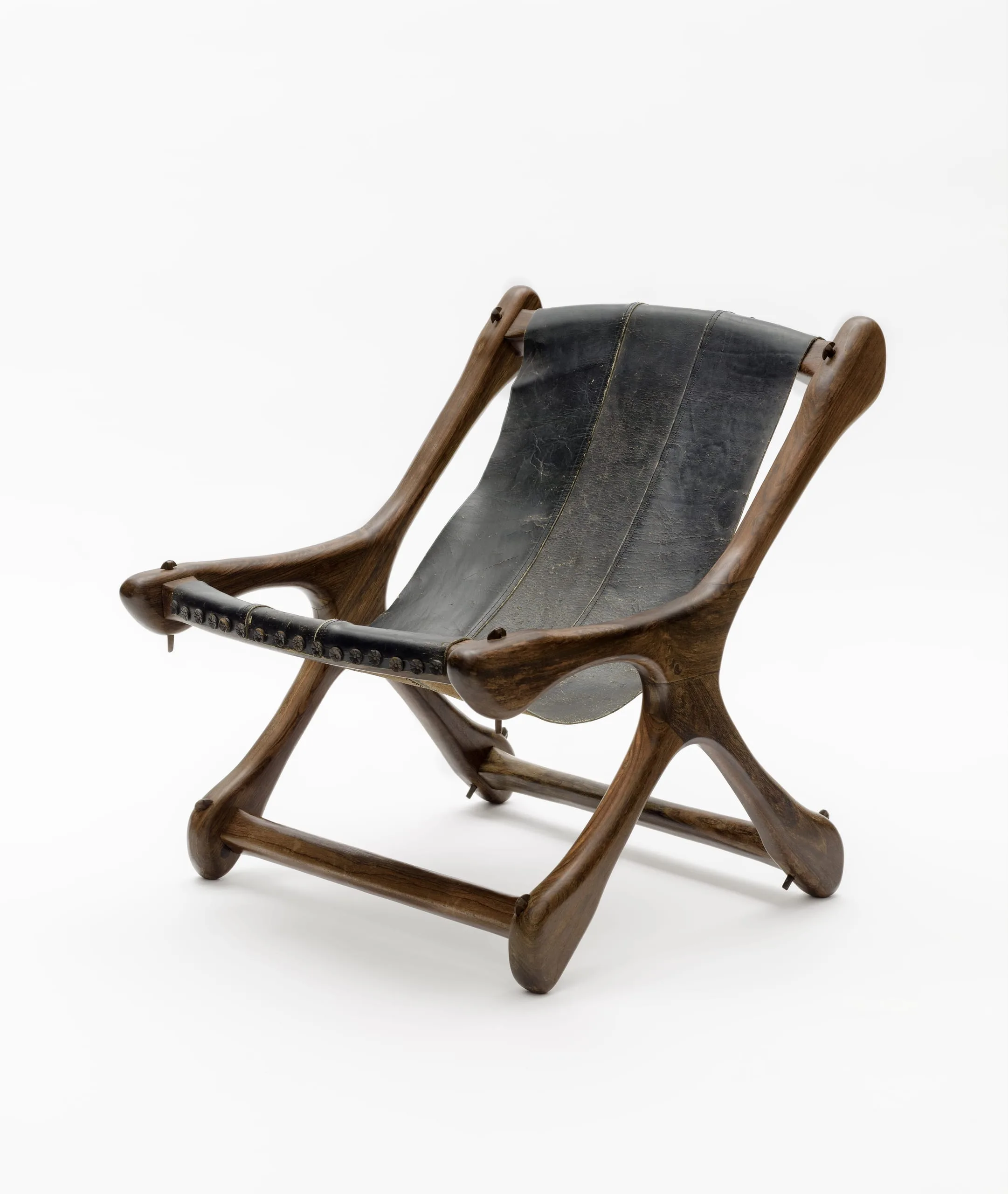
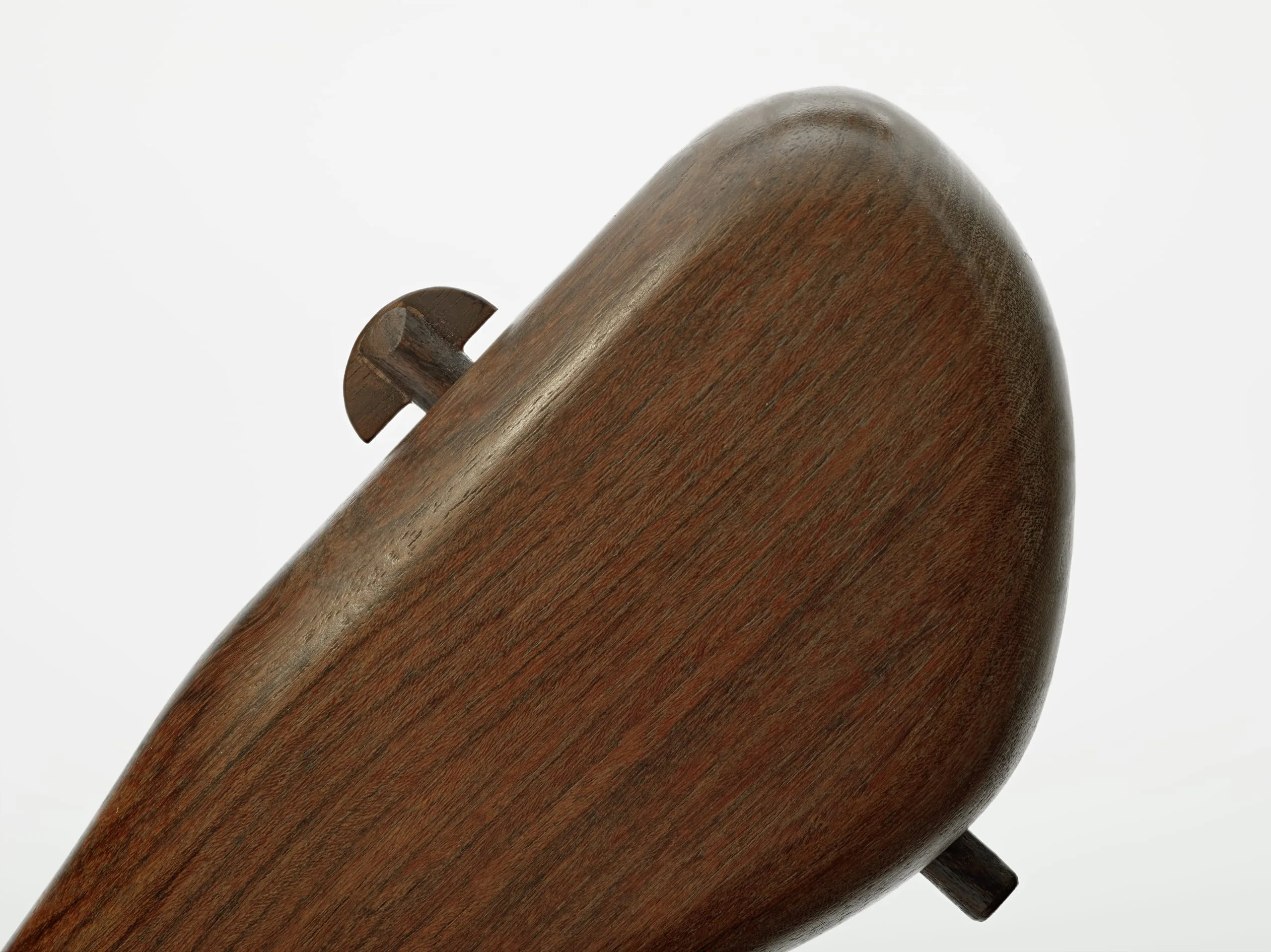
Don Shoemaker’s expressive designs ranged from bulbous biomorphic chairs to boldly geometric stack-laminated tables, reflecting the growing commitment to individual expression that characterized craft in the 1960s and 1970s. His work offered new interpretations of many classic designs, from Gerrit Rietveld’s iconic Zig-Zag chair (M.2009.177) to the time-honored folding camp chair. The Sling chair is an updated version of the butaca (or butaque), a chair type popular in Mexico’s coastal areas since colonial times, including the Yucatán Peninsula and Veracruz. Shoemaker was one of many twentieth-century designers to respond to this vernacular form. LACMA’s collection also includes examples by William Spratling (M.2015.10) and Michael van Beuren (M.2015.42), both of whom, like Shoemaker, emigrated to Mexico from the United States, as well as one by artist Josef Albers (M.2020.17).
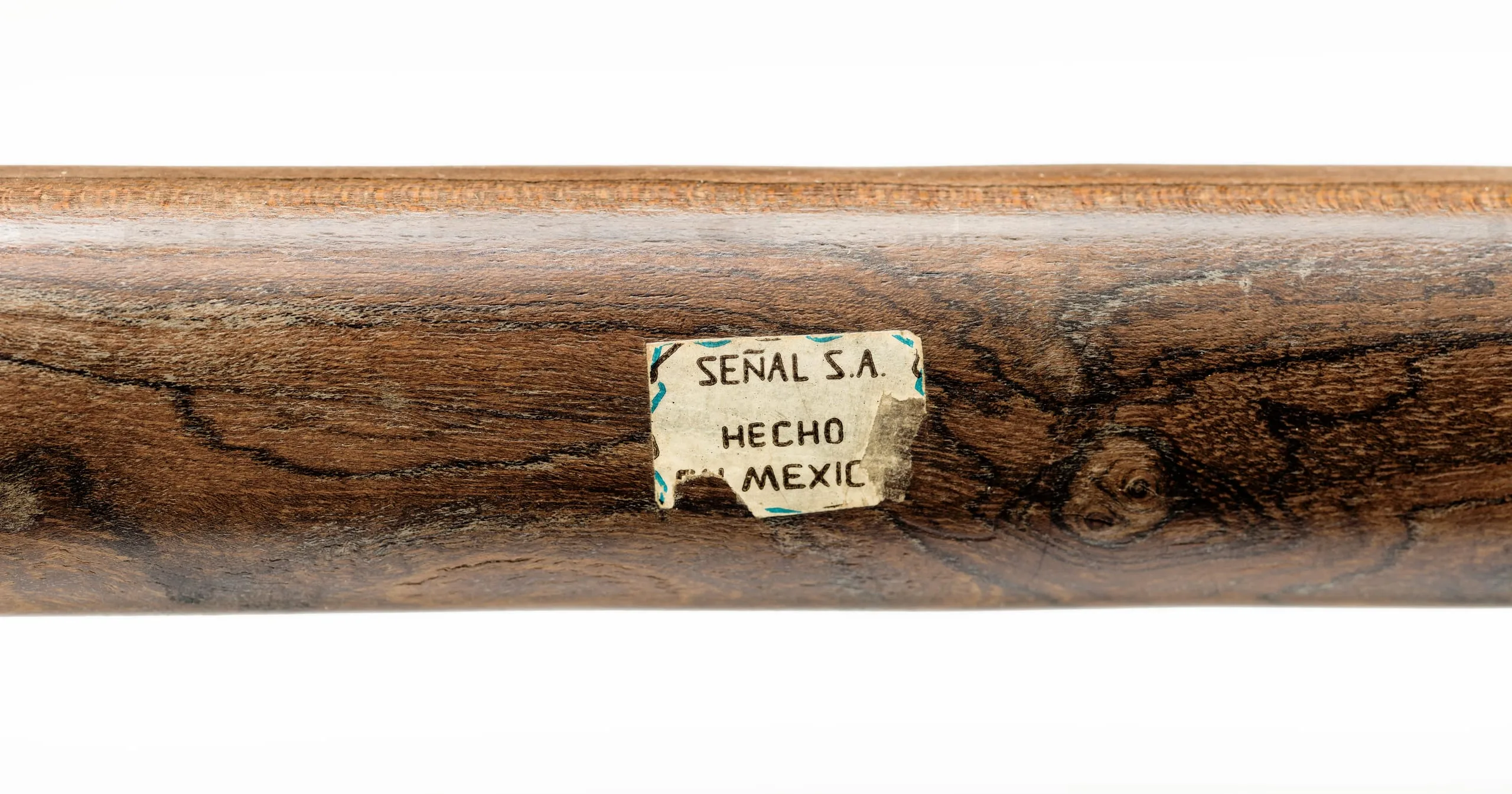
Shoemaker designed and manufactured his finely crafted wood furniture in rural Morelia, in Michoacán, Mexico. The Nebraska native trained at the Art Institute of Chicago before immigrating to Mexico with his wife Barbara after World War II. By the early 1950s, he had begun to produce furniture and accessories made from tropical woods. His company, Señal, would eventually employ more than 100 workers, operating retail shops in both Morelia and Puerto Vallarta. He exported his products to the United States, selling them through department stores as well as smaller design shops.
Staci Steinberger
2015/2024