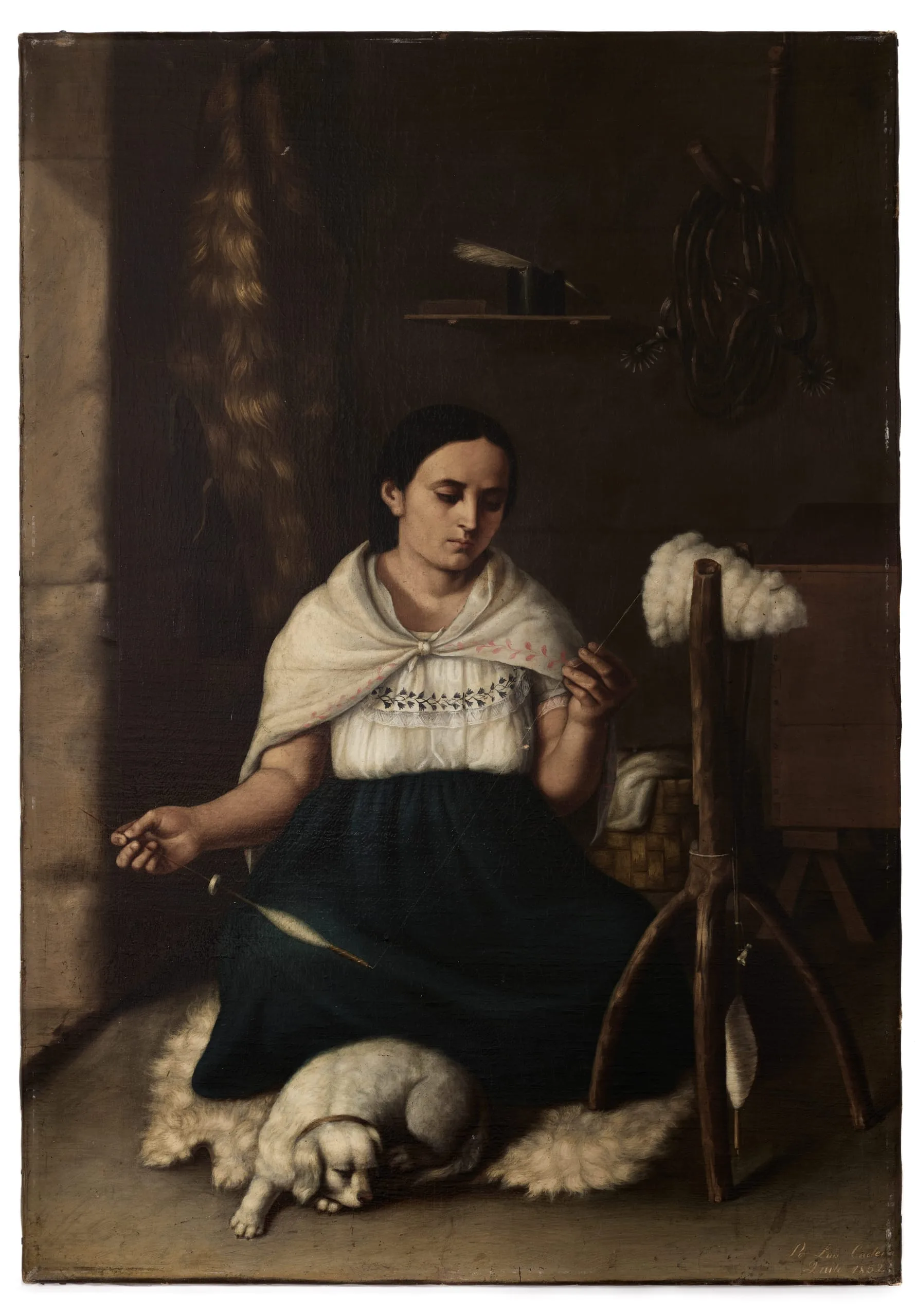
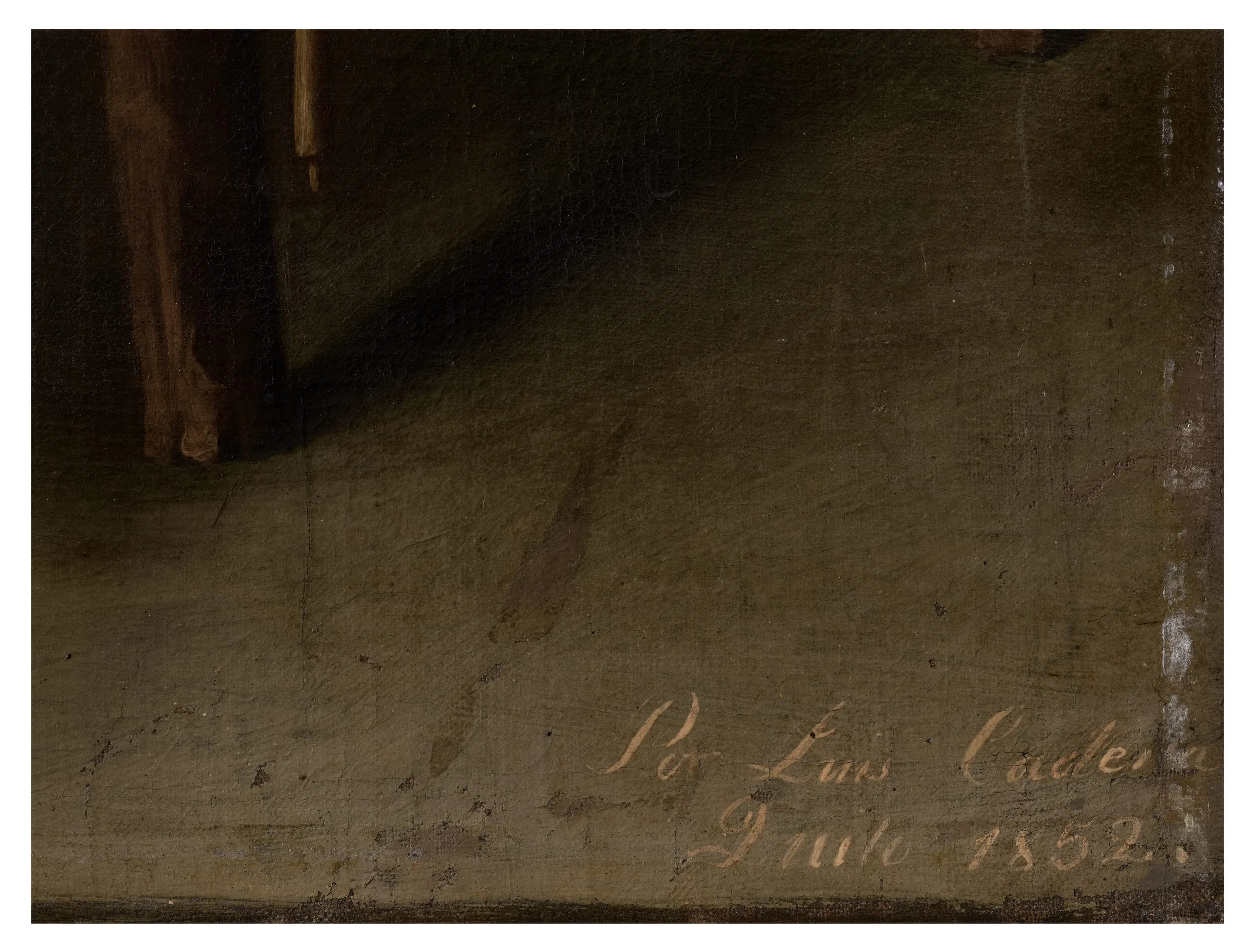
This intimate depiction of an hilandera (woman spinning) embodies Luis Cadena’s interest in the depiction of local types that gained currency in South America in the mid-nineteenth century. Set in a dark interior, the figure of the spinning peasant is foregrounded and rendered with a notable degree of decorum. Cadena gave special attention to the tactile quality of surfaces, including the embroidered details of the woman’s blouse and mantle. There is a palpable contrast between the softness of the dog (a traditional symbol of fidelity) and the rug on which the hilandera sits and her stern expression. Another apparent dichotomy is the presence of the pen, inkpot, and book resting on the shelf in the back, placed between the hanging spurs and the wool saddle. These elements might hint at the intense literacy campaigns that the Ecuadorian government undertook in the mid-nineteenth century to educate the Indigenous population.
Cadena promoted the introduction of academic art in Ecuador through his work and teachings. He was an apprentice of the renowned Ecuadorian painter Antonio Salas (1790–1860), and in 1852 he traveled to Chile, where he met the French painter Raymond Monvoisin (1790–1870), who had a decisive impact on his pictorial style. Cadena received a government grant to study in Rome, and after returning to Quito in 1860, he opened an arts academy to educate the local youth. By 1872, he was named director of the newly established Escuela de Bellas Artes (School of Fine Arts). Motivated by nationalistic ideals, Cadena drew on his European training to render the great local subjects of the day with a fully modern visual vocabulary.
Ilona Katzew
2024