LACMA

ShopMembershipMyLACMATickets
LACMA
Los Angeles County Museum of Art
5905 Wilshire Blvd.
Los Angeles, CA 90036
info@lacma.org
(323) 857-6000
Sign up to receive emails
Subscribe
© Museum Associates 2025

Museum Hours

Monday

11 am–6 pm

Tuesday

11 am–6 pm

Wednesday

Closed

Thursday

11 am–6 pm

Friday

11 am–8 pm

Saturday

10 am–7 pm

Sunday

10 am–7 pm


  • About LACMA
  • Jobs
  • Building LACMA
  • Host An Event
  • Unframed
  • Press
  • FAQs
  • Log in to MyLACMA
  • Privacy Policy
© Museum Associates 2025
Collections

Miguel Cabrera
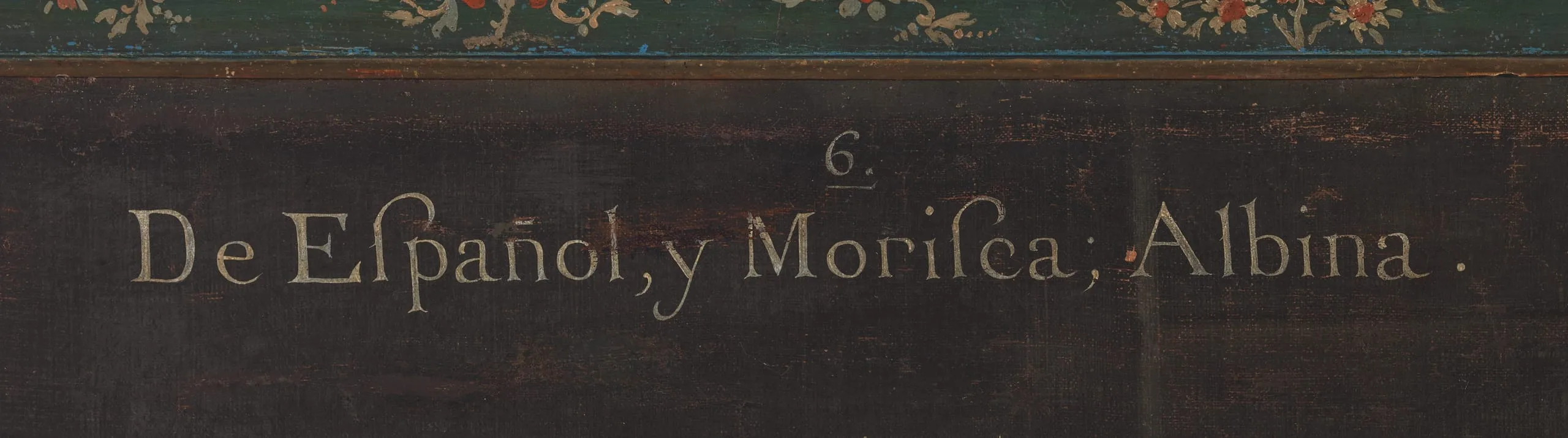
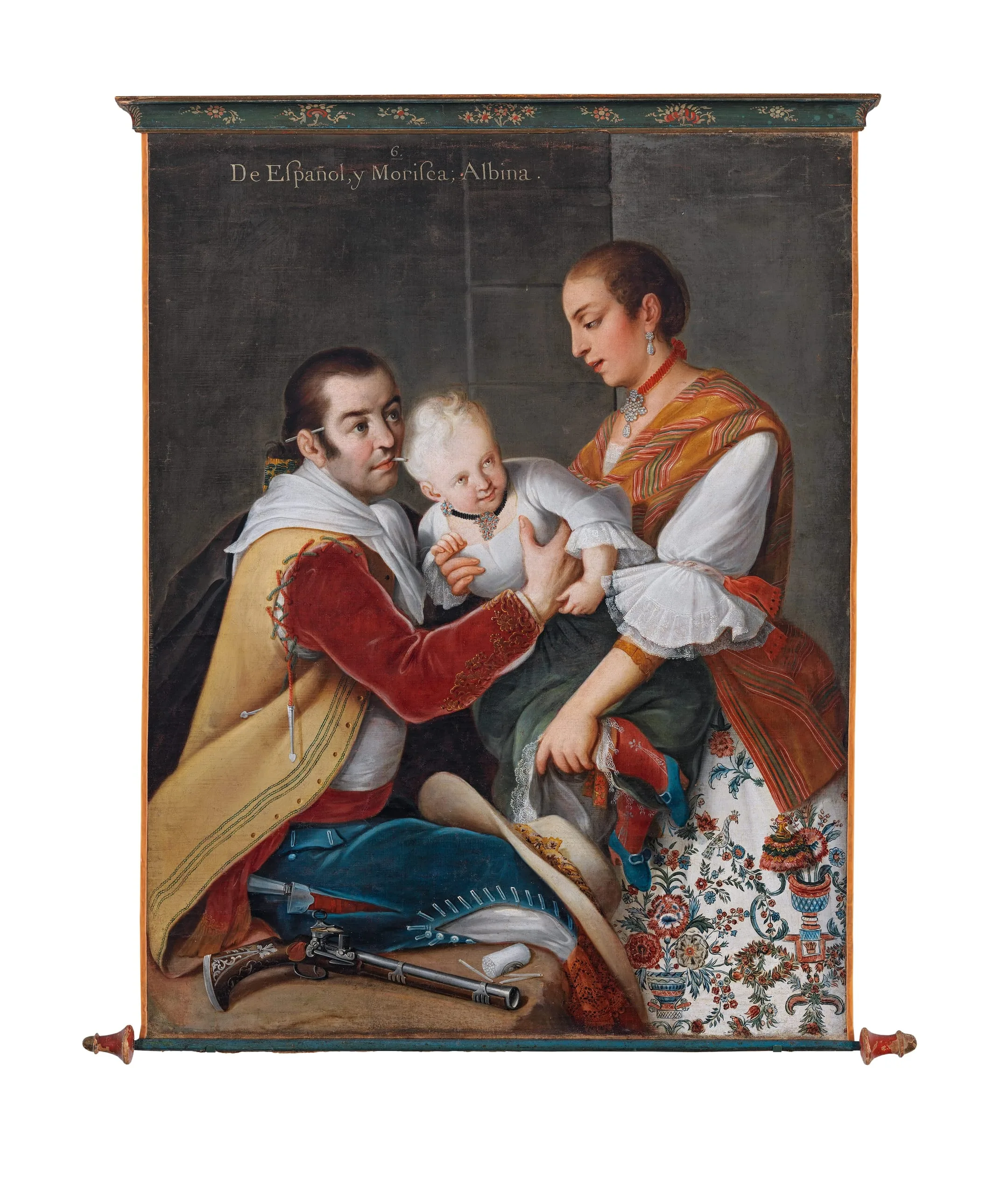
6. From Spaniard and Morisca, Albino Girl (6. De español y morisca, albina)1763

On view:
Geffen Galleries, Spanish America at the Center of the World
Oil painting of a man, woman, and pale-skinned child grouped together, the adults in elaborate period dress, with a flintlock pistol on the ground and a Spanish inscription above
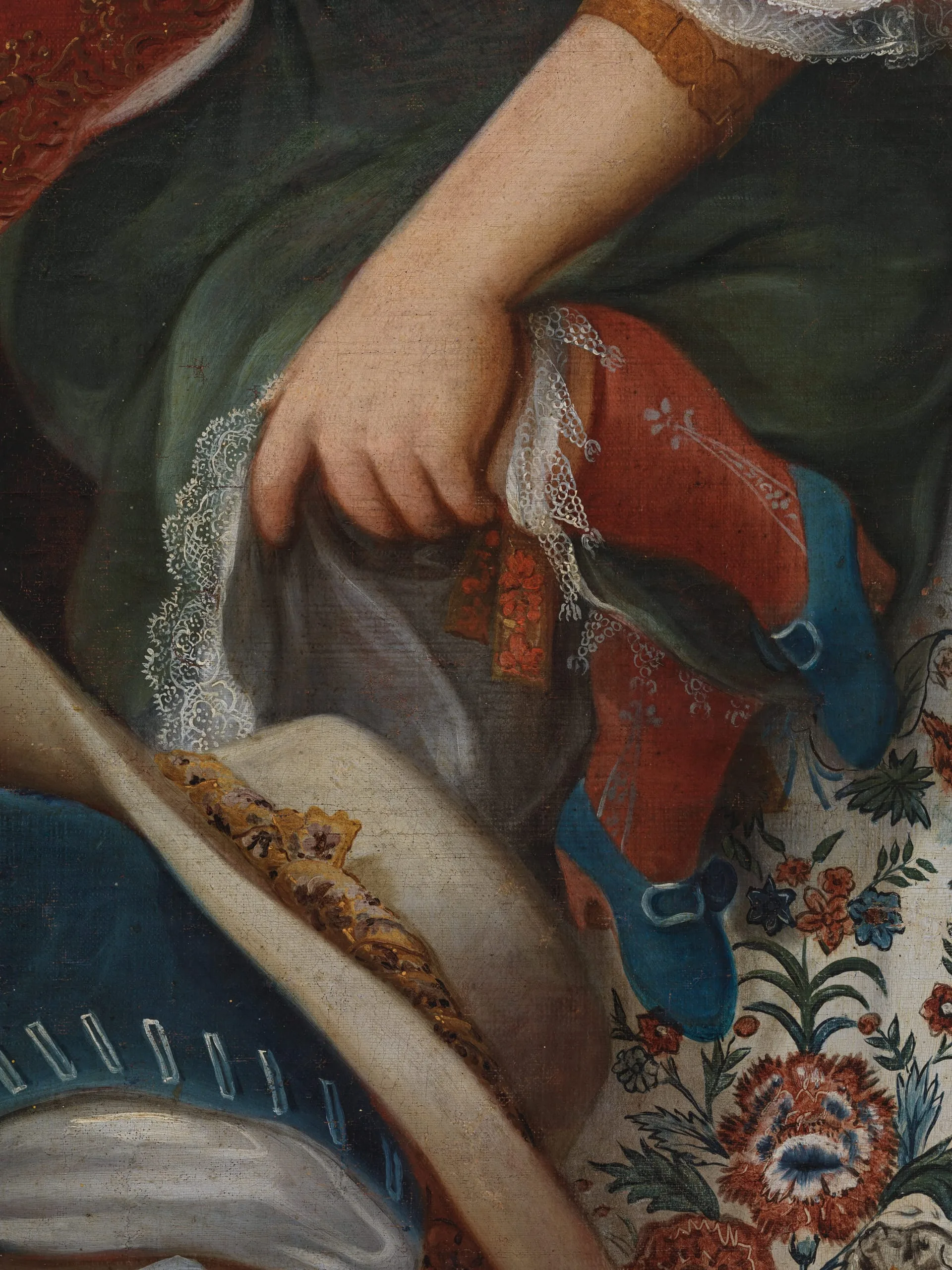
Detail of an oil painting showing a figure's hand and lower body in 18th-century dress: green overskirt, red floral underskirt, white lace-trimmed petticoat, and a bright blue heeled shoe with buckle, set against floral-patterned fabric with red carnations.
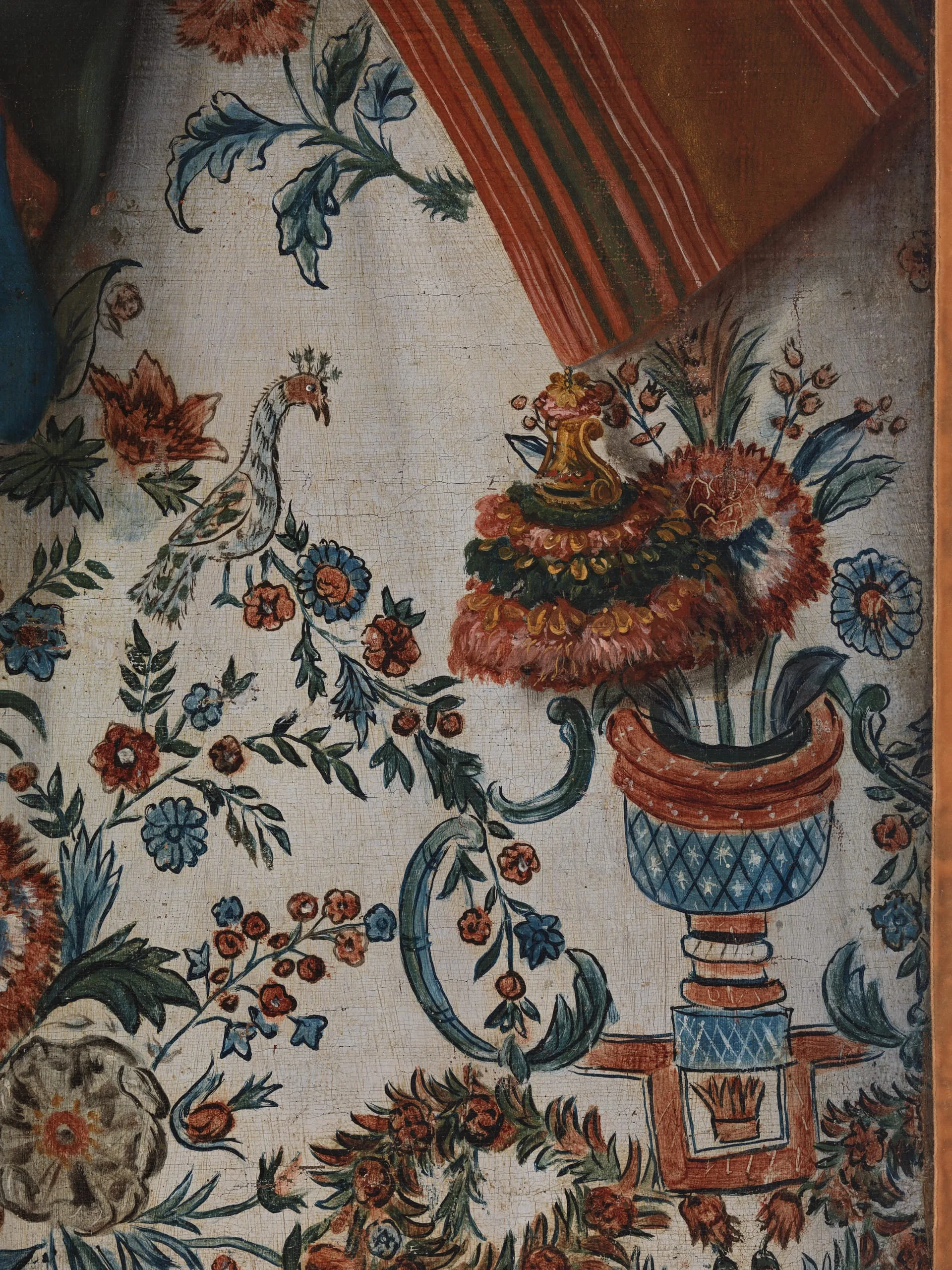
Oil painting detail depicting a white textile with painted floral chinoiserie pattern in red, blue, and green; a peacock among flowering vines at left; an ornate vase with bouquet on a pedestal at right.
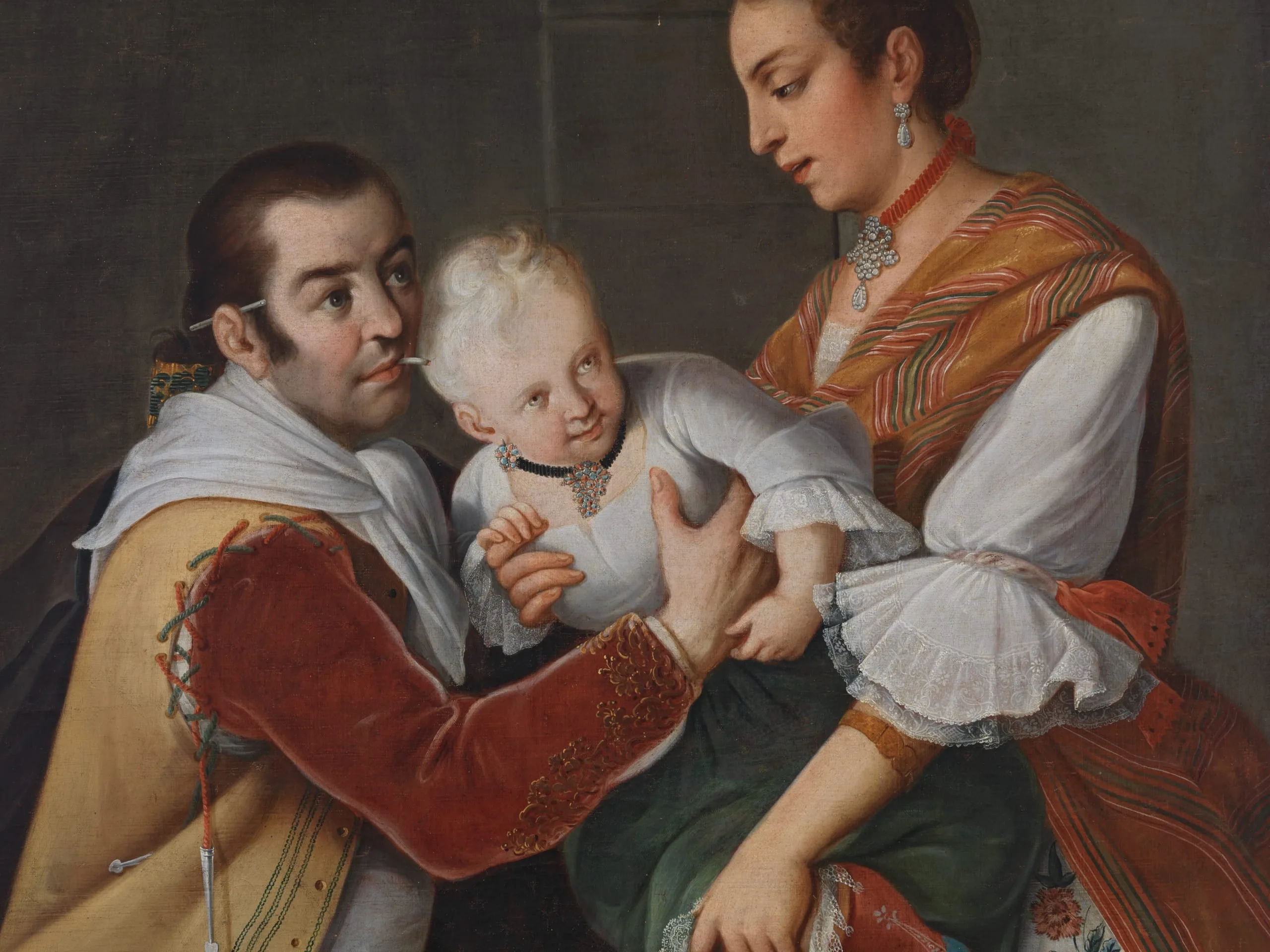
Oil painting of a man and woman with a young child between them. The man, in a yellow doublet with red velvet sleeves and white ruff, leans in from the left. The woman at right wears a striped shawl, white blouse with lace cuffs, and diamond earrings. The fair-haired child, dressed in white with a black choker, faces outward. Smooth, detailed brushwork against a dark gray background.
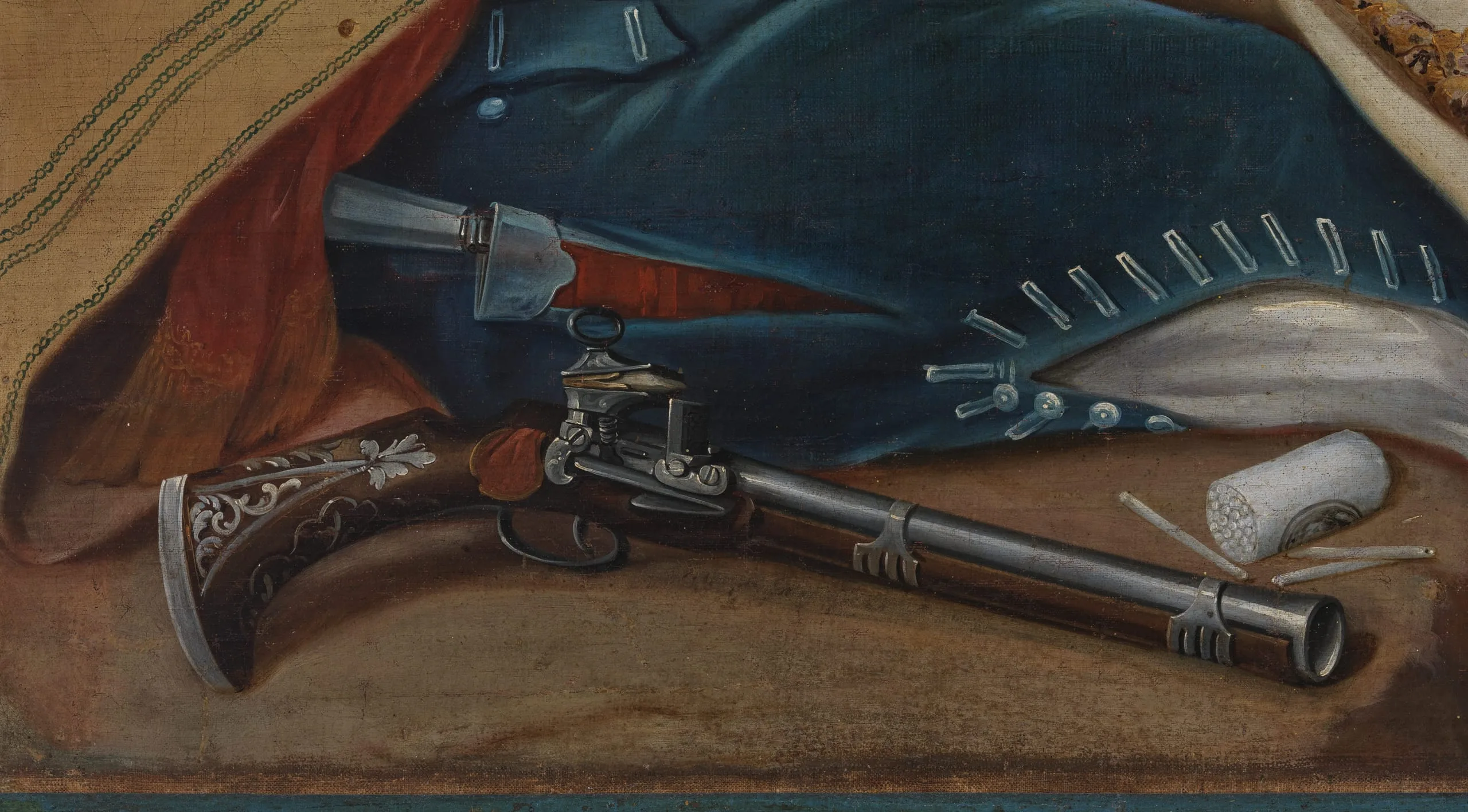
Oil painting still life of a flintlock musket with silver-inlaid stock lying on a wooden surface, alongside a rolled cloth, loose matches, and draped blue and red fabric in the background.
Detail of a painted panel with dark brown background, showing light-colored lettering reading "6. De Español, y Morisca; Albina" above a decorative floral border in green, red, and white.
Artist or Maker
Miguel Cabrera
Mexico, circa 1710-1768
Title
6. From Spaniard and Morisca, Albino Girl (6. De español y morisca, albina)
Date Made
1763
Medium
Oil on canvas
Dimensions
Canvas: 51 5/8 × 41 3/8 in. (131.1 × 105.1 cm); mount: 54 3/4 × 44 1/4 × 2 3/8 in. (139.1 × 112.4 × 6 cm)
Credit Line
Purchased with funds provided by Kelvin Davis in honor of the museum's 50th anniversary and partial gift of Christina Jones Janssen in honor of the Gregory and Harriet Jones Family
Accession Number
M.2014.223
Classification
Paintings
Collecting Area
Latin American Art
Curatorial Notes

Eighteenth-century Mexico saw the invention of a unique pictorial genre known as casta (caste) painting. Created as sets of multiple images, the works document the process of mestizaje (racial mixing) among Amerindians, Spaniards, and Africans. The story the paintings tell, reinforced by the inscriptions, is that the mixture of Spaniards and Indians gave back “pure” or white Spaniards, while the union of Spaniards and Indians with Africans led to racial degeneration. Paradoxically, the inclusion of local products presentedthe New World as a place of boundless natural wonder and emphasized the colonists’ pride in the diversity and prosperity of the land—a friction that permeates the genre. The figures’ dress and occupations reinforce their social standing.

This casta scroll painting (a typical format to transport pictures) portrays a Spanish male and a morisca—a term that designated the mixture of a Spaniard and a mulatto—with their albino daughter. Miguel Cabrera used different techniques to depict the various figures, which may have some symbolic resonance. For example, while he employed open brushwork for the faces of the Spanish soldier (distinguished by his clothing) and the albino child, he blended the flesh color of the morisca to a high finish. For an artist possibly of mixed background (despite “passing” as Spanish in official documentation), this is hardly an inconsequential detail.


From exhibition Archive of the World, 2022 (for more information see the catalogue entry by Ilona Katzew in the accompanying publication, cat. no. 39, pp. 190–94)

Provenance
Unknown collection, Spain, 1920s; David Gray, Montecito, California, 1920s; gifted to James R. H. Wagner, Montecito; by inheritance to his daughter Harriet Wagner and his son-in-law Gregory Jones (“La Casita Adobe”), Sonoma, California, 1940s; by descent to their son Gregory Jones Jr., Santa Rosa, California, 1999; by inheritance to his daughter Cristina Jones Janssen, Lafayette, California, 1998–99; Robert Simon Fine Art, New York, 2014; LACMA, 2014.
Selected Bibliography
  • Katzew, Ilona, ed. Painted in Mexico, 1700–1790: Pinxit Mexici. Exh. Cat. Los Angeles: Los Angeles County Museum of Art; Mexico City: Fomento Cultural Banamex; New York: DelMonico Books/Prestel, 2017.
  • Katzew, Ilona, ed. Archive of the World: Art and Imagination in Spanish America, 1500–1800: Highlights from LACMA’s Collection. Exh. Cat. Los Angeles: Los Angeles County Museum of Art; New York: DelMonico Books/D.A.P., 2022.
  • Katzew, Ilona “White or Black? Albinism and Spotted Blacks in the Eighteenth-Century Atlantic World.” In Envisioning Others: Race, Color, and the Visual in Iberia and Latin America, edited by Pamela Patton. Leiden, Netherlands: Brill, 2016, pp. 142–86.
  • Fronek, Joseph. “Observations on Miguel Cabrera after the Conservation of His Casta Paintings.” Latin American and Latinx Visual Culture 1, no. 2 (2019): 122–130.

  • Ilona Katzew, “Why an Albino? Some Notes On Our New Casta Painting by Miguel Cabrera,” Unframed, April 22, 2015, https://unframed.lacma.org/2015/04/22/why-albino-some-notes-our-new-casta-painting-miguel-cabrera.

Selected Exhibition History
  • Painted in Mexico, 1700–1790: Pinxit Mexici . June 29 - October 15, 2017
  • Painted in Mexico, 1700–1790: Pinxit Mexici . June 29 - October 15, 2017
  • Painted in Mexico, 1700–1790: Pinxit Mexici . Sunday, November 19, 2017 - Sunday, March 18, 2018
  • Painted in Mexico, 1700–1790: Pinxit Mexici . Sunday, November 19, 2017 - Sunday, March 18, 2018
  • Painted in Mexico, 1700–1790: Pinxit Mexici . April 24 - July 22, 2018
  • Painted in Mexico, 1700–1790: Pinxit Mexici . April 24 - July 22, 2018
  • Archive of the World: Art and Imagination in Spanish America, 1500–1800. June 12, 2022 - October 30, 2022
  • Archive of the World: Art and Imagination in Spanish America, 1500–1800. June 12, 2022 - October 30, 2022
  • Archive of the World: Art and Imagination in Spanish America, 1500–1800. October 20, 2023 - January 28, 2024
  • Archive of the World: Art and Imagination in Spanish America, 1500–1800. October 20, 2023 - January 28, 2024
  • Archive of the World: Art and Imagination in Spanish America, 1500–1800. June 22, 2024 - September 08, 2024
  • Archive of the World: Art and Imagination in Spanish America, 1500–1800. June 22, 2024 - September 08, 2024