LACMA

ShopMembershipMyLACMATickets
LACMA
Los Angeles County Museum of Art
5905 Wilshire Blvd.
Los Angeles, CA 90036
info@lacma.org
(323) 857-6000
Sign up to receive emails
Subscribe
© Museum Associates 2025

Museum Hours

Monday

11 am–6 pm

Tuesday

11 am–6 pm

Wednesday

Closed

Thursday

11 am–6 pm

Friday

11 am–8 pm

Saturday

10 am–7 pm

Sunday

10 am–7 pm


  • About LACMA
  • Jobs
  • Building LACMA
  • Host An Event
  • Unframed
  • Press
  • FAQs
  • Log in to MyLACMA
  • Privacy Policy
© Museum Associates 2025
Collections

Unknown
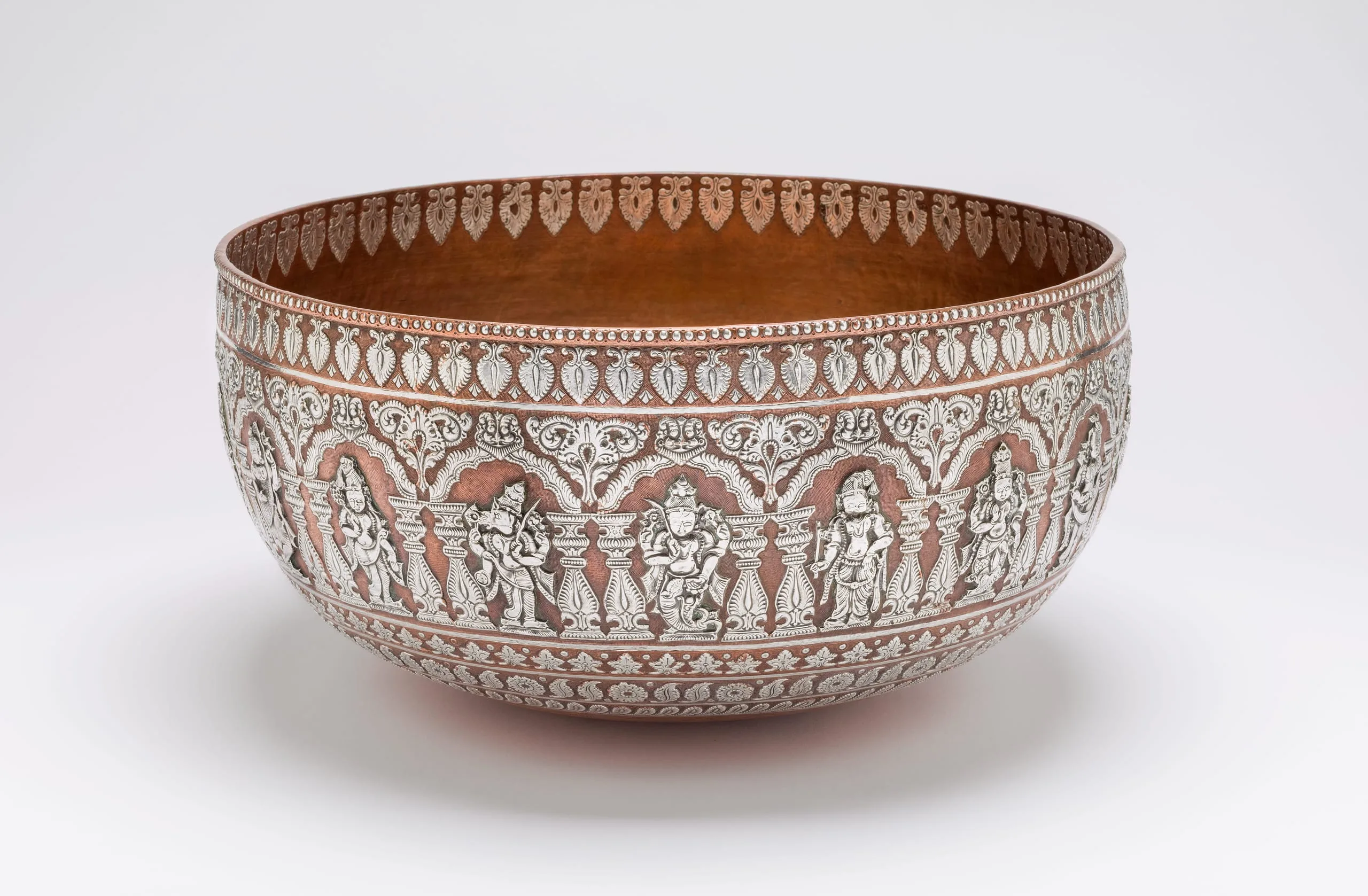
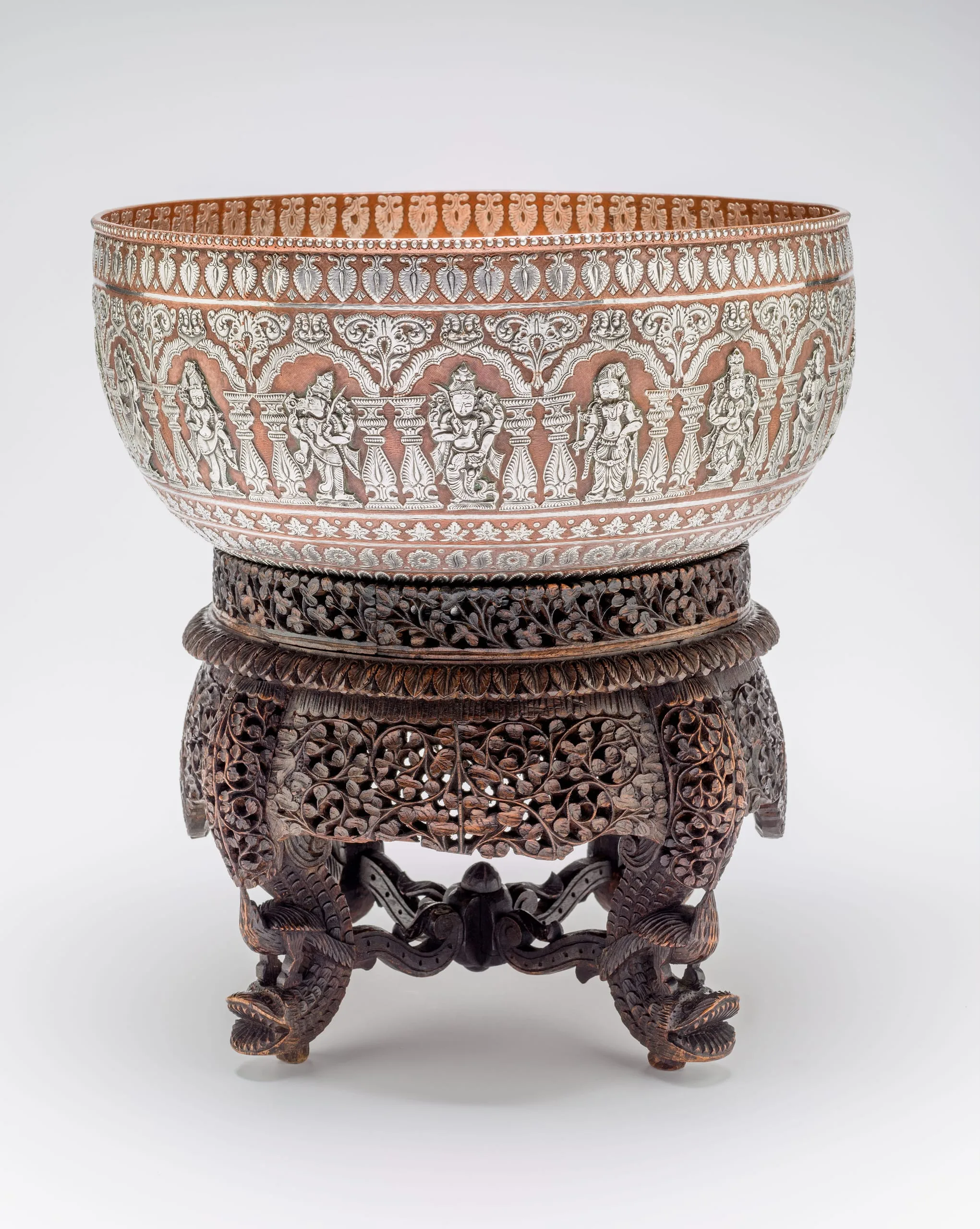
Ornamental Basin with Avatars and Womencirca 1900

Not on view
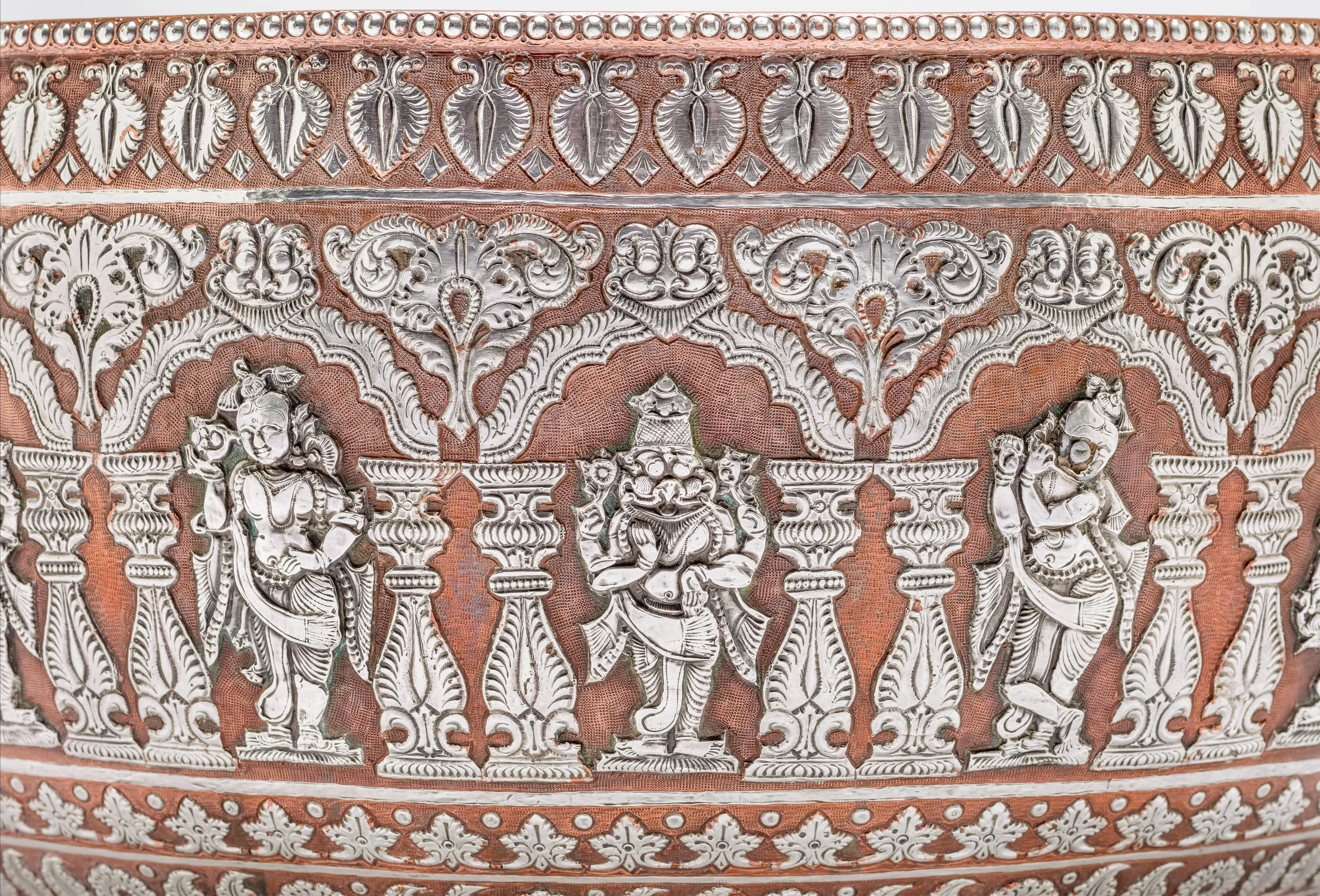
Large copper bowl with silver inlay decoration, featuring horizontal bands of leaf borders, cusped arches, and standing multi-armed figures in high relief around the exterior
Large hemispherical bowl with red and silver repoussé decoration, resting on a carved wooden stand. The bowl's exterior features registers of standing celestial figures under arched canopies, with foliate and leaf borders near the rim. The darkwood stand is openwork-carved with dense foliage and supported by crouching mythical creatures at the base.
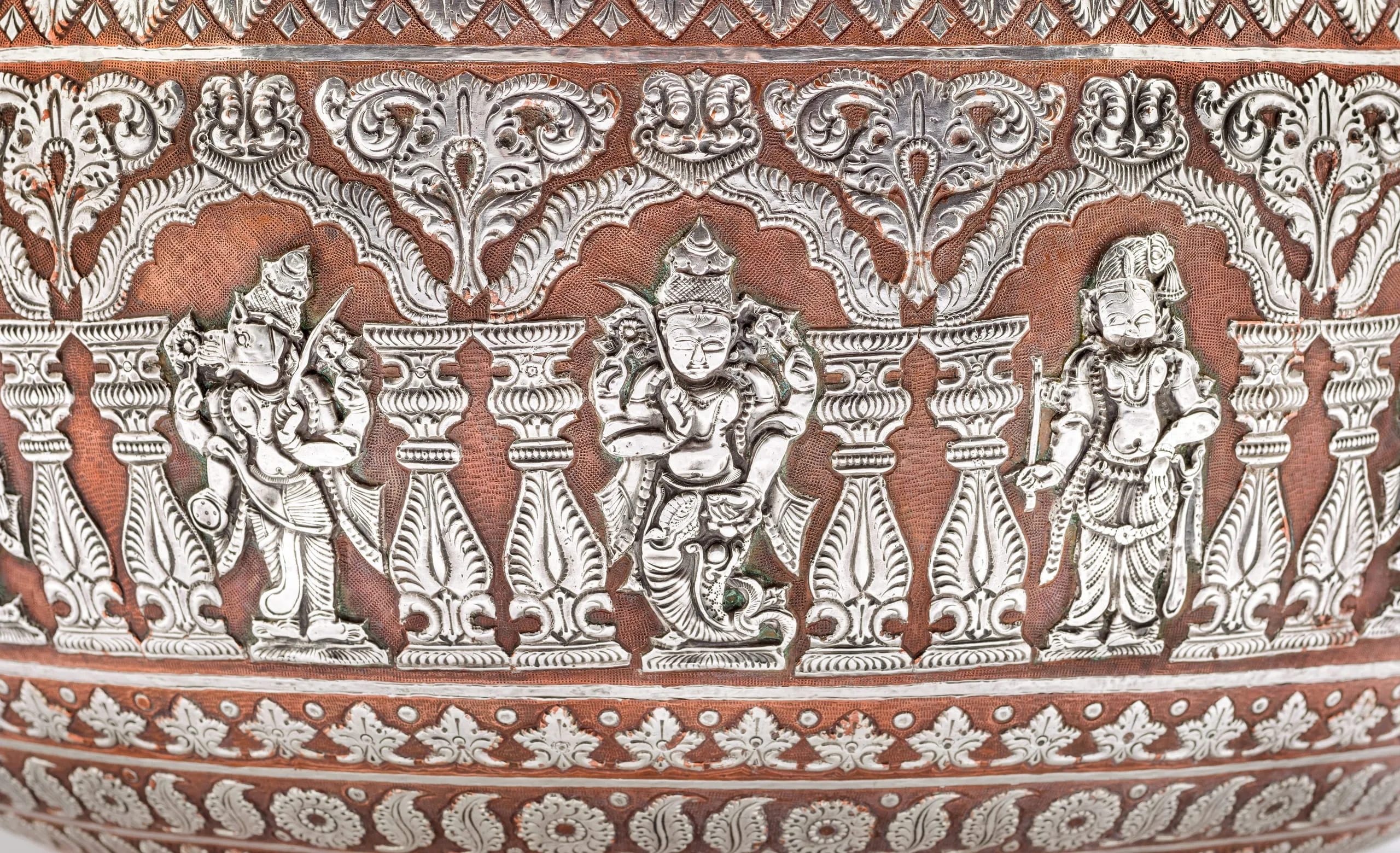
Close-up of a copper vessel with silver repoussé work, showing a frieze of multi-armed deity figures set within arched niches supported by ornate pillars, surrounded by bands of scrolling floral and foliate decoration.
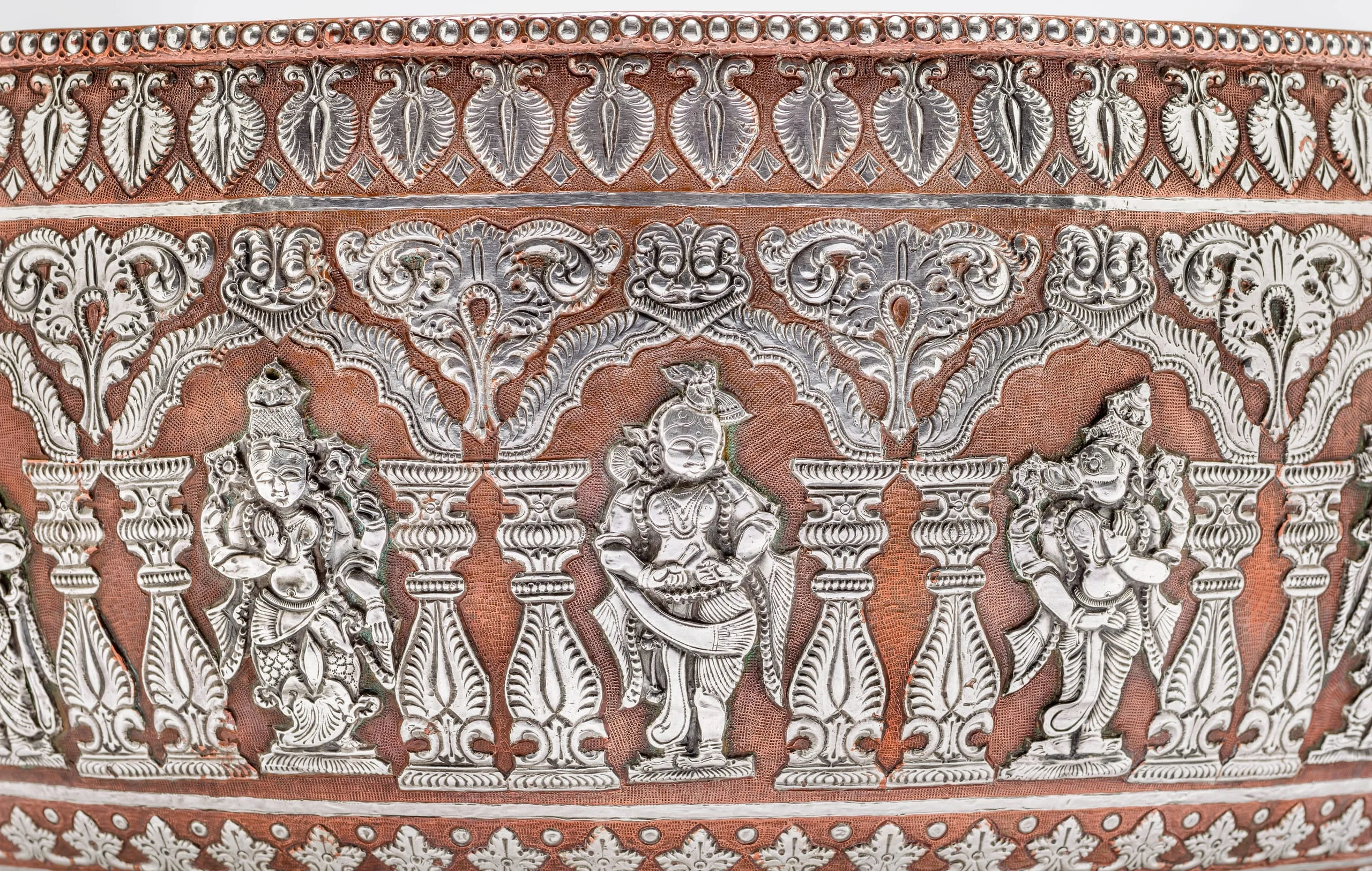
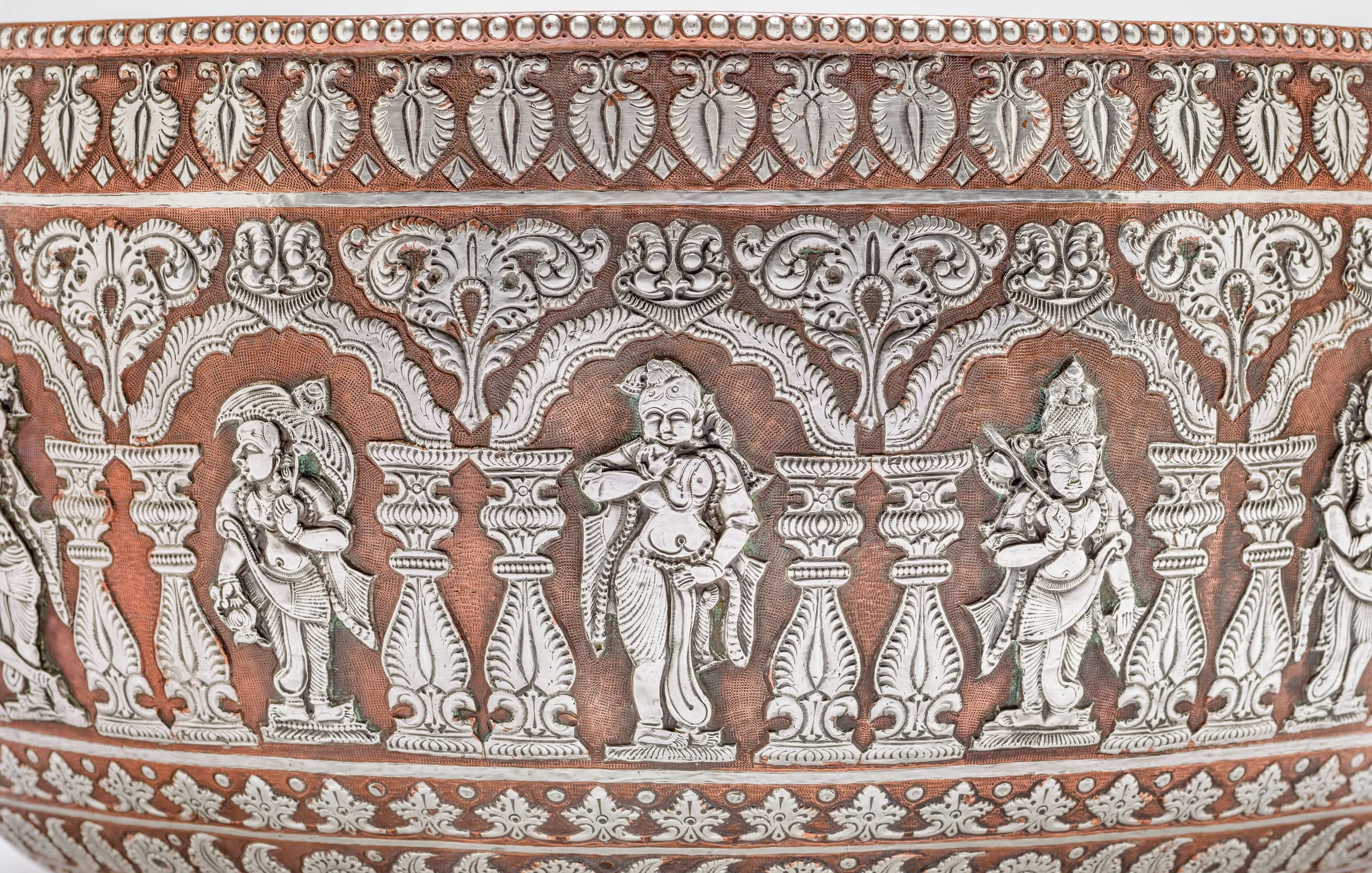
Close-up of a copper vessel with applied silver repoussé decoration arranged in horizontal registers: a row of stylized leaf motifs at top, a band of scrolling foliage and mask forms, and a frieze of high-relief figures in devotional poses set beneath arched columns with floral pilasters.
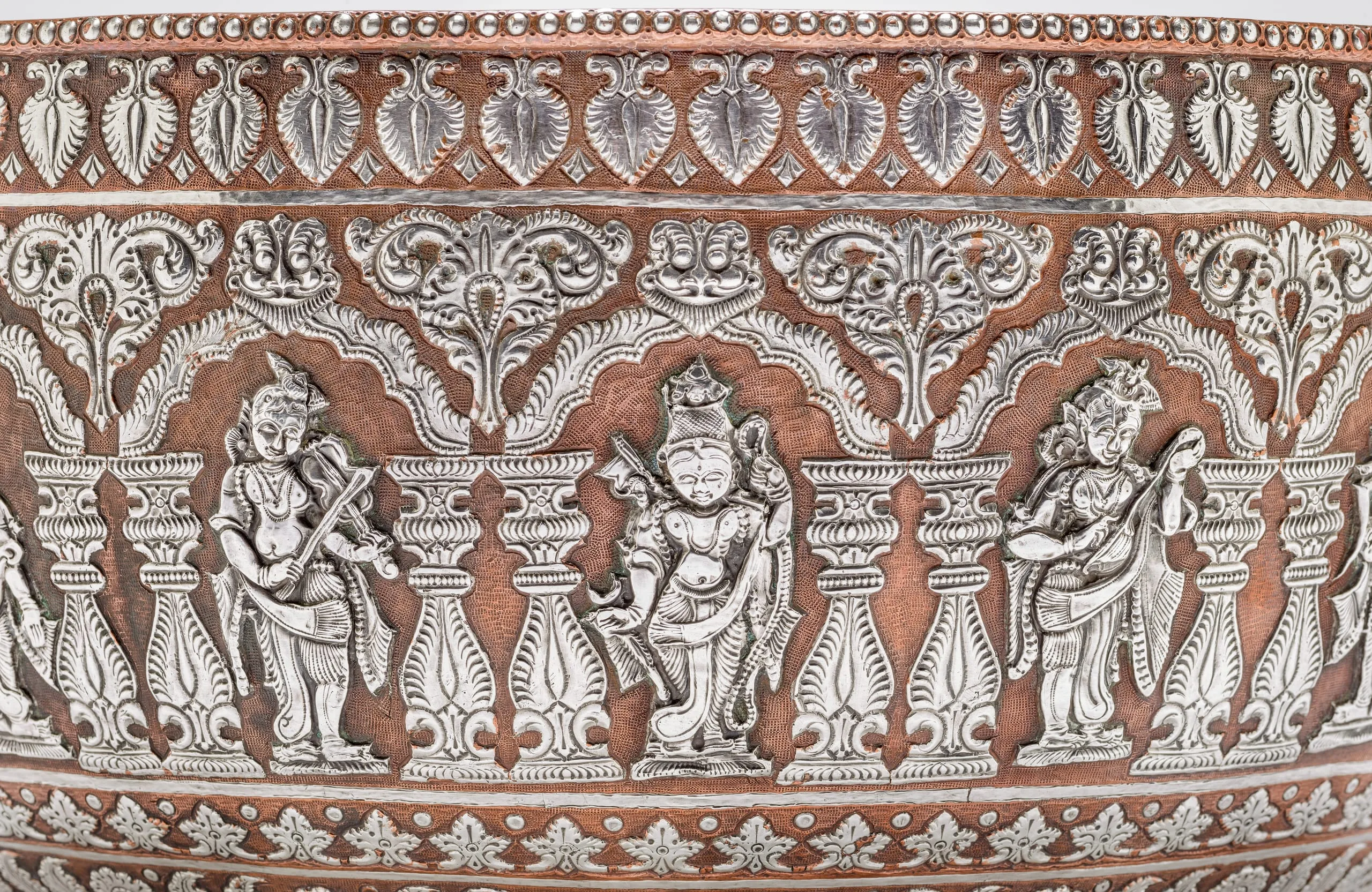
Close-up of a copper vessel with silver overlay repoussé decoration, showing a band of standing deities and figures set within arched niches flanked by columns, surrounded by registers of scrolling foliage and leaf motifs in high relief.
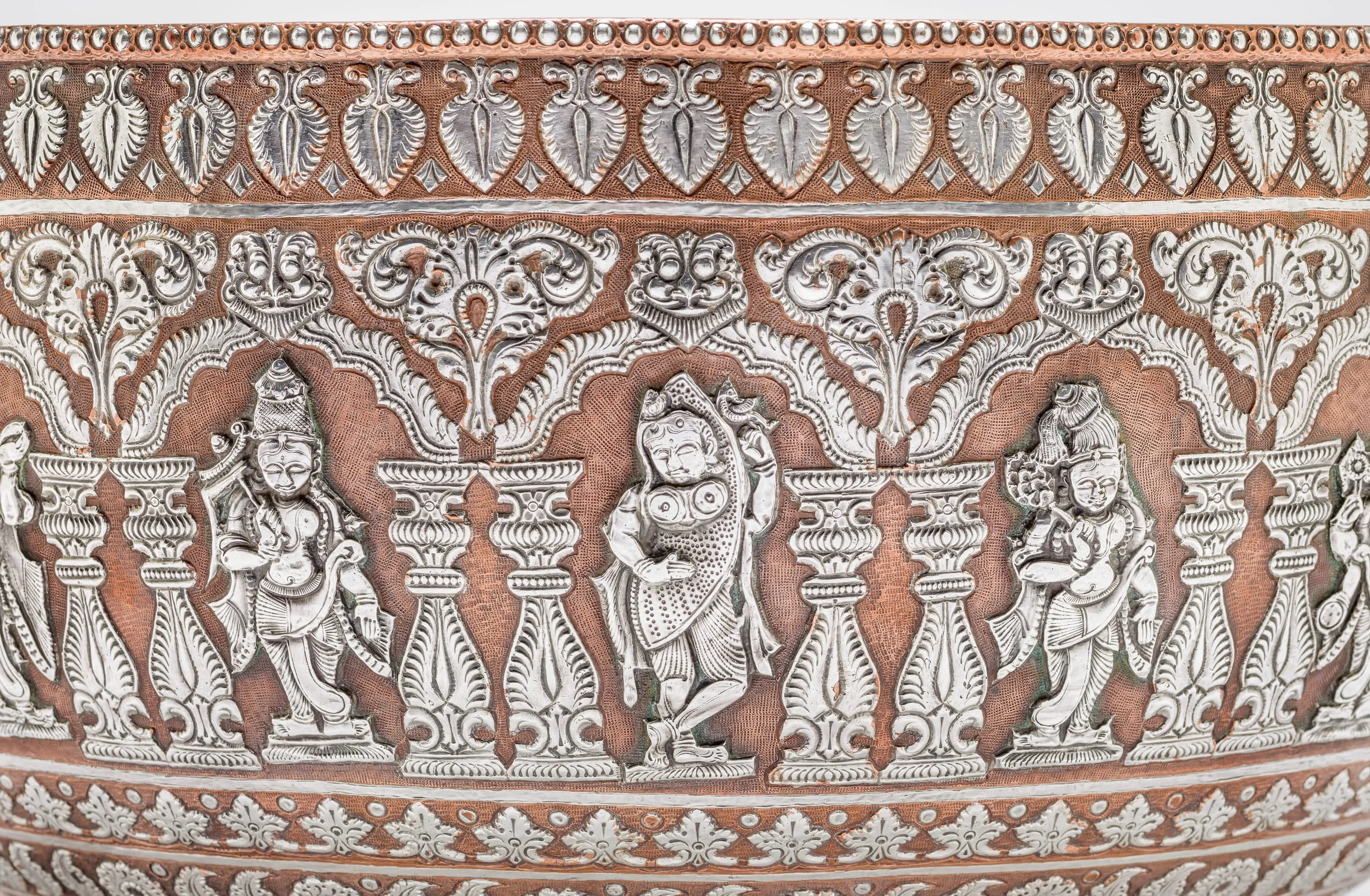
Copper vessel with silver overlay decoration, showing a frieze of standing figures beneath arched columns, flanked by bands of foliate scrollwork and a beaded border; repoussé and chased detailing throughout.
Close-up of a copper vessel with silver repoussé decoration, showing a frieze of divine figures in arched niches between ornate columns, surrounded by bands of foliate scrollwork and beaded borders.
Detail of a copper vessel with silver repoussé decoration, featuring a band of standing figures in ornate archways flanked by decorative columns, with bands of leaf and bead motifs above and below.
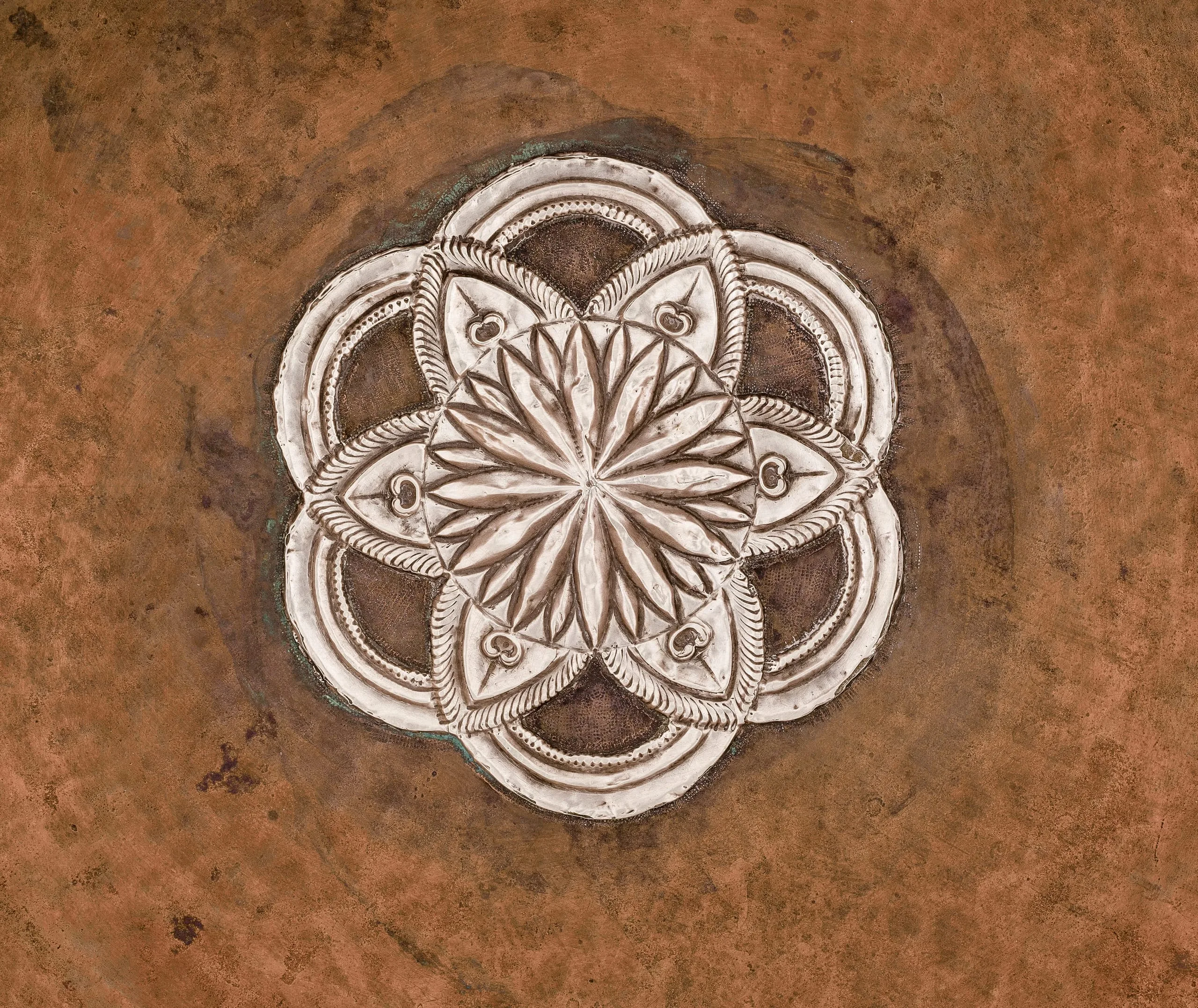
Circular carved relief medallion on a mottled reddish-brown surface, featuring a central eight-petaled rosette surrounded by interlocking lobed arches with twisted rope-pattern borders, in cream and brown tones.
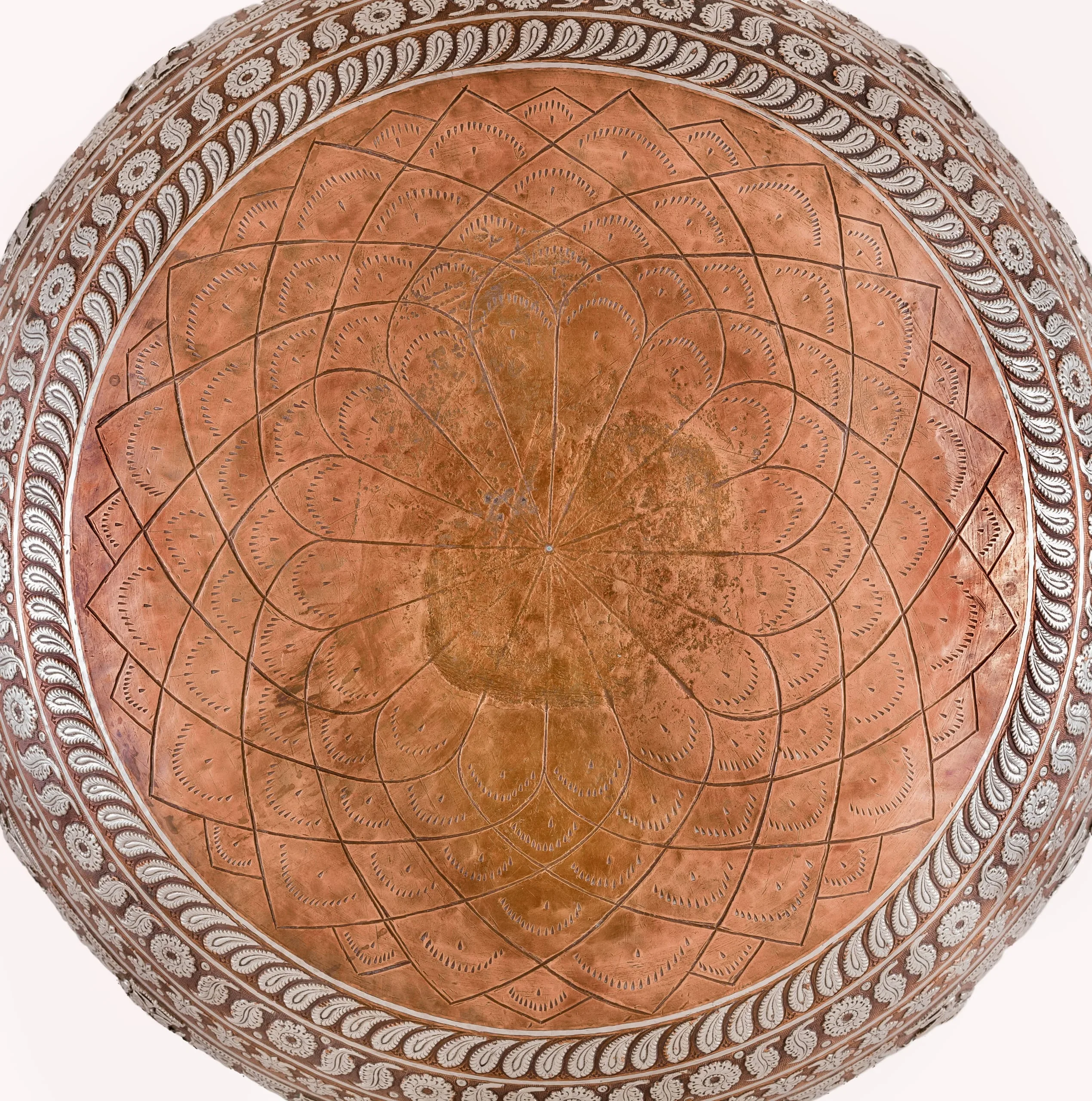
Large circular copper tray viewed from above, with an engraved radiating lotus medallion at center, surrounded by concentric bands of incised geometric patterns and a wide border of silver-inlaid paisley motifs.
Artist or Maker
Unknown
Title
Ornamental Basin with Avatars and Women
Place Made
India, Tamil Nadu, Thanjavur (Tanjore)
Date Made
circa 1900
Medium
Copper, silver repoussé, and silver overlay
Dimensions
Height: 8 in. (20.32 cm) Diameter: 16 in. (40.64 cm)
Credit Line
Purchased with funds provided by the South and Southeast Asian Deaccession Fund and the Ancient Art Deaccession Fund
Accession Number
M.2014.182.1
Classification
Furnishings
Collecting Area
South and Southeast Asian Art
Curatorial Notes

The primary decoration on this large basin consists of a band of eighteen individual figures encircling the waist of the vessel. The figures depict the ten main avatars of the Hindu god Vishnu, including Balarama rather than the Buddha, which suggests the patron may have been an adherent of the Vishishtadvaita sect. Interspersed with the avatars are eight images of elegantly coiffed women, most of whom are musicians playing various instruments. Intriguingly, the fact that the avatars and women are intermingled as an ornamental series suggests that the basin was made as a secular decorative art object intended for the international market, either as direct export ware or for sale to visiting Europeans. If it had been made as a religious object for a domestic temple, is more likely that the figures would have been portrayed in separate sets in order to preserve the sanctity of the avatars. The prominence given to the musicians may reflect their artistic legacy of the great Tanjore (modern Thanjavur), ruler Serfoji II (reigned 1798-1832), who is renowned for his enlightened patronage of music, literature, art, and science.

This opulent basin epitomizes an indigenous two-tone aesthetic metalworking genre known as Ganga-Jumna ware, which features the use of two metals of contrasting colors. The name for this distinctive metalware derives from the different colors of the two major rivers of north India, the Ganges (Ganga) and the Yamuna (Jumna).