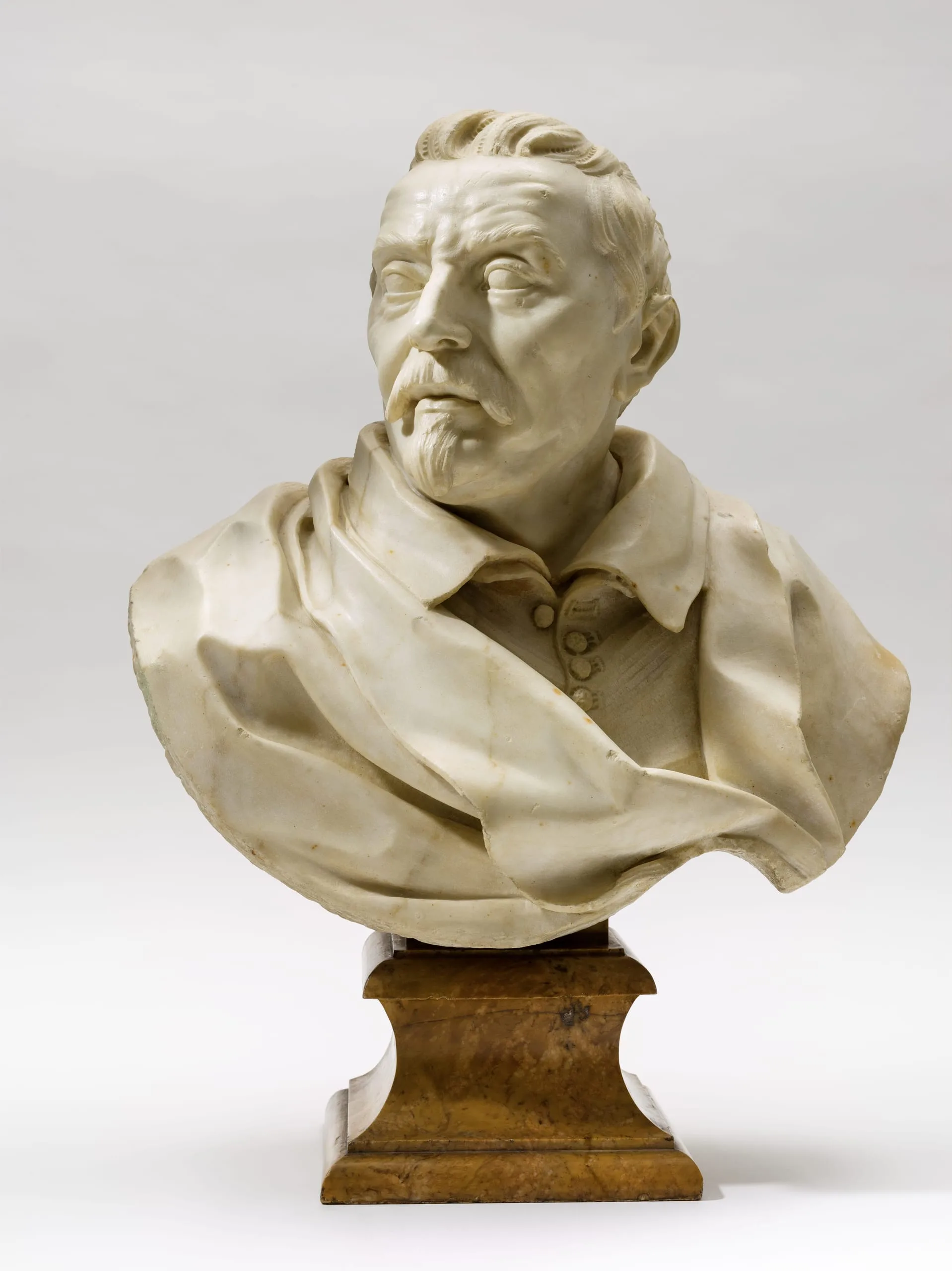
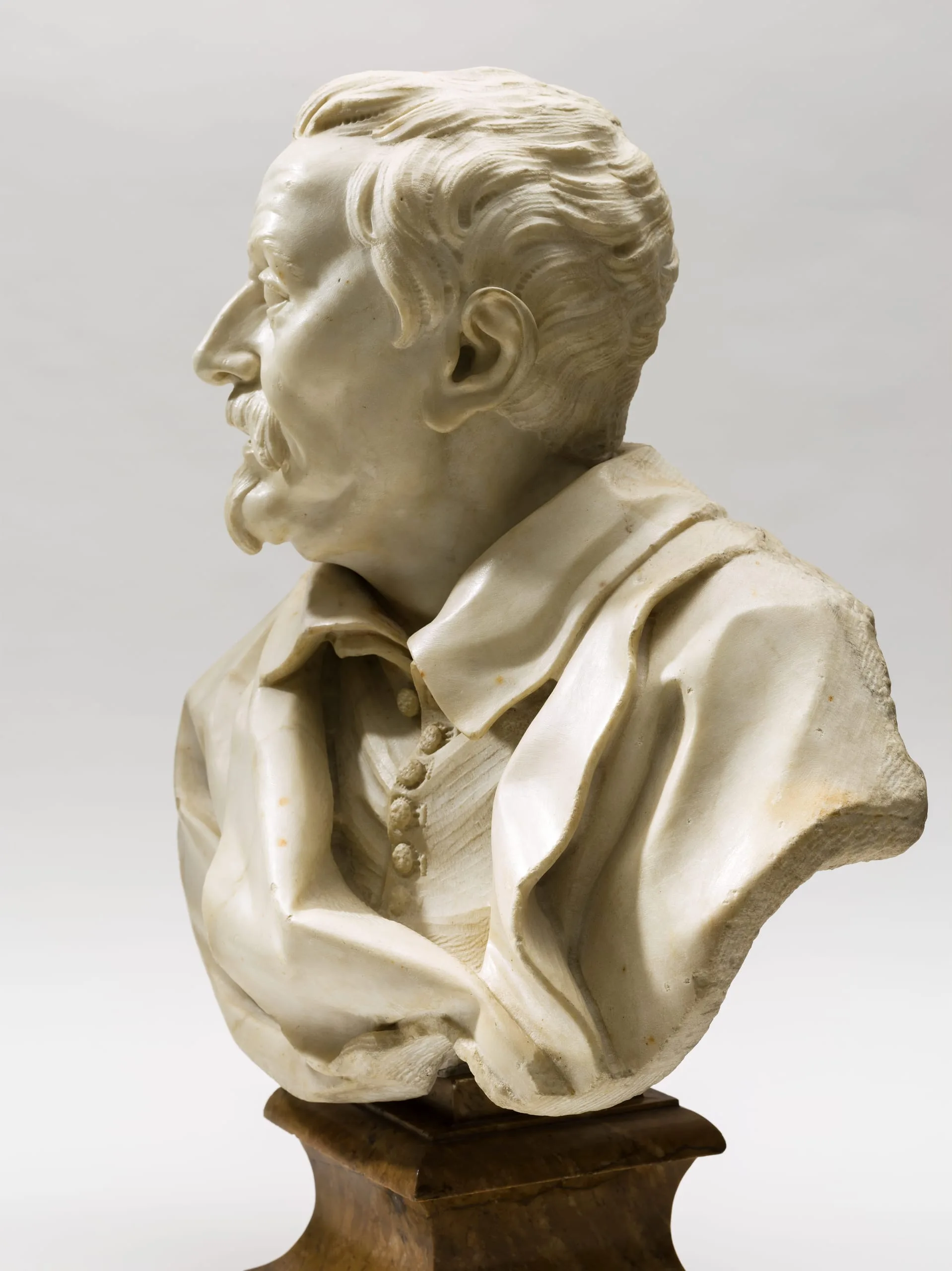
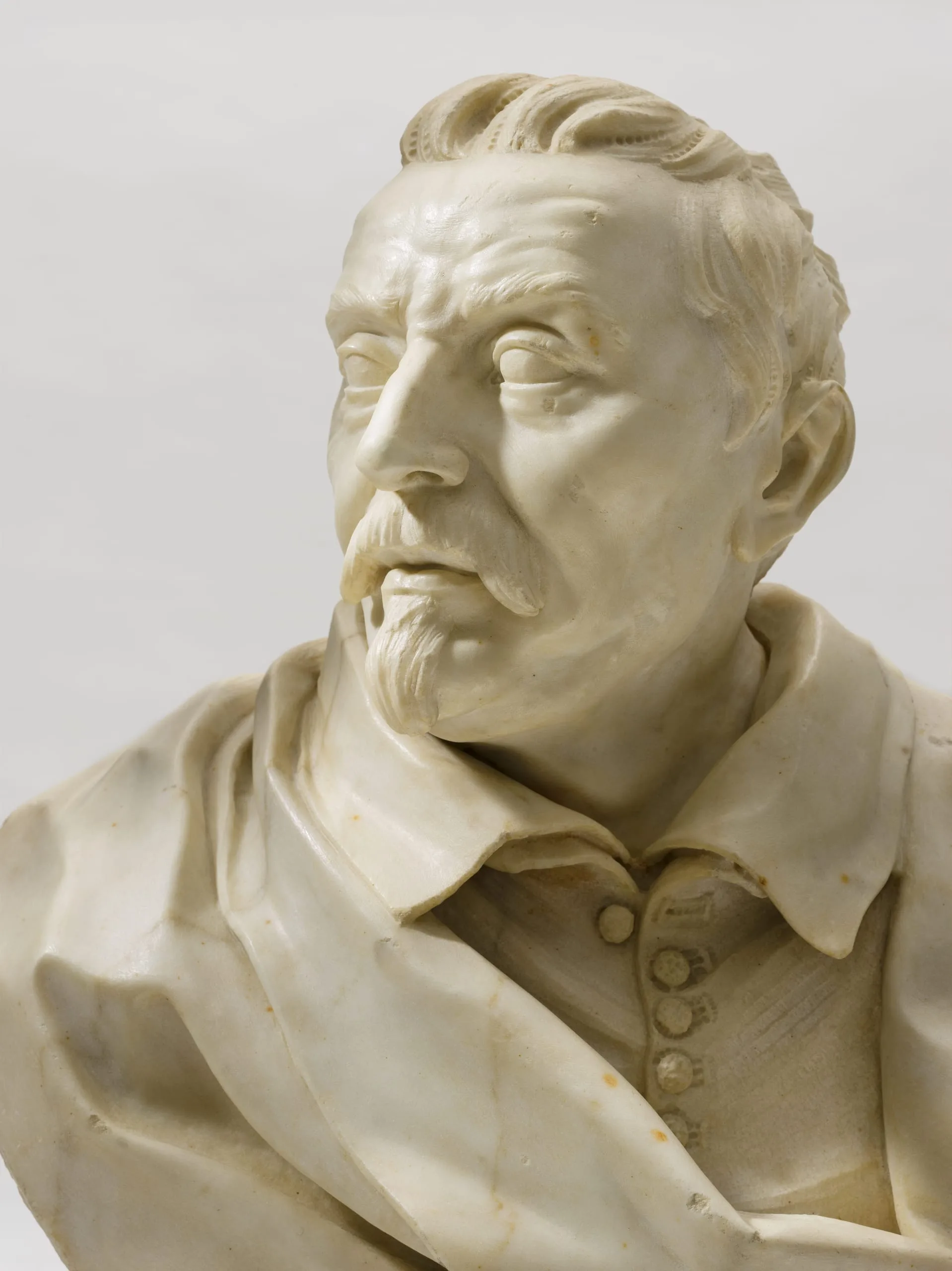
Gian Lorenzo Bernini exemplified the Renaissance ideal of the artist as polymath, as he achieved acclaim across diverse disciplines, including sculpture, painting, drawing, poetry, playwriting, stage design, architecture, and even city planning. His design of marble colonnades, leading to the entrance of Saint Peter’s Basilica in Vatican City, attests to his artistic impact in seventeenth-century Rome. Although celebrated for his expansive talents, Bernini identified first and foremost as a sculptor. His masterful command of marble is evident in the Portrait of a Gentleman, executed in the later phase of his career. Like his life-size figural sculptures, Bernini’s marble busts convey a remarkable vitality. Although the identity of this sitter remains unknown, the detailed rendering of the forehead and neck muscles clearly conveys his advanced age. Bernini’s ability to modulate surfaces with exquisite subtlety is demonstrated in the flesh around the sitter’s eyes, which has lost its elasticity.
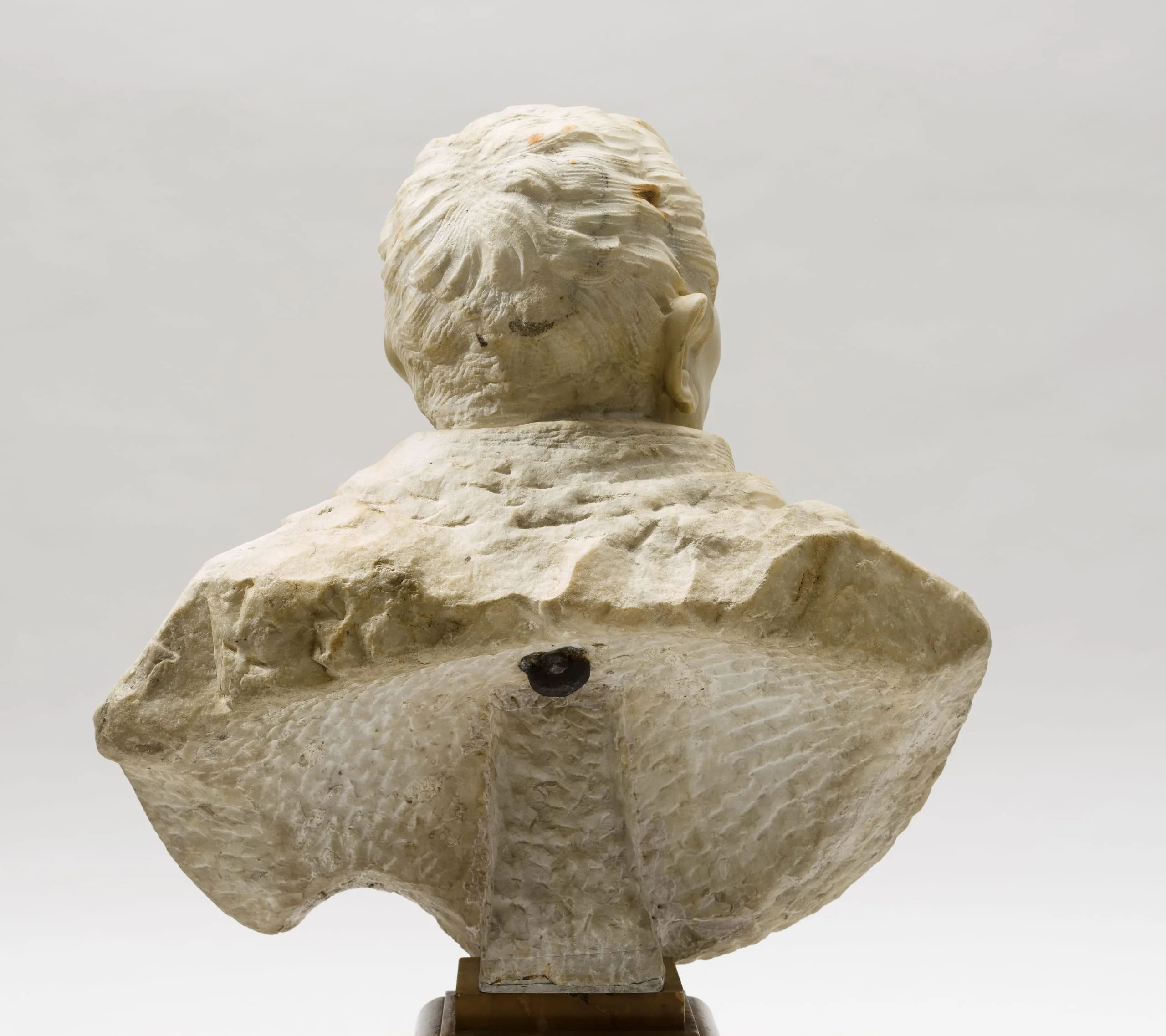
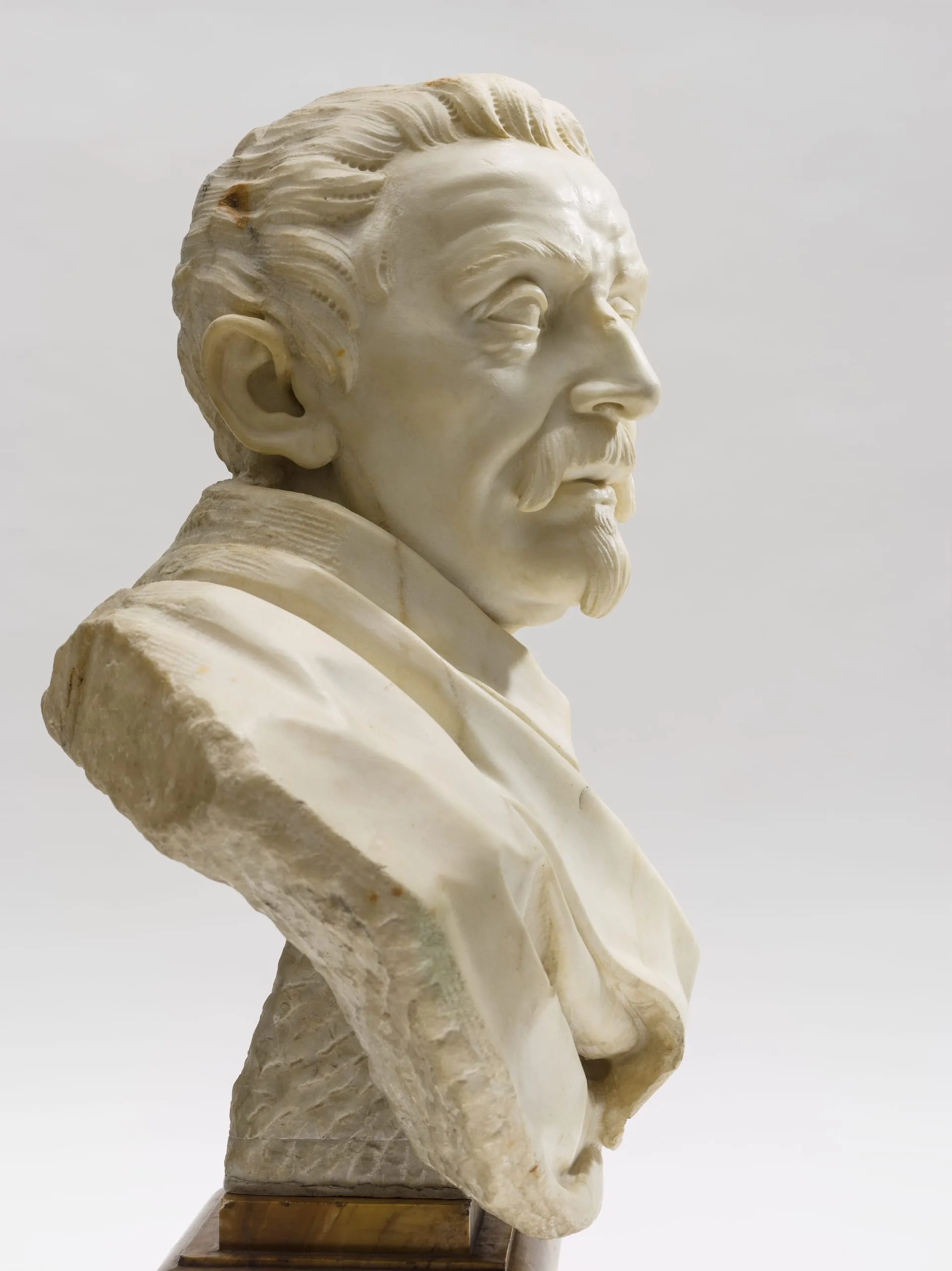
Bernini’s biographer, Filippo Baldinucci, noted that the sculptor created “up to 15 heads” that are now dispersed in various locations. While Baldinucci does not disclose the sitters’ identities, contextual clues suggest the original purpose and probable location of this bust. The informal dress, slightly open mouth, and loosely fastened collars convey a casual immediacy, indicating a personal connection between artist and sitter. The unfinished areas, particularly the back, suggest the bust was designed to be viewed from a specific angle, emphasizing the sitter’s left profile. This foreshortening implies the bust was meant to be seen from below, likely within a circular niche and possibly paired with a companion. The absence of pupils, moreover, indicates that Bernini was commissioned for a commemorative portrait, probably created for an aristocratic gallery or as a tomb monument within a chapel or church.
2024