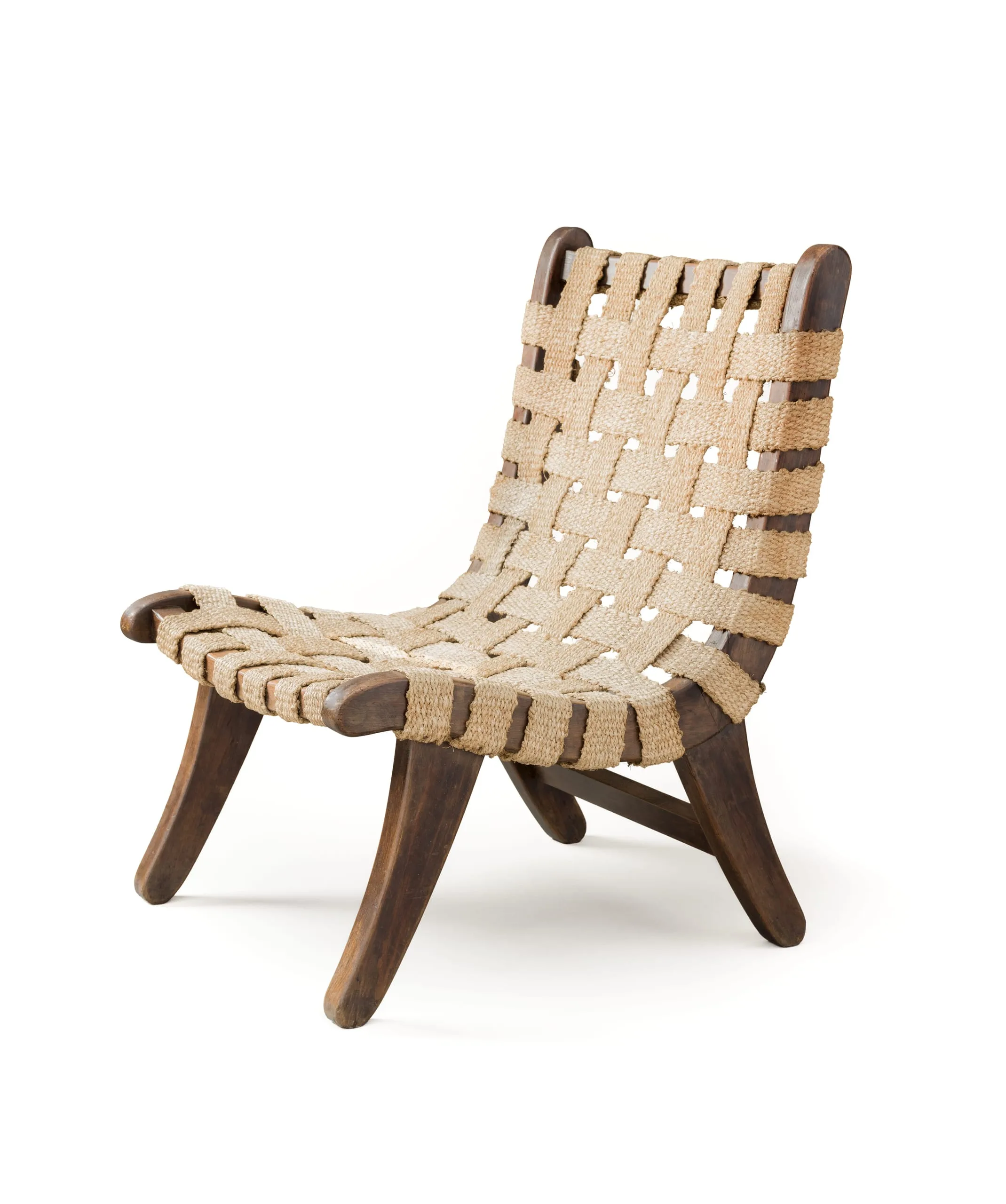
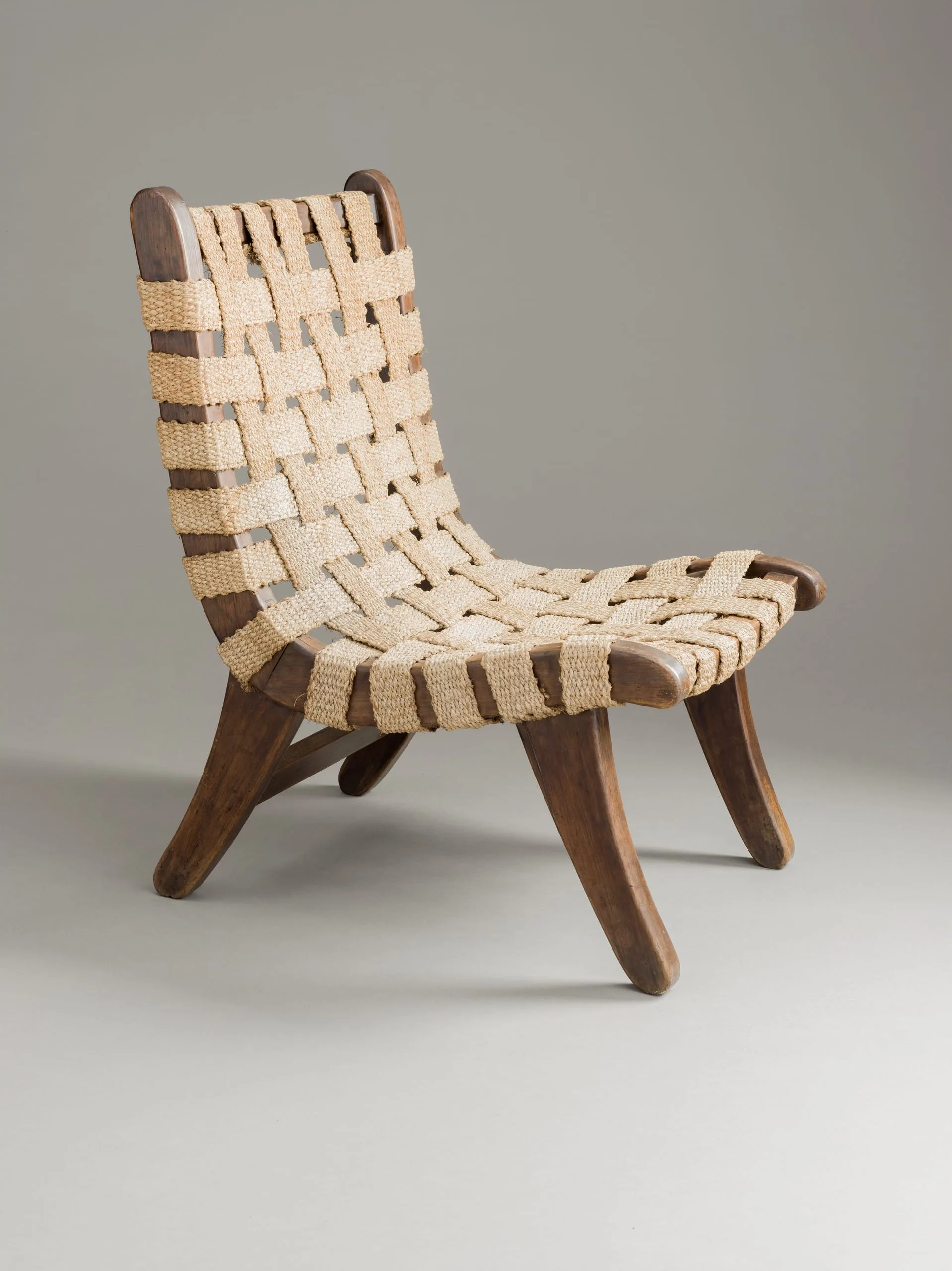
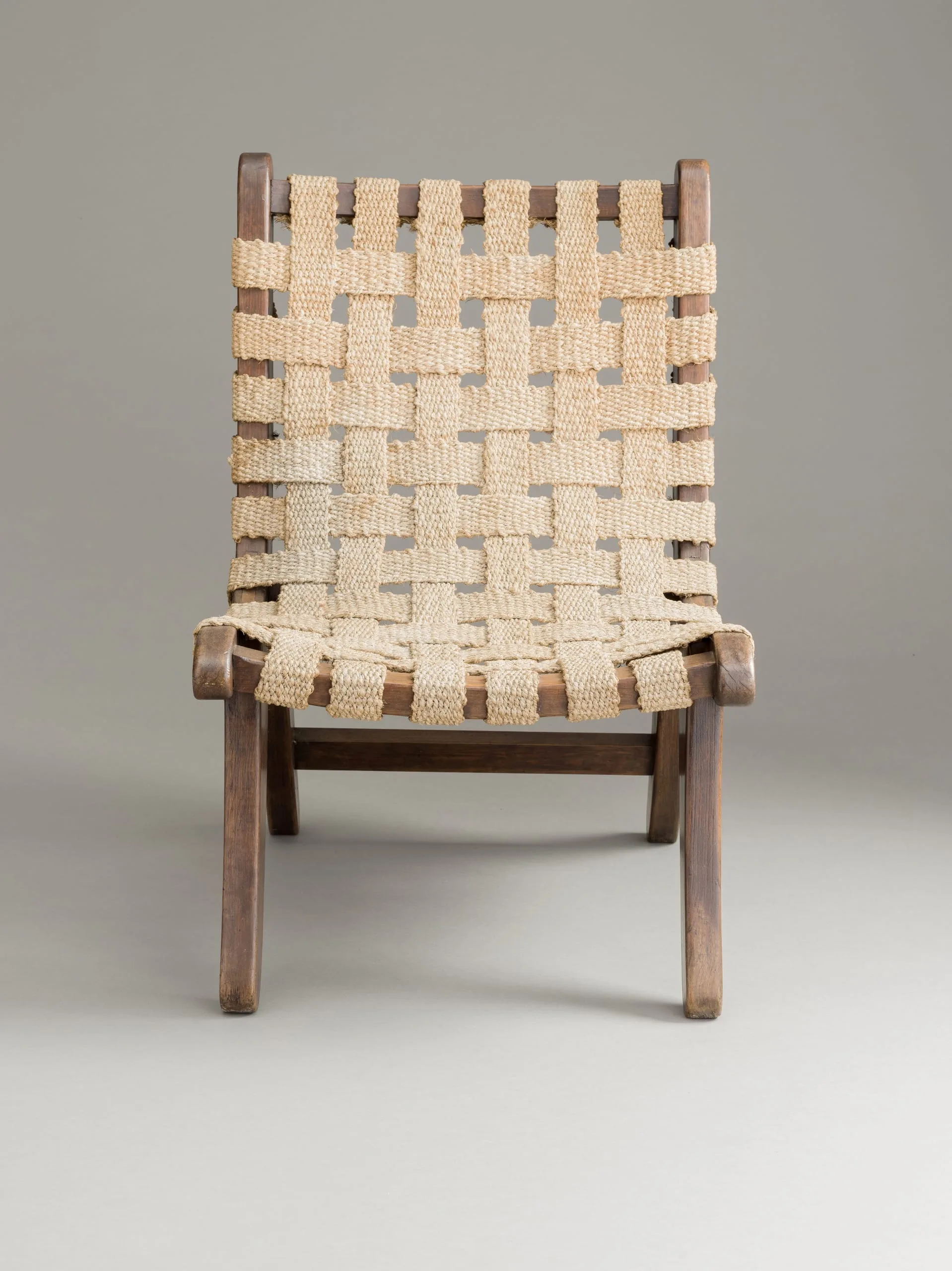
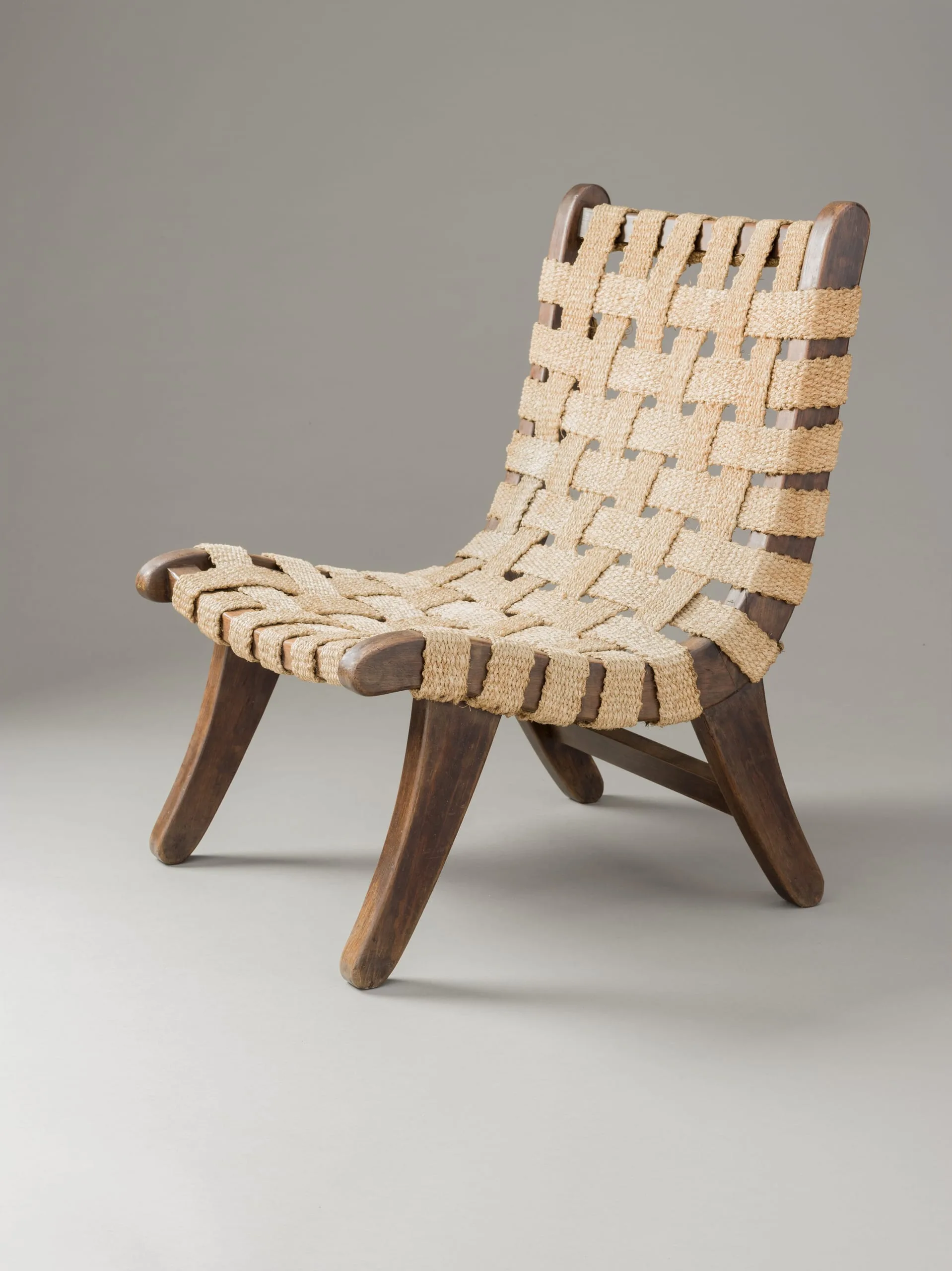
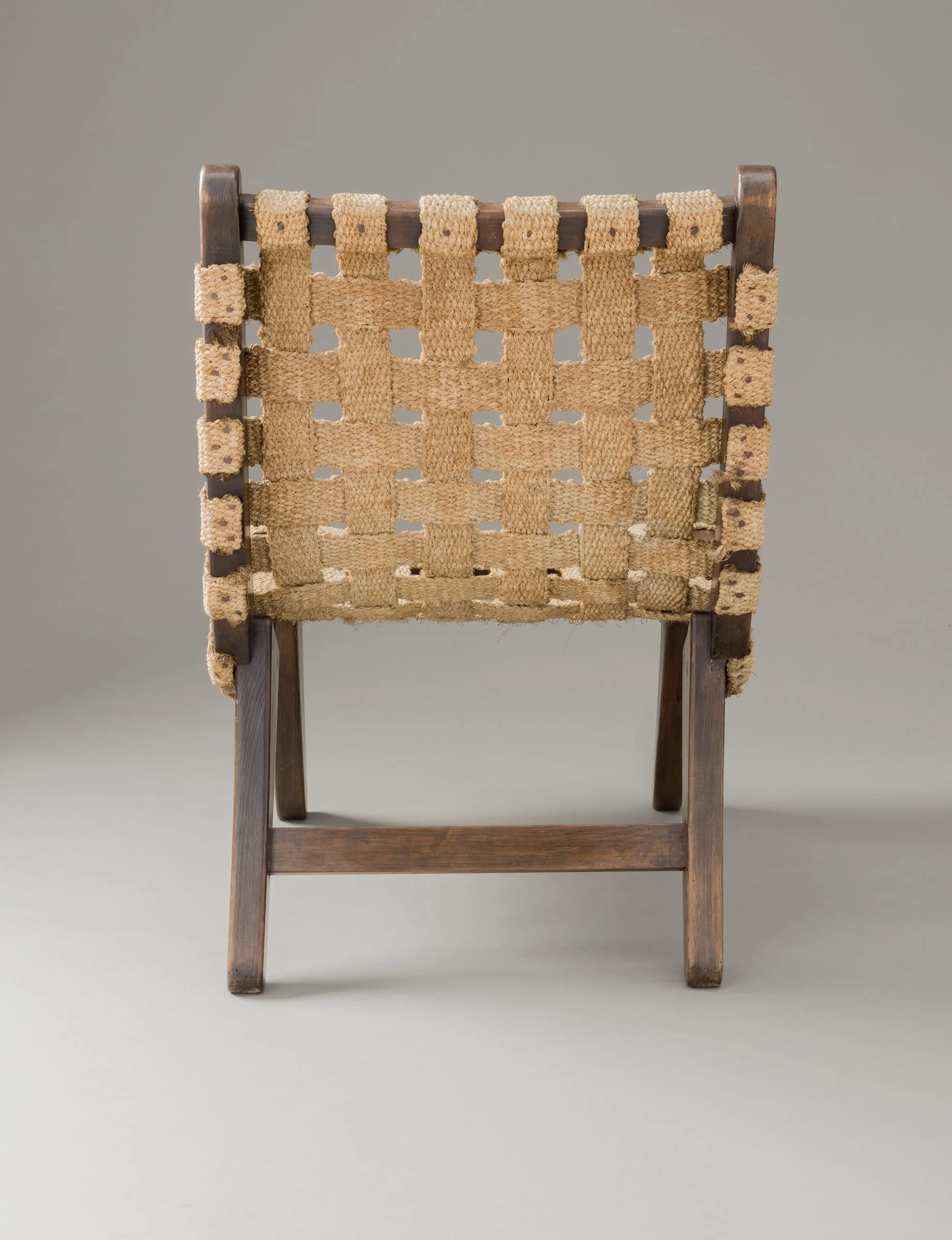
The San Miguel or San Miguelito side chair is one of Michael van Beuren’s most successful and representative designs. The chair is a modern interpretation of the traditional butaca (easy chair), which was popular in Mexico’s coastal areas since the colonial period. This particular iteration of the San Miguelito chair, which was likely produced from 1947 to 1960, combines Mexican white pine wood (ayacahuite) and agave fiber (ixtle). The model was included in the famous Organic Design in Home Furnishings competition organized by the Museum of Modern Art in New York in 1940, where it went on to win a prize.
Van Beuren was an important catalyst in the introduction of modern furniture design in Mexico in the 1930s and 1940s. Born in New York, he moved to Europe in 1930 to escape the Great Depression. There, alongside several other Americans, he attended the legendary Bauhaus art school in Dessau (1931–32), and also studied with Mies van der Rohe (1886–1969), the last director of the faltering institution when it moved to Berlin in 1933. The threat of fascism forced many of van Beuren’s classmates to return to the U.S., but he set his sights on Mexico, where he moved permanently in 1938. He and fellow Bauhaus-educated Klaus Grabe, who arrived a few months later, began designing furniture for private clients under the name of Grabe & Van Beuren. By 1939, the young designers had joined forces with the American architect Morley Webb and established a small yet highly successful furniture operation in Mexico City under the label Domus. Van Beuren and Grabe were largely responsible for the designs, while Webb, and later van Beuren’s brother Freddy, was in charge of the daily operation of the store and public relations. Their goal was to create a line of high-quality furniture that combined local Mexican furniture materials, excellent craftsmanship, and a more modern, streamlined aesthetic that reflected a Bauhaus sensibility of radically simple forms, rationality, and functionality. By the 1950s, the company was supplying the major retail stores of the day (e.g., Palacio de Hierro, Puerto de Liverpool, and Salinas y Rocha). The company kept its name when it was sold to Singer in 1973.
Ilona Katzew
2024