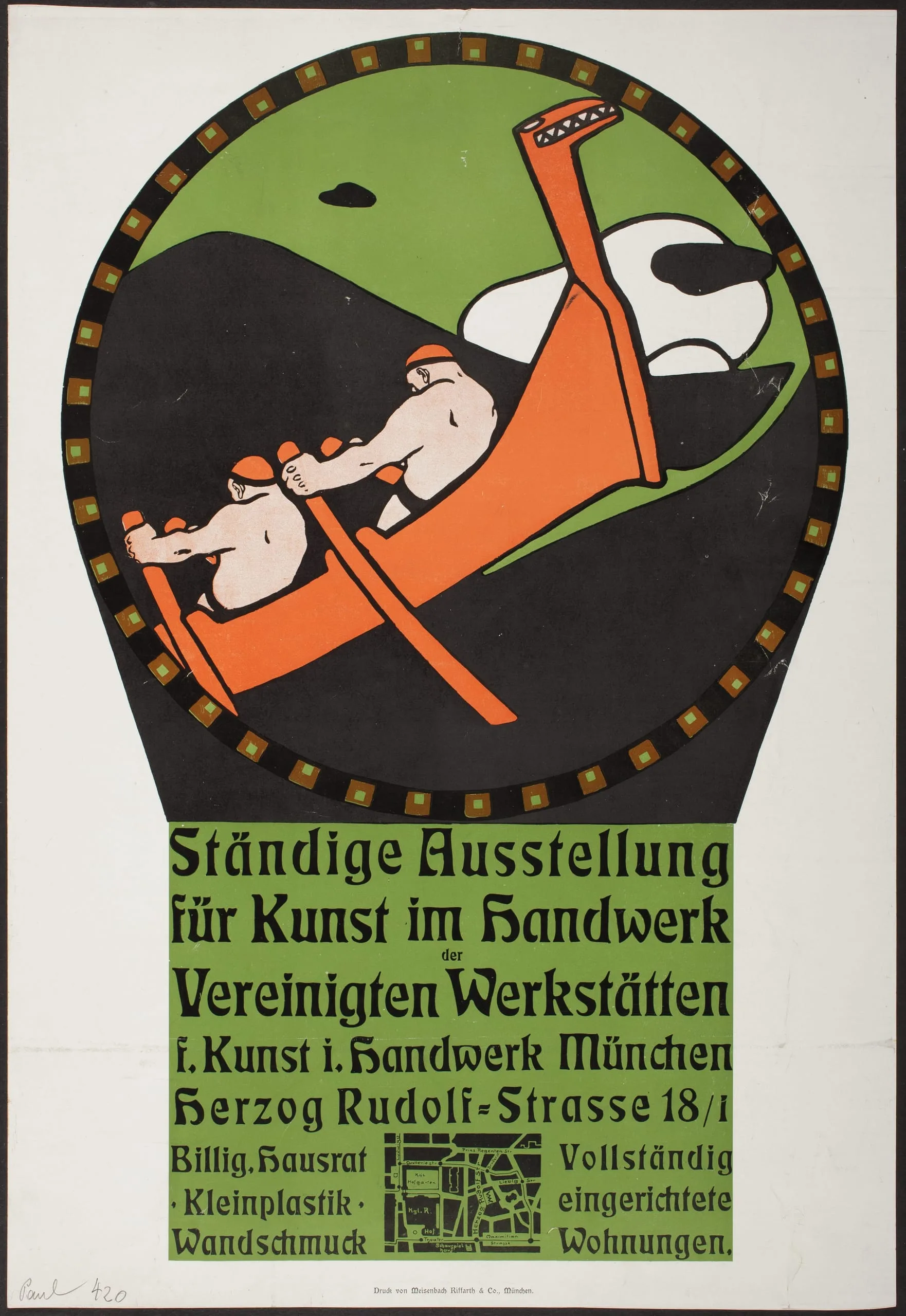
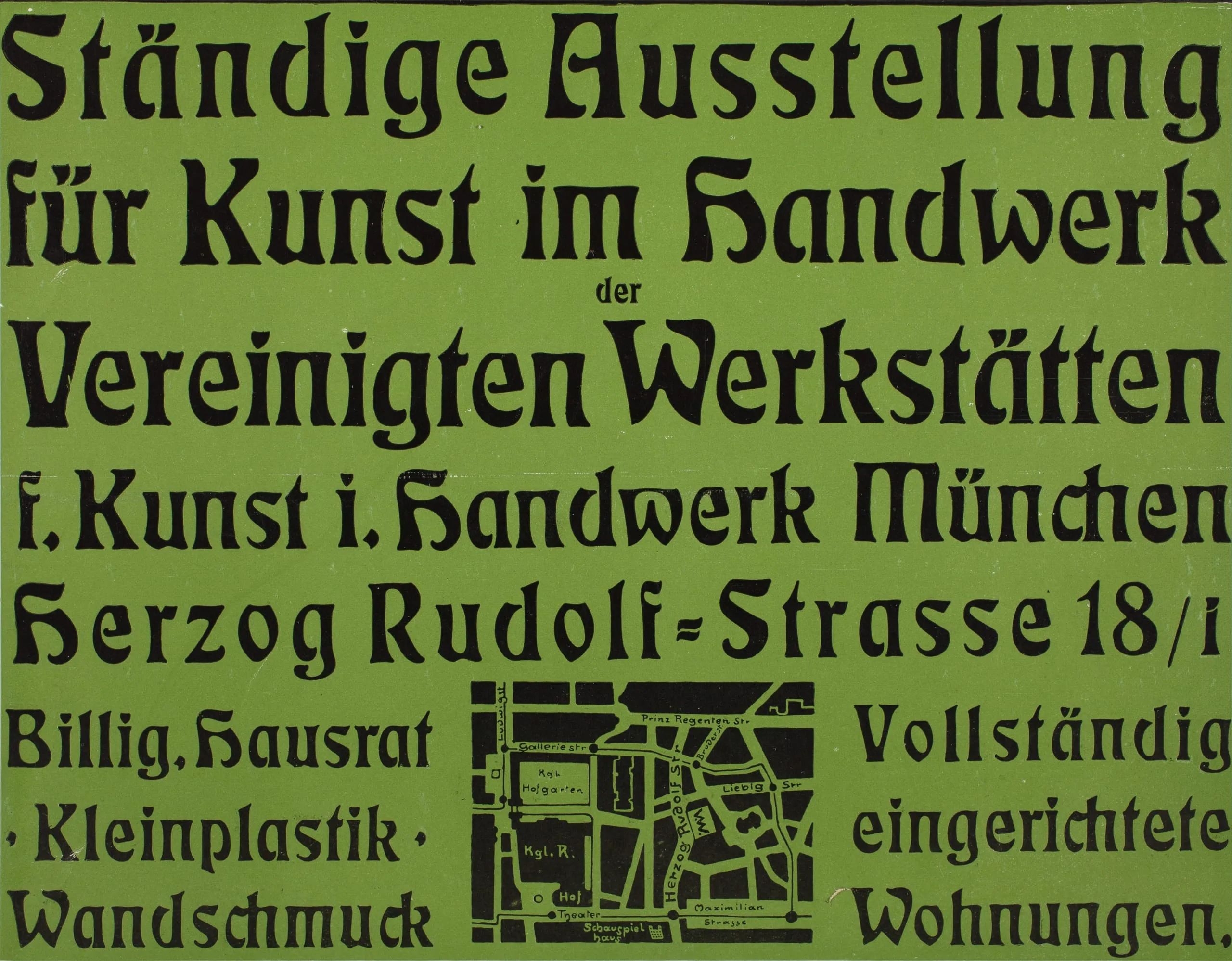
At the turn of the last century, Munich reigned as Germany’s cultural capital, a magnet for artists and designers whose innovative work set the tone for the nation. The city’s Vereinigten Werkstätten für Kunst im Handwerk (United Workshops for Art in Handicraft) provided a uniquely German variant of the Arts and Crafts movement. Incorporated in 1898, the organization brought together designers, craftspeople, manufacturers, and merchants interested in promoting progressive design, making it available to a broad audience. They presented their work as complete interiors, emphasizing the Arts and Crafts ideal of the gesamtkunstwerk (total design unity). Unlike their British counterparts, however, the Werkstätten’s founders made little distinction between hand and machine-made work, choosing instead to prioritize a stripped-down, functionalist aesthetic.
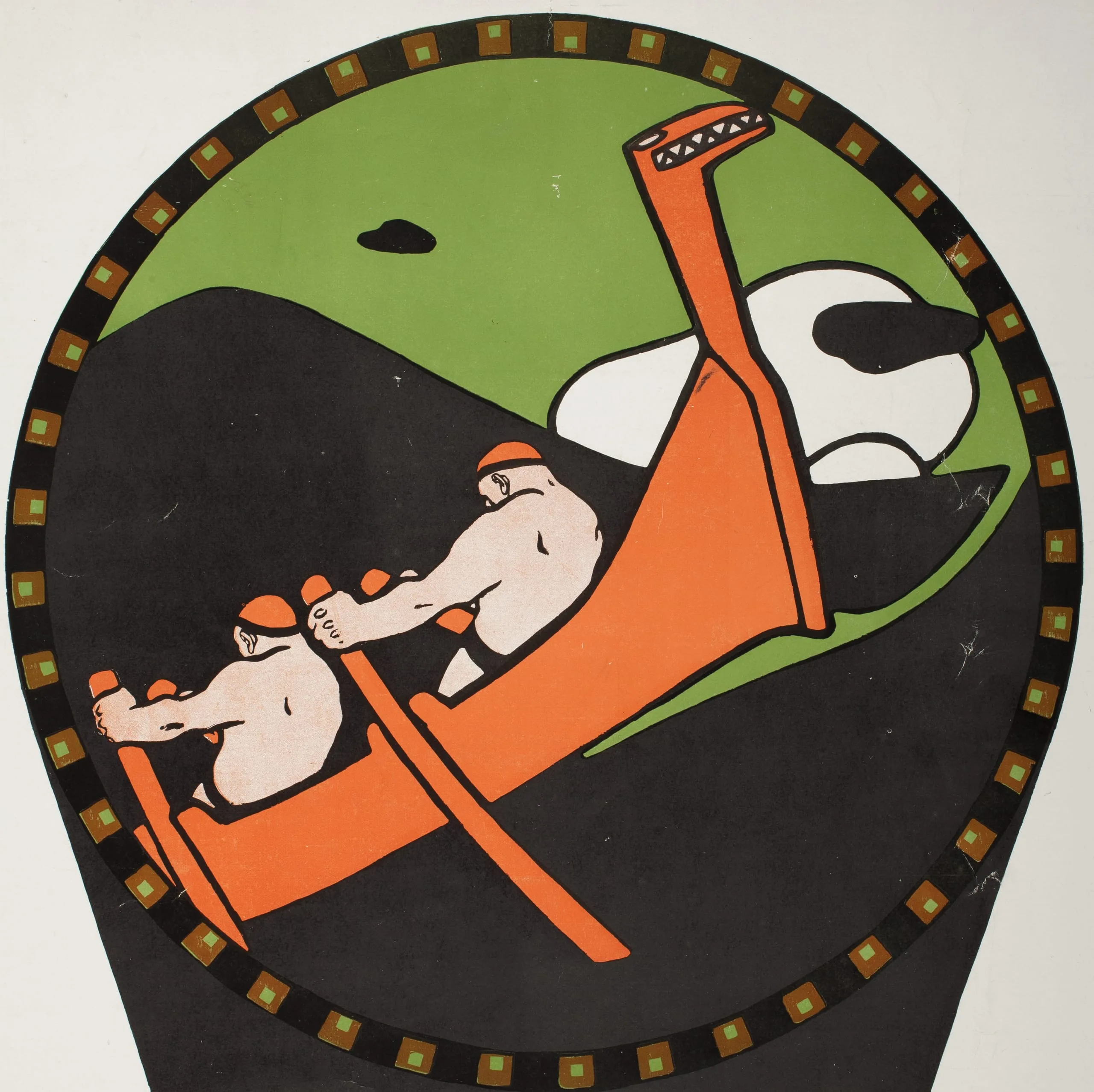
Bruno Paul joined the Vereinigte Werkstätten within its first year and quickly became one of its most acclaimed talents. The prolific designer embodied the gesamtkunstwerk ideal, creating everything from furniture and interiors to metalwork and graphics. He designed posters for several of the workshop’s exhibitions. By 1904, he had shifted from the Jugendstil aesthetic of his earliest graphics towards more nationalistic and historical imagery, echoing larger trends in German design and culture. A 1919 article in Das Plakat, an important German poster magazine, celebrated him as a pioneer in the field. The author praised this 1904 poster for the Permanent Exhibition for Art in Craft for its "forcefulness of symbolic thought" and comparing its image of strong but struggling rowers to the Werkstätten’s position at the forefront of the new art.
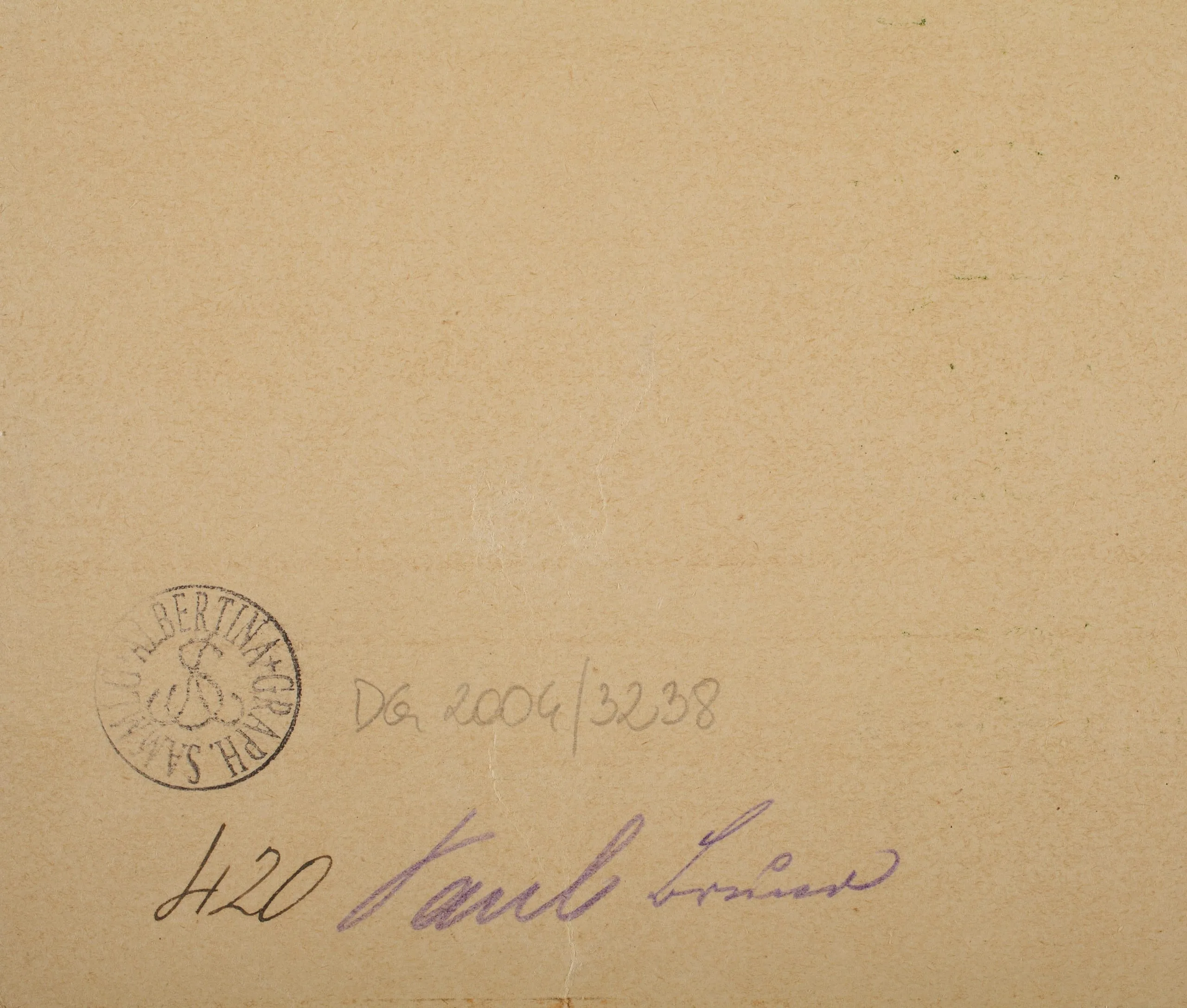
This poster was owned by Julius Paul, one of the most prominent poster collectors in early twentieth-century Austria. Between 1895 and 1937, the Hungarian-born Jewish Viennese businessman amassed a collection of over 6,300 posters, which he left to his nephew Gaston upon his death in 1938. The following year, Gaston was forced to abandon the collection when Plhe fled Austria in the face of Nazi persecution. The collection was eventually sold to the Albertina Museum, where it remained until it was restituted to Paul’s heirs in 2008.
Staci Steinberger, Associate Curator, Decorative Arts and Design, 2021