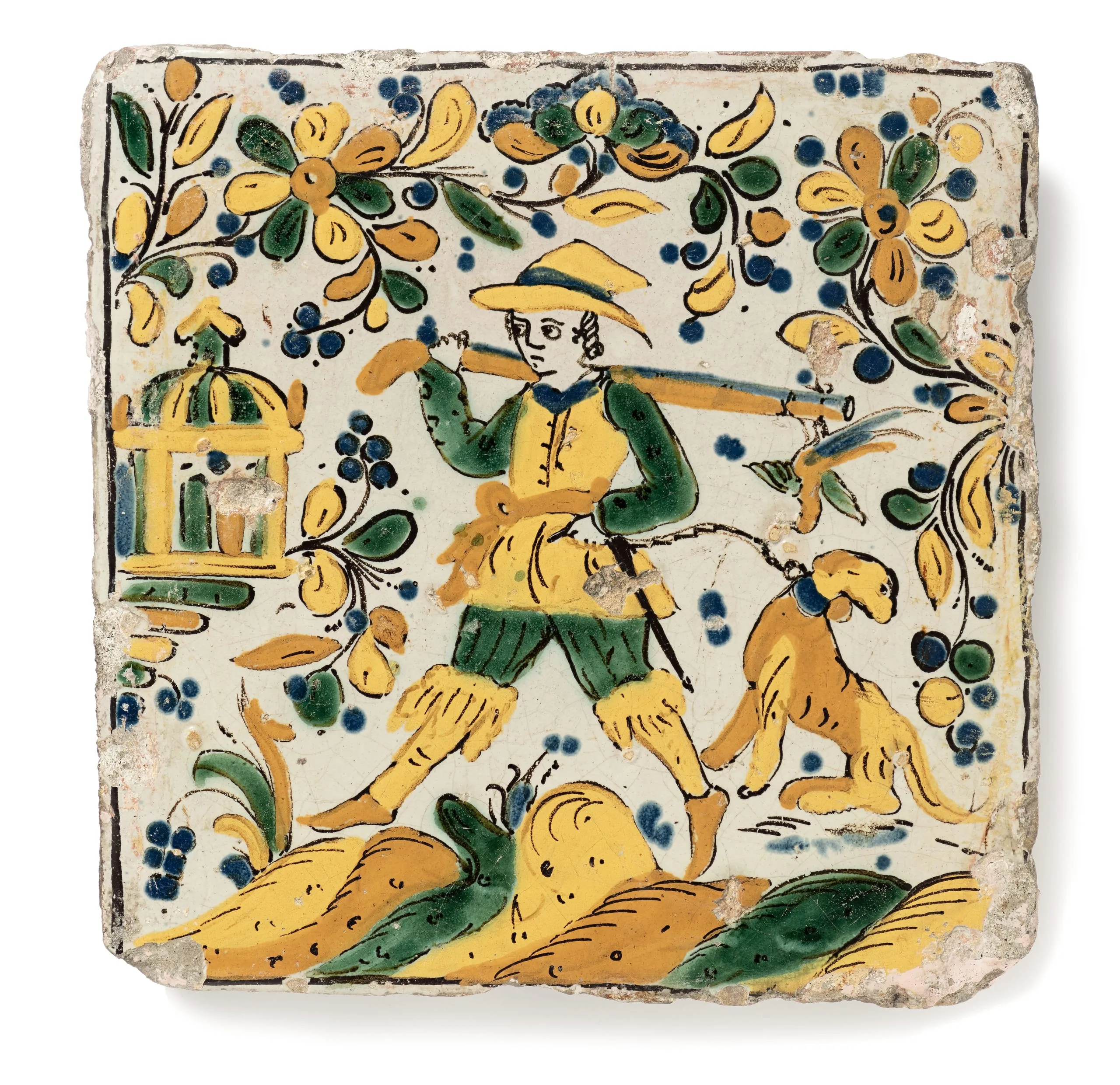
In the sixteenth and seventeenth centuries, the Mexican city of Puebla became a production center for fine earthenware and tiles later known as “Talavera poblana.” The earliest Puebla majolica (tin-glazed earthenware) shows Spanish and Hispano-Islamic influences. However, Puebla is best known for the Chinese-inspired blue-and-white majolica it began producing in the second quarter of the seventeenth century, which remained popular throughout the eighteenth century. This tile is a rare example of Abó polychrome, a style identified by the use of yellow, orange, ochre, and blue outlined in manganese. Tiles like this were used to decorate the exterior and interior of buildings and often depict trades (artes y oficios).