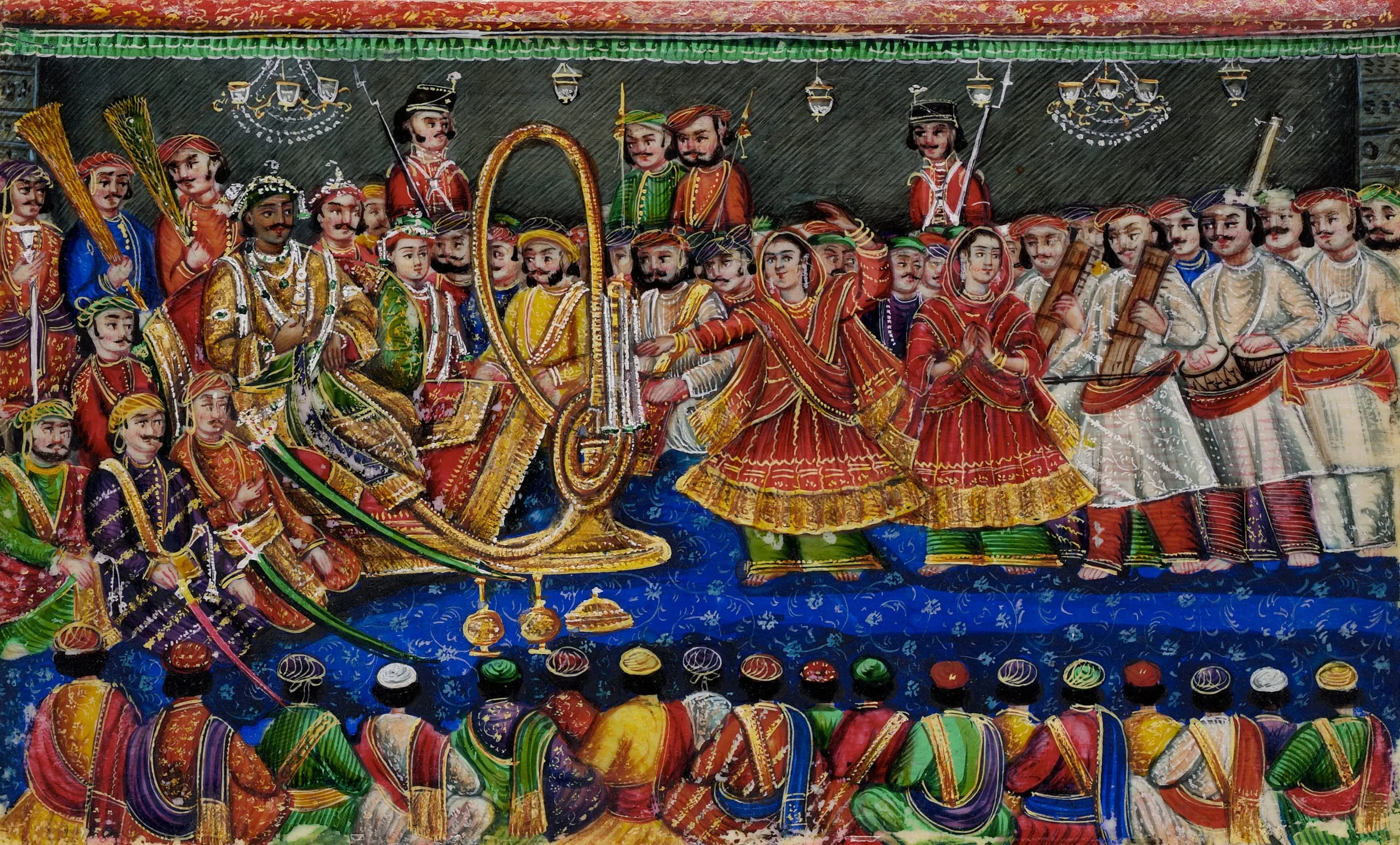
A nautch (Hindi: nach) performance was a popular form of entertainment in 19th-century India in which courtesan vocalists and dancers, known as nautch dancing girls or women, would perform for private audiences accompanied by male instrumentalists. Well-educated and highly refined courtesans (tawaif or bhagtan) in Delhi, Lucknow, Murshidabad, and other north Indian court cities in the 16th through early 20th centuries were employed by elite and wealthy patrons as singers, dancers, thespians, and teachers of social etiquette (see M.2001.103). Some became royal concubines and even married into the nobility. Courtesans helped perpetuate traditional north Indian music and dance. They were also influential in the development of modern Indian cinema. Nautch performances were frequently portrayed in paintings featuring both European and Indian patrons.
In this painting on ivory, an enthroned Hindu ruler or prince is smoking a gilded hookah through a very large inhalation tube (“snake”) with a silk velvet cover. He, along with the all-male audience of courtiers, guests, attendants with peacock-feather fly whisks, and uniformed guards, are watching a dancer and a singer performing to the accompaniment of male musicians. The recital is at night, as indicated by the dark background and lit chandeliers. The row of audience members in the foreground presents a rich array of textile designs.