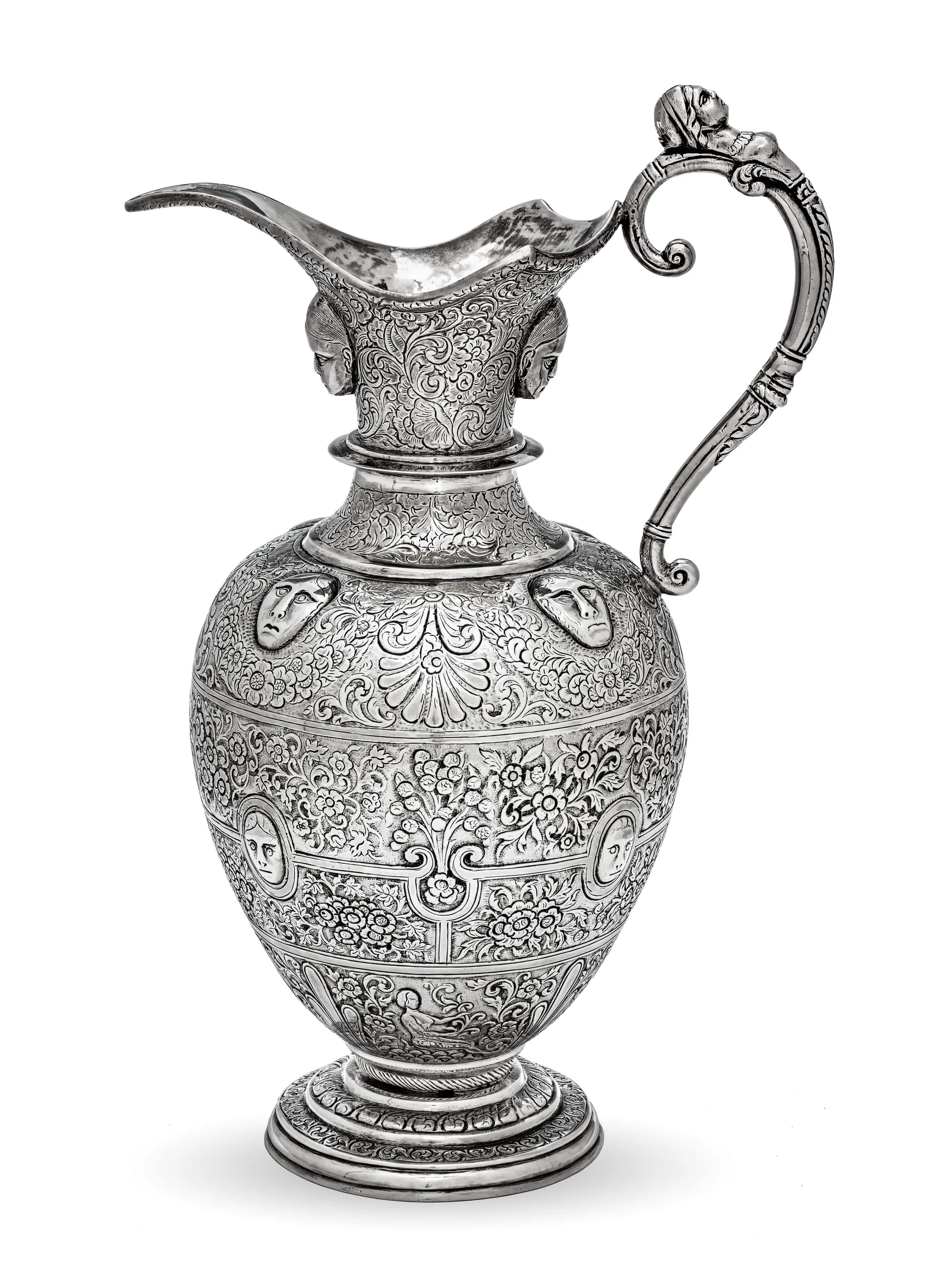
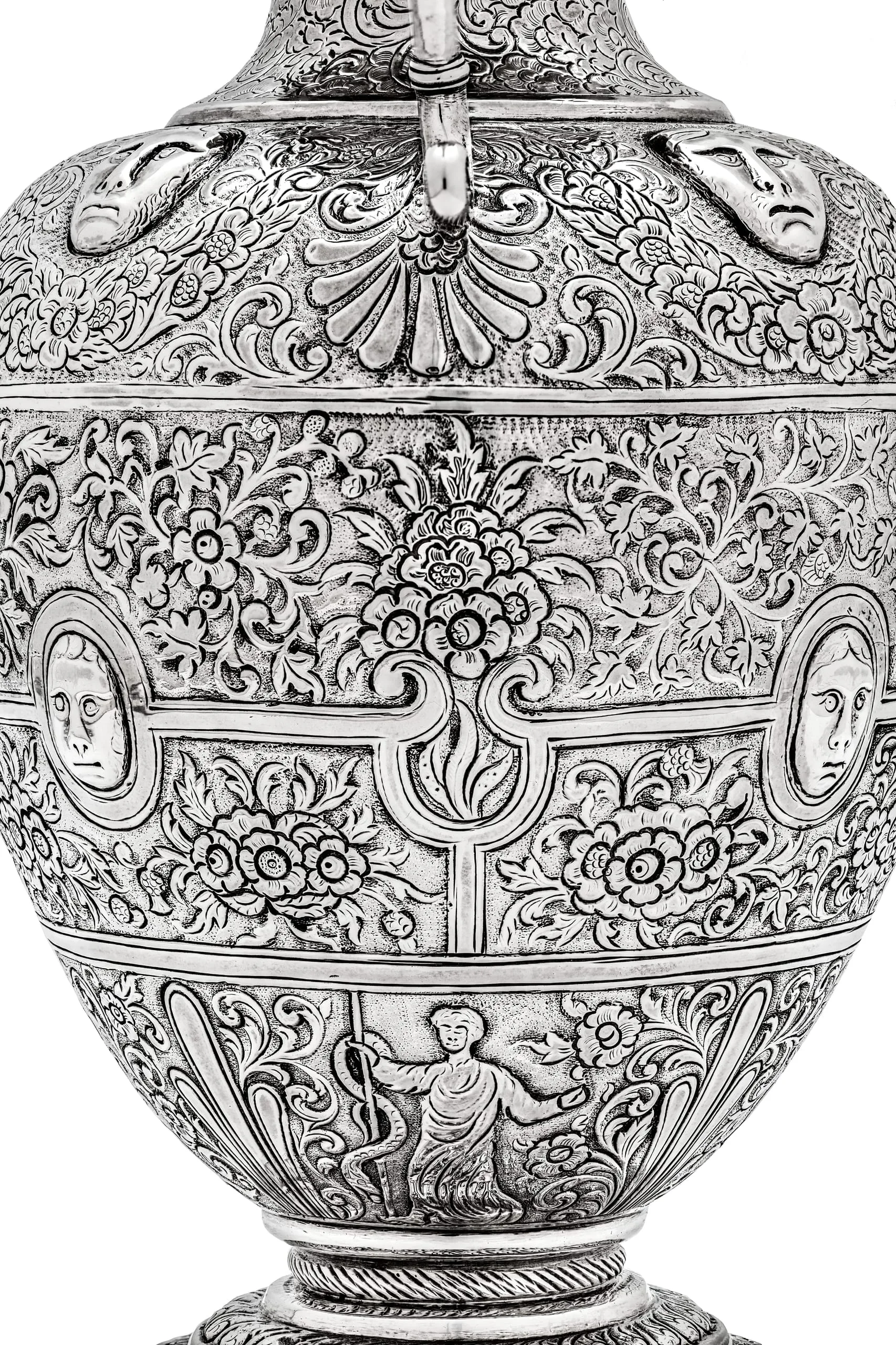
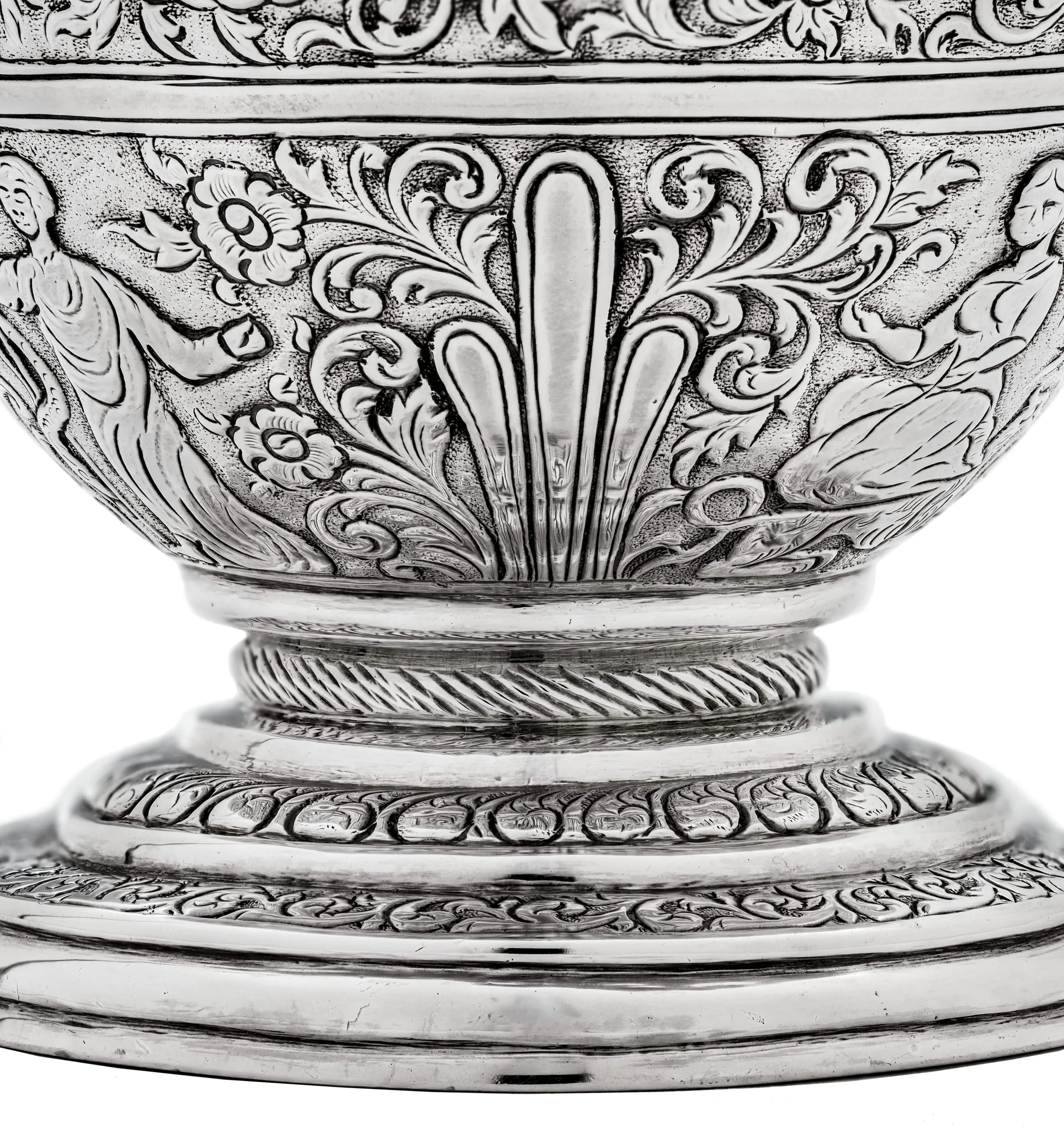
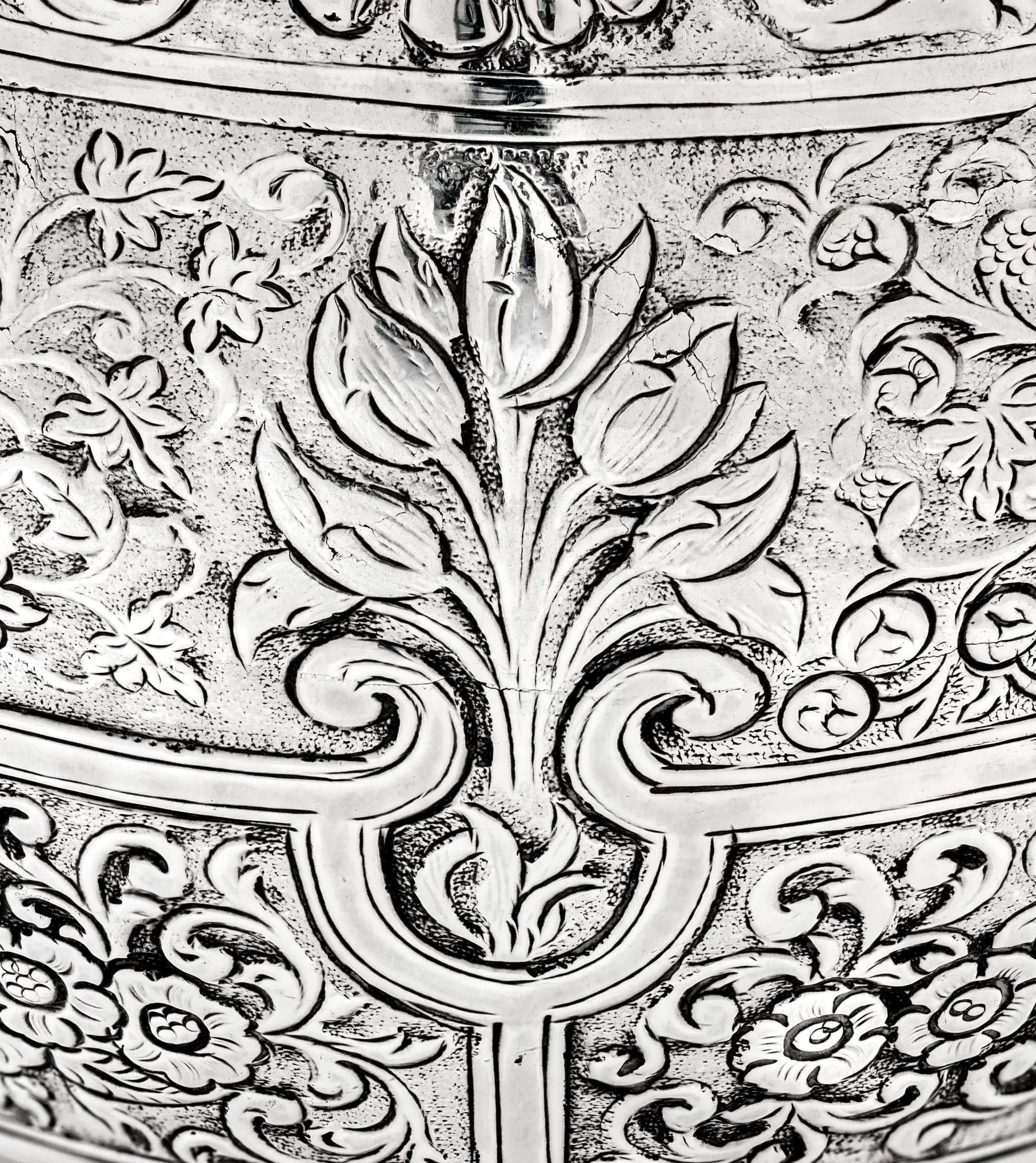
This ewer has an almost ovoid body with a curved rim; its graceful handle has volute terminals and a cast caryatid bust emerging from an acanthus scroll. The ornamentation is divided into horizontal zones with fields of flowering vines providing a uniform background. Two protruding human masks are soldered on the neck. The shoulder has four slightly raised repoussé human masks alternating with inverted palmettes. The central zone of the body has horizontal strapwork with four slightly raised repoussé masks alternating with four urn-shaped volute reservoirs, each filled with a bouquet of tulips, spherical buds (poppies?), and rosettes. The body’s lower register has four compartments, each with a mythological or allegorical figure. They most likely represent Greco-Roman deities or personifications, and may have been based on the representations of the Four Elements often found on basins made in the Cellini pattern.
LACMA’s Lucknow ewer is fashioned in a design style popular in the 19th century that is called the "Cellini pattern," fallaciously ascribing it to the great Italian gold- and silversmith Benvenuto Cellini (1500–1571). Numerous ornate ewers and basins fashioned in the Cellini pattern were produced by gold- and silversmiths across Europe during the Renaissance Revival, or Neo-Renaissance, which was an ornate, historicizing style of European architecture and the decorative arts that flourished from c. 1850 to c. 1880. Works made in the Renaissance Revival style augmented 16th-century Mannerist forms with decorative and iconographic features inspired by Renaissance and Neo-Classical imagery, and ultimately, from classical antiquity. In the 1850s Indian silversmiths in Lucknow began to make vessels and sundry objects of European form and function that were distinguished by their Indian style decoration. LACMA’s ewer epitomizes these hybrid inspirations through its assimilation of the traditional Cellini-pattern ewer form and select decorative elements, including the masks, strapwork, palmettes, and classical figures, but it has been "Indianized" with Mughal-derived floral motifs for the background.