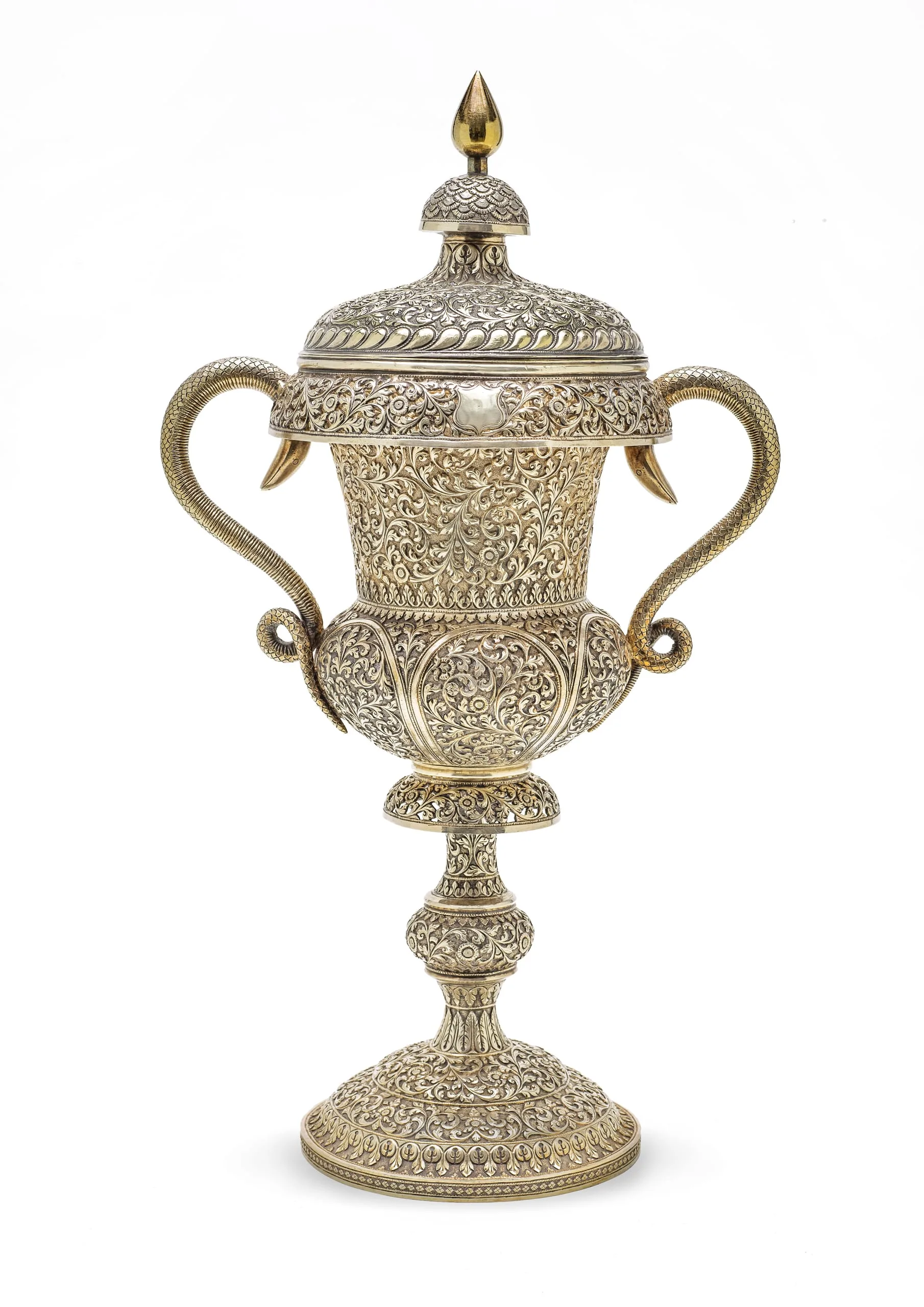
This gilded silver presentation cup is a masterpiece of Kutch metalworking, and has a distinguished pedigree. It was exhibited at "The Colonial and Indian Exhibition," London, 1886; and at the Golden Jubilee of Queen Victoria, London, 1887; reputedly given by His Highness Shri Khengarji III (r. 1875–1942), the Maharao of Kutch, in 1887 to Lady Wynford (Caroline Eliza Montagu Best, 3rd Baroness Wynford, d. 1913); then, by descent in the Wynford family of Dorset, UK; sold on the market several times after 2005; and ultimately donated to LACMA by the ardent silver collector Julian Sands in 2013.
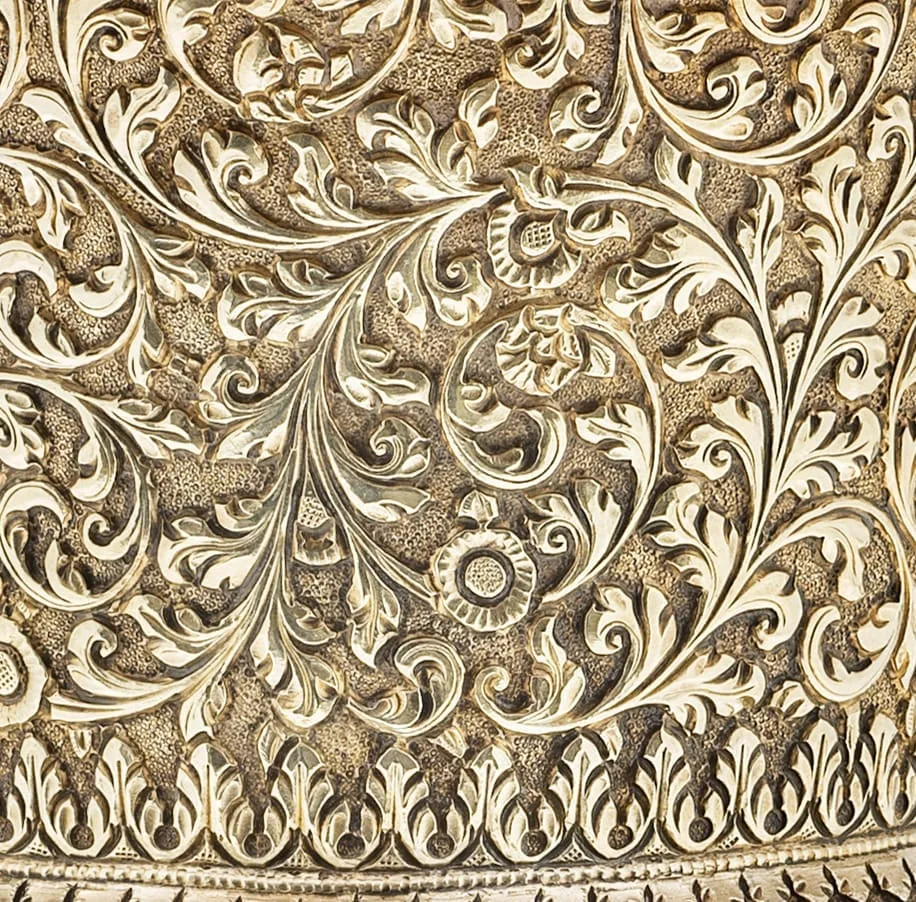
The body is a bulbous vase with a tall neck tapering outward to an everted rim that is adorned with a pierced overhanging fringe. The body is supported by a baluster stem and a tiered circular foot. There are two opposing S-shaped handles in the form of a scaled serpent. The vessel’s decoration consists principally of Kutch’s lush flowering scroll set against a matte background. No human, animal, or avian figures are represented. The distinctive use of gilding on all its exterior and interior surfaces was likely in honor of Queen Victoria’s Golden Jubilee celebration in 1887.
Grand presentation cups and testimonial pieces of gold and silver, typically trophy cups, salvers, and centerpieces, were produced at many of the major metalworking centers in South Asia and Europe in the 19th century. Kutch artisans emulated the European vessel forms but often embellished the decorative program by adding fantastical forms such as oversize reptiles, and scenes from Hindu mythology. Inscribed exemplars were presented in honor of myriad occasions: winning a race, commemorating visits by dignitaries, honoring important retirees, and acknowledging personal, commercial, or military triumphs. An ungilded silver Kutch presentation cup of this same design is in the Indian Museum, Kolkata.