- Title
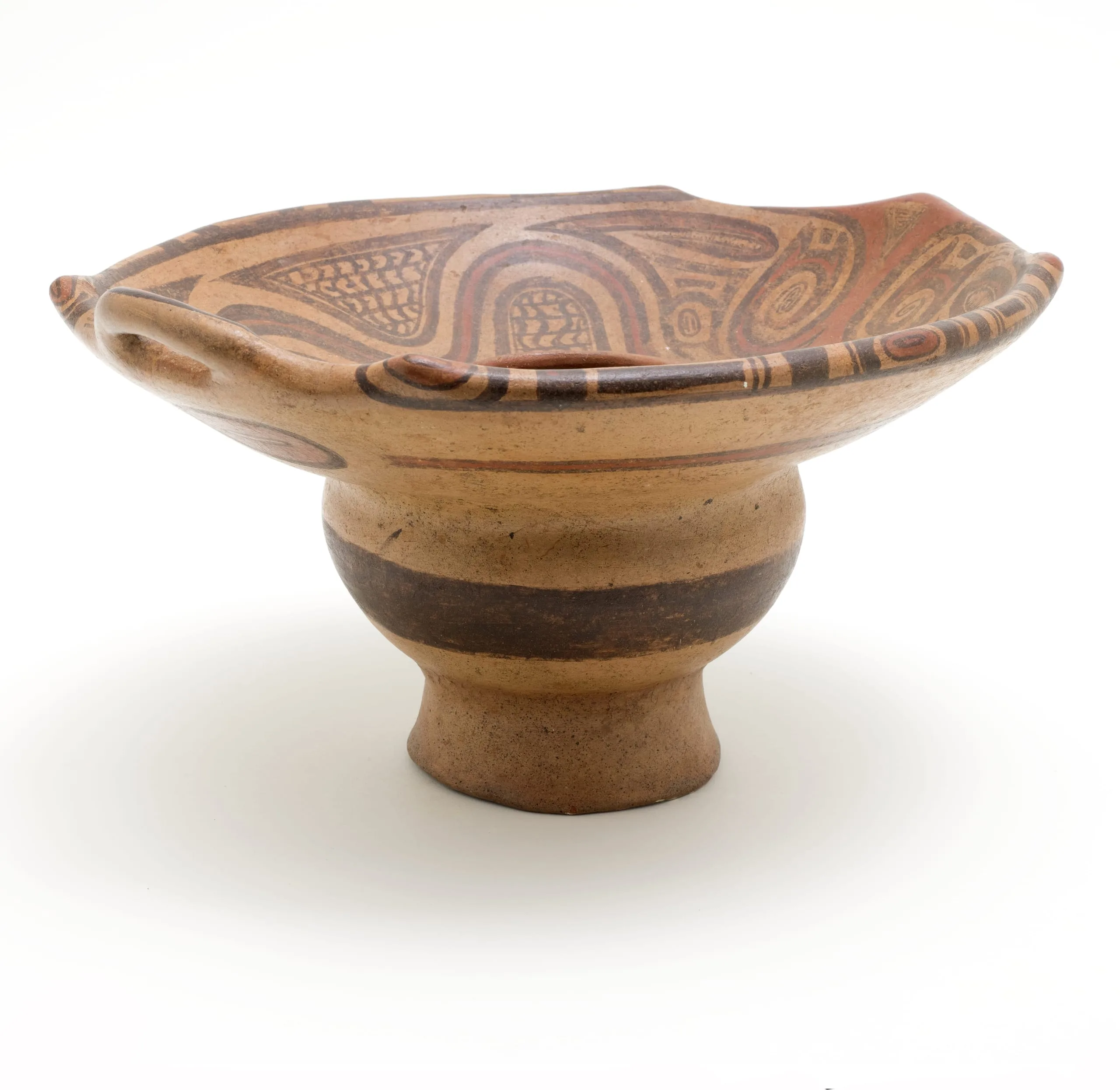
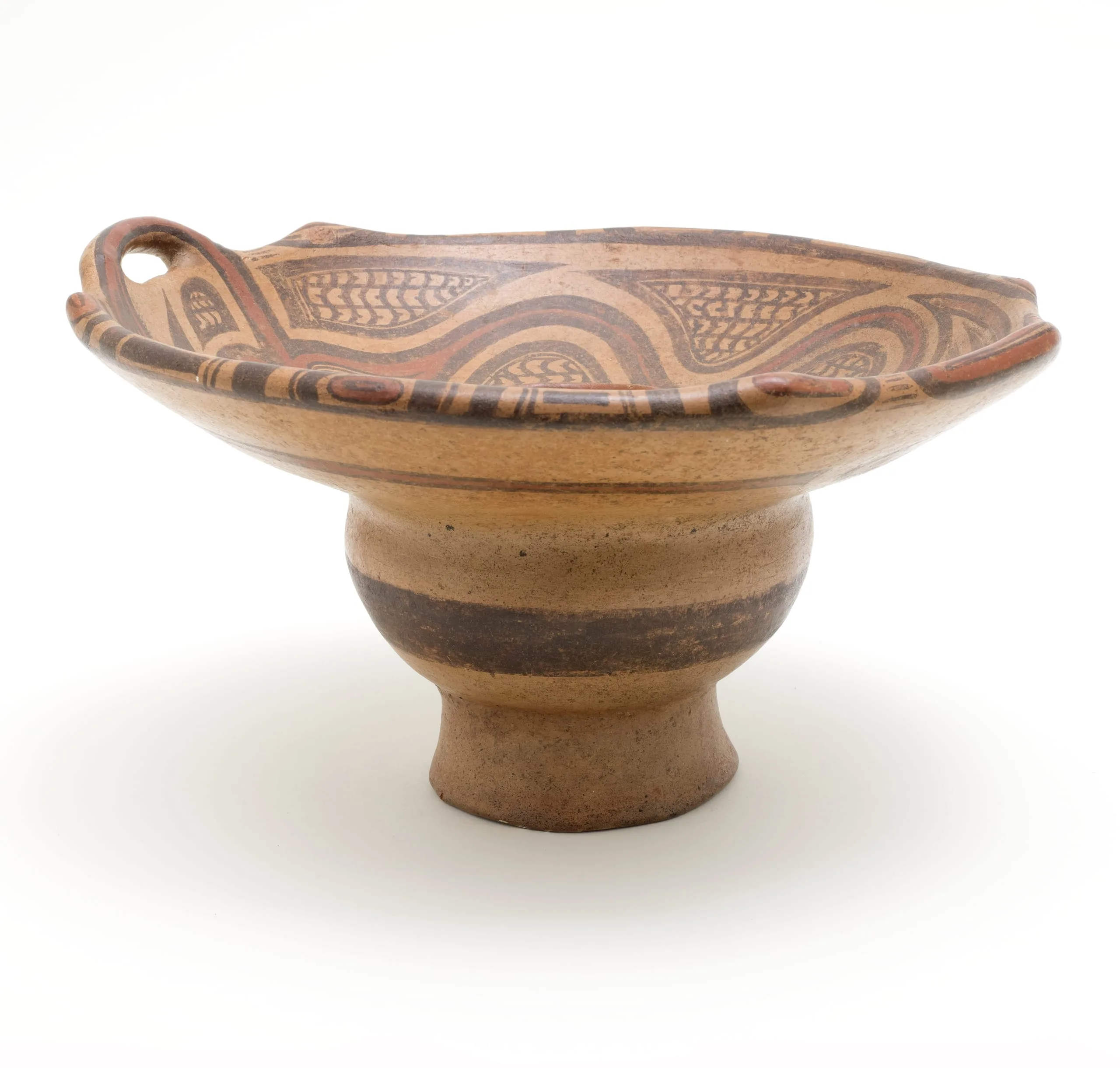
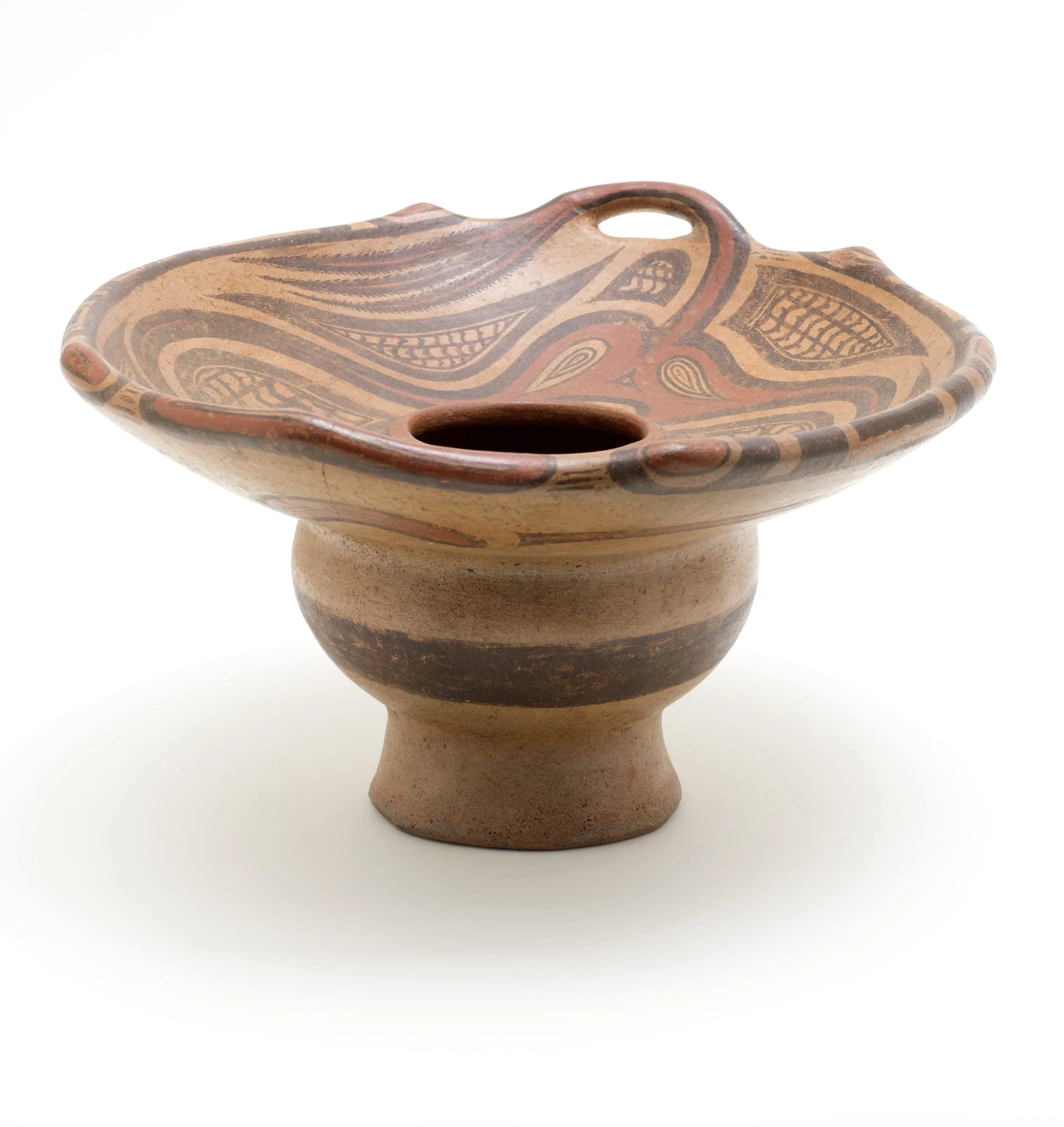
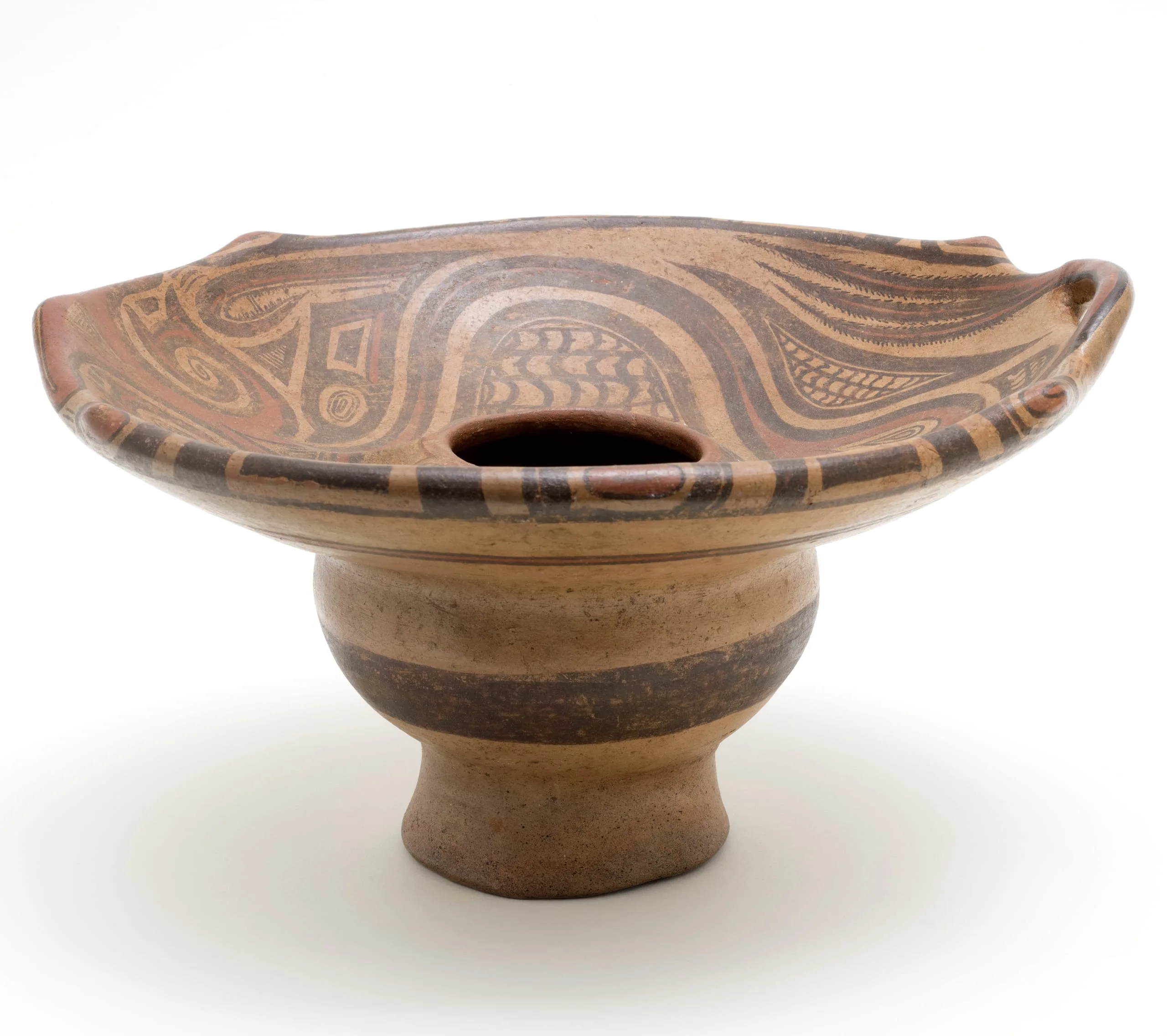
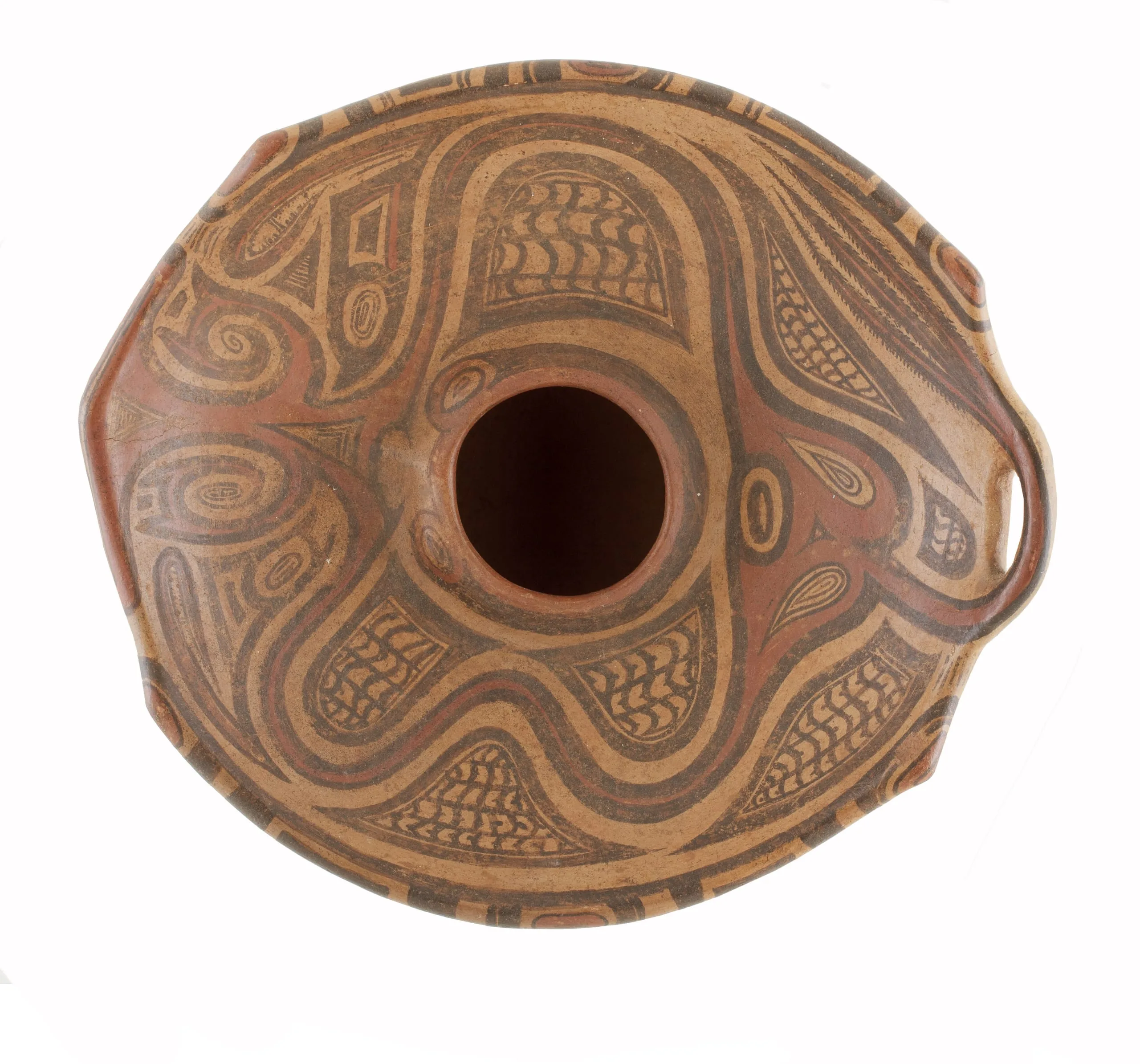
- Stingray Pedestal Plate
- Date Made
- 1300–1520
- Medium
- Engobe-painted earthenware
- Dimensions
- 7 × 12 in. (17.78 × 30.48 cm)
- Accession Number
- M.2016.348.29
- Curatorial Notes
Panamanian pedestal plates were produced by ancient artists in the thousands for funerary rites and burials. This vessel, however, represents a modification, becoming a figural jar in the form of a three-dimensional stingray. A common subject for ancient Panamanian artists, stingrays were represented in abstracted two- and three-dimensional forms. Actual stingray spines have been found at Panamanian sites and were used throughout Mesoamerica for ritual bloodletting. Piercing your body with such a spine enabled you to make the most precious offering to the gods: your own pain and blood. Pain was also one way to bring forth visions and thus access the spirit world.
In modern Guna (also Kuna) culture, images of stingrays reference the afterlife: when a fisherman dies, it is said that a manta ray transforms into a boat to take the fisherman to all the places he wanted to see when he was alive.
Julia Burtenshaw
2018