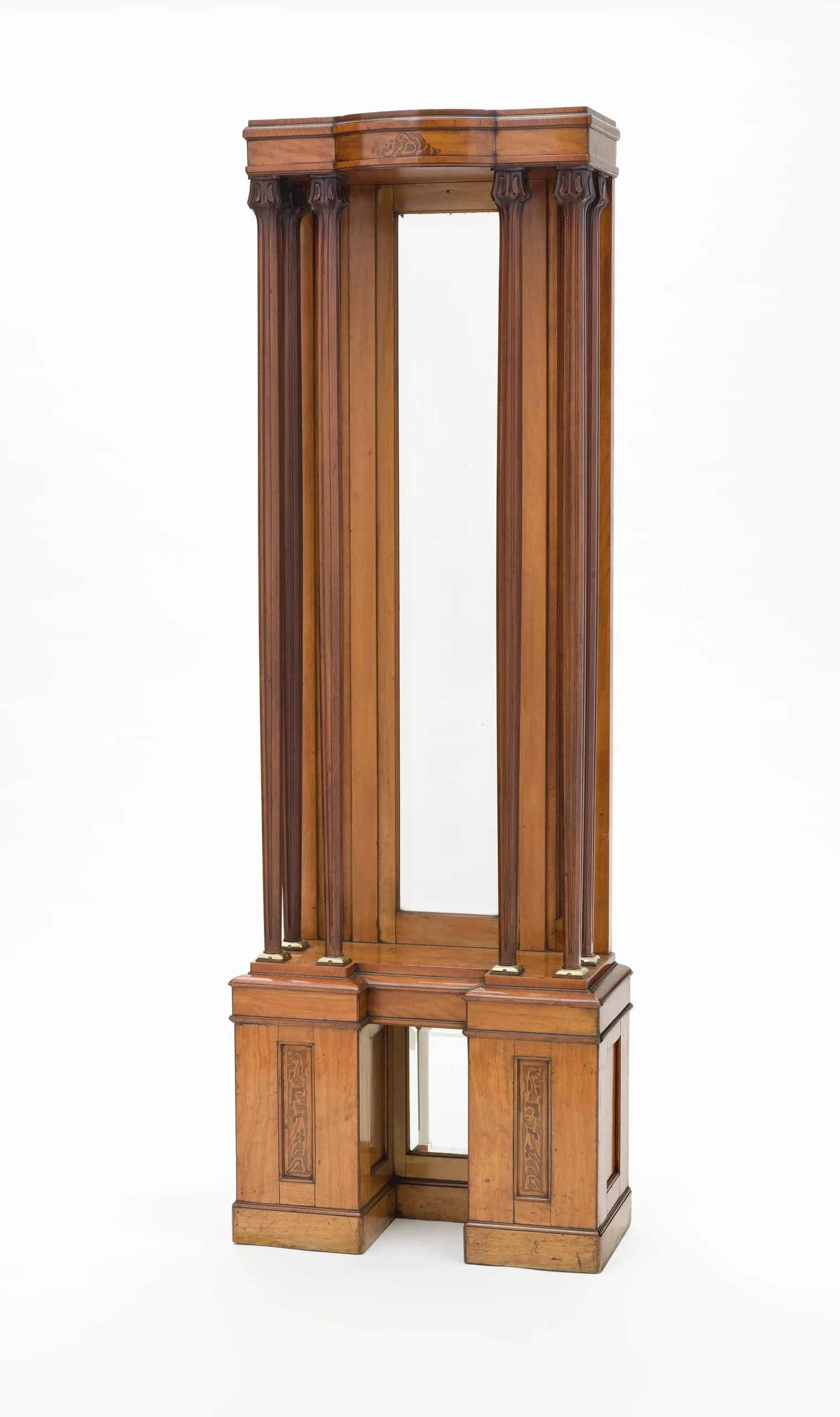
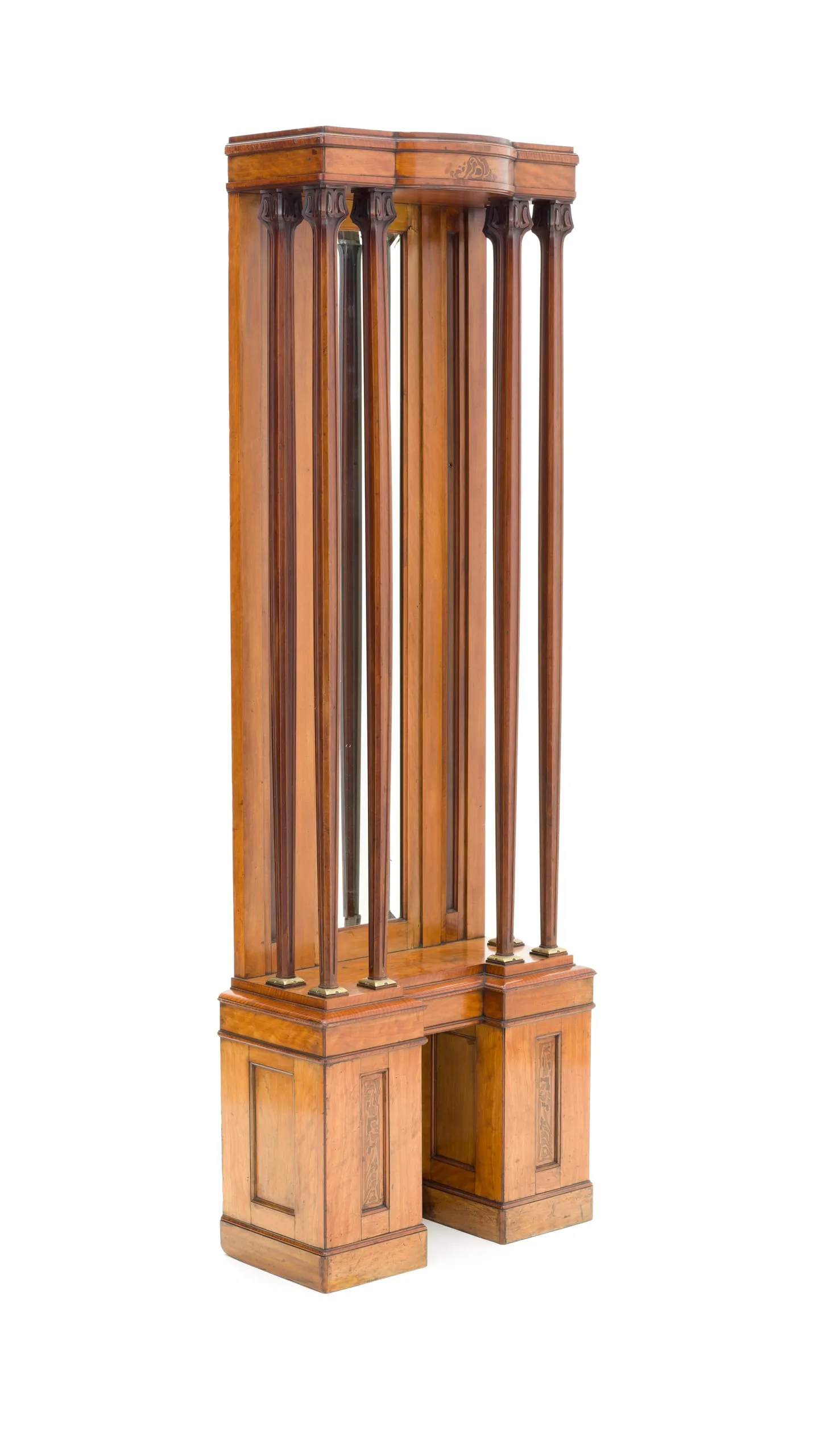
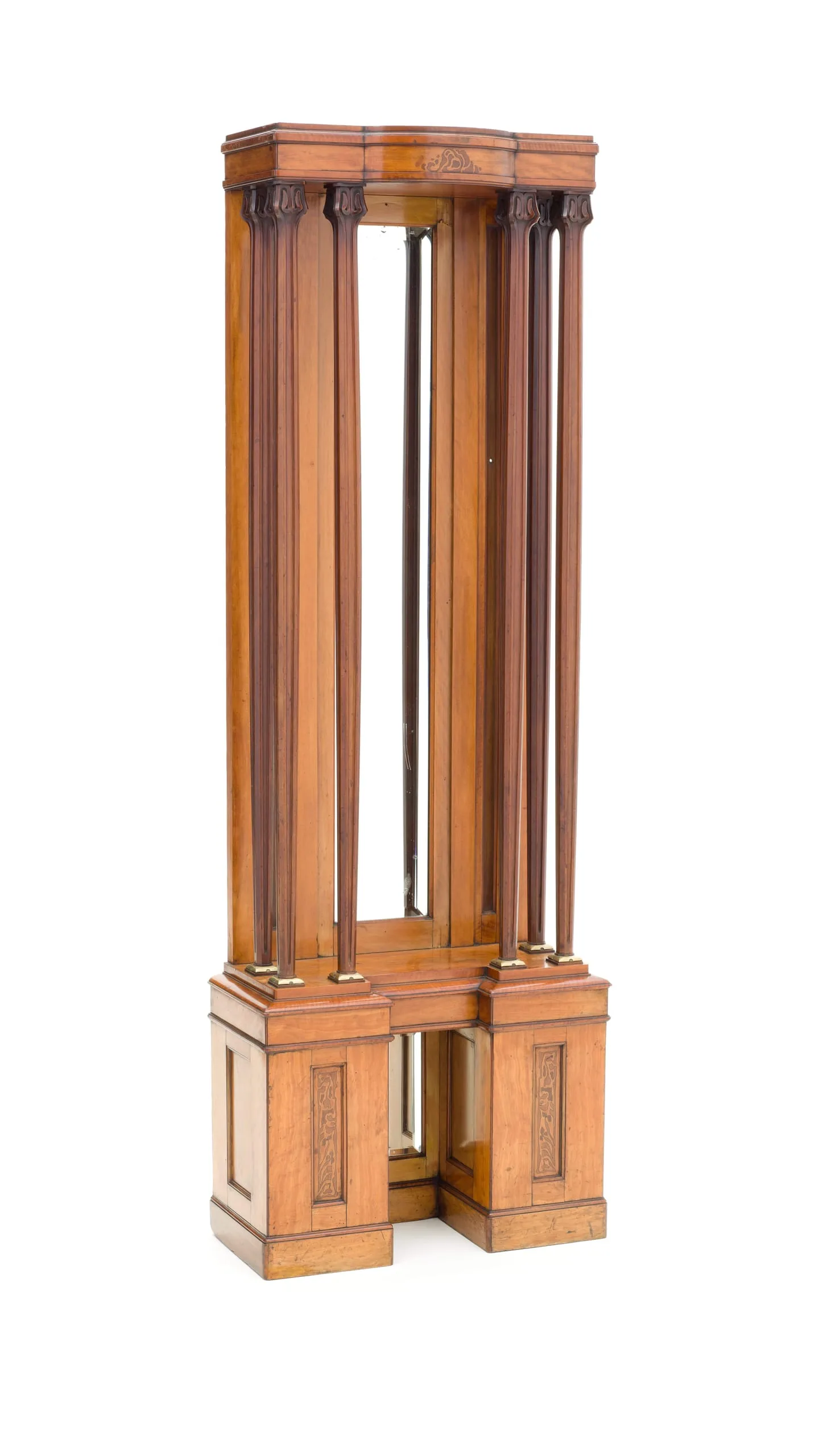
Trained as a painter, Otto Eckmann rejected his early success in this arena and fully embraced the decorative arts. He made a public renunciation in 1894, auctioning off all his paintings and bidding them a "cordial farewell. . . . May we never meet again." A true Arts and Crafts movement convert, he immediately started designing ceramics, jewelry, books, stained glass, metalwork, furniture, and textiles. While he remains most renowned for his two-dimensional work, this console (or cabinet) demonstrates his equal mastery of furniture.
In the few years before his tragic death from tuberculosis at the age of 37, he achieved enormous success in Munich, Darmstadt, Krefeld, and Berlin, receiving commissions from leading textile and furniture manufacturers as well as the most progressive and influential arts patrons in Germany. He designed a study for the Grand Duke of Hesse’s palace in Darmstadt, tapestries that made the Scherrebek weaving school famous, and a music room for Keller & Reiner, a Berlin company that was a leader in the progressive drive to make quality furniture accessible to a middle-class audience. Following the Arts and Crafts ideal of the gesamtkunstwerk (total design unity), Keller & Reiner would commission entire suites from a single designer – this console is from the music room Eckmann designed for the company about 1900, which was rapturously written about in Dekorative Kunst in 1901. The article notes how carefully Keller & Reiner selected the best designers and how closely the company worked with Eckmann to realize his ensemble, and declares that the most original aspect about the room is the consoles, on which busts of famous musicians were placed.
On display in the company showroom, the music room furnishings – including Eckmann’s wallpaper and textiles – were intended for "serial" production. The avant-garde nature of the design coupled with a price that most could still not afford meant that very few were made; only one other console (in the collection of the Bavarian National Museum) is known. Wendy Kaplan, Curator & Department Head of Decorative Arts and Design