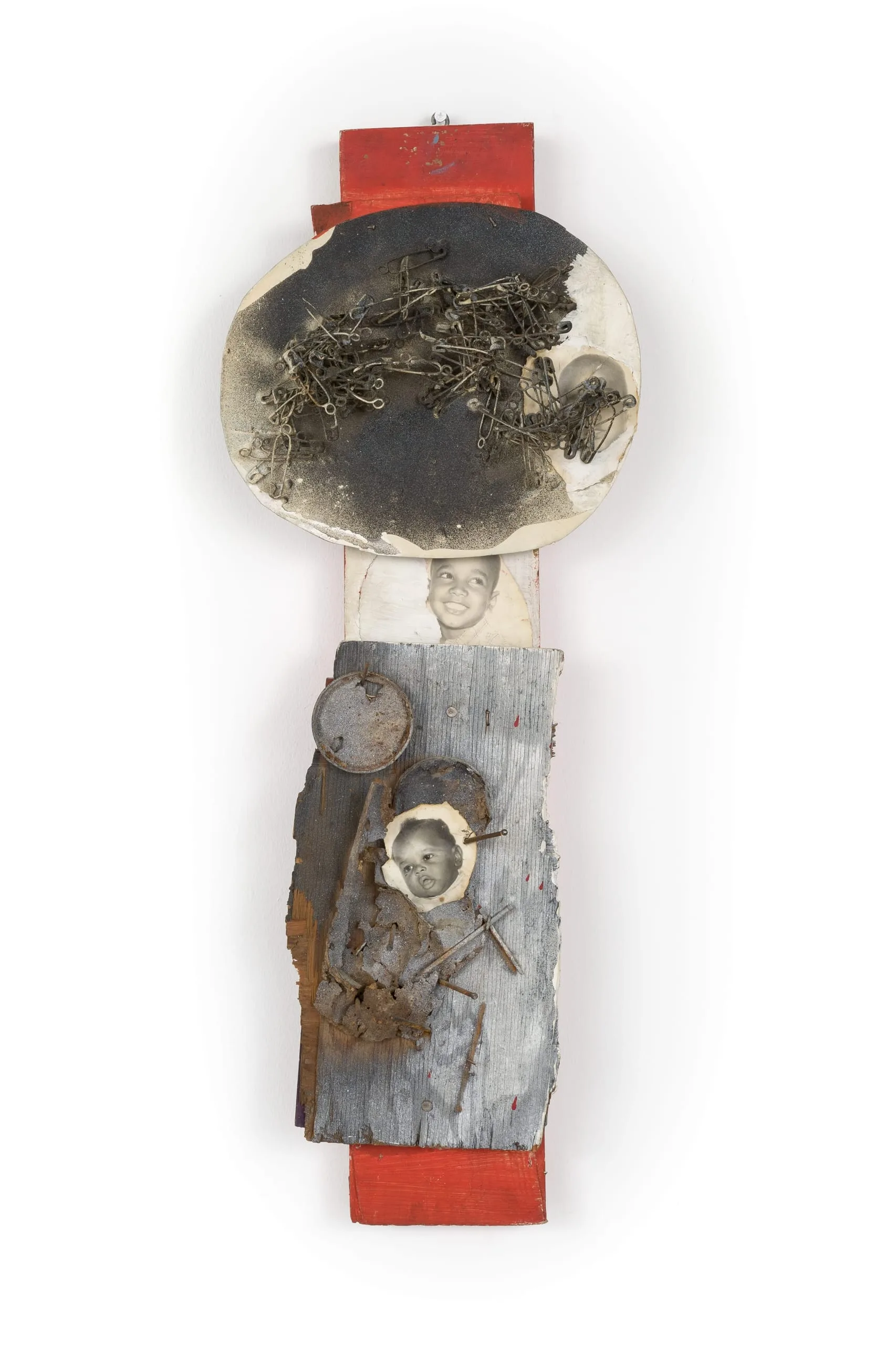
Ruth Saturensky, who in 1975 changed her name to Charu Colorado, was an artist, teacher, and early practitioner of art therapy; she also experimented with improvisational theater and became a life coach. Saturensky worked with fellow artists Noah Purifoy and Rachel Rosenthal among many others. Born in Colorado, she moved to Los Angeles and studied at Otis Art Institute and Chouinard (which later became CalArts). She spent over fifty years in southern California before moving to Oregon in 1993, where she remained for the last decades of her career.
In 1966 Purifoy, along with artist Judson Powell, organized what noted art historian and curator Lowery Stokes Sims has called “the pioneering exhibition” 66 Signs of Neon at the Watts Towers Art Center, intended to commemorate the Watts Rebellion of August 1965. As Purifoy described it, “Judson and I, while teaching at the Watts Towers Art Center, watched aghast [at] the rioting, looting and burning during the August happening. And while the debris was still smoldering, we ventured into the rubble like other Junkers of the community, digging and searching, but unlike others, obsessed without quite knowing why.” They collected three tons of such “junk,” including metal fragments, charred wood, and fire-molded debris, which—again according to Purifoy—“turned our thoughts to what were and were not tragic times in Watts and…which had begun to haunt our dreams.”
Ultimately these scavenged materials were used by various artists to create sixty-six assemblages in thirty days. Many of Saturensky’s creative tenets were brought to bear on the sixty-six works; as the exhibition brochure states: “The art works of 66 should be looked at…for the sake of establishing conversation and communication, involvement in the act of living….We wish to establish that there must be more to art than the creative act, more than the sensation of beauty, ugliness, color, form, light, sound, darkness, intrigue, wonderment, uncanniness, bitter, sweet, black, white, life and death….Art of itself is of little or no value if it…does not effect change…a change in the behavior of human beings.”
Race Babyincludes charred wood, nails, and safety pins—all remnants of the ordinary daily lives of Watts residents—as well as cherubic images of a Black baby and young children, suggesting not only the destruction wrought by the Watts Rebellion but also the ongoing challenges facing Blacks growing up in America.