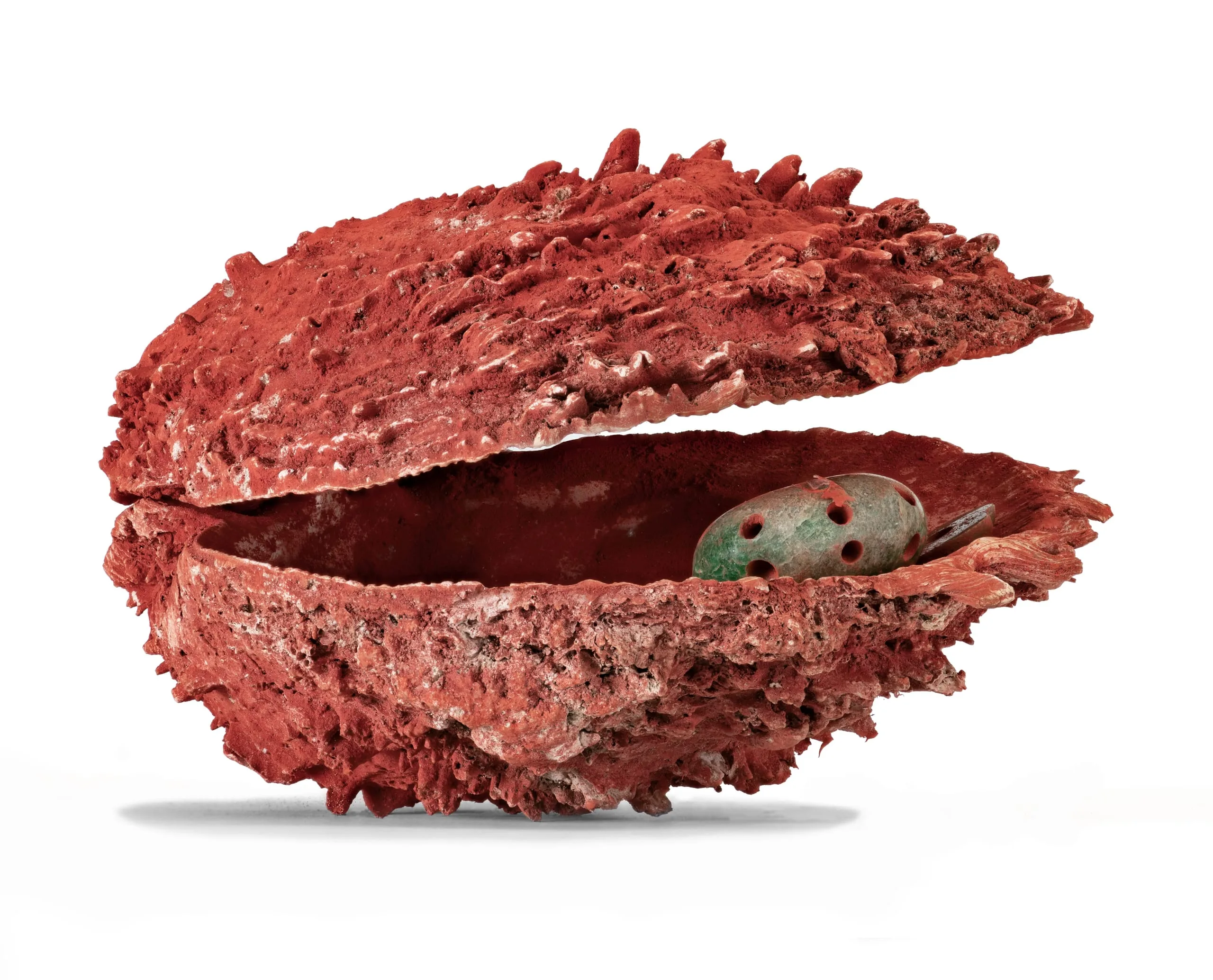
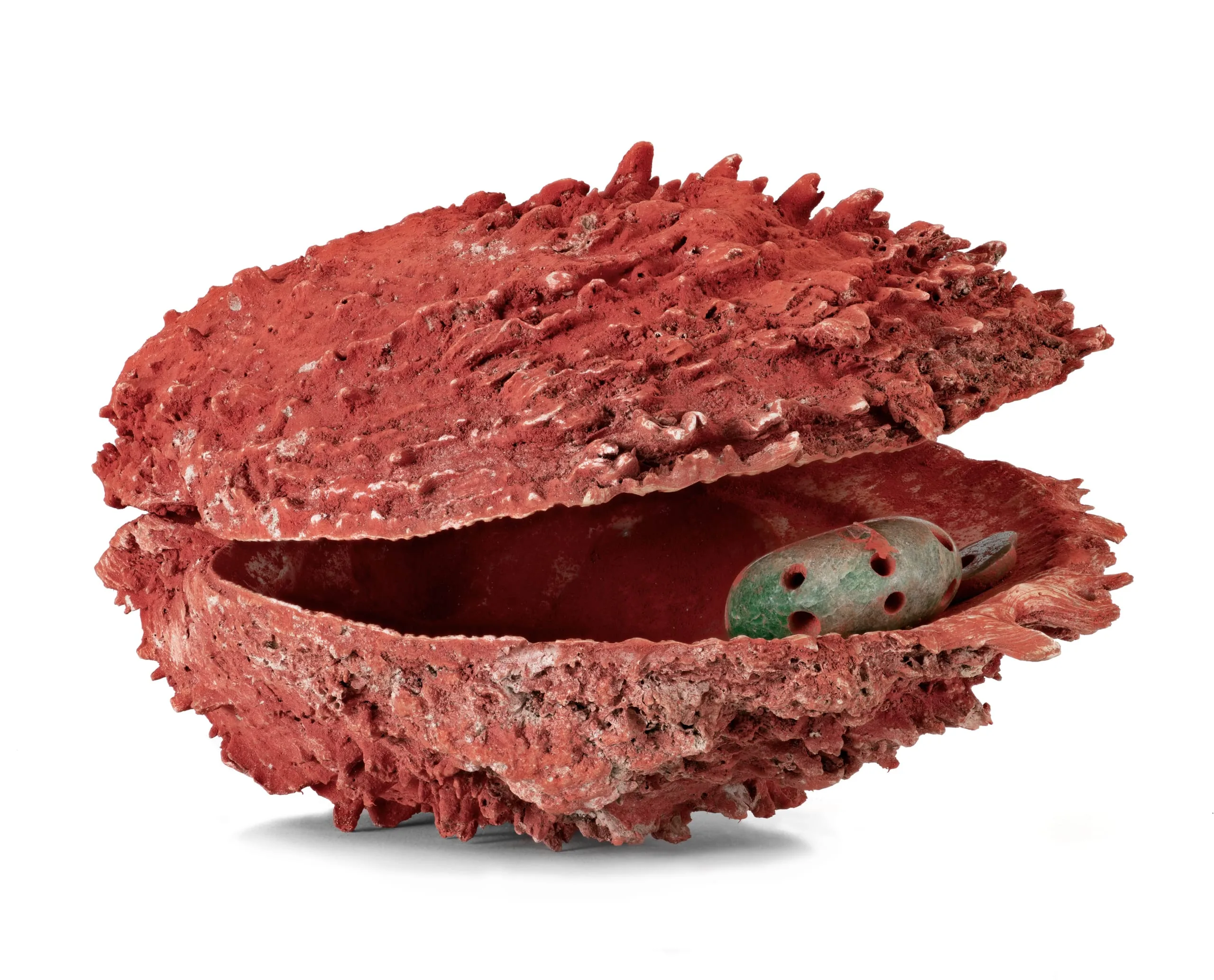
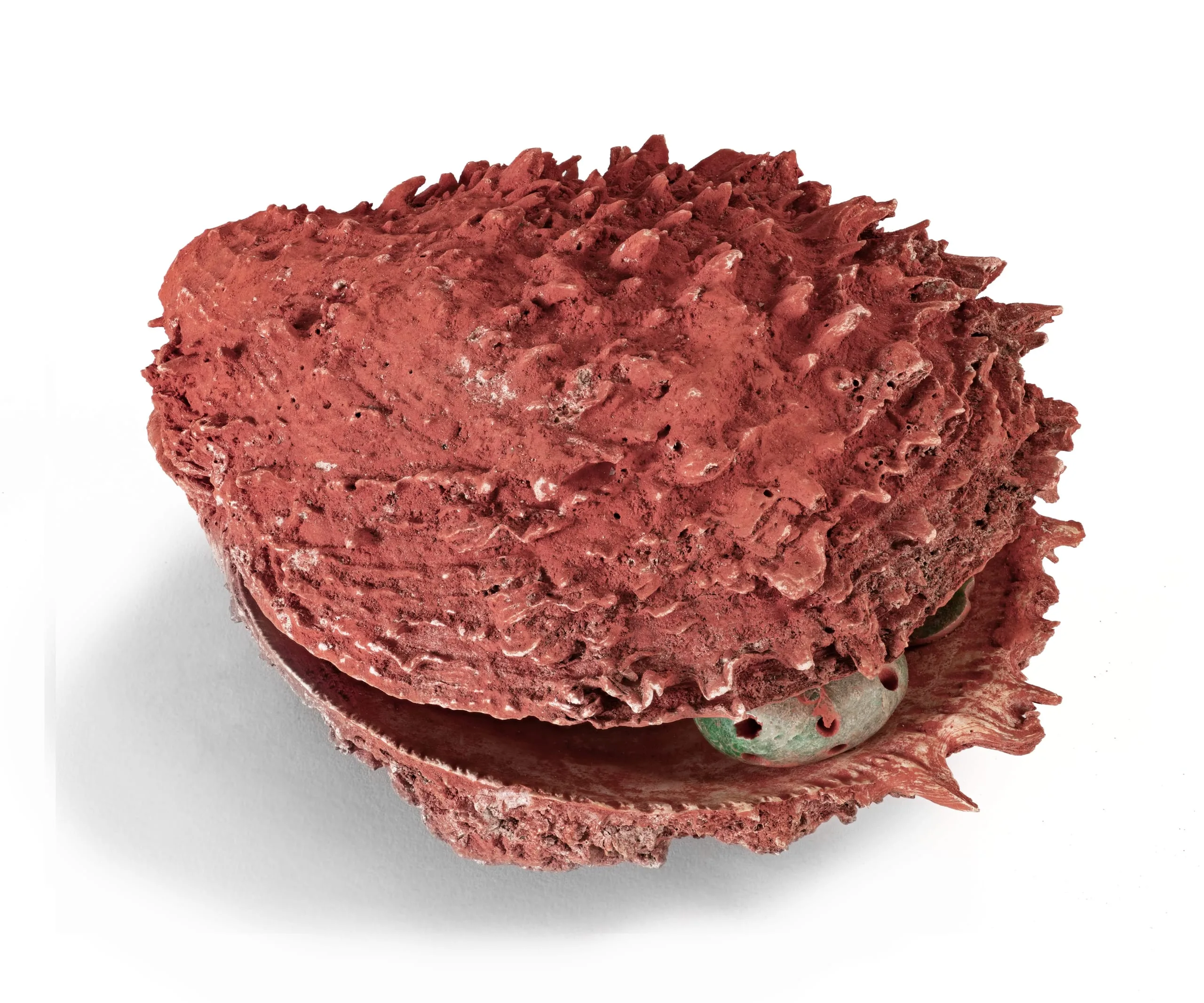
This assemblage, a Spondylus (spiny oyster) shell covered in cinnabar powder with a lidded jade bowl nestled inside, corresponds with a common offering made at sites in the Classic Maya lowlands. Each component of this offering carries its own value. Spondylus, a genus of mollusks, inhabits the cold waters of the Atlantic and Pacific Oceans, and Maya divers would go to great depths to retrieve the shells. Abrading away their spines and white exteriors would reveal a vibrant range of red and orange hues, which Maya artists then used to fashion jewelry, embellish clothing, and craft mosaics. Here, the shell has been left in its natural form, a thick coating of cinnabar giving it its red color. Cinnabar, an ore of mercury sulfide, occurs in regions with volcanic activity, including the highlands of Mesoamerica. Prized for its blood red color, its significance also stems from its telluric—that is, deep within the earth—origins. Cinnabar often appears in royal tombs as a means to prepare bodies and burial goods for becoming an ancestor. Finally, jade was perhaps the most precious material among Classic Maya peoples, embodying vital forces like breath, water, and maize. This offering thus invokes both the earth and the sea, life and death—complementary wholes.
Alyce de Carteret
2024